Impact of Digital Economy on the CA Profession in the Financial Environment
Learn the impact of the digital economy on the CA profession through automation, digital compliance, analytics, cloud accounting, and changing business expectations.
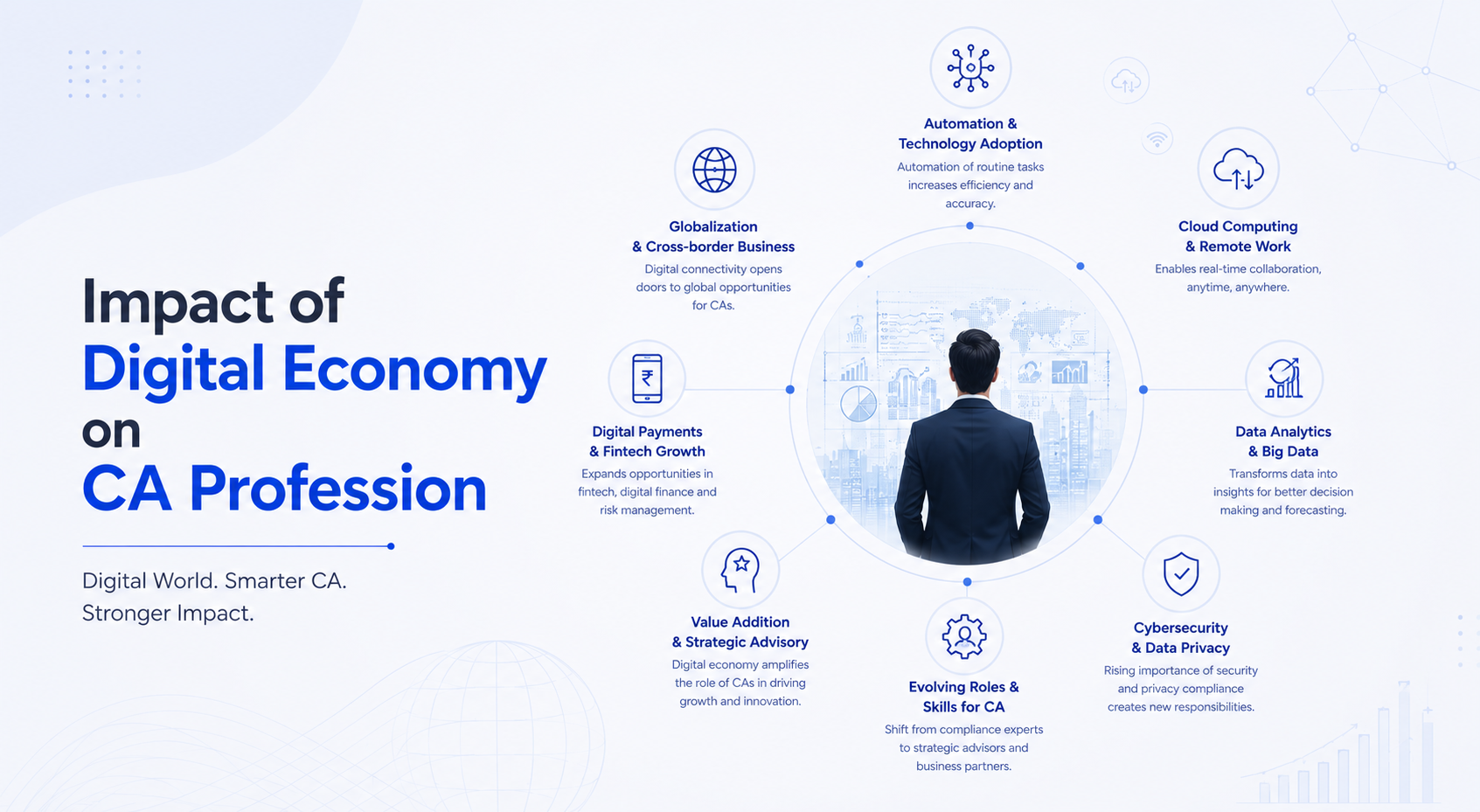
Table of Content
- Traditional Accounting Work Is Changing Rapidly
- Digital Compliance Systems Have Increased Professional Responsibilities
- Data Analytics Has Become More Important
- Businesses Expect Faster Financial Services
- Cloud Accounting Has Changed Workplace Structures
- Technology Skills Are Becoming Essential for CAs
- The digital economy has increased competition
- Advisory Roles Are Becoming More Valuable
- Cybersecurity and Data Protection Challenges Are Growing
- Continuous Learning Has Become Necessary
- Conclusion
The digital economy has completely changed the way businesses operate, manage transactions, and handle financial systems. Today, companies increasingly depend on online platforms, digital payments, automation tools, cloud accounting systems, and technology-driven compliance processes. This transformation has also created a major impact on the Chartered Accountancy profession. Modern chartered accountants are no longer limited to traditional accounting and taxation work because businesses now expect finance professionals to understand technology, digital systems, and data-driven financial operations.
The rise of the digital economy has created both opportunities and challenges for chartered accountants. On one side, technology has improved efficiency and opened new career areas, while on the other side, it has increased competition and changed traditional work structures. Understanding the impact of the digital economy on the CA profession is therefore important for students and professionals preparing for future finance careers.
Traditional Accounting Work Is Changing Rapidly
Earlier, accounting work involved large amounts of manual documentation, physical records, and repetitive calculations. However, digital systems have transformed these processes significantly. Many routine tasks are now automated through advanced accounting software and cloud-based platforms. Businesses today use technology for:
- Online accounting systems
- Automated invoicing
- Digital tax filing
- Financial reporting
- Real-time transaction tracking
Because of this, chartered accountants are gradually moving away from repetitive manual work and focusing more on analytical and advisory responsibilities. The profession is becoming more strategic and technology-oriented than before.
Digital Compliance Systems Have Increased Professional Responsibilities
The digital economy has also transformed compliance management. Governments and regulatory authorities increasingly use online systems for taxation and reporting processes. This means chartered accountants must continuously adapt to changing digital compliance environments.
-
GST and Online Tax Systems
Modern taxation systems now depend heavily on digital filing platforms and online compliance tracking. Professionals must understand these systems properly to manage client responsibilities efficiently.
-
Real-Time Financial Reporting
Businesses are now expected to maintain faster and more accurate financial reporting because digital systems make information available instantly.
-
E-Invoicing and Automation
Many organizations use automated invoicing systems that require proper financial integration and monitoring.
-
Digital Documentation
Physical records are gradually being replaced by digital financial documentation and cloud-based storage systems. These changes have increased the importance of technology awareness in the CA profession.
Data Analytics Has Become More Important
One major impact of the digital economy on the CA profession is the growing importance of financial analytics. Businesses now generate large amounts of financial and operational data every day. Companies expect finance professionals to analyze this information and provide useful business insights. Modern chartered accountants increasingly work on:
- Profitability analysis
- Financial forecasting
- Business trend evaluation
- Risk assessment
The profession is therefore evolving from simple reporting toward data interpretation and strategic financial decision-making.
Businesses Expect Faster Financial Services
Digital business environments operate much faster than traditional systems. Because of this, clients and companies now expect quicker responses and real-time financial support from professionals. Modern businesses often require:
- Instant financial reporting
- Faster compliance handling
- Quick business analysis
- Real-time financial updates
This increasing speed requirement has changed the working style of many chartered accountants. Professionals now need both technical accuracy and operational efficiency to remain competitive.
Cloud Accounting Has Changed Workplace Structures
Cloud technology has made financial systems more flexible and accessible. Businesses can now manage accounting operations from multiple locations through online platforms.
- Remote Financial Access: Companies and professionals can access financial records from anywhere using cloud systems.
- Better Collaboration: Teams can work together more efficiently through shared digital platforms.
- Faster Reporting Processes: Cloud accounting improves speed and reduces dependency on physical records.
- Improved Financial Transparency: Real-time data access helps businesses monitor financial performance more effectively.
Because of these advantages, cloud accounting is becoming a major part of modern finance environments.
Technology Skills Are Becoming Essential for CAs
In earlier years, technical accounting knowledge alone was often enough for finance professionals. However, the digital economy has changed industry expectations significantly. Today’s chartered accountants increasingly need an understanding of:
- ERP systems
- Financial software
- Analytics platforms
- Automation tools
- Digital compliance systems
Professionals who combine finance expertise with technology awareness generally gain stronger career opportunities in modern industries.
The digital economy has increased competition
Technology has made financial services more accessible and competitive. Businesses now compare professionals not only on technical knowledge but also on speed, efficiency, and digital capabilities. This has increased competition from:
- Technology-driven finance firms
- Automation platforms
- Global consulting organizations
- Digital accounting service providers
As a result, chartered accountants must continuously upgrade themselves to remain professionally relevant.
Advisory Roles Are Becoming More Valuable
Since technology can now handle many routine accounting functions, businesses increasingly depend on chartered accountants for strategic guidance and decision-making support. Modern CAs now help organizations in areas such as:
- Financial Planning: Professionals guide businesses regarding budgets and long-term financial strategies.
- Risk Management: Businesses require support in identifying financial and operational risks.
- Business Expansion Decisions: Companies depend on financial experts before making growth-related decisions.
- Performance Evaluation: Data-driven analysis helps businesses improve profitability and operational efficiency.
This advisory role is becoming one of the most valuable parts of the profession.
Cybersecurity and Data Protection Challenges Are Growing
The digital economy has increased risks related to financial data security and online fraud. Businesses now store sensitive financial information digitally, which creates cybersecurity concerns. Chartered accountants must therefore understand areas related to:
- Data confidentiality
- Digital fraud prevention
- Secure financial systems
- Technology risk management
Awareness regarding cybersecurity is becoming increasingly important in modern finance careers.
Continuous Learning Has Become Necessary
The digital economy changes rapidly because of constant technological innovation. New software, compliance systems, and financial tools continue entering the market regularly. Professionals who continuously learn about:
- Technology updates
- Digital finance systems
- Automation trends
- Data analytics
usually adapt more successfully to changing industry requirements. Continuous learning has therefore become essential for long-term professional growth in the CA field.
Conclusion
The impact of the digital economy on the CA profession has been massive because technology is transforming every aspect of finance and business operations. Automation, cloud accounting, digital compliance systems, analytics tools, and online financial platforms are changing the responsibilities of chartered accountants significantly. While repetitive accounting work is decreasing, demand for analytical thinking, strategic advisory, and technology expertise is increasing rapidly. Chartered accountants who continuously upgrade their technical and digital skills are likely to achieve stronger career growth in the evolving digital finance environment.

FAQs
What is the impact of the digital economy on the CA profession?
The digital economy has increased automation, digital compliance, analytics, and technology-based financial operations in the CA profession.
How has technology changed traditional accounting work?
Technology has automated repetitive tasks like bookkeeping, invoicing, reporting, and tax filing processes.
Why are digital compliance systems important for chartered accountants?
Modern taxation and reporting systems increasingly operate online through digital platforms and automated processes.
Why are analytics skills becoming important for CAs?
Businesses now expect finance professionals to analyze data and provide strategic business insights.
How has the digital economy increased competition for chartered accountants?
Technology-driven finance firms and automated services have increased competition within modern finance industries.
Why are advisory roles becoming more valuable in CA profession?
Businesses increasingly require strategic planning, financial analysis, and risk management support from finance professionals.
What technology skills should modern chartered accountants learn?
Modern CAs should understand ERP systems, analytics tools, cloud accounting, and digital compliance software.
Why is cybersecurity important in digital finance environments?
Businesses store financial data digitally, increasing risks related to fraud, hacking, and data security breaches.
Why is continuous learning important in the digital economy?
Technology and finance systems change rapidly, making regular skill development essential for professional growth.