Role of CAs in Financial Planning for Businesses: Detailed Guide
Learn the role of CAs in financial planning, including budgeting, taxation, cash flow management, investment decisions, and business growth strategies.
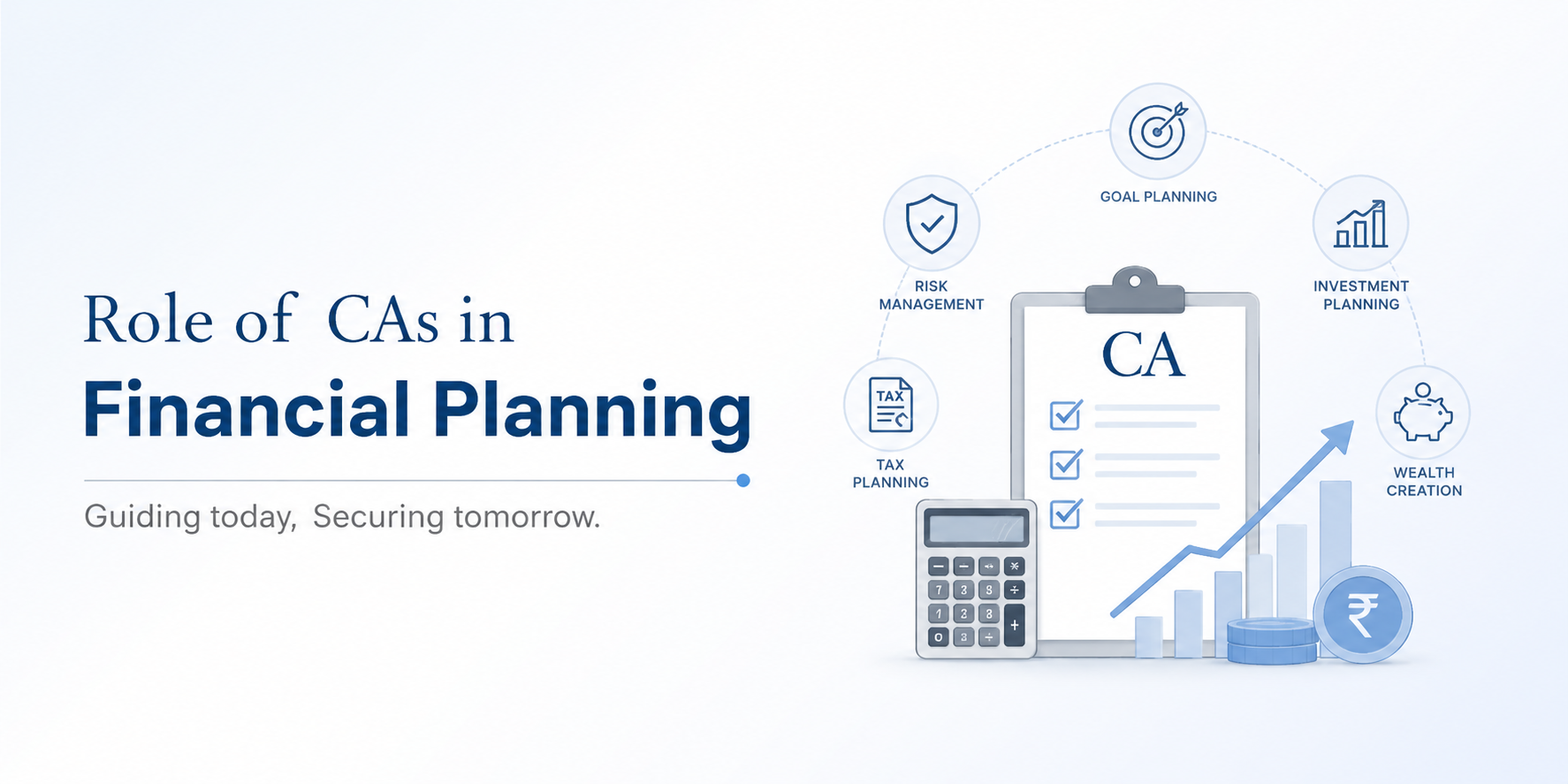
Table of Content
- Why Financial Planning Is Important for Businesses
- Budgeting Is One of the Key Responsibilities of CAs
- Role of CAs in Cash Flow Management
- Investment Planning and Business Decisions
- Tax Planning Supports Better Financial Management
- Risk Management Is an Important Part of Financial Planning
- Financial Forecasting Helps Businesses Prepare for the Future
- Role of CAs in Startup Financial Planning
- Technology Has Changed Financial Planning
- Communication Skills Matter in Financial Planning
- Why Businesses Trust Chartered Accountants
- Future Role of CAs in Financial Planning
- Conclusion
Financial planning plays a major role in the success and stability of every business. Whether it is a startup, small business, or large company, proper financial planning helps organizations manage resources, control expenses, reduce risks, and achieve long-term goals. In modern business environments, chartered accountants are considered one of the most important professionals for handling these responsibilities effectively.
Earlier, many people viewed chartered accountants mainly as professionals responsible for taxation and bookkeeping. However, the role of CAs has changed significantly over the years. Today, businesses depend on them not only for maintaining financial records but also for strategic planning, financial analysis, investment decisions, and future business growth planning.
Why Financial Planning Is Important for Businesses
Financial planning helps businesses maintain a balance between income, expenses, investments, and future objectives. Without proper planning, companies may face cash shortages, operational difficulties, or financial instability. A well-planned financial structure helps businesses:
- Control unnecessary expenses
- Improve profitability
- Manage financial risks
- Support long-term expansion
- Maintain operational stability
This is why businesses increasingly depend on chartered accountants for structured financial guidance and planning support.
Budgeting Is One of the Key Responsibilities of CAs
Budgeting is an important part of financial planning because it helps businesses allocate resources properly. Chartered accountants prepare budgets after analyzing company goals, operational requirements, and financial capacity.
Proper budgeting helps organizations maintain financial discipline and avoid overspending. It also improves decision-making because management can clearly understand where financial resources should be utilized more effectively. Businesses with strong budgeting systems usually manage growth more efficiently than companies operating without proper financial planning.
Role of CAs in Cash Flow Management
Cash flow management is extremely important because businesses require regular funds for daily operations, salaries, investments, and expansion activities. Chartered accountants help businesses monitor:
- Incoming cash
- Operational expenses
- Payment cycles
- Future liquidity requirements
Poor cash flow management can create financial stress even for profitable businesses. This is why finance professionals regularly analyze cash movement and help organizations maintain financial stability during uncertain situations.
Investment Planning and Business Decisions
Businesses often require financial guidance before making important investment decisions. Chartered accountants analyze financial data, profitability expectations, and risk factors before advising management regarding expansion or capital allocation.
They help businesses evaluate whether certain investments may improve long-term growth or create unnecessary financial pressure. This professional analysis supports smarter and more practical business decision-making. Financial planning also helps companies avoid emotional or poorly calculated financial decisions that may affect future stability.
Tax Planning Supports Better Financial Management
Taxation has a major impact on business profitability and financial performance. Chartered accountants help businesses manage tax liabilities while ensuring proper compliance with legal regulations. Strong tax planning helps organizations:
- Reduce unnecessary tax burden
- Maintain legal compliance
- Improve financial efficiency
- Organize financial records properly
As taxation systems become more complex, businesses increasingly require professional support from experienced finance experts for effective tax planning and compliance management.
Risk Management Is an Important Part of Financial Planning
Every business faces financial risks related to changing market conditions, operational losses, economic uncertainty, or compliance failures. Chartered accountants help organizations identify these risks and create strategies to manage them effectively. CAs support businesses through:
- Financial performance analysis
- Internal control improvement
- Risk evaluation
- Compliance monitoring
- Financial stability planning
Proper financial planning helps businesses remain more prepared during difficult business situations and market fluctuations.
Financial Forecasting Helps Businesses Prepare for the Future
Modern businesses rely heavily on forecasting for long-term planning and growth strategies. Chartered accountants study previous financial performance and business trends to estimate future opportunities and risks. Financial forecasting helps companies understand:
- Expected revenue growth
- Future expenses
- Investment requirements
- Business expansion possibilities
This allows management to make proactive decisions instead of reacting only after financial problems appear.
Role of CAs in Startup Financial Planning
Startups often operate under financial uncertainty during their early growth stages. Chartered accountants help startups build structured financial systems and maintain business discipline from the beginning. They support startups in areas like:
- Budget preparation
- Fund management
- Investor reporting
- Taxation compliance
- Financial structuring
Strong financial planning improves business sustainability and helps startups manage growth more effectively in competitive markets.
Technology Has Changed Financial Planning
Financial planning today is becoming increasingly technology-driven because businesses use digital systems and automation tools for financial management. Modern chartered accountants now work with:
- Cloud accounting software
- Financial analytics tools
- Automation systems
- AI-powered reporting platforms
Technology improves speed, efficiency, and financial analysis quality. Professionals who combine accounting expertise with technology awareness may perform better in modern finance industries.
Communication Skills Matter in Financial Planning
Chartered accountants regularly interact with business owners, investors, management teams, and financial institutions. Because of this, communication skills are becoming highly important in financial planning roles. Finance professionals must explain financial reports, risks, and strategies clearly so that businesses can make informed decisions confidently. Good communication also improves:
- Client trust
- Business coordination
- Professional presentation
- Strategic discussions
Modern financial planning involves both technical knowledge and practical communication ability.
Why Businesses Trust Chartered Accountants
Businesses trust chartered accountants because they provide professional expertise in multiple financial areas. Their understanding of accounting, taxation, compliance, analysis, and risk management helps organizations make more stable and practical decisions.
CAs not only help businesses manage present financial situations but also support future growth planning through proper financial strategies and professional guidance. This makes chartered accountants highly valuable in modern business environments.
Future Role of CAs in Financial Planning
The role of chartered accountants in financial planning may continue expanding as businesses become more digital and data-driven. Future finance professionals may contribute more in areas like:
- Financial analytics
- Strategic advisory
- Business forecasting
- Digital finance management
- Risk analysis
The profession is gradually evolving from traditional accounting work toward broader financial leadership and business consulting responsibilities.
Conclusion
The role of CAs in financial planning is extremely important because businesses require professional support for budgeting, taxation, investment decisions, cash flow management, and long-term growth strategies. Chartered accountants help organizations maintain financial stability, improve decision-making, and manage risks effectively. As industries continue evolving, finance professionals with analytical thinking, communication skills, and technology awareness may remain highly valuable in modern financial planning environments.

FAQs
What is the role of CAs in financial planning?
Chartered accountants help businesses with budgeting, taxation, investment planning, cash flow management, financial forecasting, and long-term strategies for business growth and financial stability.
Why is financial planning important for businesses?
Financial planning helps businesses manage resources efficiently, reduce unnecessary expenses, improve profitability, handle financial risks, and support stable long-term business growth and operations.
How do chartered accountants help in budgeting?
CAs prepare budgets by analyzing company goals, operational expenses, financial capacity, and future requirements to improve resource allocation and financial discipline within organizations.
Why is cash flow management important in financial planning?
Cash flow management helps businesses maintain sufficient funds for daily operations, salaries, investments, and future expansion while avoiding financial instability or operational disruptions.
How do CAs support investment decisions in businesses?
Chartered accountants analyze profitability, financial feasibility, business risks, and long-term impact before helping management make informed investment and expansion decisions.
What role does taxation play in financial planning?
Taxation directly affects business profitability, so chartered accountants help organizations manage compliance, reduce unnecessary tax burden, and improve overall financial efficiency legally.
How does financial forecasting help companies?
Financial forecasting helps businesses estimate future revenue, expenses, risks, and growth opportunities so management can make better strategic and financial decisions proactively.
Why do startups require chartered accountants for financial planning?
Startups need CAs for budgeting, fund management, investor reporting, taxation compliance, and financial structuring to maintain stable and organized business growth during early stages.
How is technology changing financial planning roles for CAs?
Technology is improving financial planning through cloud accounting, automation systems, AI-powered tools, and financial analytics platforms that increase efficiency and reporting accuracy.
What skills are important for CAs in financial planning?
Important skills include analytical thinking, communication ability, taxation knowledge, financial analysis, budgeting expertise, technology awareness, and strategic business understanding.