How Global Business Trends Affect CAs in Modern Economy
Learn how global business trends affect CAs through digital finance, international taxation, automation, compliance changes, and evolving business responsibilities worldwide.
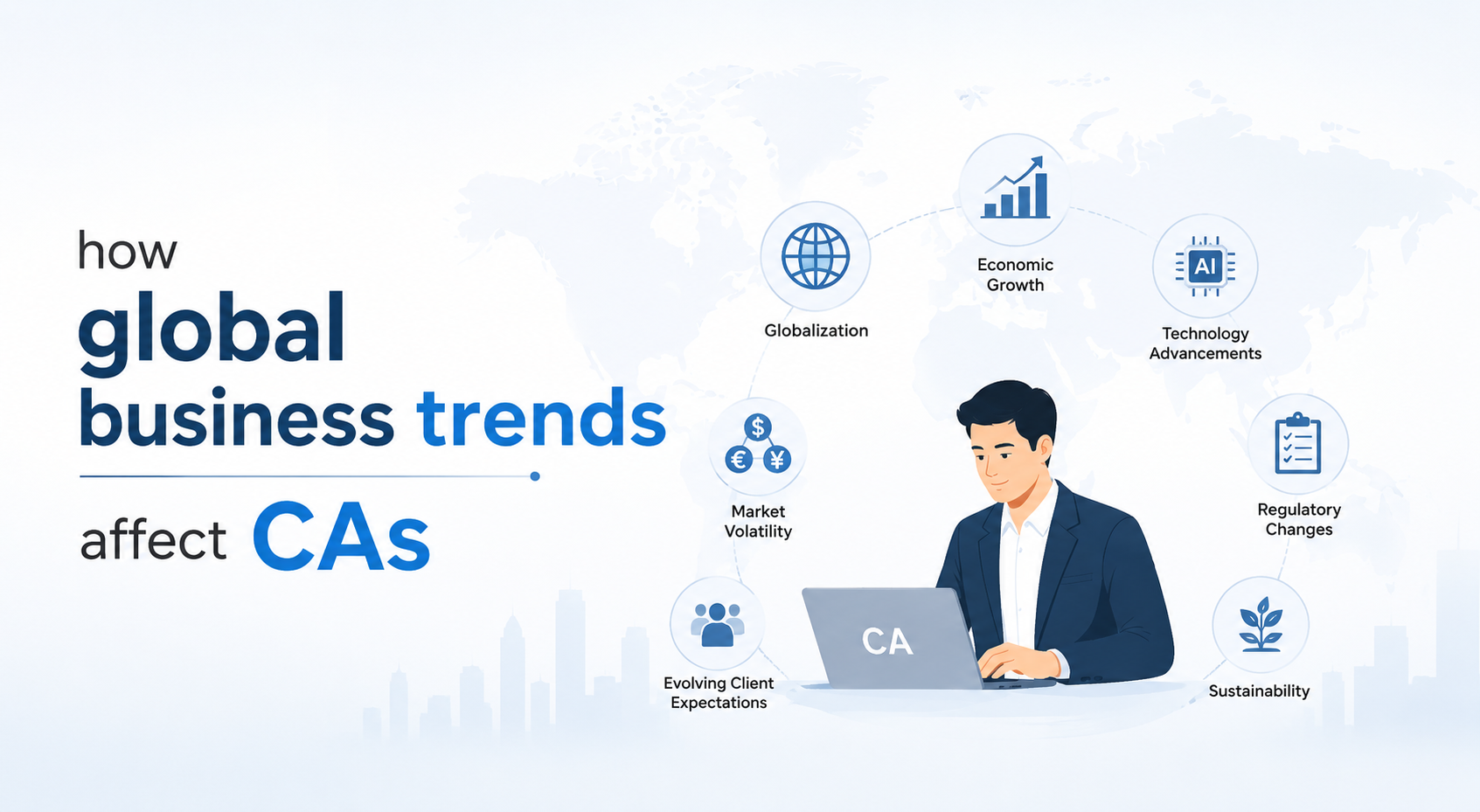
Table of Content
- Digital Transformation Is Changing CA Responsibilities
- Automation Is Reducing Manual Work
- International Business Expansion Creates New Opportunities
- Taxation Systems Are Becoming More Complex
- Data Analysis Is Becoming a Major CA Responsibility
- AI Is Reshaping Finance and Accounting Careers
- Remote Work and Global Collaboration Are Increasing
- Compliance and Governance Are Becoming More Important
- Communication Skills Matter More in Modern CA Careers
- Sustainability Reporting Is Emerging Rapidly
- Continuous Learning Has Become Essential
- Human Expertise Still Remains Valuable
- Future of Chartered Accountants in the Global Economy
- Conclusion
The global business environment is changing faster than ever before. Companies are expanding internationally, adopting digital technologies, automating financial systems, and operating through online platforms. These changes are not only transforming businesses but also changing the responsibilities and career opportunities of chartered accountants across the world.
Earlier, the role of CAs was mainly associated with accounting, taxation, auditing, and compliance work. However, modern businesses now expect finance professionals to contribute much more than traditional accounting functions. Today, chartered accountants are increasingly involved in business strategy, financial analysis, technology management, compliance planning, and decision-making support.
Because of these developments, understanding how global business trends affect CAs has become very important for commerce students and finance professionals preparing for future careers. The profession is evolving continuously, and adaptability is becoming one of the most valuable qualities for modern chartered accountants.
Digital Transformation Is Changing CA Responsibilities
One of the biggest global trends affecting chartered accountants is digital transformation. Businesses now depend heavily on technology-driven financial systems instead of traditional manual accounting processes. Modern companies use:
- Cloud accounting software
- Digital payment systems
- AI-powered finance tools
- Automated reporting systems
- Data analytics platforms
Because of this shift, repetitive accounting work is reducing gradually while analytical and strategic responsibilities are increasing. Today, CAs are expected to understand both finance and technology to work effectively in digital business environments.
Automation Is Reducing Manual Work
Automation has changed the way businesses manage accounting and financial operations. Several tasks are now handled automatically, such as:
- Data entry
- Invoice processing
- Bank reconciliation
- Basic bookkeeping
- Report generation
This improves efficiency and reduces operational workload. However, automation is not eliminating the importance of chartered accountants. Instead, it is changing their role from operational work toward more value-based financial advisory and analysis.
Professionals who develop analytical and technology-related skills may benefit more from these changes.
International Business Expansion Creates New Opportunities
Many businesses today operate internationally through exports, imports, online services, and multinational operations. This creates a growing demand for chartered accountants who understand:
- International taxation
- Cross-border transactions
- Global compliance systems
- Foreign exchange regulations
- International financial reporting standards
Globalization has increased career opportunities for finance professionals in multinational companies, consulting firms, and international business environments. CAs with global business understanding often find wider career exposure and growth opportunities.
Taxation Systems Are Becoming More Complex
Global business operations have also made taxation more complicated. Businesses now deal with:
- Digital taxation rules
- GST systems
- International tax regulations
- Cross-border compliance requirements
- E-invoicing systems
Because taxation laws change frequently, chartered accountants must continuously update their knowledge and stay informed about regulatory developments. Modern tax compliance now requires both financial understanding and technology awareness.
Data Analysis Is Becoming a Major CA Responsibility
Businesses generate massive amounts of financial and operational data daily. Modern organizations expect CAs to analyze this data for:
- Financial forecasting
- Risk management
- Profitability analysis
- Business growth planning
- Strategic decision-making
This means chartered accountants are increasingly becoming financial analysts and business advisors instead of only compliance professionals. Analytical thinking is now highly valuable in modern finance careers.
AI Is Reshaping Finance and Accounting Careers
Artificial Intelligence is another major global trend affecting chartered accountancy. AI tools now help businesses with:
- Financial analysis
- Fraud detection
- Automated reporting
- Compliance tracking
- Tax calculations
These systems improve efficiency and reduce repetitive workload. However, businesses still need human professionals for:
- Ethical judgment
- Financial interpretation
- Strategic planning
- Client communication
- Advisory services
This is why AI is more likely to transform the profession instead of completely replacing chartered accountants.
Remote Work and Global Collaboration Are Increasing
The rise of remote work and digital collaboration has also changed the professional environment for CAs. Today, finance professionals often work with:
- International clients
- Remote teams
- Cloud-based financial systems
- Online communication platforms
Because of this shift, professionals must develop:
- Digital communication skills
- Technology adaptability
- Virtual collaboration abilities
Modern business environments require flexibility and comfort with online work systems.
Compliance and Governance Are Becoming More Important
Global businesses now face stricter compliance and reporting requirements. Companies must maintain proper:
- Financial transparency
- Audit standards
- Tax compliance
- Corporate governance systems
Non-compliance can create serious legal and financial risks. Chartered accountants play an important role in helping organizations maintain proper regulatory compliance and financial discipline in increasingly complex business environments.
Communication Skills Matter More in Modern CA Careers
Modern chartered accountants regularly interact with:
- Business owners
- Investors
- Management teams
- International clients
- Government authorities
This makes communication skills extremely important in modern finance careers. CAs are now expected not only to prepare financial information but also to explain it clearly and support important business decisions effectively. Strong communication often improves leadership and consulting opportunities as well.
Sustainability Reporting Is Emerging Rapidly
Businesses across the world are focusing more on sustainability and responsible business practices. This has increased demand for professionals who understand:
- ESG reporting
- Sustainability compliance
- Ethical financial practices
- Corporate responsibility standards
Chartered accountants may find growing opportunities in sustainability reporting and governance-related finance roles in future business environments.
Continuous Learning Has Become Essential
Because global business trends change rapidly, finance professionals cannot depend only on old knowledge. Modern chartered accountants must continuously upgrade skills in:
- Technology tools
- International finance
- Taxation updates
- Digital compliance systems
- Business analytics
Professionals who remain adaptable and open to learning usually perform better in changing industries. Continuous learning has become necessary for long-term career growth in finance.
Human Expertise Still Remains Valuable
Despite rapid technological advancements, businesses still require human judgment for several important responsibilities. CAs continue to play major roles in:
- Strategic decision-making
- Financial advisory
- Ethical interpretation
- Risk evaluation
- Client relationship management
Technology can improve efficiency, but practical business understanding and professional judgment remain difficult to automate completely. This is why chartered accountants continue to remain highly relevant in modern business environments.
Future of Chartered Accountants in the Global Economy
The role of chartered accountants may continue evolving along with global business trends. Future CAs may spend more time on:
- Business consulting
- Financial strategy
- Data interpretation
- Compliance management
- Technology-based financial planning
While automated systems handle repetitive accounting operations. Professionals who combine accounting expertise with adaptability, communication, and technology awareness may continue finding strong opportunities in future finance industries.
Conclusion
Global business trends are transforming the chartered accountancy profession through technology, automation, globalization, digital finance, and changing compliance systems. Modern CAs are now expected to contribute in analytical, strategic, and advisory roles beyond traditional accounting work. Professionals who continuously upgrade their skills and adapt to evolving business environments may continue to grow successfully in the future global economy.

FAQs
How do global business trends affect CAs?
Global business trends affect CAs by increasing technology usage, changing compliance systems, expanding international finance roles, and shifting responsibilities toward analytical, strategic, and advisory functions in modern businesses worldwide.
Why is digital transformation important for chartered accountants?
Digital transformation is important because businesses now use automation, cloud accounting systems, and AI-based financial tools, requiring chartered accountants to adapt to technology-driven finance environments and modern accounting processes.
How does globalization create career opportunities for CAs?
Globalization creates opportunities through multinational businesses, international taxation, cross-border financial reporting, global compliance systems, and consulting roles requiring strong accounting and finance expertise.
How is automation changing the chartered accountancy profession?
Automation is reducing repetitive accounting work like bookkeeping and reconciliation while increasing demand for analytical thinking, advisory services, business interpretation, and strategic financial decision-making skills.
Why are analytical skills becoming important for modern CAs?
Modern businesses expect chartered accountants to analyze financial data, identify business risks, support growth planning, and provide strategic insights instead of only maintaining financial records.
How does AI affect chartered accountants?
AI improves efficiency by automating calculations, reporting, compliance tracking, and financial analysis, but chartered accountants are still needed for professional judgment, strategy, and advisory responsibilities.
Why are communication skills important for CAs today?
Communication skills help chartered accountants explain financial information clearly, interact professionally with clients and management, and support important business decisions in competitive global environments.
What is the role of CAs in compliance management?
CAs help businesses maintain proper financial reporting, taxation compliance, audit standards, and corporate governance systems while reducing legal and financial risks in changing business environments.
Why is continuous learning necessary for chartered accountants?
Continuous learning helps CAs stay updated with changing technology, tax laws, international regulations, compliance systems, and evolving business trends affecting the finance industries worldwide.
What is the future of chartered accountants in the global economy?
The future of chartered accountants may focus more on financial analysis, advisory services, strategic planning, digital finance, and technology integration, while automation handles repetitive operational work.