Importance of Financial Transparency in Companies
Learn the importance of financial transparency in companies for investor trust, compliance, ethical business practices, and long-term business growth.
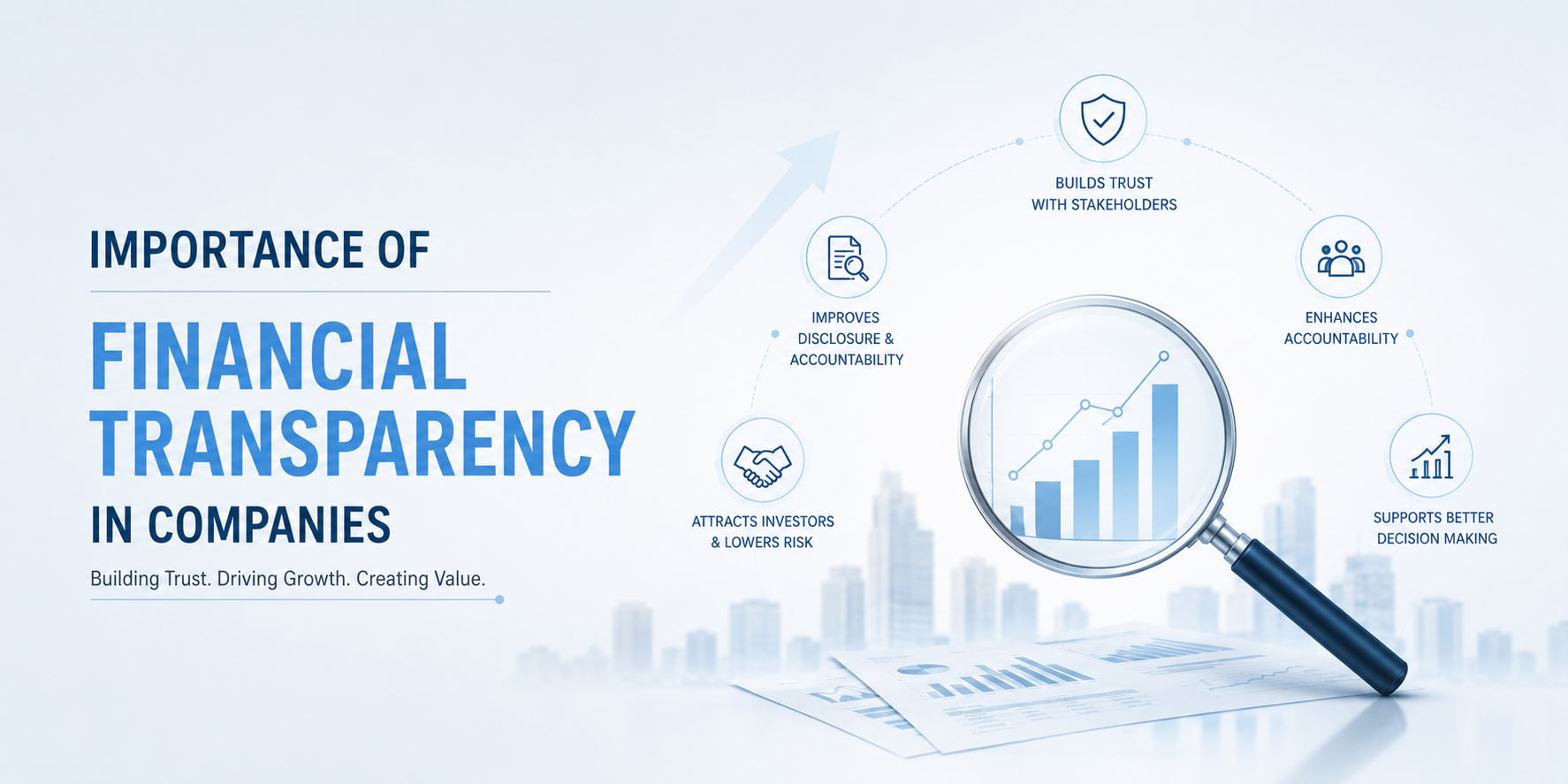
Table of Content
- Financial Transparency in Companies Builds Investor Trust
- Helps Companies Maintain a Better Reputation
- Transparency Improves Decision-Making
- Helps Prevent Financial Fraud
- Important for Regulatory Compliance
- Transparency Improves Employee Confidence
- Builds Strong Relationships With Banks and Financial Institutions
- Financial Transparency in Companies Supports Ethical Business Practices
- Auditing Becomes More Effective
- Transparency Improves Long-Term Business Growth
- Role of Chartered Accountants in Financial Transparency in Companies
- Technology Is Improving Financial Transparency
- Why Transparency Matters More Today
- Conclusion
Financial transparency is one of the most important foundations of a successful and trustworthy business. Companies regularly deal with investors, employees, customers, banks, regulatory authorities, and business partners who depend on accurate financial information for decision-making. Because of this, organizations must maintain clear, honest, and reliable financial reporting systems.
In modern business environments, financial transparency is no longer only a legal requirement. It has become an important factor for building trust, improving business reputation, and maintaining long-term stability. Companies that hide financial information or follow misleading reporting practices often face legal problems, loss of credibility, and reduced investor confidence. On the other hand, transparent organizations usually build stronger professional relationships and more sustainable business growth.
Financial Transparency in Companies Builds Investor Trust
Investors depend heavily on financial reports before making investment decisions. They want to understand whether a company is financially stable, profitable, and operating responsibly. Transparent financial reporting helps investors evaluate:
- Company performance
- Profitability trends
- Financial risks
- Business growth potential
When businesses provide accurate and honest financial information, investors feel more confident about investing in the organization. Strong investor trust also improves long-term financial stability for companies.
Helps Companies Maintain a Better Reputation
A company’s reputation is one of its most valuable assets in competitive industries. Financial transparency helps businesses build a reputation through:
- Honest reporting practices
- Ethical financial behavior
- Clear communication
- Responsible compliance systems
Organizations known for transparent operations are usually trusted more by customers, banks, investors, and business partners. This positive image often supports long-term business growth and market credibility.
Transparency Improves Decision-Making
Management teams require accurate financial information for making important business decisions. Transparent financial systems help organizations analyze:
- Revenue performance
- Operational expenses
- Profit margins
- Cash flow conditions
Reliable information improves strategic planning and helps companies make practical financial decisions instead of relying on assumptions or incomplete data. Good decision-making becomes difficult when financial reporting lacks accuracy or clarity.
Helps Prevent Financial Fraud
Financial transparency plays an important role in reducing fraud and unethical financial activities within organizations. Clear reporting systems and regular financial monitoring help:
- Detect irregularities early
- Improve accountability
- Reduce the manipulation of records
- Strengthen internal controls
Transparent companies are generally less vulnerable to financial fraud because employees and management operate under proper reporting and compliance systems. This improves organizational discipline and financial security.
Important for Regulatory Compliance
Businesses today operate under strict financial and legal regulations. Companies must maintain proper transparency to comply with taxation laws, accounting standards, and reporting requirements. Financial transparency helps organizations:
- Follow legal regulations properly
- Avoid penalties and legal disputes
- Maintain accurate financial documentation
- Improve audit processes
Strong compliance systems protect businesses from unnecessary financial and legal complications.
Transparency Improves Employee Confidence
Employees also value transparency within organizations because financial stability affects workplace confidence and career security. Transparent businesses often create stronger trust among employees through:
- Clear financial communication
- Honest organizational practices
- Ethical business culture
Employees generally feel more secure and motivated when organizations maintain openness regarding financial performance and business direction.
Builds Strong Relationships With Banks and Financial Institutions
Banks and financial institutions regularly evaluate company financial reports before approving loans or financial support. Transparent financial systems help businesses:
- Improve credibility with lenders
- Access funding more easily
- Maintain stronger banking relationships
Financial institutions prefer organizations that maintain reliable reporting and proper financial discipline. This becomes especially important during business expansion or investment planning.
Financial Transparency in Companies Supports Ethical Business Practices
Ethical business culture depends heavily on transparency and accountability. Financial transparency encourages companies to:
- Maintain honest reporting
- Avoid misleading information
- Follow responsible financial practices
- Improve corporate governance
Organizations with ethical financial systems often maintain stronger long-term business stability and professional respect within industries.
Auditing Becomes More Effective
Transparent financial reporting improves the effectiveness of audits and compliance reviews. Auditors can evaluate company financial records more accurately when organizations maintain:
- Proper documentation
- Clear accounting systems
- Reliable financial records
This helps improve accountability and strengthens confidence among stakeholders regarding company operations.
Transparency Improves Long-Term Business Growth
Companies focusing on transparent operations often experience more sustainable growth because they build stronger relationships with investors, customers, and financial institutions. Financial transparency supports:
- Better strategic planning
- Stronger investor confidence
- Improved operational control
- Higher business credibility
Long-term business growth becomes more stable when organizations maintain trust and accountability consistently.
Role of Chartered Accountants in Financial Transparency in Companies
Chartered accountants play an important role in maintaining financial transparency within organizations. They help companies through:
- Financial reporting
- Auditing systems
- Compliance monitoring
- Internal control evaluation
Finance professionals ensure that organizations maintain accurate and ethical financial practices according to legal and professional standards. Their contribution helps strengthen financial discipline and transparency in businesses.
Technology Is Improving Financial Transparency
Modern businesses increasingly use technology-driven systems for accounting and financial reporting. Digital finance tools help improve:
- Reporting accuracy
- Real-time monitoring
- Data management
- Financial tracking systems
Technology also reduces the chances of manual errors and improves operational transparency within organizations. Businesses combining technology with ethical practices often maintain stronger financial systems.
Why Transparency Matters More Today
Modern business environments are highly competitive and closely monitored by investors, regulators, and the public. Because of this, companies are expected to maintain:
- Honest financial communication
- Ethical reporting standards
- Strong compliance systems
- Responsible business conduct
Financial transparency is no longer optional for businesses aiming to build sustainable and respected organizations.
Conclusion
Financial transparency is extremely important for companies because it builds investor trust, improves business reputation, strengthens compliance systems, and supports ethical business practices. Transparent organizations make better financial decisions, reduce fraud risks, and maintain stronger relationships with stakeholders, employees, and financial institutions. In modern business environments, financial transparency has become one of the most important factors for long-term stability, accountability, and sustainable growth.

FAQs
Why is financial transparency important in companies?
Financial transparency helps companies build trust, improve compliance, reduce fraud risks, strengthen their reputation, and support better business decision-making.
How does financial transparency build investor confidence?
Transparent financial reporting helps investors understand company performance, profitability, risks, and growth potential before making investment decisions.
Why does transparency help prevent financial fraud?
Clear reporting systems, accountability, and regular monitoring reduce the chances of financial manipulation, unethical practices, and hidden irregularities within organizations.
How does financial transparency improve business reputation?
Honest reporting and ethical financial practices improve credibility among investors, customers, employees, and business partners, strengthening the company's reputation.
Why is transparency important for regulatory compliance?
Financial transparency helps businesses maintain accurate records, follow legal regulations properly, improve audit systems, and avoid penalties or compliance-related issues.
How does transparency improve decision-making in companies?
Accurate financial information helps management evaluate revenue, expenses, profitability, and risks more effectively while making strategic business decisions.
Why do banks prefer financially transparent companies?
Banks trust organizations with reliable financial reporting because transparency improves credibility, reduces lending risk, and supports responsible financial management.
What role do chartered accountants play in financial transparency?
Chartered accountants help companies maintain transparent financial reporting, auditing systems, compliance management, and ethical accounting practices professionally.
How does technology improve financial transparency?
Technology improves reporting accuracy, financial monitoring, data management, and operational transparency while reducing manual errors in financial systems.
Why is financial transparency important for long-term growth?
Transparent companies build stronger stakeholder trust, improve financial stability, maintain better compliance systems, and support sustainable business growth over time.