Impact of ICAI Policy Changes on Students and Their CA Preparation Journey
Learn the impact of ICAI policy changes on students, including exam patterns, syllabus updates, training structure, preparation strategy, and career planning in the CA course.
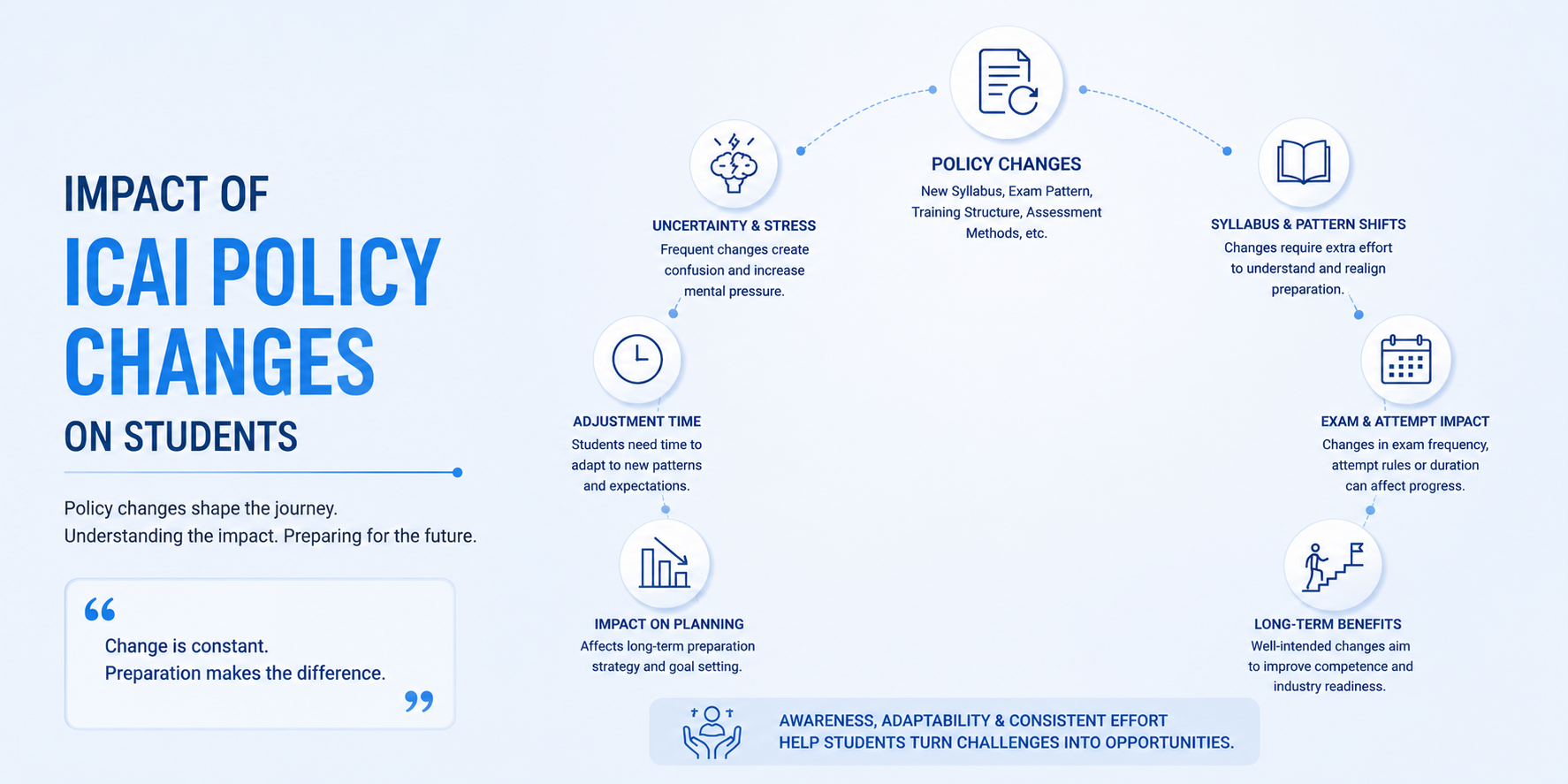
Table of Content
- ICAI Policy Changes Aim to Modernize the Course
- Syllabus Changes Affect Preparation Strategy
- Exam Pattern Changes Create Adjustment Pressure
- Training Structure Changes Influence Career Planning
- Technology-Focused Changes Increase Learning Requirements
- Students Sometimes Feel Mentally Stressed
- Positive Changes Improve Professional Opportunities
- Increased Focus on Conceptual Learning
- Competitive Pressure May Increase
- Need for Better Time Management
- Guidance and Awareness Become Important
- Adaptability Is Becoming a Necessary Skill
- Long-Term Benefits Often Become Visible Later
- Conclusion
The Chartered Accountancy course continuously evolves to match changing business environments, technology advancements, professional requirements, and global financial standards. Because of this, the Institute of Chartered Accountants of India (ICAI) regularly introduces policy changes related to examinations, training systems, syllabus structures, and professional regulations. These changes directly influence the preparation journey, academic planning, and career decisions of students. This is why understanding the impact of ICAI policy changes on students becomes extremely important for CA aspirants.
While many policy updates are introduced to improve professional quality and modernize the course structure, they can also create temporary confusion, stress, and adjustment challenges for students. Changes in examination patterns, training periods, or syllabus coverage often require students to modify preparation strategies and academic planning quickly. Students who adapt positively to such changes generally manage transitions more effectively.
ICAI Policy Changes Aim to Modernize the Course
One major reason behind policy changes is the need to keep the CA course aligned with:
- Modern business practices
- Technology developments
- Global finance standards
- Industry expectations
The accounting and finance profession changes continuously, so ICAI updates policies to ensure future chartered accountants remain professionally relevant and competent. Modernization is therefore one of the most important aspects of the impact of ICAI policy changes on students.
Syllabus Changes Affect Preparation Strategy
Whenever ICAI updates the syllabus structure, students often need to:
- Rearrange study plans
- Learn new topics
- Adjust revision schedules
- Understand updated concepts
New subjects or revised coverage areas may initially create pressure because students must adapt to different preparation requirements. However, an updated syllabus often improves practical relevance and industry alignment in the long term.
Exam Pattern Changes Create Adjustment Pressure
Changes in examination patterns can affect students emotionally and academically. Students may need to adjust according to:
- New question formats
- Increased application-based questions
- Objective paper patterns
- Different marking structures
Many students feel anxious when familiar preparation methods no longer seem fully effective. Adapting to new exam expectations becomes an important part of the CA journey.
Training Structure Changes Influence Career Planning
ICAI policy updates related to articleship and training systems also affect students significantly. Changes in:
- Training duration
- Industrial training rules
- Practical exposure requirements
- Skill development structure
may influence career planning and preparation balance. Students often need to reorganize study routines and long-term goals according to updated training frameworks.
Technology-Focused Changes Increase Learning Requirements
Modern finance industries increasingly depend on digital systems and automation. ICAI policy updates now often include greater focus on:
- Technology awareness
- Digital accounting systems
- Data analytics understanding
- Modern finance tools
Students may need to develop additional technical skills beyond traditional accounting knowledge. Although this increases learning pressure, it also improves future employability.
Students Sometimes Feel Mentally Stressed
Sudden policy announcements can create uncertainty among students regarding:
- Attempt planning
- Exam preparation
- Career timelines
- Syllabus transition
Some students feel confused about whether their previous preparation strategy remains effective after major changes. Emotional adjustment becomes important during transition periods. This psychological impact is one of the major aspects of the impact of ICAI policy changes on students.
Positive Changes Improve Professional Opportunities
Although policy changes may initially feel challenging, many updates are introduced to improve:
- Practical learning
- Professional quality
- Global recognition
- Career readiness
Modernized education systems help students become better prepared for evolving finance and business environments. Long-term professional benefits often outweigh temporary adjustment difficulties.
Increased Focus on Conceptual Learning
Recent policy trends increasingly emphasize:
- Analytical thinking
- Practical application
- Conceptual understanding
- Professional interpretation
This reduces dependence on rote learning and encourages a deeper understanding of subjects. Students now need stronger practical preparation instead of relying only on memorized answers.
Competitive Pressure May Increase
Policy changes sometimes increase competition because students must quickly adapt to:
- Revised patterns
- Updated subjects
- New evaluation methods
Students who adapt faster often gain an advantage during examinations and professional development. This creates additional pressure for students already managing a vast syllabus and demanding preparation schedules.
Need for Better Time Management
Changes in course structure or examination systems often require students to improve:
- Study planning
- Revision scheduling
- Subject prioritization
- Time allocation strategies
Flexible preparation becomes important because rigid routines may not work effectively during transition periods. Good planning helps students handle uncertainty more calmly.
Guidance and Awareness Become Important
Students often struggle when they depend on incomplete or unofficial information regarding policy changes. Proper guidance from:
- ICAI notifications
- Official announcements
- Faculty support
- Professional mentors
helps students understand changes more accurately and avoid unnecessary confusion. Staying informed becomes extremely important during policy transitions.
Adaptability Is Becoming a Necessary Skill
Modern professional environments constantly evolve because of:
- Technology advancements
- Regulatory changes
- Global business developments
ICAI policy changes indirectly train students to become more adaptable and flexible professionals. Adaptability itself has become an important professional skill in finance careers today.
Long-Term Benefits Often Become Visible Later
Initially, students may resist policy changes because adjustments feel difficult. However, many changes later helped improve:
- Professional quality
- Industry readiness
- Career opportunities
- Practical understanding
Students who remain positive and adaptable generally benefit more from updated educational systems over time.
Conclusion
The impact of ICAI policy changes on students is significant because these changes influence preparation strategy, exam patterns, training structure, emotional balance, and long-term career planning. While policy updates may create temporary adjustment pressure and uncertainty, they are generally introduced to modernize the CA course and improve professional quality. Students who remain adaptable, stay updated with official information, and adjust preparation methods positively usually handle policy transitions more effectively during their CA journey.