Why the CA Profession Requires Continuous Learning in the Finance Industry
Learn why the CA profession requires continuous learning because of changing taxation laws, technology, compliance systems, and evolving business environments
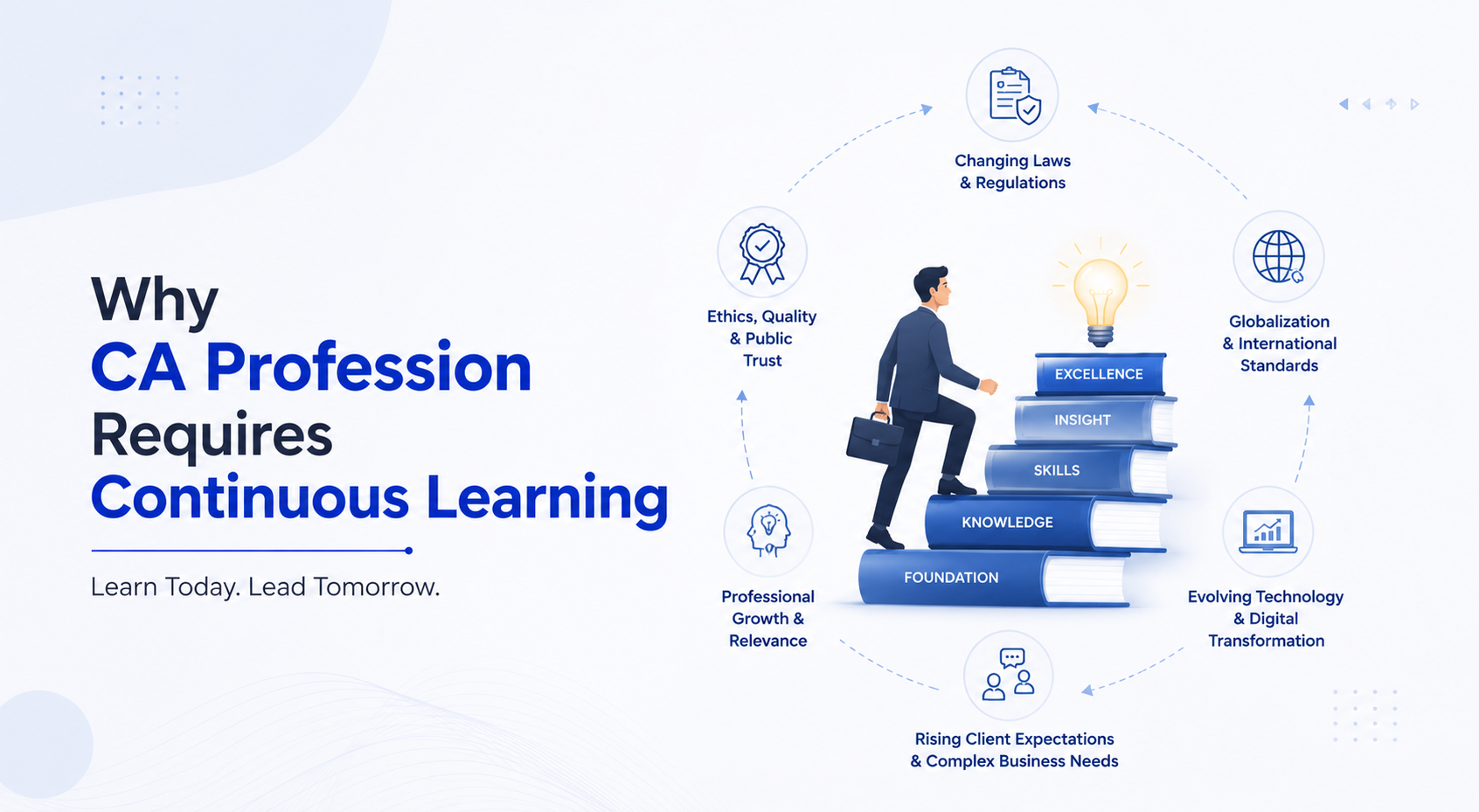
Table of Content
- Taxation Laws Change Frequently
- Technology is rapidly transforming the finance industry
- Compliance Requirements Keep Expanding
- Businesses Expect Strategic Guidance
- Globalization Has Increased Professional Complexity
- Continuous Learning Improves Career Growth
- Clients and Businesses Expect Updated Knowledge
- The Profession Requires Analytical Thinking
- Professional Competition Is Increasing
- Communication and Soft Skills Also Need Development
- Continuous Learning Helps Professionals Stay Relevant
- Why the CA Profession Will Always Demand Learning
- Conclusion
The Chartered Accountancy profession is one of the most dynamic careers in the finance industry. Unlike many fields where knowledge remains stable for long periods, the world of accounting, taxation, auditing, and compliance changes continuously. New laws, technology systems, financial regulations, and business practices regularly reshape the professional environment. Because of this, chartered accountants cannot depend only on what they learned during their CA studies. Continuous learning becomes necessary throughout their careers.
Modern businesses expect chartered accountants to stay updated with changing financial systems and industry trends. A professional who stops learning may eventually struggle to handle new compliance requirements, technology tools, or strategic financial responsibilities. This is one of the biggest reasons why the CA profession requires continuous learning in today’s rapidly changing business environment.
Taxation Laws Change Frequently
Taxation is one of the fastest-changing areas in finance and business. Governments regularly introduce:
- New tax rules
- GST amendments
- Compliance updates
- Reporting requirements
Chartered accountants handling taxation work must therefore stay updated continuously. Even small changes in tax laws can affect business decisions, financial planning, and compliance responsibilities. Professionals who ignore updates may create serious financial or legal problems for clients and organizations.
Technology is rapidly transforming the finance industry
Technology has changed the CA profession significantly over the last few years. Modern finance systems now involve:
- Cloud accounting platforms
- ERP software
- Automation tools
- Digital compliance systems
- Financial analytics software
Chartered accountants who understand technology usually adapt more effectively to modern workplaces.
- Automation Has Changed Traditional Work
- Many repetitive accounting tasks are now handled through automated systems. Because of this, professionals increasingly focus on:
- Financial interpretation
- Strategic planning
- Data analysis
- Advisory services
- Digital Skills Are Becoming Necessary
Businesses now prefer professionals who can work efficiently with digital financial tools and reporting systems. This technological transformation is a major reason why the CA profession requires continuous learning today.
Compliance Requirements Keep Expanding
Modern businesses operate under strict financial and legal regulations. Chartered accountants must regularly understand updates related to:
- Corporate laws
- Financial reporting standards
- Audit regulations
- Compliance procedures
Failure to stay updated may lead to compliance mistakes, penalties, and reputational damage. Continuous learning helps professionals maintain accuracy and professional reliability.
Businesses Expect Strategic Guidance
The role of chartered accountants is no longer limited to accounting and taxation alone. Today, businesses also expect support in areas such as:
- Financial Planning: Companies need guidance regarding budgeting and resource management.
- Risk Management: Professionals help businesses identify financial risks and improve stability.
- Business Growth Strategies: Management teams often involve chartered accountants in expansion and investment decisions.
- Profitability Analysis: Businesses depend on financial experts for performance evaluation and strategic improvement.
These evolving responsibilities require continuous skill development and business understanding.
Globalization Has Increased Professional Complexity
Global business operations have increased the need for international finance knowledge. Chartered accountants now increasingly work with:
- Cross-border taxation
- International reporting standards
- Foreign investments
- Global compliance systems
Professionals who continuously upgrade their knowledge usually gain better opportunities in international finance environments. Globalization has therefore made continuous learning even more important for chartered accountants.
Continuous Learning Improves Career Growth
Professionals who regularly update their skills often achieve stronger career progress. Learning new areas can create opportunities in fields such as:
- Consulting
- Investment advisory
- Financial analytics
- International taxation
- Risk management
Modern industries prefer finance professionals who remain adaptable and knowledgeable about current trends. Continuous improvement increases long-term professional value.
Clients and Businesses Expect Updated Knowledge
Businesses trust chartered accountants because they expect professional expertise and accurate financial guidance. Clients usually assume that finance professionals understand:
- Latest tax amendments
- New compliance systems
- Financial reporting updates
- Technology-driven processes
Professionals who remain outdated may lose credibility and a competitive advantage over time.
The Profession Requires Analytical Thinking
Continuous learning is not only about memorizing new laws or regulations. It also helps professionals improve:
- Problem-solving ability
- Financial interpretation
- Strategic thinking
- Decision-making skills
The finance industry increasingly values professionals who can analyze situations practically and provide intelligent business solutions.
Professional Competition Is Increasing
Modern finance industries have become highly competitive because of:
- Global consulting firms
- Technology-driven finance systems
- Increasing number of professionals
Chartered accountants who continuously upgrade themselves usually stand out more in competitive environments. Learning new skills has become necessary for long-term professional survival and growth.
Communication and Soft Skills Also Need Development
Continuous learning in the CA profession is not limited only to technical subjects. Modern professionals also improve areas such as:
- Communication Skills: A clear financial explanation has become extremely important in corporate environments.
- Leadership Ability: Many chartered accountants move into managerial and advisory positions.
- Client Handling: Professional interaction skills improve long-term career success.
These soft skills play a major role in modern finance careers.
Continuous Learning Helps Professionals Stay Relevant
Industries continuously evolve because of economic changes, technological growth, and business innovation. Professionals who stop learning may eventually struggle to remain relevant in changing environments. On the other hand, chartered accountants who regularly upgrade themselves often adapt more successfully to new opportunities and industry expectations.
Why the CA Profession Will Always Demand Learning
The finance world never remains completely stable. New developments continuously affect:
- Tax systems
- Business regulations
- Financial technology
- Reporting standards
- Corporate governance practices
This constant evolution is the biggest reason why the CA profession requires continuous learning throughout a professional career.
Conclusion
Understanding why the CA profession requires continuous learning helps students and professionals realize the long-term responsibilities associated with the finance industry. Continuous changes in taxation laws, technology systems, compliance requirements, and global business practices make regular learning essential for chartered accountants. Professionals who continuously improve their technical knowledge, analytical ability, communication skills, and technology awareness are more likely to remain competitive, relevant, and successful in modern finance environments.

FAQs
Why CA profession require continuous learning?
The CA profession requires continuous learning because taxation laws, technology, compliance systems, and business environments change regularly.
How does technology increase the need for learning in the CA profession?
Technology introduces automation, cloud accounting, analytics tools, and digital compliance systems that professionals must understand.
Why is updated taxation knowledge important for chartered accountants?
Tax laws frequently change, and outdated knowledge may create compliance errors and financial risks for businesses.
How does continuous learning improve CA career growth?
Learning new skills improves opportunities in consulting, analytics, advisory, and international finance roles.
Why are businesses expecting more from chartered accountants today?
Businesses now require strategic planning, financial analysis, risk management, and advisory support beyond accounting work.
How has globalization increased learning requirements for CAs?
Global business operations require an understanding of international taxation, compliance systems, and financial reporting standards.
Why are communication skills important in the modern CA profession?
Chartered accountants regularly interact with management teams, clients, investors, and regulatory authorities.
How does continuous learning improve professional relevance?
Professionals who upgrade their knowledge adapt better to changing business trends and industry expectations.
Why is competition increasing in the finance industry?
Technology growth, globalization, and expanding finance careers have increased professional competition significantly.
What happens if chartered accountants stop learning?
Professionals who stop learning may struggle with technology changes, compliance updates, and evolving business requirements.