AI Is Transforming Chartered Accountancy Profession
Learn how AI is transforming chartered accountancy through automation, auditing, taxation, financial analysis, and changing finance career opportunities in modern businesses.
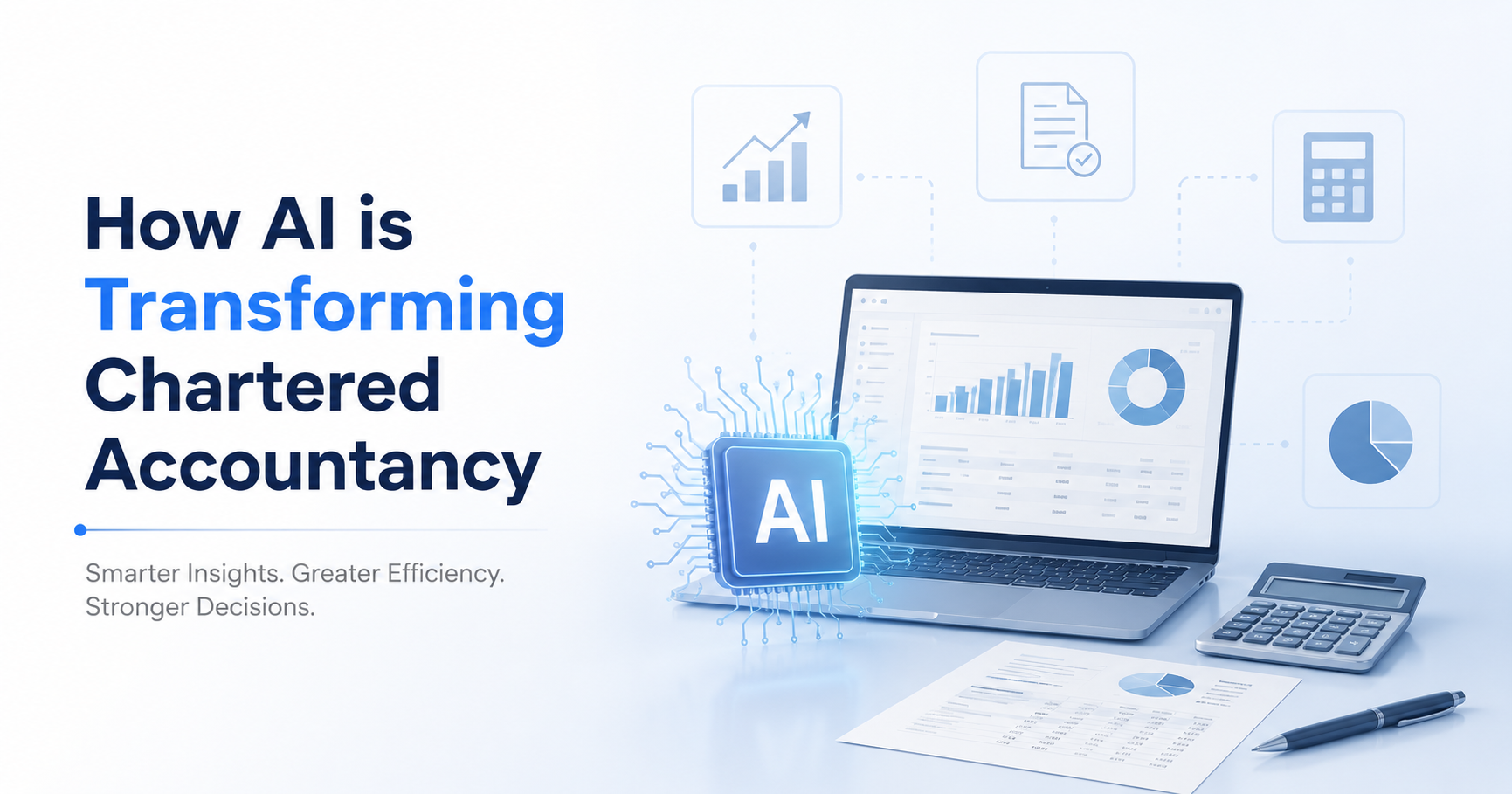
Table of Content
- AI Is Reducing Repetitive Accounting Work
- How AI Improves Accounting Accuracy
- AI Is Changing the Audit Process
- Taxation Is Becoming More Technology-Based
- AI is increasing the demand for Analytical Skills
- Why Technology Knowledge Is Becoming Essential
- AI Helps Businesses Make Faster Decisions
- Human Judgment Still Remains Important
- AI Is Creating New Career Opportunities
- Why Communication Skills Are Still Important
- Challenges of AI in Chartered Accountancy
- Future of Chartered Accountants With AI
- How CA Students Should Prepare for Future Changes
- Conclusion
Artificial Intelligence is rapidly changing the way businesses operate across the world, and the chartered accountancy profession is also experiencing a major transformation. Tasks that once required hours of manual effort can now be completed much faster with the help of AI-powered tools and automation systems. From accounting software to advanced financial analysis platforms, technology is becoming deeply connected with finance and compliance work.
Because of these changes, the role of chartered accountants is evolving continuously. Modern CAs are no longer limited only to bookkeeping and traditional accounting work. Today, professionals are expected to understand technology, analyze financial data, support business decisions, and adapt to digital systems. This is why understanding how AI is transforming chartered accountancy has become extremely important for students and finance professionals preparing for future careers.
AI Is Reducing Repetitive Accounting Work
One of the biggest impacts of AI in chartered accountancy is the automation of repetitive tasks. AI systems can now perform activities like:
- Data entry
- Invoice processing
- Bank reconciliation
- Expense categorization
- Basic bookkeeping
Much faster than manual processes. This reduces workload related to routine operations and helps businesses save time and operational costs. As automation increases, chartered accountants are spending less time on repetitive tasks and more time on analysis and advisory work.
How AI Improves Accounting Accuracy
Manual accounting work always carries the risk of human error, especially when handling large volumes of financial data. AI-powered systems help improve:
- Data accuracy
- Calculation speed
- Error detection
- Financial record consistency
Automated systems can quickly identify mismatched entries, unusual transactions, or missing information. This improves operational efficiency and reduces the chances of financial mistakes in businesses. However, professional supervision is still important because AI systems also require proper monitoring and validation.
AI Is Changing the Audit Process
Auditing has become more technology-driven because of AI and data analysis tools. Modern audit systems can analyze:
- Large transaction volumes
- Financial patterns
- Risk indicators
- Unusual activities
Within very short time periods. AI helps auditors identify potential issues faster than traditional manual methods. However, auditing still requires human judgment because professionals must interpret findings, apply skepticism, and make final decisions based on practical understanding and ethics.
Taxation Is Becoming More Technology-Based
Tax compliance and reporting are also changing because of AI-driven systems. AI tools can assist with:
- GST calculations
- Tax return preparation
- Compliance tracking
- Data organization
- Financial reporting automation
This helps businesses manage taxation processes more efficiently and reduces manual workload for professionals. At the same time, chartered accountants are still needed for:
- Tax planning
- Legal interpretation
- Strategic advisory
- Complex compliance decisions
because taxation often involves practical judgment beyond software calculations.
AI is increasing the demand for Analytical Skills
As routine accounting tasks become automated, analytical thinking is becoming more valuable in the CA profession. Modern chartered accountants are increasingly expected to:
- Interpret financial data
- Analyze business performance
- Identify financial risks
- Support strategic decisions
- Provide advisory services
Businesses now expect finance professionals to contribute practical insights instead of only maintaining records. This shift is changing the overall nature of chartered accountancy careers.
Why Technology Knowledge Is Becoming Essential
Future-ready chartered accountants need more than traditional accounting knowledge. Professionals are now expected to understand:
- Cloud accounting systems
- Financial technology platforms
- AI-powered accounting tools
- Data analytics software
- Automation systems
Technology awareness helps chartered accountants work more efficiently in modern digital business environments. Students who combine finance expertise with technology understanding may find stronger opportunities in future finance careers.
AI Helps Businesses Make Faster Decisions
Modern businesses generate huge amounts of financial data every day. AI systems help process and organize this information quickly. AI-powered analysis helps businesses:
- Track financial trends
- Monitor cash flow
- Predict business risks
- Analyze customer behavior
- Improve financial planning
Chartered accountants use these insights to support management decisions and strategic planning. This makes finance roles more analytical and business-oriented than before.
Human Judgment Still Remains Important
Despite rapid technological growth, AI cannot completely replace professional judgment in chartered accountancy. CAs still handle responsibilities involving:
- Ethical decision-making
- Client communication
- Business interpretation
- Financial strategy
- Practical advisory
Finance decisions often involve uncertainty, legal complexity, and emotional understanding that software cannot fully manage independently. Human expertise remains essential for handling complex and sensitive business situations.
AI Is Creating New Career Opportunities
Technology transformation is not only changing existing jobs but also creating new career opportunities for finance professionals. Modern CAs may work in areas like:
- Financial technology consulting
- Data analytics
- Digital auditing
- Risk advisory
- Business intelligence
The demand for professionals who understand both accounting and technology is increasing rapidly in modern businesses.
Why Communication Skills Are Still Important
Even with advanced automation, chartered accountants regularly communicate with:
- Clients
- Investors
- Business owners
- Regulatory authorities
- Management teams
Strong communication skills remain important because professionals must explain financial information clearly and support business decisions effectively. AI may generate reports, but humans are still needed to interpret and communicate those insights properly.
Challenges of AI in Chartered Accountancy
Although AI offers many benefits, it also creates certain challenges for professionals. Some concerns include:
- Fear of job automation
- Need for continuous skill upgrading
- Dependence on technology systems
- Data privacy and cybersecurity risks
Professionals who resist technology adaptation may struggle more in future finance environments. Continuous learning is becoming increasingly important in the CA profession.
Future of Chartered Accountants With AI
The future of chartered accountancy may involve collaboration between AI systems and human professionals. AI may mainly handle:
- Automation
- Data processing
- Report generation
- Transaction analysis
while chartered accountants focus more on:
- Strategy
- Advisory services
- Decision-making
- Business analysis
This transformation may increase the importance of analytical thinking, communication, and adaptability in finance careers.
How CA Students Should Prepare for Future Changes
Students preparing for chartered accountancy should focus on both technical and practical skills. Important areas include:
- Conceptual accounting knowledge
- Technology awareness
- Communication skills
- Data interpretation
- Analytical thinking
Students who stay adaptable and open to learning new tools may remain highly valuable in the changing finance industry.
Conclusion
AI is transforming chartered accountancy by automating repetitive work, improving financial analysis, and changing the role of finance professionals in modern businesses. While technology is reducing manual tasks, chartered accountants remain important for strategic thinking, advisory services, ethical judgment, and decision-making. Future professionals who combine accounting expertise with technology understanding may continue to find strong opportunities in the evolving finance industry.

FAQs
How is AI transforming the chartered accountancy profession?
AI is transforming chartered accountancy by automating repetitive accounting tasks, improving financial analysis, supporting digital auditing, and changing finance roles toward advisory and analytical responsibilities in modern businesses.
Which accounting tasks are most affected by AI?
Tasks like bookkeeping, invoice processing, bank reconciliation, data entry, and basic financial reporting are highly affected because AI systems can perform these repetitive activities more efficiently and accurately.
Can AI completely replace chartered accountants?
No, AI cannot completely replace chartered accountants because finance decisions still require professional judgment, ethical understanding, strategic thinking, and communication skills that technology cannot fully replicate independently.
How is AI changing the audit process?
AI improves auditing by analyzing large financial datasets, identifying unusual patterns, detecting risks, and improving audit efficiency through technology-based transaction monitoring and automated financial analysis systems.
Why are analytical skills becoming important for CAs?
As automation handles repetitive work, chartered accountants are increasingly expected to analyze financial data, support business decisions, identify risks, and provide strategic advisory services to organizations.
What technology skills should future CAs learn?
Future chartered accountants should learn cloud accounting systems, AI-powered finance tools, data analytics platforms, automation software, and digital business technologies to remain competitive in evolving finance careers.
How does AI improve accounting accuracy?
AI systems improve accounting accuracy by reducing manual errors, automating calculations, identifying inconsistencies, and processing large volumes of financial data more efficiently than traditional manual methods.
What challenges does AI create for chartered accountants?
AI creates challenges such as automation fear, need for continuous learning, technology adaptation pressure, cybersecurity concerns, and changing skill requirements in the modern accounting and finance industries.
Is communication still important in the AI-driven finance industry?
Yes, communication remains extremely important because chartered accountants must explain financial insights, advise clients, support management decisions, and handle professional interactions effectively despite increasing automation.
What is the future of chartered accountants with AI?
The future of chartered accountants will likely focus more on advisory services, financial analysis, strategic planning, and decision-making, while AI systems handle repetitive accounting and data-processing activities.