Future Transformation of the Chartered Accountancy Profession
Learn about the future transformation of the chartered accountancy profession through technology, automation, analytics, global finance, and strategic advisory roles.
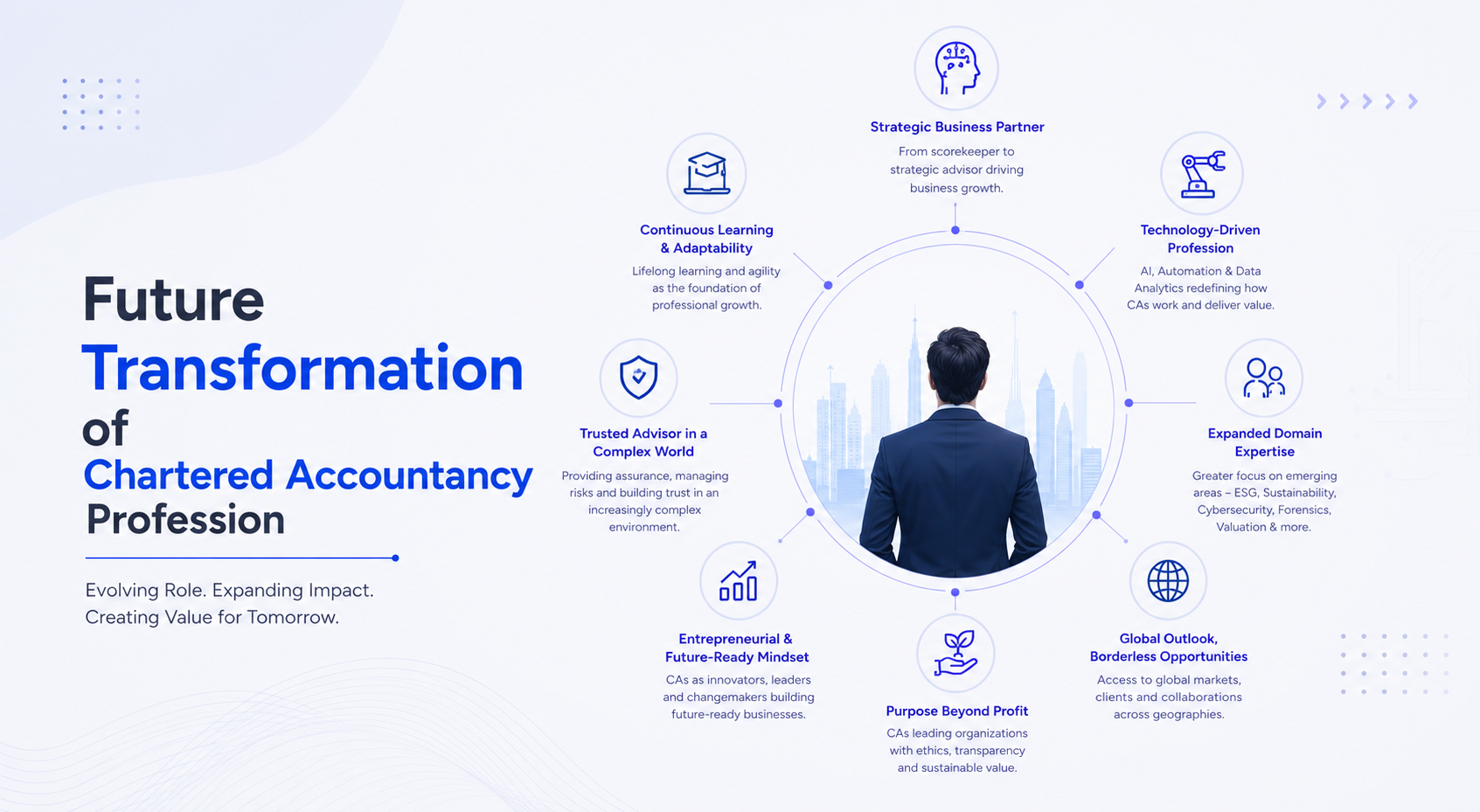
Table of Content
- Technology Will Redefine Traditional Accounting Work
- Advisory Roles Will Become More Valuable
- Digital Economy Will Expand Professional Opportunities
- Globalization Will Increase International Exposure
- Continuous Learning Will Become More Important
- Communication and Leadership Skills Will Gain Importance
- Cybersecurity and Data Protection Will Become Key Areas
- Work Environments Will Become More Flexible
- Ethical Responsibilities Will Remain Important
- Why Adaptability Will Decide Future Success
- Conclusion
The finance industry is changing rapidly because of technology, globalization, automation, and digital business systems. These developments are creating a major future transformation of the chartered accountancy profession across the world. Earlier, the profession mainly focused on accounting, taxation, auditing, and compliance work. However, modern businesses now expect chartered accountants to contribute much more in areas such as strategic planning, data analysis, financial forecasting, and business advisory services.
The future transformation of the chartered accountancy profession is not only about technology replacing traditional work. Instead, it is about the profession evolving into a more analytical, technology-driven, and decision-oriented career. Chartered accountants who continuously improve their skills and adapt to modern financial systems are likely to play an even bigger role in future business environments.
Technology Will Redefine Traditional Accounting Work
One of the biggest reasons behind the future transformation of the chartered accountancy profession is the rapid growth of technology in the finance industry. Automation tools and digital accounting systems are already reducing repetitive manual work significantly. Businesses now use technology for:
- Automated bookkeeping
- Digital tax filing
- Online compliance systems
- Financial reporting automation
- Cloud accounting operations
Because of this shift, chartered accountants are gradually moving toward more analytical and advisory-focused responsibilities.
-
Automation Will Reduce Routine Tasks
Many repetitive accounting activities will continue becoming automated in future years. This will save time and improve operational efficiency.
-
Human Judgment Will Still Matter
Even with automation, businesses will still require professionals for strategic interpretation, ethical decisions, and financial planning.
-
Technology Skills Will Become Essential
Modern professionals will increasingly need an understanding related to analytics tools, ERP systems, cloud accounting, and digital finance platforms.
The future transformation of the chartered accountancy profession will therefore depend heavily on technological adaptation.
Advisory Roles Will Become More Valuable
Traditional accounting work alone may no longer define the CA profession in future business environments. Companies now expect finance professionals to actively support management decisions and long-term planning. Chartered accountants are increasingly becoming business advisors who help organizations improve profitability, reduce risks, and manage financial growth.
- Strategic Planning: Businesses need professional guidance regarding expansion, investments, and financial management.
- Risk Management: Modern industries face financial, operational, and compliance-related risks that require expert analysis.
- Financial Forecasting: Future business decisions will increasingly depend on predictive financial analysis and data interpretation.
- Business Performance Analysis: Companies expect professionals to identify financial weaknesses and suggest practical improvements.
This advisory-focused shift is one of the biggest aspects of the future transformation of the chartered accountancy profession.
Digital Economy Will Expand Professional Opportunities
The rise of digital businesses and online financial systems is creating completely new opportunities for finance professionals. Modern chartered accountants are now working in areas such as:
- Financial analytics
- Digital compliance management
- Fintech consulting
- Virtual CFO services
- Data-driven finance operations
The future transformation of the chartered accountancy profession will therefore create broader career flexibility than traditional accounting roles alone. Professionals who understand digital finance environments are likely to remain highly valuable in future industries.
Globalization Will Increase International Exposure
Global business operations are expanding continuously because companies increasingly operate across multiple countries and markets. Because of globalization, chartered accountants now require an understanding of:
- International taxation
- Cross-border compliance
- Global reporting standards
- International financial regulations
The future transformation of the chartered accountancy profession will increase demand for professionals capable of handling international financial responsibilities. This global exposure may also create stronger overseas opportunities for Indian chartered accountants.
Continuous Learning Will Become More Important
One major reality of the future transformation of the chartered accountancy profession is that learning will never stop. Finance laws, technology systems, and compliance structures will continue evolving rapidly. Professionals will regularly need to upgrade their knowledge regarding:
- Technology Platforms: Digital accounting and analytics tools will keep changing.
- Regulatory Systems: Taxation laws and financial reporting standards will continue evolving.
- Industry Trends: Businesses will expect finance professionals to understand changing market conditions.
- Data Analysis: Financial interpretation skills will become increasingly valuable.
Chartered accountants who continuously learn and adapt will perform better in future finance industries.
Communication and Leadership Skills Will Gain Importance
Future finance environments will require more interaction between chartered accountants and business management teams. Because of this, professionals will increasingly need:
- Communication skills
- Leadership ability
- Presentation confidence
- Strategic thinking
The future transformation of the chartered accountancy profession is therefore not limited only to technical finance knowledge. Soft skills will also play a major role in long-term career success.
Cybersecurity and Data Protection Will Become Key Areas
As financial systems become more digital, businesses will face increasing concerns regarding:
- Financial data security
- Cyber fraud risks
- Confidentiality protection
- Digital compliance management
Chartered accountants may increasingly participate in areas related to financial cybersecurity and digital risk management in future years. This is another important part of the future transformation of the chartered accountancy profession.
Work Environments Will Become More Flexible
Technology has already changed workplace structures in many industries. Future finance professionals may increasingly work through:
- Remote financial systems
- Virtual meetings
- Online collaboration tools
- Cloud-based reporting platforms
Flexible working models are likely to become more common in the future CA profession.
Ethical Responsibilities Will Remain Important
Even though technology and automation will transform the profession, ethical responsibility will always remain important. Businesses and investors will continue expecting chartered accountants to maintain:
- Financial transparency
- Professional integrity
- Honest reporting practices
- Compliance discipline
The future transformation of the chartered accountancy profession may change work methods, but professional ethics will continue to remain a core foundation of the profession.
Why Adaptability Will Decide Future Success
The future finance industry will reward professionals who can quickly adapt to changing systems and industry expectations. Chartered accountants who remain open to:
- Learning technology
- Improving communication skills
- Understanding digital business systems
- Expanding advisory capabilities
will likely achieve stronger career growth in future business environments. Adaptability may become one of the most valuable professional qualities in the coming years.
Conclusion
The future transformation of the chartered accountancy profession is being driven by technology, automation, globalization, digital business systems, and changing corporate expectations. Traditional accounting work is gradually evolving into analytical, advisory, and technology-oriented professional responsibilities. Chartered accountants of the future will need continuous learning, digital awareness, strategic thinking, communication skills, and adaptability to remain successful in competitive finance environments. While the profession is changing rapidly, the importance of professional judgment, ethics, and financial expertise will continue to make chartered accountants highly valuable in modern business industries.

FAQs
What is the future transformation of the chartered accountancy profession?
The profession is evolving through technology, automation, analytics, advisory services, and digital finance systems.
How is technology changing the CA profession?
Technology is automating routine work and increasing demand for analytics, advisory, and strategic financial roles.
Will automation replace chartered accountants completely?
No, businesses still require professional judgment, financial interpretation, and strategic decision-making support.
Why are advisory roles becoming important for chartered accountants?
Modern businesses expect finance professionals to support planning, profitability analysis, and risk management decisions.
How is globalization affecting future CA careers?
Globalization is increasing international finance opportunities and demand for cross-border compliance knowledge.
Why is continuous learning important in the future CA profession?
Finance laws, technology platforms, and compliance systems will continue changing rapidly in future industries.
What technology skills should future chartered accountants learn?
Future professionals should understand cloud accounting, ERP systems, analytics tools, and digital compliance platforms.
Why are communication skills becoming important for CAs?
Modern finance professionals regularly interact with clients, investors, and management teams during decision-making processes.
How will the digital economy affect future chartered accountants?
Digital businesses will increase opportunities in analytics, fintech consulting, and technology-driven finance roles.
Why will adaptability matter in the future CA profession?
Professionals who quickly adapt to technology, business trends, and changing financial systems will achieve stronger career growth.