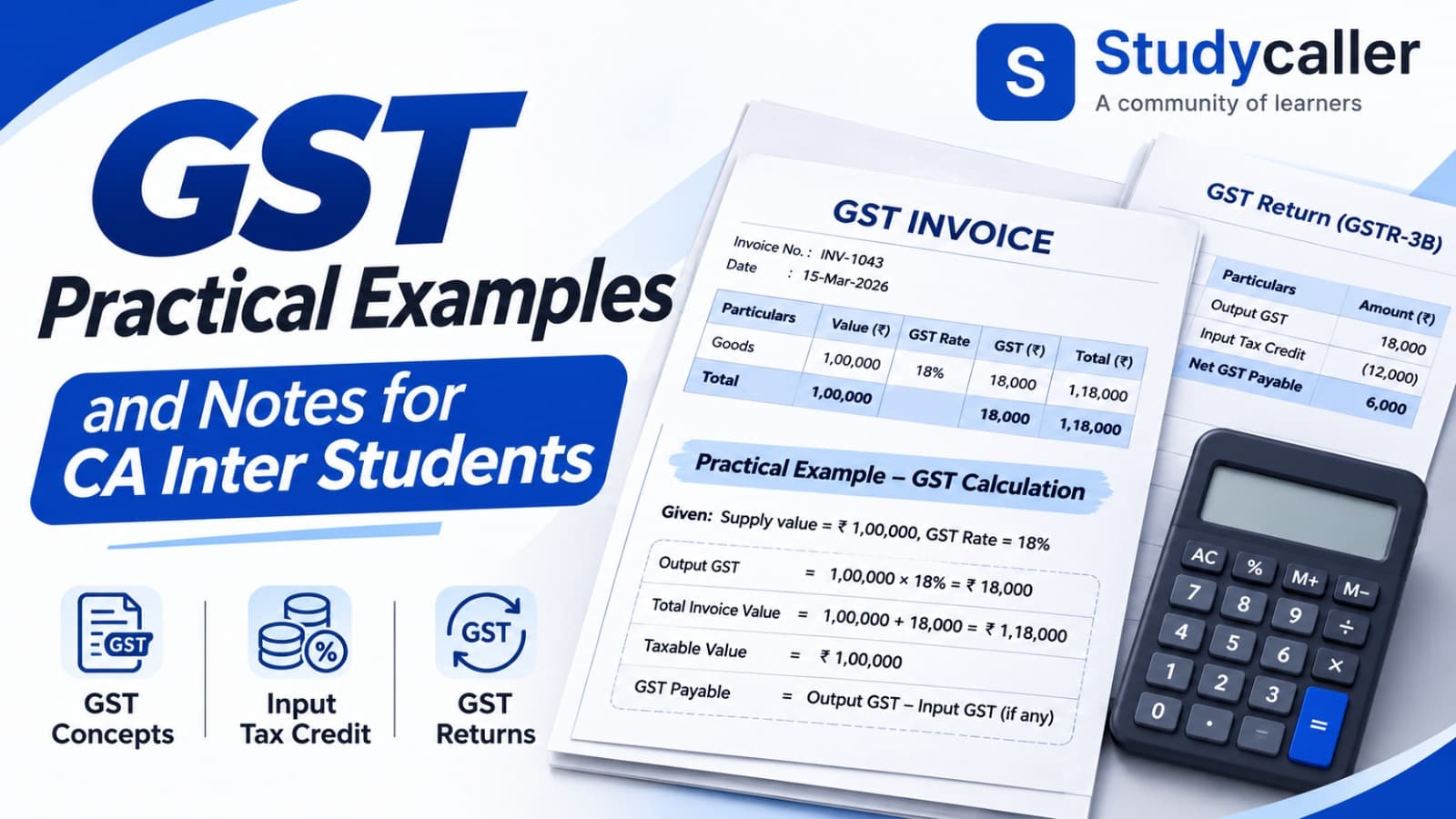
Preparing for a CA examination involves understanding concepts, practising questions and revising the syllabus in a planned way. A useful set of notes can make this process easier, but rewriting every page of a textbook is rarely the best use of study time.
The approach in this article focuses on building a practical revision resource from the applicable ICAI study material. Use the notes to support detailed learning, active recall and question practice rather than treating them as a replacement for the prescribed content.
Build GST understanding from basic concepts
Begin by revising the basic structure and terminology used in GST. Understand the role of supply, the parties involved and the broad framework before moving to detailed provisions. A clear base helps you follow how different rules connect in a practical question.
Prepare a short glossary for terms that are easy to confuse. Write the meaning in simple language and add a brief example where it improves understanding. Check technical definitions against the prescribed material.
Read facts before selecting a treatment
GST questions often include facts that determine the applicable treatment. Identify the nature of the transaction, relevant parties, place-related facts, timing and any conditions mentioned. Do not begin a calculation before deciding which provision or concept the question is testing.
Create a checklist of facts to verify. This is useful when a change in one detail may lead to a different result. Practise explaining why a particular treatment applies rather than memorising the final answer.
Use examples for supply-related concepts
Prepare examples that distinguish between transaction types and situations. Write the relevant rule first, then show how the facts fit the rule. Where an exception or condition changes the outcome, create a second example that highlights the difference.
Avoid assuming that a familiar business transaction always receives the same treatment. Read the facts carefully and verify the relevant conditions. Examples should train analysis, not encourage automatic answers.
Practise calculations and working steps
For numerical GST questions, identify the data required, the applicable method and the sequence of calculations. Keep workings separate and label each figure. Check whether the question includes conditions that affect the value or timing of the transaction.
After solving, verify arithmetic and review whether the correct concept was selected. A neat calculation may still be wrong if the underlying treatment is incorrect.
Prepare concise notes for provisions
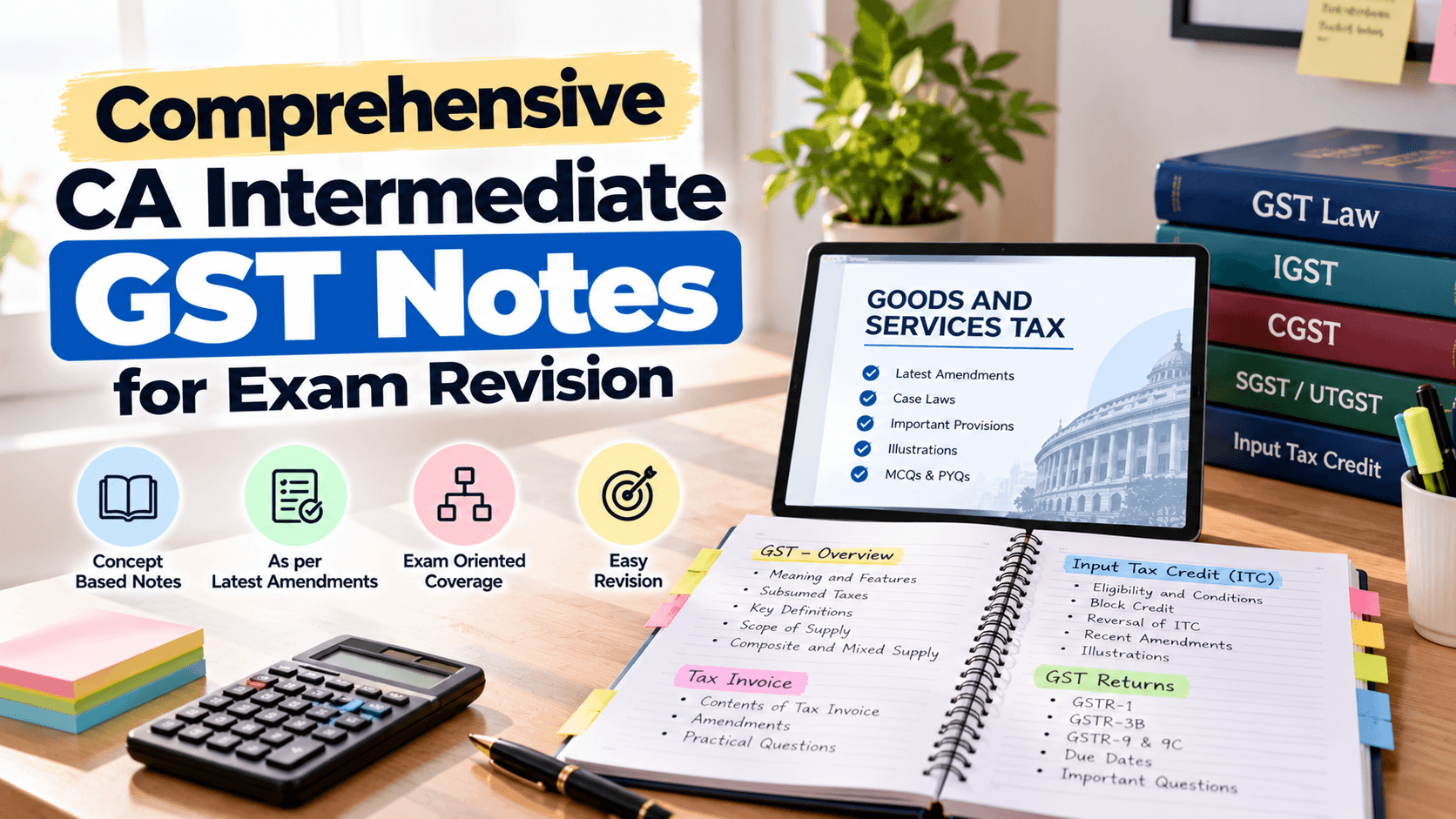
GST notes should include the essential rule, relevant conditions, exceptions and important terms. Avoid copying lengthy explanations. Use a small table when two treatments are easy to confuse and include a reminder about the fact that determines which applies.
Keep notes updated for the examination attempt. Verify applicable amendments and study requirements through official ICAI resources. Do not rely on old summaries without checking their relevance.
Organise input tax credit revision
For input tax credit topics, revise the basic eligibility framework and conditions or restrictions relevant to the syllabus. Make a checklist of facts to check before arriving at a conclusion. Use examples to distinguish situations where treatment changes.
When reviewing a question, explain each step rather than jumping directly to a final amount. Identify whether an error came from missing a condition, misunderstanding the rule or making a calculation mistake.
Use Studycaller for structured GST preparation
Studycaller can be part of a routine that combines GST concept notes, practical examples, timed questions and performance review. Use applicable ICAI material to verify provisions and amendments relevant to your attempt.
After each test, identify whether an incorrect answer came from a concept gap, a missed condition or a calculation error. Revise the relevant section and attempt another question.
Quick Reference Table
| GST revision area | What to prepare | Practice approach |
|---|---|---|
| Basic concepts | Definitions and key terms | Explain with examples |
| Supply-related topics | Rules, conditions and exceptions | Compare fact situations |
| Calculations | Method and working sequence | Solve independently |
| Input tax credit | Eligibility and restrictions | Use condition-based examples |
| Exam practice | Mixed and timed questions | Review errors |
Conclusion
Effective preparation depends on clear concepts, relevant practice and regular review. Use applicable ICAI resources as your foundation, keep revision notes accurate and turn each assessment into a practical improvement plan. A consistent routine with Studycaller can help make revision more organised and focused.