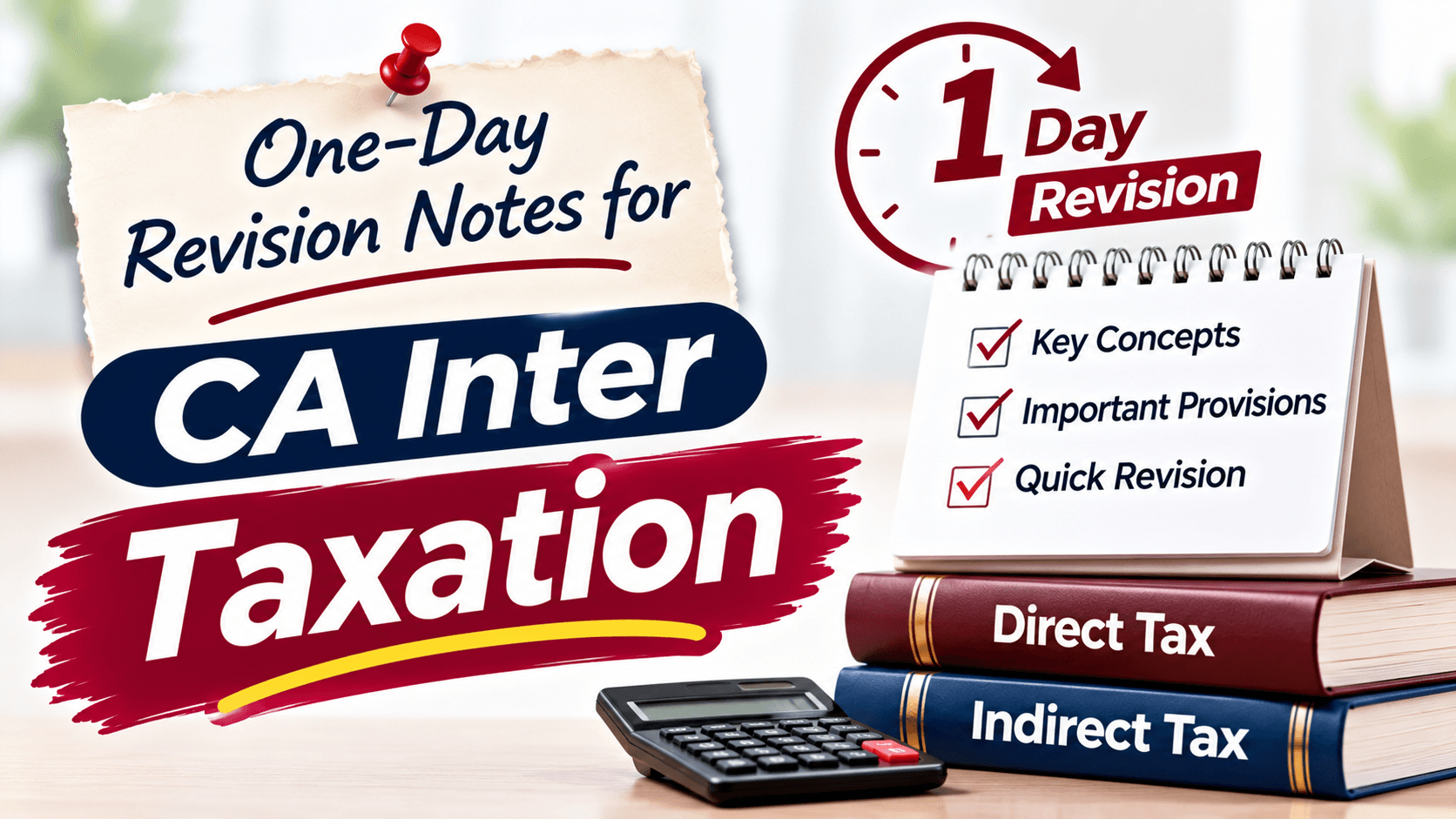
One-Day Revision Notes for CA Inter Taxation new image and diffrent mage
Explore one-day revision notes for ca inter taxation with practical study methods, revision tips, topic planning, question practice and exam-focused guidance from…
In this article(11 sections)ShowHide
One-Day Revision Notes for CA Inter Taxation is a practical study resource when it is built around the syllabus applicable to your examination attempt. Students often collect many pages of material but struggle to identify what to revise, how to practise and which errors need attention. A useful set of notes should make preparation clearer rather than simply shorter.
This guide explains how to organise the topic, strengthen understanding, revise systematically and use examination-style practice. The approach is designed for CA aspirants who want reliable notes, clear examples and a manageable preparation routine, with Studycaller included as a supplementary practice resource.
Treat one-day revision as a final review
One-day revision works best after you have already studied and practised the syllabus. It cannot replace the detailed learning needed for Income-tax and GST concepts. The purpose is to refresh high-value rules, check common mistakes and rebuild confidence before the examination.
Start with the ICAI material, amendments and statutory provisions applicable to your examination attempt. Tax law changes over time, so do not use an old summary without checking its applicability.
Prepare a compact revision kit
Keep a small set of chapter summaries, formula or computation formats, amendment notes and an error log. Arrange them in the order you plan to revise. A compact kit reduces time spent searching across multiple books.
Each sheet should show the topic, key conditions, important exceptions and one short example where useful. Avoid rewriting the entire chapter during the final day. The goal is quick recall and verification.
Revise Income-tax computation structure
Review the overall computation flow and the treatment of income under the heads covered by the applicable syllabus. Focus on the sequence of adjustments and the conditions attached to common deductions or exclusions.
Practise a short computation from memory and compare it with the prescribed format. Pay attention to facts such as status, dates and other conditions that affect treatment. Verify rates, limits and provisions against the material for your attempt.
| Study component | What to record | How to check progress |
|---|---|---|
| Core concept | Meaning, conditions and exceptions | Explain without notes |
| Application | Worked example or short case | Solve a fresh question |
| Revision | Summary and weak points | Recall after a gap |
| Practice | Timed question and errors | Review corrections |
Review common Income-tax errors
Use your error log to identify mistakes in classification, computation, exemptions, deductions, timing or presentation. Revisit the underlying rule only where you have shown a recurring weakness.
Avoid spending hours on a topic you already understand well. A final review should prioritise errors that are both likely to recur in your own work and important to accurate computation.
Revise GST concepts and transaction analysis
Review the basic structure of GST topics prescribed for your attempt, including relevant supply, valuation, credit, registration or compliance concepts as applicable. Focus on identifying the transaction and selecting the correct treatment.
Use brief scenarios and ask which condition applies. Do not rely on a remembered threshold or rate without verifying that it is current for your examination. A wrong figure can undermine an otherwise correct computation.
Keep amendments and exceptions visible
Create a separate amendment sheet using official applicable updates. Distinguish between a concept that remains stable and a number, threshold, date or provision that may change. This reduces the risk of mixing rules from different attempts.
Highlight exceptions only where they affect the conclusion or computation. Do not add every possible note to the final-day sheet. The objective is a reliable quick reference.
Use short mixed practice sets
After each major revision block, solve a small set of questions without notes. Include both conceptual and computation-based requirements. This shows whether you can recall the method independently under mild time pressure.
Review mistakes immediately. If a problem reveals a serious concept gap, return to the relevant official explanation. Otherwise, note the correction and continue with the schedule.
Sample Four-Week Study and Revision Plan
| Week | Main task | Checkpoint |
|---|---|---|
| 1 | Review syllabus and learn core concepts | Short topic quiz |
| 2 | Complete notes and practise examples | Chapter questions |
| 3 | Revise weak areas and mix topics | Timed practice |
| 4 | Review mistakes and attempt a test | Performance analysis |
Allocate the final day realistically
Divide available hours among Income-tax, GST, amendments, weak topics and short practice. The proportions should reflect your own preparation and the paper structure for your attempt. Include breaks and a stopping time.
Do not attempt to learn every untouched chapter overnight. Prioritise clear recall of material you have already studied and protect enough rest before the examination.
Check presentation and computation formats
Review how to show workings, assumptions, adjustments and final answers clearly. In tax computations, a readable sequence can help you avoid missed steps and make checking easier.
Practise one short answer using the format you plan to use in the examination. Keep working notes concise and labelled. When a question requires explanation, state the reason for the treatment rather than presenting only a figure.
Studycaller and final-day tax revision
A good final-day plan is based on evidence from earlier practice. Use mock test analysis to identify recurring mistakes, then choose the relevant summaries and examples for quick review.
Studycaller can support tax preparation through practice and performance review. Check all tax provisions, amendments, rates and limits against the official material applicable to your examination attempt before relying on any revision sheet.
CA Inter GST notes
Free notes from the Studycaller library, picked for this article.
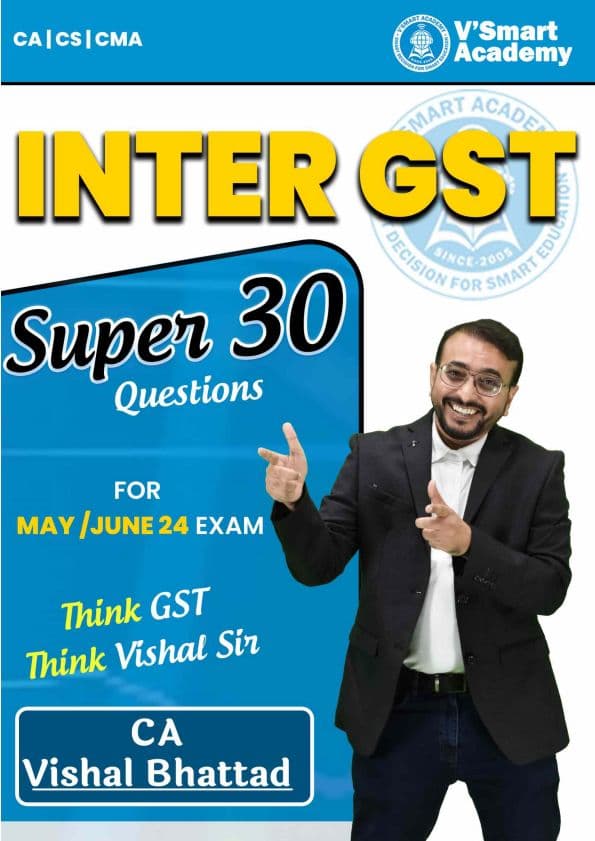 Questions
CA Inter · Taxation
CA inter GST super 30 question by CA Vishal bhattad sir
HarshLikes 43Views 49.6k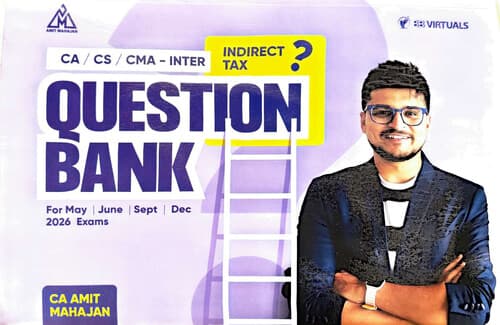 Amendments
CA Inter · Taxation
CA Inter Indirect Tax Question Bank by CA Amit Mahajan for May June Sept Dec
InterverseLikes 36Views 30.5k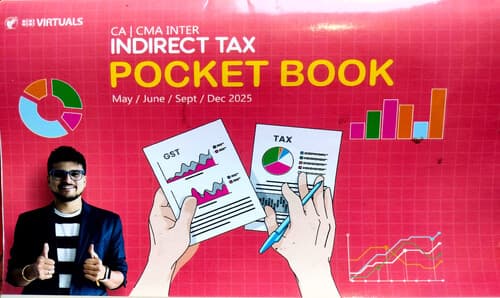 Summary
CA Inter · Taxation
GST Summary book by Amit Mahajan sir September/January 2025 Exam
AbhinavLikes 26Views 20.9k Questions
CA Inter · Taxation
Gst QB
VickyLikes 24Views 26k
Frequently asked questions
Can I revise CA Inter Taxation in one day?
One-day revision works best after you have already studied and practised the syllabus. Start with the ICAI material, amendments and statutory provisions applicable to your examination attempt. Use the official ICAI material relevant to your attempt and check your understanding with short questions or timed practice.
What should my one-day revision kit contain?
Keep a small set of chapter summaries, formula or computation formats, amendment notes and an error log. Each sheet should show the topic, key conditions, important exceptions and one short example where useful. Use the official ICAI material relevant to your attempt and check your understanding with short questions or timed practice.
Should I focus on Income-tax or GST first?
Review the overall computation flow and the treatment of income under the heads covered by the applicable syllabus. Practise a short computation from memory and compare it with the prescribed format. Use the official ICAI material relevant to your attempt and check your understanding with short questions or timed practice.
How do I avoid using outdated tax rates?
Use your error log to identify mistakes in classification, computation, exemptions, deductions, timing or presentation. Avoid spending hours on a topic you already understand well. Use the official ICAI material relevant to your attempt and check your understanding with short questions or timed practice.
Are computation formats important?
Review the basic structure of GST topics prescribed for your attempt, including relevant supply, valuation, credit, registration or compliance concepts as applicable. Use brief scenarios and ask which condition applies. Use the official ICAI material relevant to your attempt and check your understanding with short questions or timed practice.
Should I attempt a full mock test on the final day?
Create a separate amendment sheet using official applicable updates. Highlight exceptions only where they affect the conclusion or computation. Use the official ICAI material relevant to your attempt and check your understanding with short questions or timed practice.
How can I revise tax amendments?
After each major revision block, solve a small set of questions without notes. Review mistakes immediately. Use the official ICAI material relevant to your attempt and check your understanding with short questions or timed practice.
What should I do with weak chapters?
Divide available hours among Income-tax, GST, amendments, weak topics and short practice. Do not attempt to learn every untouched chapter overnight. Use the official ICAI material relevant to your attempt and check your understanding with short questions or timed practice.
Can short notes replace detailed tax study?
Review how to show workings, assumptions, adjustments and final answers clearly. Practise one short answer using the format you plan to use in the examination. Use the official ICAI material relevant to your attempt and check your understanding with short questions or timed practice.
How can Studycaller support tax revision?
A good final-day plan is based on evidence from earlier practice. Studycaller can support tax preparation through practice and performance review. Use the official ICAI material relevant to your attempt and check your understanding with short questions or timed practice.