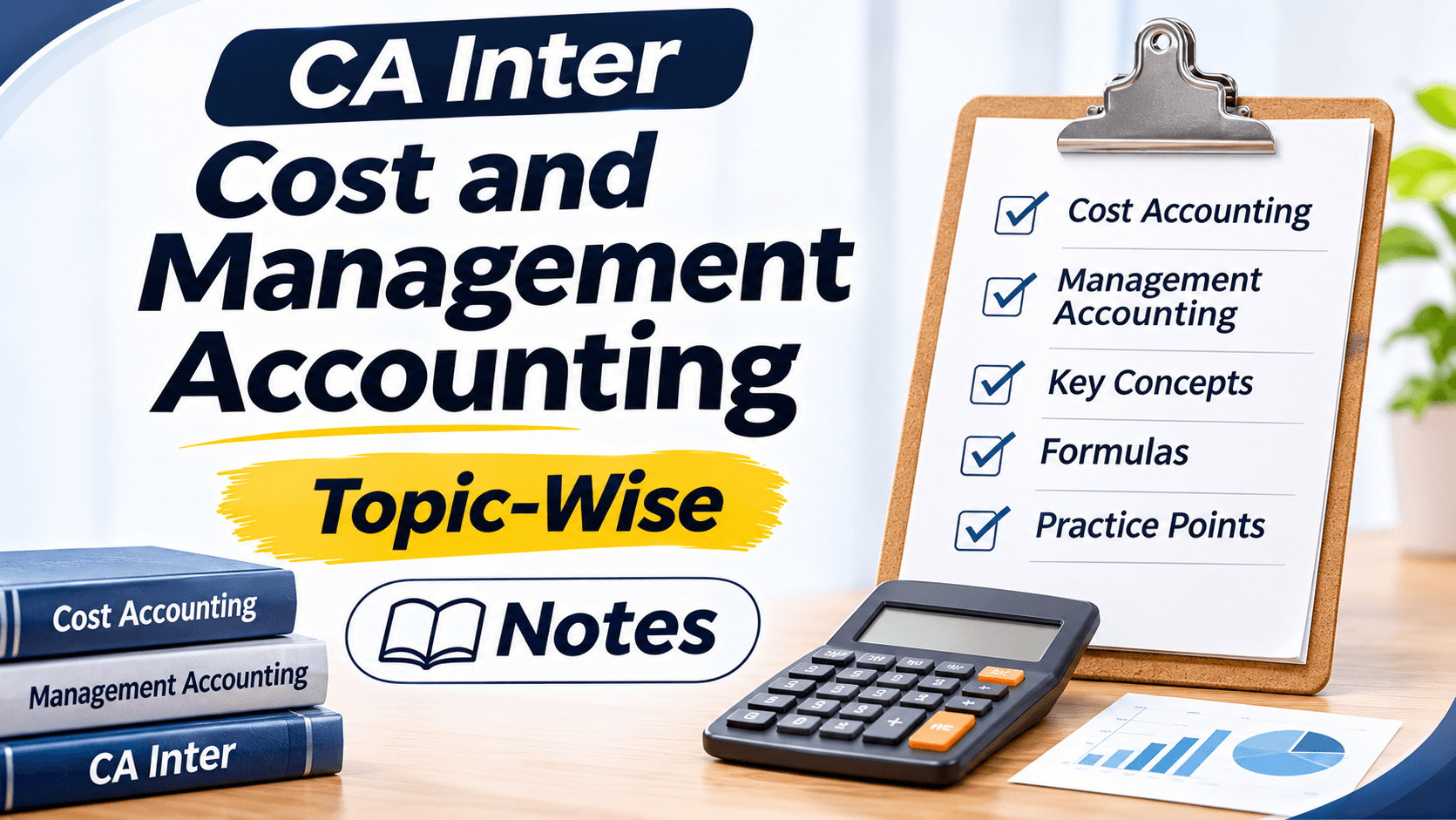
Topic-Wise CA Inter Cost and Management Accounting Notes
Organise CA Inter Cost and Management Accounting revision topic by topic with formula summaries, method steps, worked-question practice, error tracking and timed…
In this article(14 sections)ShowHide
Cost and Management Accounting requires conceptual clarity, correct formula selection, organised working, and regular problem-solving practice. Topic-wise notes help when they show how a method works and when it applies, rather than collecting formulas without context.
Use this framework to create notes that are easier to revise and test. Confirm the chapter list, formulas, and technical requirements against the current ICAI syllabus and study material for your attempt before using notes for final preparation.
Organise notes around the current syllabus
Create a checklist from the official syllabus and divide each chapter into specific methods or concepts. Mark each topic as learned, practised, revised, or needing work. This helps identify weak areas and avoids relying on a chapter list from an earlier session.
Close your notes after this topic and check what you can recall or apply independently. Record any gap and schedule a follow-up review rather than marking the topic complete based only on reading.
Use a consistent format for each topic
Record the objective, key terms, formulas, steps, assumptions, and common mistakes. A consistent structure makes notes easier to scan and helps you compare methods. Keep explanations concise but include enough context to know when a method is appropriate.
Close your notes after this topic and check what you can recall or apply independently. Record any gap and schedule a follow-up review rather than marking the topic complete based only on reading.
Write formulas with conditions and symbols
Do not list formulas alone. Define symbols, explain units, and record conditions or assumptions that affect their use. If two formulas look similar, note the difference and practise selecting the correct one from question facts.
Close your notes after this topic and check what you can recall or apply independently. Record any gap and schedule a follow-up review rather than marking the topic complete based only on reading.
Record problem-solving steps in order
For a calculation-based topic, create a short sequence from identifying the requirement to checking the result. Include relevant formats, classifications, or adjustments. Clear working helps you find the source of an error instead of repeating the entire question blindly.
Close your notes after this topic and check what you can recall or apply independently. Record any gap and schedule a follow-up review rather than marking the topic complete based only on reading.
Add worked examples for difficult methods
Choose a representative question and write the essential steps. Use it to show how the method is applied and what details must be checked. Then solve a similar question independently to ensure the notes are not doing all the thinking.
Close your notes after this topic and check what you can recall or apply independently. Record any gap and schedule a follow-up review rather than marking the topic complete based only on reading.
Compare methods that are easy to confuse
Create a table for similar costing or management-accounting methods. Compare purpose, data required, calculation sequence, and result. Verify distinctions against official material and practise deciding which method fits a question.
Close your notes after this topic and check what you can recall or apply independently. Record any gap and schedule a follow-up review rather than marking the topic complete based only on reading.
Practise topic-wise before mixed questions
Begin with questions focused on one method so you can learn the steps. Later, use mixed sets where the method is not stated. This checks whether you can recognise the problem type and choose the correct approach independently.
Close your notes after this topic and check what you can recall or apply independently. Record any gap and schedule a follow-up review rather than marking the topic complete based only on reading.
Track calculation errors precisely
Record errors such as incorrect classification, wrong formula, missed adjustment, arithmetic slip, or unclear working. Write the correct method and retry the question after a gap. A precise error log is more useful than marking an entire chapter weak.
Close your notes after this topic and check what you can recall or apply independently. Record any gap and schedule a follow-up review rather than marking the topic complete based only on reading.
Use active recall for formulas and methods
Cover the notes and reproduce a formula, explain its variables, or write the steps from memory. Then solve a question without assistance. Mark topics where recall or application fails and schedule targeted review.
Close your notes after this topic and check what you can recall or apply independently. Record any gap and schedule a follow-up review rather than marking the topic complete based only on reading.
Make revision notes shorter over time
Your first notes may explain concepts in detail. During later revisions, reduce them to formulas, steps, conditions, formats, and common traps. Do not remove information that changes how a method is applied.
Close your notes after this topic and check what you can recall or apply independently. Record any gap and schedule a follow-up review rather than marking the topic complete based only on reading.
Practise under time limits
Use short timed sets to improve pace and identify steps that consume too much time. Gradually move to longer tests as syllabus coverage permits. Analyse method and presentation after each test rather than judging readiness only by score.
Close your notes after this topic and check what you can recall or apply independently. Record any gap and schedule a follow-up review rather than marking the topic complete based only on reading.
Verify technical details before the exam
Use the official syllabus and study material applicable to your attempt. External notes can omit topics or reflect older content. Check formula notation, chapter coverage, and relevant updates before treating notes as final.
Close your notes after this topic and check what you can recall or apply independently. Record any gap and schedule a follow-up review rather than marking the topic complete based only on reading.
Use Studycaller as part of preparation
Use relevant Studycaller resources alongside official study material, independent problem solving, and a record of recurring mistakes. Use practice results to decide which methods need another revision cycle.
Close your notes after this topic and check what you can recall or apply independently. Record any gap and schedule a follow-up review rather than marking the topic complete based only on reading.
Quick Revision Table
| Topic-note component | What to include | Benefit |
|---|---|---|
| Concept | Purpose and assumptions | Understand method |
| Formula | Symbols and conditions | Choose correctly |
| Steps | Ordered calculation process | Improve working |
| Example | Representative solved question | See application |
| Error log | Mistake and correction | Target revision |
CA Inter Costing notes
Free notes from the Studycaller library, picked for this article.
 Amendments
CA Inter · Cost and Management Accounting
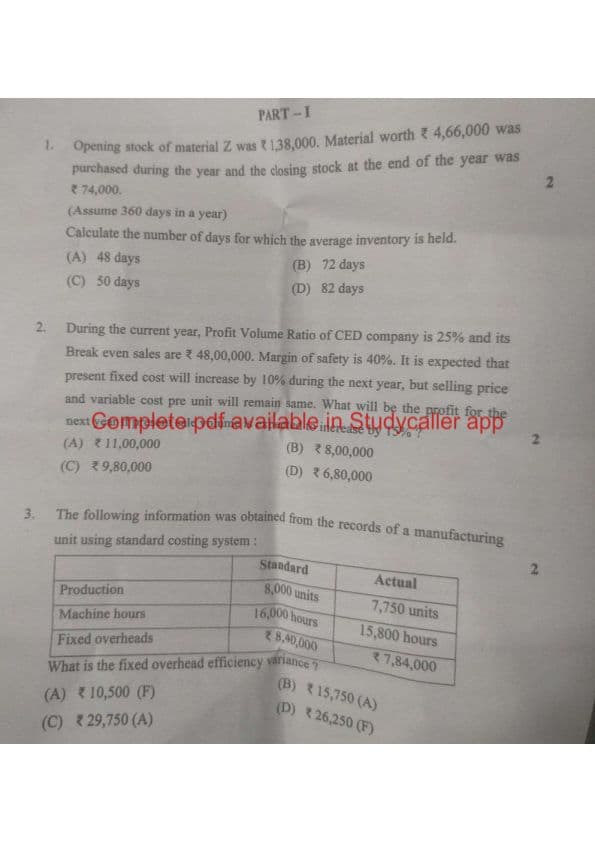
Cost and Management Accounting Mcq Question Paper Part I, CA Inter
Mahi❤️Likes 25Views 10.9k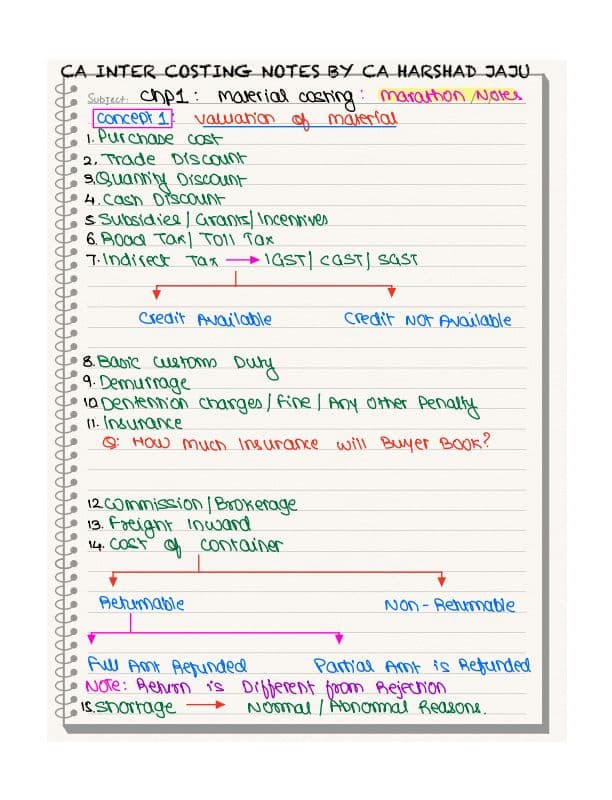 Amendments
CA Inter · Taxation
Costing Notes by CA Harshad Jaju: Material Costing Marathon Notes, Re-order
Mahi❤️Likes 23Views 26.6k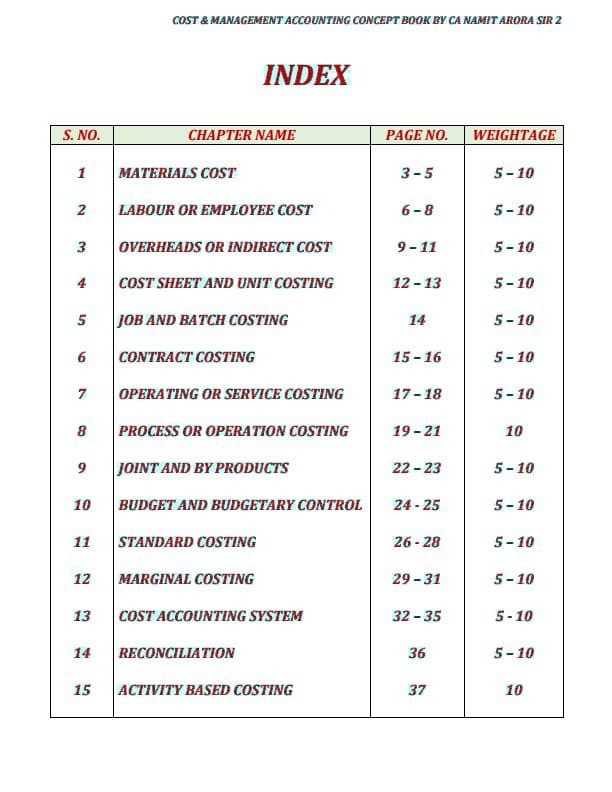 Handwritten
CA Inter · Cost and Management Accounting
Cost and Management Accounting Formula Concept Book by CA Namit Arora Sir
MANAN KABRALikes 22Views 26.3k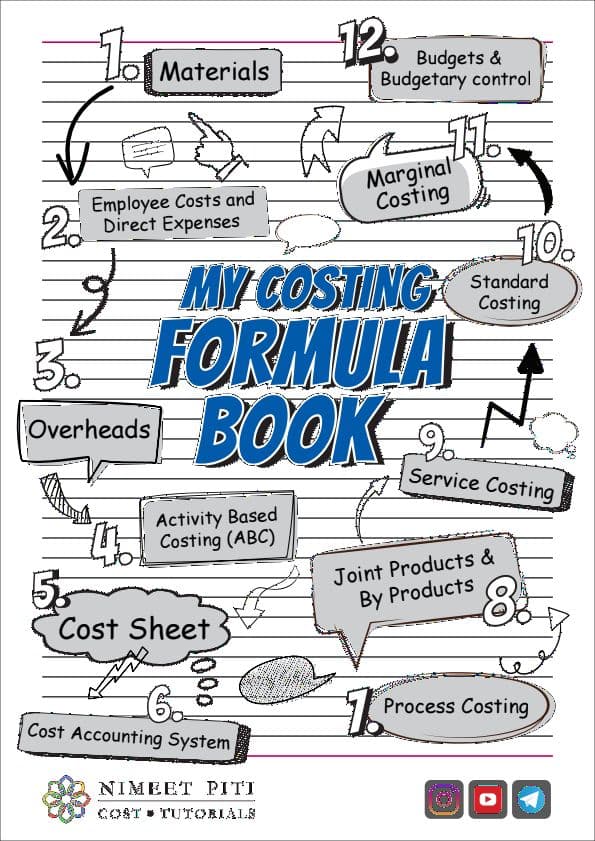 Charts
CA Inter · Cost and Management Accounting
Costing formula book (all costing formulas)
NadeemLikes 21Views 14.9k
Frequently asked questions
What should topic-wise CMA notes include?
Include the concept, formulas with defined symbols, conditions, calculation steps, useful formats, examples for difficult methods, and common errors. Check notes against the current official syllabus and study material.
Are formula lists enough?
No. Formula lists help recall, but you must understand when each formula applies and practise using it in different question formats. Include conditions and method steps.
How can I improve calculation speed?
Practise short timed sets, write steps consistently, and analyse where time is lost. Improve pace by correcting repeated method errors rather than skipping working.
Should I solve questions topic by topic?
Start topic-wise to learn the method, then move to mixed sets where you must identify the appropriate approach yourself. Both types of practice serve different purposes.
How do I remember formulas and methods?
Use active recall by writing formulas and steps without looking, then solve a question. Revisit difficult methods after a gap and keep a list of recurring errors.
What is the best way to maintain an error log?
Record the topic, error type, correct method, and a date to retry the question. Review recurring errors weekly and reattempt questions without checking the solution first.
How much detail should worked examples contain?
Include enough working to show the method, important adjustments, and final check. Keep examples concise, then solve a similar question independently.
Can I use notes from an older attempt?
Use them only after comparing them with the current official syllabus and study material. Older notes may omit or misstate details relevant to your session.
When should I start timed tests?
Begin with short timed sets after learning the methods. Increase length as syllabus coverage improves and leave time to review mistakes after each test.
How can Studycaller help with CMA revision?
Use relevant Studycaller resources alongside prescribed material and independent question solving. Analyse practice errors and focus revision on formulas, methods, or concepts you cannot yet apply reliably.