Why Audit Alone Is Not Enough for Modern CAs
Discover why audit alone is not enough for modern CAs and how advisory, analytics, technology, and business consulting are shaping the profession.
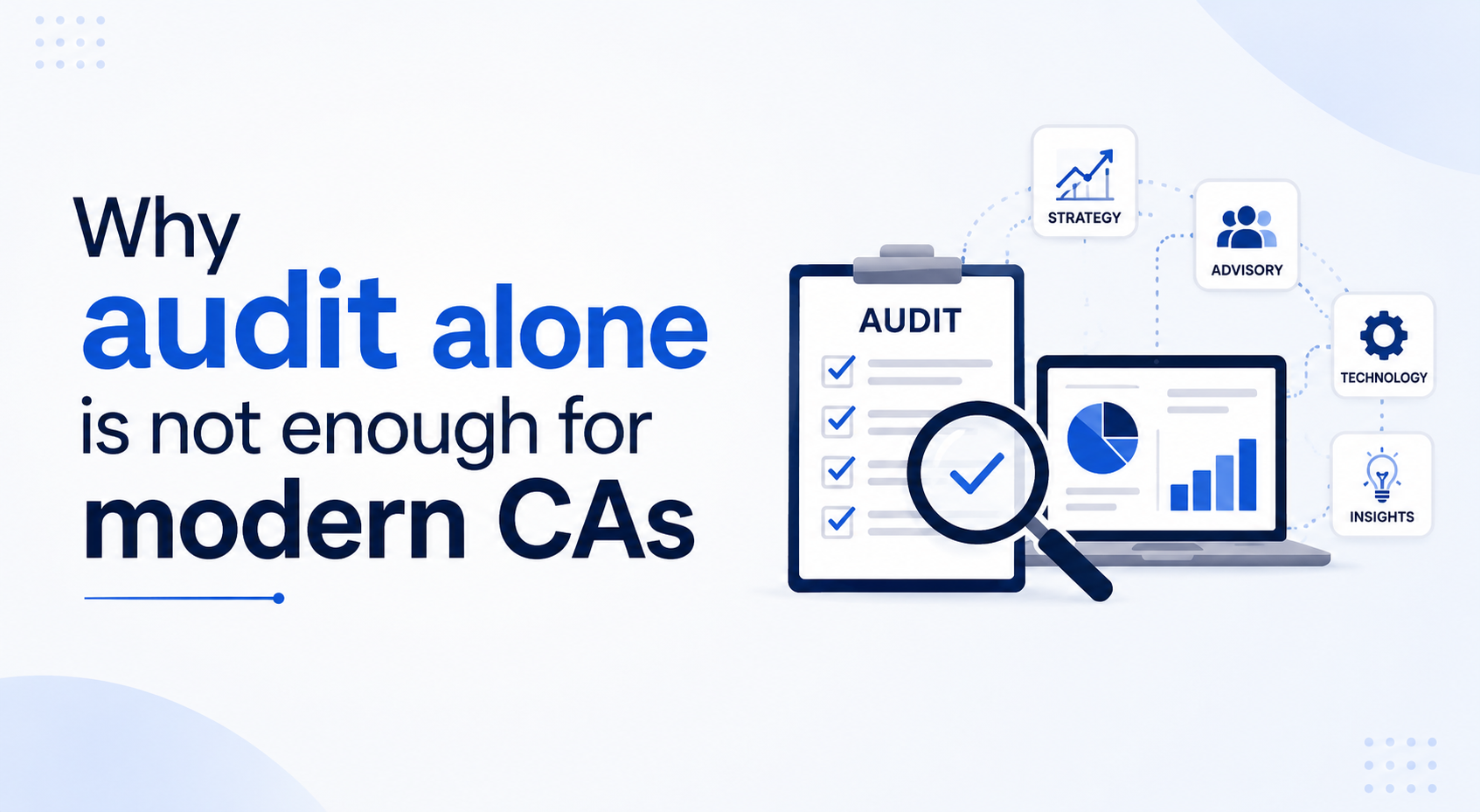
Table of Content
- Businesses Need Solutions, Not Just Observations
- Technology Has Changed Client Expectations
- Advisory Services Are Becoming More Valuable
- Modern Risks Require Broader Expertise
- Data Analytics Is Becoming a Core Requirement
- Clients Expect Continuous Support
- Communication Skills Matter More Than Ever
- The Future Profession Will Be More Multifaceted
- Audit Remains Important, But It Is No Longer Enough
- Conclusion
For decades, auditing has been one of the most respected and important areas of the Chartered Accountancy profession. Audits help improve financial transparency, strengthen stakeholder confidence, and ensure businesses comply with regulatory requirements. Even today, auditing remains a critical function for organizations of all sizes.
However, the business world has changed dramatically. Companies now face challenges related to technology, competition, data management, risk assessment, and strategic decision-making. Because of these changes, businesses expect much more from chartered accountants than traditional audit services alone.
This does not mean auditing has lost its importance. Instead, it means that audit by itself is no longer enough to meet the growing expectations of modern businesses. Today's CA is increasingly expected to act as an advisor, analyst, and business partner alongside being an auditor.
Businesses Need Solutions, Not Just Observations
A traditional audit primarily focuses on reviewing financial records and identifying whether reporting practices comply with applicable standards. While this remains valuable, businesses often need guidance beyond identifying issues. Management teams today want answers to questions such as:
- How can profitability be improved without increasing financial risk?
- Which operational areas are affecting business performance?
- What financial strategies can support future growth?
- How can risks be managed before they become major problems?
An audit may highlight concerns, but businesses often need practical recommendations as well. This is why many companies increasingly depend on chartered accountants for advisory support rather than relying solely on audit engagements.
Technology Has Changed Client Expectations
Technology is one of the biggest reasons the profession is evolving beyond traditional audit work. Modern businesses now have access to:
- Real-time financial dashboards that provide instant visibility into performance.
- Automated reporting systems that reduce dependence on manual processes.
- Analytics platforms that identify trends and operational inefficiencies.
Because financial information is available much faster than before, businesses expect chartered accountants to help interpret that information and provide strategic insights. Simply reviewing historical financial records is no longer sufficient in an environment where decisions must be made quickly.
Advisory Services Are Becoming More Valuable
One of the most noticeable trends in the profession is the growing demand for advisory services. Companies increasingly seek support in:
- Financial planning and forecasting.
- Business expansion and investment decisions.
- Cost optimization and profitability improvement.
- Risk management and restructuring strategies.
These services allow chartered accountants to contribute directly to business growth rather than only reviewing past performance. In many firms today, advisory assignments are becoming a significant source of professional opportunities because businesses value practical guidance alongside assurance services.
Modern Risks Require Broader Expertise
The risks faced by businesses today are far more complex than they were a decade ago. Apart from financial risks, companies now deal with:
- Cybersecurity concerns affecting financial information.
- Technology-related operational disruptions.
- ESG and sustainability reporting obligations.
- Regulatory changes and governance challenges.
Addressing these issues often requires broader business understanding and continuous involvement. While audits help identify certain risks, businesses frequently need ongoing support to manage and mitigate them effectively. This has expanded the role of chartered accountants beyond traditional assurance functions.
Data Analytics Is Becoming a Core Requirement
Businesses generate enormous amounts of financial and operational data every day. The challenge is not collecting data—it is understanding what the data reveals. Modern chartered accountants increasingly help businesses:
- Identify trends affecting profitability.
- Analyze operational efficiency.
- Forecast future financial performance.
- Evaluate strategic opportunities and risks.
These activities go beyond the traditional scope of auditing and require stronger analytical capabilities. Professionals who can transform data into actionable business insights are becoming highly valuable in today's corporate environment.
Clients Expect Continuous Support
An audit engagement is usually periodic. It may occur annually or at specific intervals depending on regulatory requirements. However, businesses operate every day and face decisions continuously. This is why companies increasingly value professionals who can provide:
- Ongoing financial guidance.
- Regular performance reviews.
- Strategic planning support.
- Timely responses to business challenges.
The relationship between businesses and chartered accountants is becoming more collaborative and long-term. Clients now often prefer professionals who remain involved throughout the year rather than only during audit periods.
Communication Skills Matter More Than Ever
A successful modern CA is expected not only to understand numbers but also to explain them effectively. Businesses want professionals who can:
- Present financial information clearly.
- Communicate risks in practical terms.
- Participate in strategic discussions.
- Help management understand the financial impact of decisions.
These communication and advisory skills often play a major role in professional success. An excellent audit report has value, but the ability to translate financial information into business action creates even greater impact.
The Future Profession Will Be More Multifaceted
The future of chartered accountancy is unlikely to revolve around a single service area. Instead, professionals will increasingly combine multiple capabilities. Future-focused CAs are developing expertise in:
- Advisory and consulting services.
- Financial analytics and business intelligence.
- Risk management and governance.
- Technology-driven finance systems.
Audit will continue to remain an important pillar of the profession, but it will be one part of a broader service portfolio. Professionals who diversify their skills are likely to find stronger growth opportunities in the coming years.
Audit Remains Important, But It Is No Longer Enough
Perhaps the most important point is that audit is not becoming less relevant. In fact, assurance and trust remain essential in business environments. What has changed is the expectation surrounding the profession. Businesses no longer want professionals who only review the past. They increasingly seek guidance that helps them prepare for the future. As a result, the most successful chartered accountants are those who combine audit expertise with technology awareness, analytical thinking, and strategic business understanding.
Conclusion
Audit continues to be one of the foundations of the Chartered Accountancy profession, but modern business expectations have expanded the role of chartered accountants significantly. Companies now require support in financial planning, risk management, analytics, technology adoption, and strategic decision-making. While audits provide valuable assurance and transparency, businesses increasingly look for professionals who can deliver practical insights and long-term guidance. The future of the profession belongs to CAs who can combine strong audit expertise with advisory, analytical, and business-focused capabilities.

FAQs
Why is audit alone not enough for modern CAs?
Businesses now expect chartered accountants to provide advisory, analytical, and strategic support in addition to traditional audit services.
Is auditing still important for chartered accountants?
Yes, auditing remains a core part of the profession because it strengthens transparency, compliance, and stakeholder confidence.
Why are advisory services becoming more important?
Businesses increasingly seek help with financial planning, profitability improvement, risk management, and growth strategies.
How has technology changed the role of CAs?
Technology has automated many routine tasks and increased demand for professionals who can interpret data and provide business insights.
What skills do modern chartered accountants need beyond auditing?
Modern CAs benefit from skills in analytics, communication, technology, advisory services, and business strategy.
How does data analytics support the CA profession?
Data analytics helps identify trends, assess risks, improve forecasting, and support better decision-making for businesses.
Why do businesses prefer continuous financial support?
Businesses face daily challenges and decisions, making ongoing advisory and planning support more valuable than periodic engagement alone.
How are client expectations changing from chartered accountants?
Clients now expect faster communication, practical guidance, strategic insights, and technology-enabled services.
Can auditing and advisory services work together?
Yes, many successful professionals combine audit expertise with advisory services to deliver greater value to clients.
What is the future of auditing in the CA profession?
Auditing will remain important, but it is expected to work alongside analytics, advisory, technology, and strategic consulting services.