Integrated Reporting Services by CAs for Modern Businesses
Explore Integrated Reporting Services by CAs, including financial reporting, sustainability disclosures, stakeholder communication, governance reporting, and business value creation.
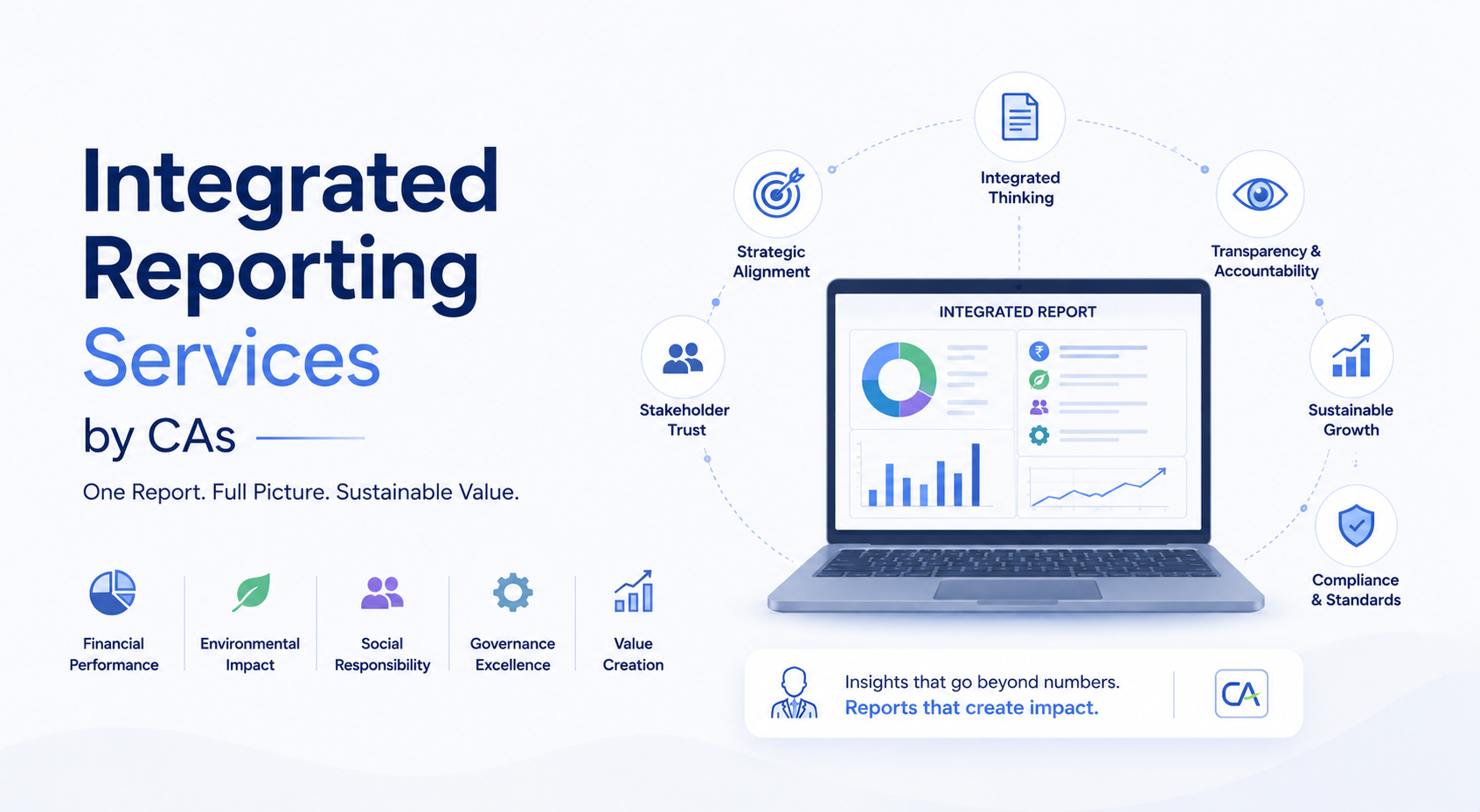
Table of Content
- Understanding Integrated Reporting
- Why Businesses Are Moving Toward Integrated Reporting
- The Role of Chartered Accountants in Integrated Reporting
- Connecting Financial and Non-Financial Information
- Governance Reporting and Transparency
- Sustainability and ESG Reporting Integration
- Enhancing Investor Communication
- Technology and Data Management in Integrated Reporting
- Future Opportunities for CA Firms
- Conclusion
The business world is changing rapidly. Investors, regulators, lenders, and other stakeholders no longer evaluate companies solely based on financial performance. Today, they also want to understand how an organization creates value over time, manages risks, utilizes resources, and contributes to sustainable growth. This shift has increased the importance of integrated reporting.
Traditional financial statements provide valuable information about a company's past performance, but they often fail to present a complete picture of the organization's long-term value creation strategy. Integrated reporting addresses this gap by combining financial and non-financial information into a comprehensive report that explains how a business operates, grows, and sustains itself.
As businesses increasingly focus on transparency and stakeholder engagement, Chartered Accountants are emerging as key professionals in delivering Integrated Reporting Services. Their expertise in financial reporting, governance, risk management, and performance measurement makes them well-positioned to guide organizations through the integrated reporting process.
Understanding Integrated Reporting
Integrated reporting is a reporting approach that combines financial data with information about governance, strategy, risk management, sustainability initiatives, and business performance. Instead of presenting separate reports for different aspects of the organization, integrated reporting aims to provide a holistic view of how the business creates value in the short, medium, and long term. An integrated report typically covers areas such as:
- Financial performance and position.
- Business strategy and objectives.
- Governance and leadership structures.
- Risk management practices.
- Sustainability and stakeholder considerations.
The goal is to help stakeholders understand the broader story behind business performance rather than focusing only on financial results.
Why Businesses Are Moving Toward Integrated Reporting
Business stakeholders today expect greater transparency than ever before. Investors want to know how a company plans to sustain growth. Lenders want to understand risk management practices. Customers and employees increasingly pay attention to governance and sustainability issues.
As a result, organizations are looking for reporting frameworks that communicate a more complete picture of business performance. Integrated reporting helps businesses:
- Improve stakeholder confidence.
- Enhance corporate transparency.
- Demonstrate long-term value creation.
Companies that communicate effectively often build stronger relationships with investors and other stakeholders. This growing demand is creating new opportunities for Chartered Accountants.
The Role of Chartered Accountants in Integrated Reporting
Integrated reporting involves collecting, analyzing, and presenting information from multiple areas of an organization. Chartered Accountants play an important role because they already possess expertise in:
- Financial reporting and analysis.
- Internal controls and governance.
- Risk management frameworks.
- Performance measurement systems.
Their understanding of business operations allows them to connect financial outcomes with broader strategic objectives. Rather than preparing only financial statements, modern CAs help organizations tell a complete business story through integrated reporting. This advisory role is becoming increasingly valuable in today's corporate environment.
Connecting Financial and Non-Financial Information
One of the biggest challenges in integrated reporting is linking financial performance with non-financial factors. For example, a company's investment in employee development, technology upgrades, or sustainability initiatives may not immediately appear in financial results. However, these activities often contribute significantly to future business value.
Chartered Accountants help organizations identify these connections and present them in a meaningful way. This enables stakeholders to understand:
- How strategic decisions influence performance.
- How risks are being managed.
- How resources are creating long-term value.
Integrated reporting therefore provides context that traditional financial reporting may not fully capture.
Governance Reporting and Transparency
Corporate governance has become an increasingly important area of stakeholder interest. Businesses are expected to demonstrate accountability, ethical decision-making, and effective oversight mechanisms. Integrated reporting provides an opportunity to explain governance structures and management practices in a transparent manner. Chartered Accountants often assist organizations by:
- Reviewing governance frameworks.
- Evaluating reporting processes.
- Enhancing disclosure quality.
Strong governance reporting can improve stakeholder confidence and support long-term business credibility. For many organizations, transparency has become a competitive advantage.
Sustainability and ESG Reporting Integration
Environmental, Social, and Governance (ESG) considerations are becoming central to business reporting. Investors and regulators increasingly expect organizations to disclose information regarding sustainability initiatives, social impact, and governance practices. Integrated reporting allows businesses to combine ESG disclosures with financial performance information in a single framework. CAs help organizations:
- Structure ESG-related disclosures.
- Align reporting practices with business objectives.
- Improve reporting consistency and reliability.
As sustainability reporting continues expanding, the connection between integrated reporting and ESG reporting is becoming stronger. This creates significant opportunities for Chartered Accountants specializing in these areas.
Enhancing Investor Communication
Investors often seek more than financial statements when evaluating a company. They want to understand:
- Growth strategies.
- Competitive advantages.
- Risk management approaches.
- Long-term sustainability plans.
Integrated reporting provides a platform for communicating these elements effectively. Chartered Accountants support this process by ensuring that information is presented clearly, accurately, and consistently. Better communication can improve investor confidence and contribute to stronger business relationships. This is particularly important for organizations seeking investment or planning future expansion.
Technology and Data Management in Integrated Reporting
Preparing integrated reports often requires information from multiple departments and systems. Technology plays an important role in gathering, organizing, and analyzing this data efficiently. Modern reporting platforms help businesses manage large volumes of information while maintaining accuracy and consistency. Chartered Accountants increasingly work with:
- Digital reporting tools.
- Data analytics platforms.
- Performance monitoring systems.
Technology not only improves efficiency but also enhances the quality of reporting outcomes. Organizations that invest in strong reporting systems are often better equipped to meet stakeholder expectations.
Future Opportunities for CA Firms
Integrated reporting is still developing in many markets, creating substantial opportunities for forward-thinking professionals. As stakeholder expectations continue evolving, businesses will require guidance on:
- Reporting frameworks.
- Sustainability integration.
- Governance disclosures.
- Strategic communication.
CA firms that build expertise in integrated reporting can position themselves as strategic advisors rather than traditional compliance providers. This shift aligns closely with the broader transformation occurring within the Chartered Accountancy profession. The future is likely to favor firms that combine financial expertise with business advisory capabilities.
Conclusion
Integrated Reporting Services by CAs represent a growing area of opportunity in the modern business environment. By combining financial information with governance, strategy, sustainability, and risk-related disclosures, integrated reporting helps organizations communicate a more complete picture of value creation. Chartered Accountants play a critical role in designing reporting frameworks, improving transparency, strengthening stakeholder communication, and supporting long-term business objectives. As businesses increasingly prioritize accountability and sustainability, integrated reporting is expected to become an important component of corporate reporting practices worldwide.

FAQs
What are Integrated Reporting Services by CAs?
Integrated Reporting Services involve helping businesses prepare reports that combine financial information with governance, strategy, risk management, sustainability, and performance-related disclosures to provide a comprehensive view of value creation.
Why is integrated reporting important for businesses?
Integrated reporting improves transparency, enhances stakeholder communication, and helps investors understand how a company creates value over the short, medium, and long term.
How do Chartered Accountants contribute to integrated reporting?
Chartered Accountants assist with financial analysis, governance reporting, risk assessment, performance measurement, and the preparation of integrated reports that align with organizational objectives.
What is the difference between financial reporting and integrated reporting?
Financial reporting primarily focuses on financial performance and position, whereas integrated reporting combines financial and non-financial information to present a broader picture of business value creation.
Can integrated reporting improve investor confidence?
Yes, integrated reporting provides additional context regarding strategy, governance, sustainability, and risk management, helping investors make better-informed decisions.
How does integrated reporting relate to ESG reporting?
Integrated reporting often includes Environmental, Social, and Governance (ESG) disclosures alongside financial information, creating a more complete representation of organizational performance.
What role does governance play in integrated reporting?
Governance reporting explains how leadership structures, oversight mechanisms, and decision-making processes contribute to business performance and long-term sustainability.
Do small and medium-sized businesses need integrated reporting?
While integrated reporting is more common among larger organizations, many growing businesses can also benefit from improved stakeholder communication and transparency through integrated reporting practices.
How does technology support integrated reporting?
Technology helps collect, manage, analyze, and present data from different business functions, improving reporting accuracy, efficiency, and consistency.
What is the future scope of integrated reporting for Chartered Accountants?
The future scope is significant as businesses increasingly focus on sustainability, transparency, stakeholder engagement, and long-term value creation. This creates growing demand for integrated reporting expertise and advisory services.