
Role of AI in Tax Compliance and Modern Finance
Learn the role of AI in tax compliance, including automation, error reduction, faster filings, data analysis, and improving accuracy in taxation processes.
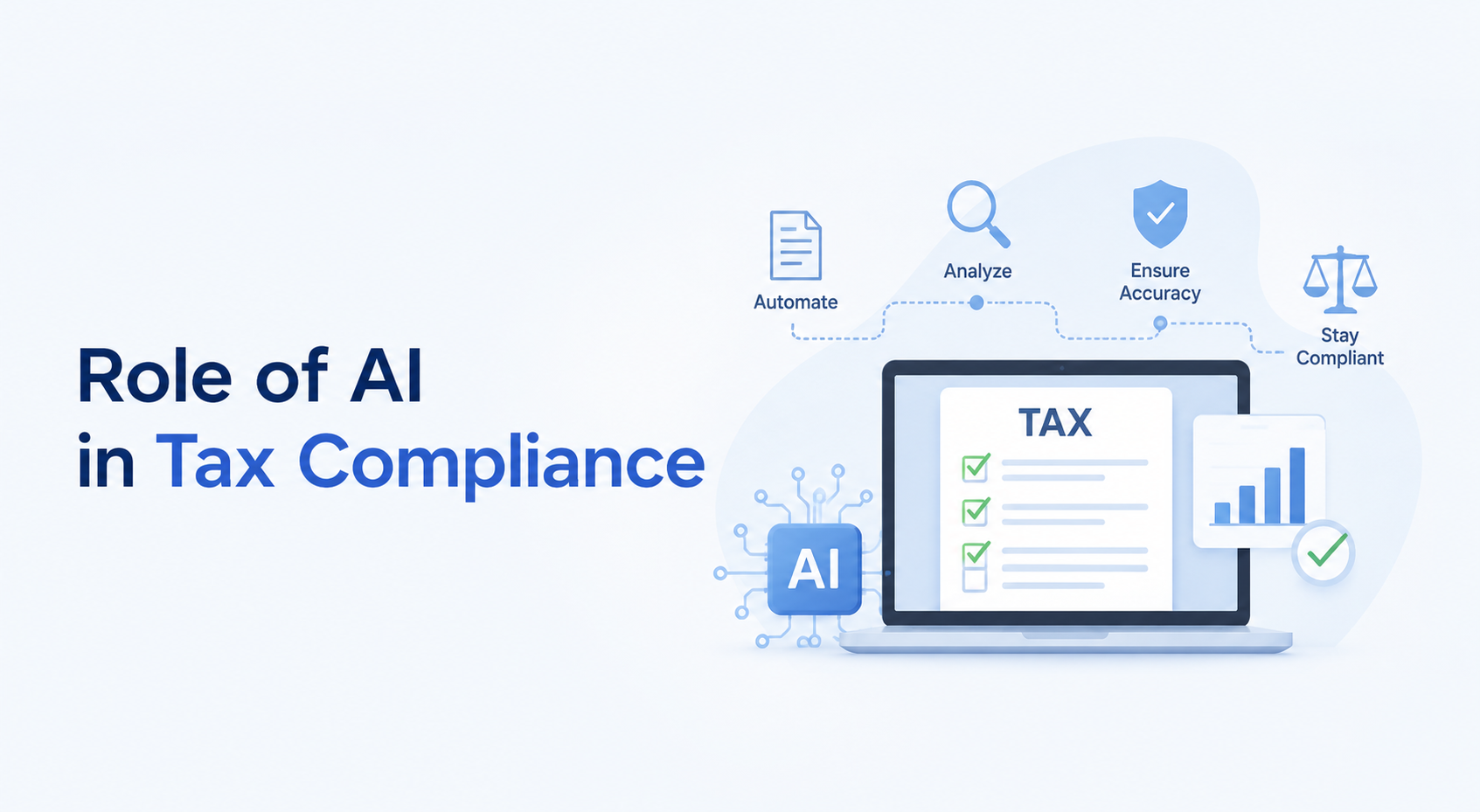
Table of Content
- How AI Is Used in Tax Compliance
- AI Helps Reduce Human Errors
- Faster Tax Processing Improves Efficiency
- AI Supports GST Compliance Management
- Importance of Data Analysis in Taxation
- AI Helps in Fraud Detection
- Why Human Expertise Is Still Necessary
- AI Is Changing the Role of Tax Professionals
- Benefits of AI in Tax Compliance
- Challenges of AI in Taxation
- Technology Skills Are Becoming Important for Tax Professionals
- Future of AI in Tax Compliance
- Conclusion
Tax compliance has become increasingly complex in modern businesses because companies now handle large volumes of financial transactions, digital payments, and constantly changing taxation rules. Managing tax calculations, documentation, return filing, and regulatory compliance manually can consume significant time and effort for businesses and finance professionals.
This is where Artificial Intelligence is playing an important role in transforming tax compliance processes. AI-powered systems are helping businesses automate repetitive tax-related work, improve accuracy, reduce human errors, and manage financial data more efficiently. As technology continues evolving, AI is becoming an important support system for taxation and compliance management in modern finance environments.
However, AI is not replacing tax professionals completely. Instead, it is changing how tax experts and chartered accountants perform their work by improving productivity and simplifying several operational tasks.
How AI Is Used in Tax Compliance
AI systems can process large amounts of financial and taxation data much faster than traditional manual methods. Businesses now use AI for activities like:
- Tax calculations
- GST compliance tracking
- Invoice verification
- Data classification
- Automated reporting
- Return preparation assistance
These systems reduce repetitive workload and help finance teams manage compliance more efficiently. AI tools can also quickly identify missing entries, mismatched invoices, or unusual transaction patterns that may affect taxation records.
AI Helps Reduce Human Errors
Manual tax work often involves risks such as:
- Incorrect calculations
- Wrong data entry
- Missed compliance deadlines
- Filing mistakes
AI-powered software helps reduce these problems through automated data processing and real-time verification systems. Improved accuracy becomes extremely important because taxation errors may lead to penalties, notices, or financial losses for businesses. Although AI improves precision, professional review and supervision are still necessary for final compliance decisions.
Faster Tax Processing Improves Efficiency
Traditional tax processes can consume significant time, especially for businesses handling large transaction volumes. AI helps improve efficiency by:
- Automating Repetitive Tasks: Routine work gets completed much faster through automation systems.
- Organizing Financial Data Quickly: AI tools process and classify financial records efficiently.
- Speeding Up Compliance Workflows: Return preparation and documentation become more streamlined.
This allows tax professionals to focus more on analysis and advisory work instead of repetitive operational tasks.
AI Supports GST Compliance Management
GST compliance involves continuous monitoring of invoices, transactions, input credits, and return filing requirements. AI tools help businesses:
- Match invoices automatically
- Track GST liabilities
- Detect filing inconsistencies
- Organize compliance records
These systems reduce manual effort and improve accuracy in GST-related operations. As tax regulations become more digital, AI-based GST management tools are becoming increasingly useful for businesses and professionals.
Importance of Data Analysis in Taxation
Modern taxation involves huge amounts of financial data. AI systems can analyze this information quickly and identify useful patterns or risks. AI-based analysis helps businesses:
- Detect unusual transactions
- Monitor compliance trends
- Identify possible errors
- Improve tax planning support
Large-scale data analysis becomes much easier with automation and intelligent software systems. This improves overall efficiency in tax compliance management.
AI Helps in Fraud Detection
One important advantage of AI in taxation is fraud detection capability. AI systems can identify:
- Suspicious financial activity
- Unusual transaction patterns
- Duplicate invoices
- Mismatched records
This helps businesses improve financial transparency and reduce compliance risks. Government taxation departments are also increasingly using technology and data analysis systems for monitoring suspicious activities.
Why Human Expertise Is Still Necessary
Although AI improves efficiency, taxation still requires professional interpretation and human judgment. Tax professionals regularly handle situations involving:
- Legal interpretation
- Complex tax planning
- Advisory decisions
- Compliance strategy
- Ethical considerations
Tax laws often involve practical interpretation beyond software-generated calculations. This is why chartered accountants and tax experts continue to remain highly important even in technology-driven environments.
AI Is Changing the Role of Tax Professionals
As automation increases, the role of finance professionals is gradually shifting from repetitive work toward more analytical and strategic responsibilities. Modern tax professionals now focus more on:
- Advisory services
- Compliance strategy
- Risk management
- Financial interpretation
- Business consulting
AI handles operational support while professionals contribute practical expertise and business understanding.
Benefits of AI in Tax Compliance
AI provides several advantages in taxation and compliance management. Major benefits include:
- Faster tax processing
- Improved accuracy
- Reduced manual workload
- Better compliance monitoring
- Efficient data management
These improvements help businesses save time and improve operational productivity significantly.
Challenges of AI in Taxation
Despite many benefits, AI also creates certain challenges. Some concerns include:
- Dependence on software systems
- Data privacy risks
- Cybersecurity issues
- Need for technical knowledge
- Incorrect automated classifications in some cases
Businesses still need professional supervision to ensure proper compliance and decision-making. Technology should support human expertise instead of replacing it blindly.
Technology Skills Are Becoming Important for Tax Professionals
Future tax professionals may need a stronger understanding of:
- Tax software
- AI-powered compliance tools
- Data analysis systems
- Cloud accounting platforms
Technology awareness is becoming increasingly valuable in modern taxation careers. Professionals who adapt to digital tools may work more efficiently in evolving finance environments.
AI and Government Tax Systems
Many government taxation systems are also becoming technology-driven. Digital systems now support:
- Online filing
- Automated compliance tracking
- E-invoicing
- Data matching processes
AI and automation help taxation authorities improve transparency and monitor compliance more effectively. This shift is making digital taxation knowledge important for businesses and professionals alike.
Future of AI in Tax Compliance
The role of AI in tax compliance is expected to grow further in the coming years. Future developments may include:
- Smarter automated compliance systems
- Advanced risk prediction tools
- Faster financial data processing
- Improved fraud detection capabilities
However, human expertise will likely remain essential for strategic tax planning, legal interpretation, and professional advisory services.
Conclusion
AI is playing an increasingly important role in tax compliance by improving automation, reducing errors, speeding up tax processes, and supporting financial data analysis. While AI-powered systems help businesses manage compliance more efficiently, professional judgment and human expertise remain essential for taxation strategy and complex financial decisions. The future of taxation will likely involve collaboration between technology and skilled finance professionals.

FAQs
What is the role of AI in tax compliance?
AI helps automate tax calculations, data processing, compliance tracking, invoice verification, and reporting processes, improving efficiency and reducing manual workload in modern taxation systems and financial operations.
How does AI improve tax compliance accuracy?
AI improves accuracy by reducing human errors, automating calculations, verifying financial records, and identifying inconsistencies or mismatched data during tax processing and reporting activities.
Can AI automate GST compliance processes?
Yes, AI can automate several GST-related tasks such as invoice matching, liability tracking, compliance monitoring, and return preparation support, helping businesses manage GST operations more efficiently.
Why is AI useful for businesses in taxation?
AI helps businesses save time, reduce repetitive work, improve compliance efficiency, organize financial data better, and minimize errors in taxation and reporting activities.
Can AI completely replace tax professionals?
No, AI cannot completely replace tax professionals because taxation still requires legal interpretation, advisory services, ethical judgment, and strategic decision-making by experienced finance experts.
How does AI help in fraud detection during tax compliance?
AI systems can analyze transaction patterns, identify suspicious activities, detect duplicate invoices, and monitor unusual financial behavior that may indicate fraud or compliance risks.
What challenges does AI create in tax compliance?
AI creates challenges such as dependence on software systems, cybersecurity concerns, data privacy risks, and the need for technical knowledge and professional supervision during compliance processes.
Why are technology skills important for tax professionals?
Technology skills help professionals use AI-powered tax systems, compliance tools, automation software, and digital finance platforms more effectively in modern taxation environments.
How is government taxation becoming more technology-driven?
Governments increasingly use digital filing systems, e-invoicing, automated tracking, and AI-supported monitoring tools to improve transparency and tax compliance management across businesses.
What is the future of AI in tax compliance?
The future of AI in tax compliance may involve smarter automation, advanced fraud detection, faster financial analysis, and improved compliance systems, while professionals continue handling strategic and advisory responsibilities.