Future of Digital Taxation for CAs in India & Modern Compliance System
Learn the future of digital taxation for CAs through automation, AI-driven compliance, online reporting systems, analytics, and technology-based tax management.
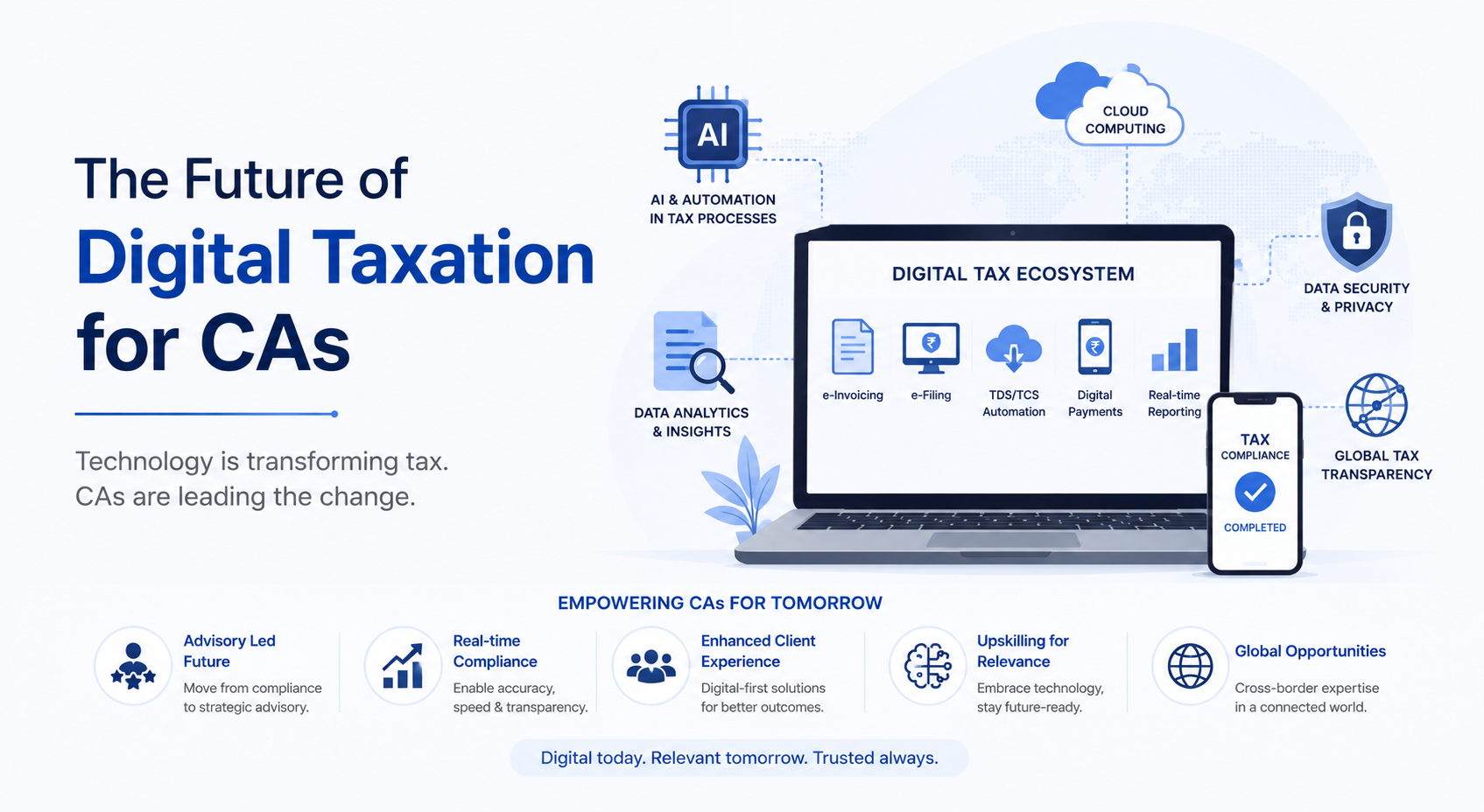
Table of Content
- Digital Tax Systems Are Expanding Rapidly
- Automation Is Changing Routine Tax Compliance Work
- Real-Time Reporting Is Increasing Transparency
- Chartered Accountants Must Adapt to Technology
- AI and Analytics Will Transform Taxation Further
- Tax Professionals Will Focus More on Advisory Services
- Digital Taxation Improves Compliance Monitoring
- Cybersecurity and Data Protection Are Becoming Important
- Small Businesses Also Need Digital Tax Support
- International Taxation Complexity Is Increasing
- Future Scope of Digital Taxation Looks Strong
- Conclusion
The taxation system in India is changing rapidly because of digital transformation, automation, and technology-driven compliance frameworks. Earlier, taxation processes depended heavily on manual filings, physical records, paperwork, and offline verification systems. However, modern tax administration is increasingly becoming digital, automated, and data-oriented. Governments now use technology extensively for monitoring transactions, tracking compliance, reducing tax evasion, and improving transparency within financial systems.
Because of these changes, the role of chartered accountants in taxation is also evolving significantly. Today’s tax professionals are expected not only to understand taxation laws but also to work efficiently with online portals, automated reporting systems, data analytics, and technology-based compliance tools. Understanding the future of digital taxation for CAs helps explain how the profession is adapting to rapidly changing financial and regulatory environments.
Digital Tax Systems Are Expanding Rapidly
India’s taxation framework has already moved significantly toward digital systems through platforms like GST portals, e-filing systems, online assessments, and digital reporting structures.Modern taxation processes increasingly involve:
- Online return filing
- Automated compliance tracking
- Digital invoice systems
- E-assessment procedures
- Technology-based financial verification
Because of this shift, chartered accountants now spend much more time handling technology-based compliance systems compared to traditional manual taxation processes.
Automation Is Changing Routine Tax Compliance Work
Technology and automation are reducing the amount of repetitive manual work involved in taxation services.
- Automated Return Preparation: Software tools now assist in preparing GST returns and income tax filings more efficiently.
- Data Matching Systems: Digital platforms automatically compare invoices, returns, and transaction records.
- Compliance Tracking: Automated alerts help businesses monitor filing deadlines and tax liabilities.
- Faster Financial Reconciliation: Technology improves accuracy and speed in matching financial records.
As routine compliance tasks become more automated, chartered accountants are gradually shifting toward advisory and analytical taxation roles.
Real-Time Reporting Is Increasing Transparency
Digital taxation systems increasingly focus on real-time financial monitoring and reporting. Governments and regulatory authorities now receive transaction-level information through automated systems much faster than before. This increased transparency helps in:
- Reducing tax evasion
- Improving compliance discipline
- Detecting financial irregularities
- Strengthening financial reporting accuracy
Businesses are therefore expected to maintain more organized and transparent financial records in digital environments.
Chartered Accountants Must Adapt to Technology
The future of digital taxation for CAs depends heavily on technology adaptability. Traditional taxation knowledge alone is no longer enough in modern compliance systems. Modern professionals increasingly work with:
- GST software
- Cloud accounting systems
- ERP platforms
- Tax analytics tools
Digital Documentation Systems
Businesses now maintain financial records electronically instead of relying only on physical documents.
- Online Tax Assessments: Tax authorities increasingly conduct digital communication and online verification.
- AI-Based Compliance Systems: Technology tools can automatically identify reporting mismatches and suspicious activities.
- Data Analytics in Taxation: Professionals use analytics to identify tax risks and improve compliance management.
Technology understanding is therefore becoming one of the most important professional skills for modern chartered accountants.
AI and Analytics Will Transform Taxation Further
Artificial intelligence and analytics are expected to play major roles in future taxation systems. Governments and businesses increasingly use advanced technology tools for monitoring financial activities and detecting compliance risks. AI-based systems may help in:
- Identifying unusual transactions
- Detecting tax fraud risks
- Improving return verification
- Automating compliance reviews
For chartered accountants, this means taxation work may gradually become more analytical and advisory-focused instead of only compliance-oriented.
Tax Professionals Will Focus More on Advisory Services
As technology automates routine filing and reporting work, businesses will increasingly depend on chartered accountants for strategic taxation advice. Future advisory areas may include:
- Tax planning strategies
- Risk management support
- International taxation guidance
- Business restructuring advice
This shift from compliance execution toward strategic consulting is one of the biggest future changes in the taxation profession.
Digital Taxation Improves Compliance Monitoring
Modern taxation systems allow authorities to monitor financial transactions much more efficiently than traditional systems.
- Integrated Financial Reporting: Different financial records are increasingly interconnected digitally.
- Automated Verification Systems: Technology can quickly detect inconsistencies in financial reporting.
- Reduced Manual Intervention: Online systems reduce dependency on physical verification processes.
- Faster Regulatory Communication: Businesses receive notices, updates, and compliance instructions digitally.
Because of this stronger monitoring environment, businesses are expected to maintain higher compliance discipline.
Cybersecurity and Data Protection Are Becoming Important
As taxation systems become fully digital, financial data security is becoming a major concern for businesses and professionals. Chartered accountants increasingly focus on:
- Secure financial data handling
- Protected client communication
- Digital record safety
- Compliance-related cybersecurity awareness
Businesses now expect professionals to protect sensitive financial information while handling online taxation systems.
Small Businesses Also Need Digital Tax Support
Many small and medium businesses still struggle with digital compliance systems and online taxation procedures. Chartered accountants, therefore, continue playing an important role in supporting businesses through digital transformation. Professionals help businesses with:
- GST compliance management
- Online filing procedures
- Financial record organization
- Digital accounting systems
This support becomes extremely important for businesses transitioning from traditional systems toward technology-driven compliance environments.
International Taxation Complexity Is Increasing
Globalization and digital business models are also increasing the complexity in international taxation systems.
- Cross-Border Transactions: Digital businesses increasingly operate internationally.
- E-Commerce Taxation: Online businesses require specialized taxation understanding.
- International Compliance Rules: Businesses face evolving global reporting requirements.
- Digital Service Taxation: Governments increasingly regulate taxation related to digital services and online platforms.
This growing complexity is creating new opportunities for chartered accountants specializing in digital taxation and international compliance systems.
Future Scope of Digital Taxation Looks Strong
The future of digital taxation is expected to expand significantly as governments continue modernizing financial monitoring systems and online compliance frameworks. Future growth opportunities for chartered accountants may increase in areas such as:
- Digital tax consulting
- Technology-based compliance management
- International digital taxation
- Tax analytics services
- AI-driven financial advisory
Professionals who combine taxation expertise with technology understanding are likely to experience strong long-term growth.
Conclusion
Understanding the future of digital taxation for CAs helps explain how technology is transforming taxation systems and professional responsibilities in modern finance environments. Automation, AI, analytics, cloud accounting, and online compliance systems are changing how taxation is managed and monitored. While routine compliance activities are becoming increasingly automated, chartered accountants are expected to play stronger roles in advisory services, risk management, tax planning, and strategic financial guidance. As digital taxation systems continue expanding globally, technology adaptability and continuous learning will become extremely important for long-term professional success in the CA profession.

FAQs
What is the future of digital taxation for CAs?
The future of digital taxation involves automation, AI-based compliance systems, analytics, online reporting platforms, and technology-driven financial monitoring processes.
How is automation changing taxation work for chartered accountants?
Automation reduces repetitive compliance tasks like return preparation, reconciliation, and reporting, allowing professionals to focus more on advisory services.
Why is technology becoming important in taxation systems?
Modern taxation systems use digital portals, online assessments, analytics tools, and automated verification processes for improving transparency and compliance monitoring.
How does digital taxation improve financial transparency?
Digital systems allow real-time reporting, automated transaction tracking, and faster verification of financial records and compliance activities.
What role will AI play in future taxation systems?
AI may help detect fraud risks, identify unusual transactions, automate compliance reviews, and improve taxation monitoring systems.
Why are chartered accountants shifting toward advisory taxation services?
Routine compliance work is becoming automated, increasing demand for strategic tax planning, risk management, and business advisory services.
How does digital taxation affect small businesses?
Many small businesses require professional support for online filing, GST compliance, digital accounting, and technology-based financial systems.
Why is cybersecurity important in digital taxation?
Digital taxation involves sensitive financial data, making secure record management and protected online communication extremely important.
How is globalization increasing complexity in digital taxation?
Cross-border transactions, e-commerce operations, and international reporting systems require advanced taxation understanding and compliance management.
What skills will future tax professionals require?
Future professionals will need taxation expertise, technology understanding, analytics skills, digital compliance knowledge, and continuous learning ability.