The Changing Identity of Chartered Accountants Today
Explore the changing identity of chartered accountants as technology, advisory services, analytics, and business leadership reshape the profession.
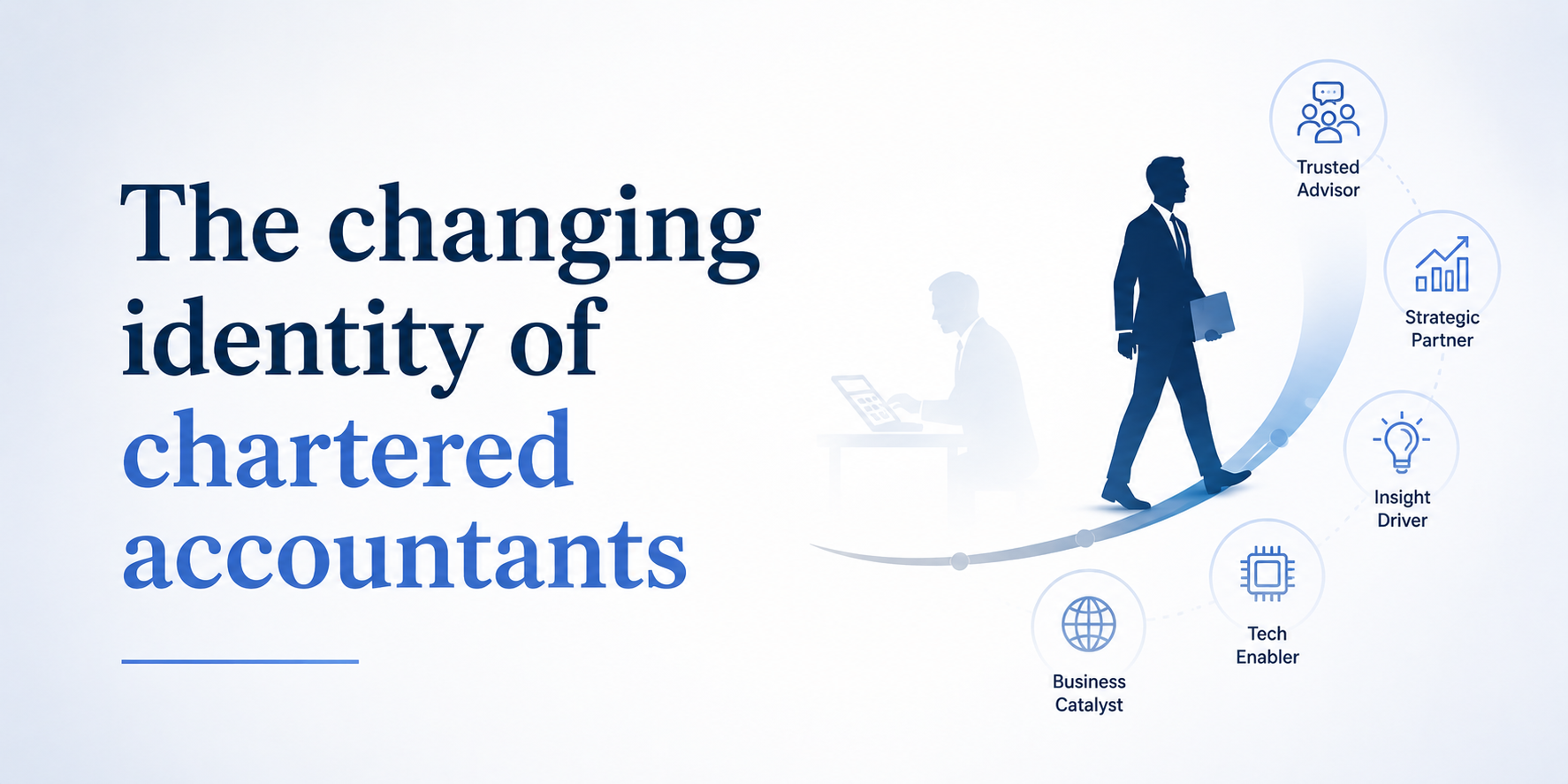
Table of Content
- From Compliance Experts to Business Advisors
- Technology Is Reshaping Professional Roles
- Businesses Want Strategic Thinking
- Data Interpretation Is Becoming More Valuable
- Communication Skills Are More Important Than Ever
- The Rise of Specialized Career Paths
- Clients Expect Partnership, Not Just Services
- Leadership Opportunities Are Increasing
- The Future Identity of CAs Will Be More Dynamic
- Conclusion
For many years, the identity of a chartered accountant was closely associated with auditing, taxation, compliance, and financial reporting. Businesses viewed CAs as professionals responsible for maintaining financial records, ensuring regulatory compliance, and preparing statutory reports. While these responsibilities remain important, the profession is no longer defined by these functions alone.
Today, the identity of chartered accountants is undergoing a significant transformation. Technology, changing business environments, evolving client expectations, and growing demand for advisory services are reshaping how professionals contribute to organizations. Modern CAs are increasingly becoming business advisors, analysts, strategists, and decision-making partners. This shift is changing not only what chartered accountants do but also how businesses perceive their value.
From Compliance Experts to Business Advisors
Traditionally, businesses approached chartered accountants for specific compliance-related requirements. The relationship was often transactional, focusing on audits, tax filings, and regulatory obligations.
However, modern businesses face challenges that extend far beyond compliance. Companies need support in areas such as growth planning, profitability management, financial forecasting, and risk assessment. As a result, chartered accountants are increasingly helping organizations:
- Evaluate business opportunities before major investments are made.
- Improve financial performance through better planning and analysis.
- Support management teams during strategic decision-making processes.
This evolution is gradually transforming CAs into trusted business advisors rather than only compliance professionals.
Technology Is Reshaping Professional Roles
One of the biggest reasons behind this changing identity is technology. A large portion of traditional accounting work is becoming automated through:
- Cloud accounting systems that simplify financial management.
- Automated compliance tools that reduce manual effort.
- AI-powered solutions that improve reporting and analysis.
Because routine work requires less manual involvement, professionals have more time to focus on interpretation, planning, and advisory services. The value of a modern chartered accountant increasingly comes from understanding financial information and helping businesses use it effectively.
Businesses Want Strategic Thinking
Today's business leaders operate in highly competitive and uncertain environments. They need professionals who can contribute ideas and provide direction, not just prepare reports. Modern CAs are expected to:
- Analyze financial data and identify business trends.
- Evaluate risks associated with expansion and investment decisions.
- Recommend strategies that support sustainable growth.
This growing emphasis on strategic thinking is changing how the profession is viewed inside organizations. In many companies, chartered accountants now participate in management discussions and business planning meetings alongside senior leadership teams.
Data Interpretation Is Becoming More Valuable
Businesses generate enormous amounts of financial and operational data every day. While technology can collect and organize this information, interpreting it remains a critical human responsibility. Modern chartered accountants increasingly help organizations:
- Understand why profitability is changing.
- Identify operational inefficiencies affecting performance.
- Forecast future financial outcomes.
Clients and employers now value professionals who can explain what financial data means and what actions should be taken as a result. This analytical role is becoming a defining characteristic of the profession.
Communication Skills Are More Important Than Ever
The traditional image of a CA working primarily with numbers is also changing. Today's professionals frequently interact with:
- Business owners and entrepreneurs.
- Investors and stakeholders.
- Management teams and department heads.
Because of this, communication has become a critical skill. Successful chartered accountants are often those who can:
- Explain complex financial matters in simple language.
- Present recommendations confidently.
- Build strong professional relationships.
Technical expertise remains essential, but the ability to communicate insights effectively is now equally important.
The Rise of Specialized Career Paths
The profession is also becoming more diverse than before. Earlier, many CAs followed similar career paths focused on audit, taxation, or accounting. Today, professionals are building expertise in emerging areas such as:
- Startup advisory and fundraising support.
- Business analytics and financial intelligence.
- ESG reporting and sustainability assurance.
- Forensic accounting and fraud investigation.
These specialized fields are expanding the identity of chartered accountants beyond traditional practice areas. As new opportunities emerge, the profession continues to evolve in exciting ways.
Clients Expect Partnership, Not Just Services
Modern clients increasingly want chartered accountants to act as long-term partners rather than service providers. Businesses appreciate professionals who:
- Understand their goals and challenges.
- Provide proactive recommendations.
- Remain involved throughout the year instead of only during compliance periods.
This shift has strengthened the advisory side of the profession and changed how relationships are built. Many clients now view their CA as a key contributor to business success rather than someone who only handles financial paperwork.
Leadership Opportunities Are Increasing
The changing identity of chartered accountants is also creating more leadership opportunities. Many professionals are now moving into roles such as:
- Chief Financial Officer (CFO).
- Business strategist.
- Financial consultant.
- Corporate advisor.
Organizations increasingly recognize that strong financial understanding is essential for effective leadership. As a result, chartered accountants are playing larger roles in shaping business direction and organizational growth.
The Future Identity of CAs Will Be More Dynamic
Looking ahead, the profession is expected to become even more dynamic and multidisciplinary. Future chartered accountants will likely combine:
- Financial expertise.
- Technology awareness.
- Business understanding.
- Strategic thinking.
- Communication skills.
The profession will continue to evolve as businesses face new challenges and opportunities. Rather than being defined by a single service area, future CAs will be recognized for their ability to solve problems, guide decisions, and create value.
Conclusion
The changing identity of chartered accountants reflects the broader transformation taking place across the business world. While compliance, taxation, and auditing remain important, the profession is increasingly associated with advisory services, analytics, strategy, and business leadership. Technology is reducing routine work and creating opportunities for professionals to focus on higher-value contributions. As client expectations continue evolving, chartered accountants are becoming trusted advisors, strategic thinkers, and growth partners. This transformation is not reducing the importance of the profession—it is expanding its influence and opening new pathways for future success.

FAQs
What is meant by the changing identity of chartered accountants?
It refers to the shift from traditional compliance-focused roles toward advisory, analytical, strategic, and business-oriented responsibilities.
Why is the role of chartered accountants changing?
Technology, changing client expectations, and increasing business complexity are expanding the responsibilities of chartered accountants.
How is technology influencing the profession?
Technology is automating routine tasks and allowing professionals to focus more on analysis, advisory services, and decision-making support.
Are chartered accountants becoming business advisors?
Yes, many businesses now rely on CAs for financial planning, strategic guidance, and business growth support beyond compliance work.
Why are communication skills important for modern CAs?
Modern professionals frequently interact with clients, investors, and management teams, making effective communication essential.
How is data analytics affecting the CA profession?
Data analytics helps professionals identify trends, evaluate risks, and provide meaningful business insights for decision-making.
What new career opportunities are emerging for CAs?
Emerging areas include ESG advisory, startup consulting, forensic accounting, business analytics, and sustainability assurance.
How are client expectations changing for chartered accountants?
Clients now expect proactive guidance, faster communication, strategic advice, and long-term business support.
Can chartered accountants move into leadership roles?
Yes, many CAs become CFOs, consultants, advisors, and senior business leaders because of their financial expertise.
What will the future identity of chartered accountants look like?
The future CA is likely to be a technology-aware, business-focused professional who combines finance expertise with advisory and strategic capabilities.