Changing Work Culture in CA Firms and Its Impact on Young Professionals
Learn about changing work culture in CA firms through technology, flexible work models, modern expectations, employee well-being, and evolving professional environments.
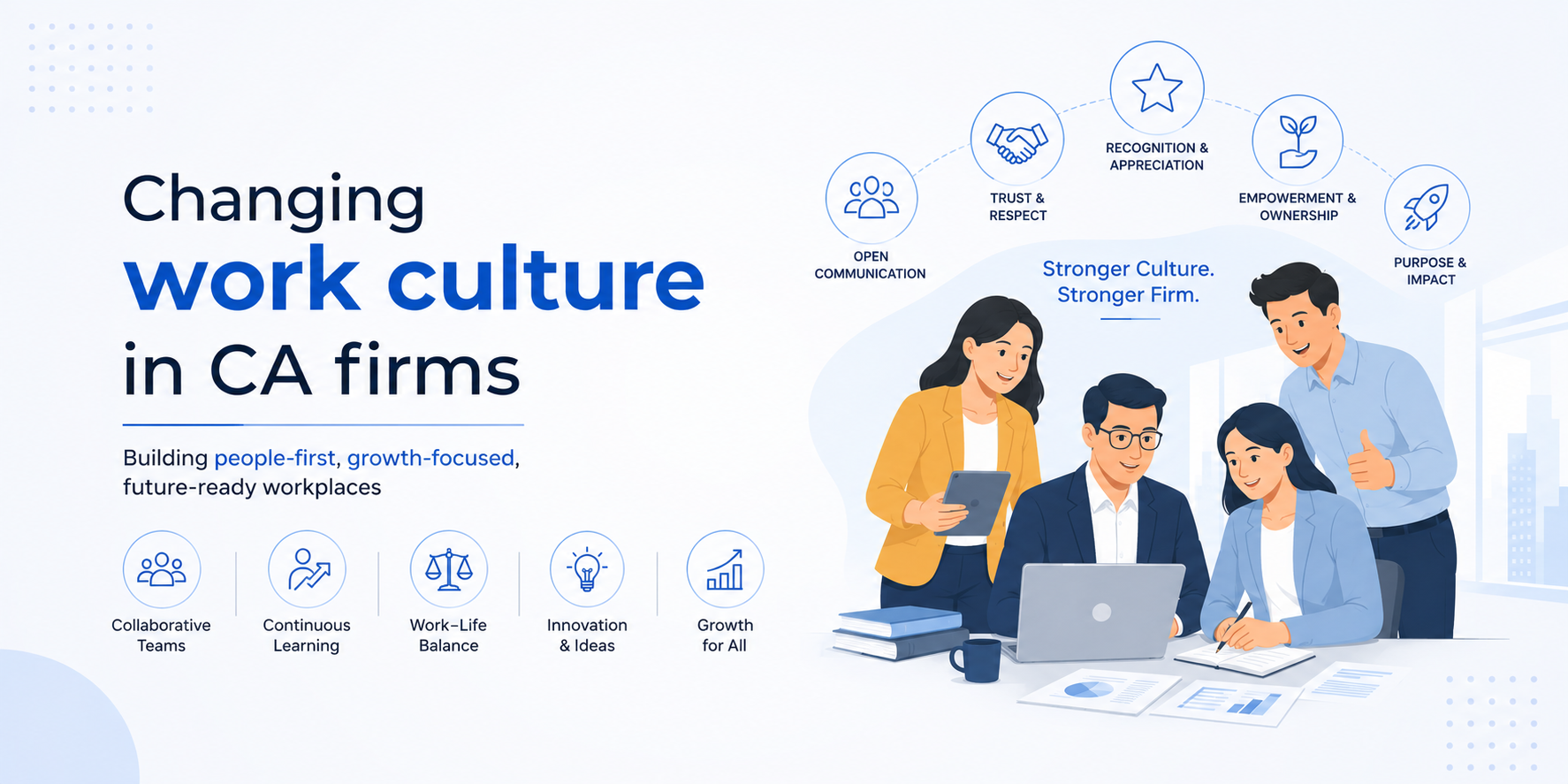
Table of Content
- Technology Has Completely Changed Daily Work Processes
- Flexible Work Models Are Becoming More Common
- Young Professionals Expect Better Work-Life Balance
- Communication Styles Have Become More Open
- Learning Opportunities Have Become More Important
- Work Pressure Still Exists in CA Firms
- Employee Well-Being Is Getting More Attention
- Client Expectations Are Also Changing
- Women's Participation in CA Firms Is Increasing
- Modern CA Firms Focus More on Skills Beyond Accounting
- Smaller Firms Are Also Modernizing Rapidly
- Future Work Culture in CA Firms Will Become More Dynamic
- Conclusion
The work culture in Chartered Accountancy firms has changed significantly over the last few years. Earlier, CA firms were often known mainly for long working hours, strict hierarchical structures, traditional office environments, and highly formal professional systems. While professionalism and discipline still remain important, modern CA firms are gradually adapting to new workplace expectations influenced by technology, employee priorities, digital transformation, and changing business models.
Young professionals today value flexibility, learning opportunities, work-life balance, technology-friendly environments, and healthy workplace communication. Because of this shift, many CA firms are rethinking their operational structures and workplace culture to attract and retain skilled professionals. Understanding the changing work culture in CA firms helps explain how the finance profession is evolving beyond traditional office systems.
Technology Has Completely Changed Daily Work Processes
One of the biggest reasons behind the changing work culture in CA firms is technology adoption. Earlier, most accounting, auditing, and compliance work depended heavily on physical files, manual calculations, and office-based operations. Today, firms increasingly use:
- Cloud accounting software
- Digital audit systems
- Automated compliance platforms
- Virtual communication tools
- Online documentation systems
Because of these changes, professionals can now handle work faster and more efficiently compared to traditional systems.
Technology has also reduced dependency on physical office presence for certain finance-related tasks.
Flexible Work Models Are Becoming More Common
The idea that finance professionals must always work physically from office locations is gradually changing. Many CA firms now allow partial flexibility depending on work type and client requirements.
- Hybrid Work Culture: Some firms now combine office work with remote working models.
- Online Client Meetings: Virtual meetings have become common for discussions and financial consultations.
- Flexible Scheduling: Certain firms provide more flexible timing structures during non-peak periods.
- Remote Documentation Access: Cloud systems allow professionals to access files and reports digitally.
Although complete flexibility may not be possible in every finance role, workplace structures are definitely becoming more adaptable than before.
Young Professionals Expect Better Work-Life Balance
One major reason for the changing work culture in CA firms is the mindset of younger professionals entering the industry. Earlier generations often accepted extreme work pressure as a normal part of professional life. However, modern professionals increasingly value:
- Mental well-being
- Personal time
- Career satisfaction
- Healthy workplace environment
CA firms are now gradually realizing that employee productivity and retention improve when workplaces become more balanced and supportive. This shift is slowly changing traditional perceptions regarding professional work culture in the finance industry.
Communication Styles Have Become More Open
Traditional CA firm environments were often highly formal and hierarchical. Junior professionals sometimes felt uncomfortable sharing opinions or discussing workplace concerns openly. Modern firms are gradually encouraging:
- Team discussions
- Collaborative work culture
- Open communication
- Feedback-based learning
Younger professionals generally prefer workplaces where they feel respected and involved in professional discussions instead of only following strict authority structures. This cultural shift has improved workplace interaction and team coordination in many firms.
Learning Opportunities Have Become More Important
Earlier, many professionals mainly focused on completing assigned compliance or audit work. Today, employees increasingly expect firms to support long-term skill development and career growth. Modern CA firms now often encourage learning related to:
- Financial analytics
- Technology platforms
- Business advisory services
- Communication and presentation skills
Professionals now understand that career growth depends not only on technical accounting knowledge but also on continuous upskilling and adaptability.
Work Pressure Still Exists in CA Firms
Despite workplace improvements, the CA profession still involves significant pressure during busy financial periods. Audit season, tax deadlines, financial closings, and compliance reporting often require long working hours and high operational focus. Common challenges still include:
- Tight deadlines
- Heavy client workload
- Seasonal work pressure
- Continuous compliance responsibilities
However, many firms are now trying to manage workloads more systematically through technology, team coordination, and process automation.
Employee Well-Being Is Getting More Attention
Mental stress and burnout have become serious concerns in professional industries, including finance and accounting sectors. Because of this, some CA firms are now paying greater attention to employee well-being.
- Better Team Support: Managers increasingly focus on smoother team coordination and workload distribution.
- Healthier Workplace Environment: Firms are becoming more aware of workplace stress management.
- Employee Engagement Activities: Some organizations conduct workshops, events, and team-building sessions.
- Professional Mentorship: Guidance from seniors helps younger professionals adjust better to workplace challenges.
Although the industry remains demanding, workplace awareness regarding employee health and motivation is improving gradually.
Client Expectations Are Also Changing
Modern businesses now expect faster responses, real-time updates, and technology-driven services from CA firms. This has changed how professionals interact with clients and manage work processes. Today, clients often expect:
- Quick communication
- Faster compliance handling
- Digital reporting systems
- Practical financial guidance
As a result, CA firms are becoming more service-oriented and technology-focused than traditional compliance-only firms.
Women's Participation in CA Firms Is Increasing
The work culture in CA firms is also changing because of increasing participation of women professionals in the finance and accounting industries. Many firms now focus more on:
- Inclusive workplace policies
- Flexible work support
- Professional growth opportunities for women
This shift is gradually improving workplace diversity and creating more balanced professional environments.
Modern CA Firms Focus More on Skills Beyond Accounting
Today’s firms increasingly value professionals who possess:
- Communication skills
- Technology understanding
- Business advisory capabilities
- Leadership qualities
Technical accounting knowledge alone is no longer considered enough for long-term growth in many organizations. The changing work culture in CA firms, therefore, also reflects broader changes in professional expectations within the finance industry.
Smaller Firms Are Also Modernizing Rapidly
The cultural shift is not limited only to large firms. Even boutique and mid-sized CA firms are now adopting modern work practices to remain competitive and attract talented professionals.
Many smaller firms now use:
- Digital workflow systems
- Online client management
- Flexible operational structures
- Technology-driven compliance processes
This modernization is improving overall efficiency and workplace adaptability across the industry.
Future Work Culture in CA Firms Will Become More Dynamic
The future work environment in CA firms is expected to become more technology-driven, collaborative, and flexible. Firms may increasingly focus on:
- Automation-based workflows
- Remote collaboration
- Employee skill development
- Advisory-focused professional roles
Professionals who adapt to these evolving workplace systems are likely to perform better in future finance environments.
Conclusion
Understanding the changing work culture in CA firms helps explain how the finance profession is evolving in response to technology, employee expectations, and modern business demands. Traditional office structures are gradually shifting toward more flexible, collaborative, and technology-driven environments. While work pressure and compliance responsibilities still remain important parts of the profession, firms are increasingly focusing on employee well-being, learning opportunities, communication, and operational efficiency. As the industry continues modernizing, the work culture in CA firms is expected to become more dynamic, skill-oriented, and professionally balanced in the coming years.

FAQs
What is changing the work culture in CA firms?
The work culture in CA firms is changing because of technology adoption, flexible work models, modern employee expectations, and evolving business requirements in the finance industry.
How has technology changed work culture in CA firms?
Technology has improved automation, digital communication, cloud accounting, virtual meetings, and online compliance management systems within firms.
Why are flexible work models becoming common in CA firms?
Professionals increasingly value work-life balance, and digital systems now allow certain finance-related tasks to be managed remotely and more efficiently.
How are younger professionals influencing CA firm culture?
Young professionals expect better workplace communication, learning opportunities, mental well-being support, and healthier professional environments.
Does work pressure still exist in CA firms?
Yes, CA firms still face heavy workloads during audits, tax filing seasons, and compliance deadlines despite workplace modernization.
Why are communication styles changing in CA firms?
Modern firms now encourage teamwork, collaborative discussions, and open communication instead of highly rigid hierarchical systems.
How are CA firms supporting employee well-being?
Many firms are focusing on workload management, mentorship, healthier work environments, and employee engagement initiatives.
Why are modern CA firms focusing on skill development?
Businesses now expect professionals to possess communication skills, technology understanding, analytical ability, and advisory capabilities beyond accounting knowledge.
How are client expectations affecting CA firm work culture?
Clients now demand faster responses, digital reporting, real-time updates, and practical financial guidance from professionals.
What is the future of work culture in CA firms?
Future work culture is expected to become more flexible, technology-driven, collaborative, and focused on continuous professional development.