How Is the CA Profession Changing in India: Trends Shaping the Future of CA
Explore how the CA profession is changing in India through technology, advisory services, automation, digital finance, and evolving business opportunities.
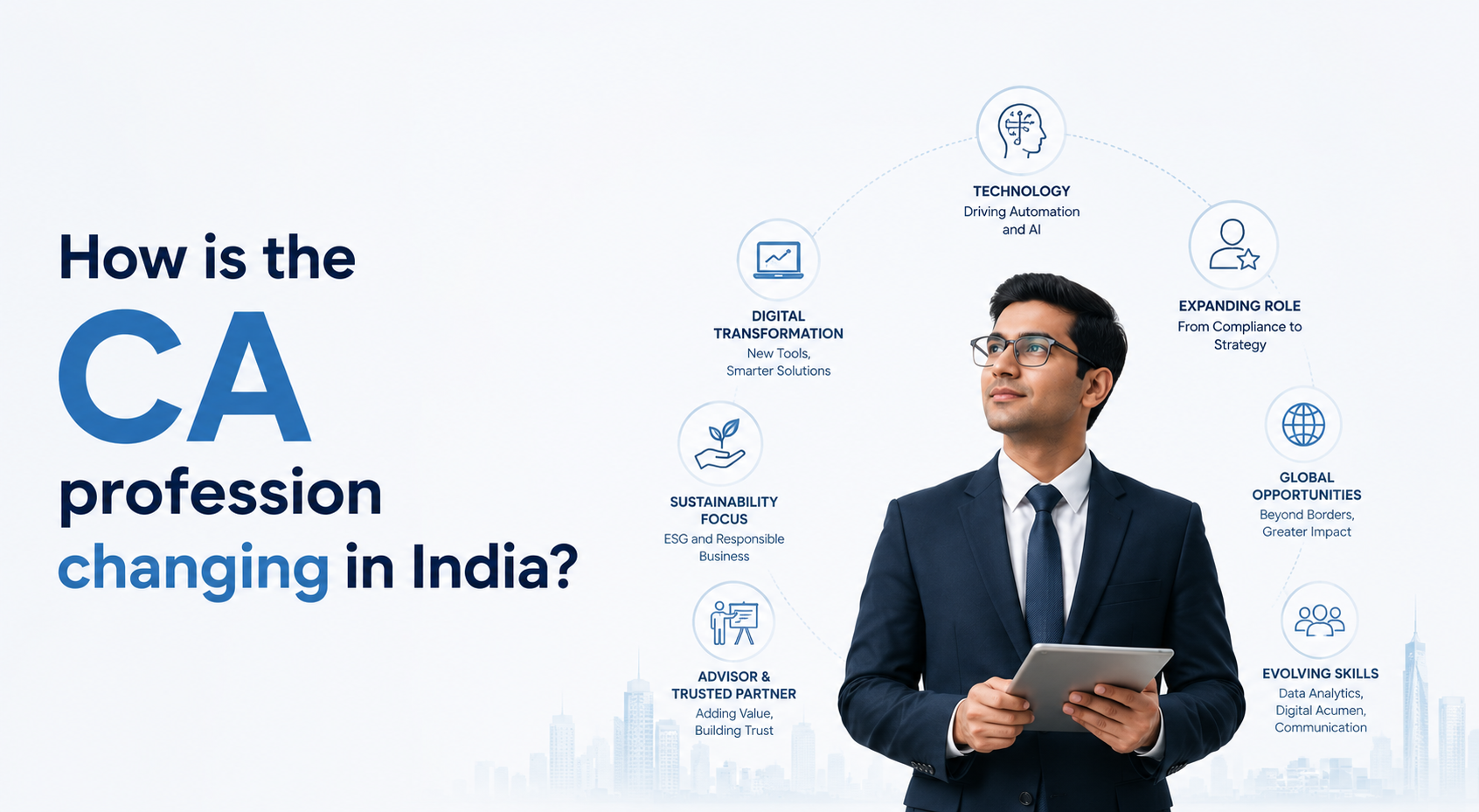
Table of Content
- The Traditional Role of Chartered Accountants Is Expanding
- Technology Is Transforming the CA Profession
- Advisory Services Are Becoming More Important
- Startups Have Created New Opportunities
- Virtual CFO Services Are Growing Rapidly
- Data Analytics Is Becoming an Essential Skill
- Automation Is Changing Routine Accounting Work
- Industry Specialization Is Increasing
- Global Opportunities for Indian Chartered Accountants
- Digital Skills Are Becoming Essential
- Businesses Now Expect Strategic Partners
- Continuous Learning Is More Important Than Ever
- The Future of Chartered Accountancy in India
- Conclusion
The Chartered Accountancy profession in India has witnessed remarkable transformation over the past decade. Earlier, the role of a Chartered Accountant was primarily associated with auditing, taxation, bookkeeping, and statutory compliance. Businesses approached CAs mainly for financial statements, tax returns, and regulatory filings. However, the rapid growth of technology, globalization, digital business models, and changing corporate expectations has significantly expanded the responsibilities of Chartered Accountants. Today, organizations expect financial professionals to contribute far beyond traditional compliance functions by providing strategic insights and business solutions.
The modern Indian business ecosystem demands professionals who can combine financial expertise with technology, analytics, risk management, and strategic planning. As a result, Chartered Accountants are increasingly working as business advisors, financial consultants, Virtual CFOs, startup mentors, digital transformation experts, and corporate strategists. This evolution has created new career opportunities while reshaping the way Chartered Accountants add value to businesses. The profession is no longer limited to managing numbers—it is becoming an essential driver of business growth and decision-making.
The Traditional Role of Chartered Accountants Is Expanding
For decades, Chartered Accountants were primarily known for handling taxation, auditing, accounting, and compliance-related responsibilities. While these services remain important, businesses today expect CAs to provide solutions that improve profitability, strengthen governance, and support strategic growth.
The profession has gradually shifted from compliance-driven work to value-driven advisory services. This transition has opened new opportunities across industries and business sectors.
Technology Is Transforming the CA Profession
Digital technology has completely changed the way financial services are delivered. Cloud accounting, automation, artificial intelligence, and business analytics have reduced manual accounting work while improving accuracy and efficiency. Modern Chartered Accountants now use technology for:
- Cloud accounting
- Financial dashboards
- ERP implementation
- Business analytics
- Automated reporting
- Digital documentation
Technology enables faster decision-making and enhances the quality of financial advisory services.
Advisory Services Are Becoming More Important
Businesses increasingly seek financial professionals who can help them make better strategic decisions rather than simply maintain compliance. As a result, advisory services have become one of the fastest-growing areas for Chartered Accountants. Popular advisory services include:
- Business consulting
- Financial planning
- Working capital advisory
- Business restructuring
- Profitability analysis
- Growth strategy planning
Advisory-focused practices create greater value for clients while expanding professional opportunities for CAs.
Startups Have Created New Opportunities
India's growing startup ecosystem has significantly increased the demand for Chartered Accountants. Entrepreneurs require expert financial guidance from the early stages of business development. Chartered Accountants support startups through:
- Business registration
- Financial projections
- Fundraising advisory
- Compliance management
- Investor reporting
- Budget planning
Professional financial guidance helps startups establish strong foundations for future growth.
Virtual CFO Services Are Growing Rapidly
Many small and medium-sized businesses require strategic financial leadership but may not have the resources to appoint a full-time CFO. This has created strong demand for Virtual CFO services provided by Chartered Accountants. Virtual CFO responsibilities include:
- Financial planning
- Budget management
- Cash flow monitoring
- Business reporting
- Strategic advisory
- Profitability analysis
This service model allows CAs to build long-term client relationships while delivering high-value advisory solutions.
Data Analytics Is Becoming an Essential Skill
Modern businesses generate large volumes of financial and operational data. Chartered Accountants are increasingly using data analytics tools to identify business trends, monitor performance, and support strategic decision-making. Analytics-driven services include:
- Financial forecasting
- Business intelligence
- Profitability analysis
- Cost management
- Performance reporting
- Risk assessment
Data-driven insights enable businesses to make faster and more informed decisions.
Automation Is Changing Routine Accounting Work
Automation has reduced the time spent on repetitive accounting tasks such as bookkeeping, reconciliation, invoice processing, and report generation. This allows Chartered Accountants to focus more on strategic advisory and financial consulting. Automation improves:
- Efficiency
- Accuracy
- Productivity
- Compliance management
- Financial reporting
- Client service quality
The profession is moving toward knowledge-based services rather than manual processing.
Industry Specialization Is Increasing
Many Chartered Accountants are developing expertise in specific industries to provide customized advisory solutions. Specialization helps professionals understand industry-specific regulations and financial challenges more effectively. Popular sectors include:
- Healthcare
- Manufacturing
- Real estate
- Information Technology
- MSMEs
- Education
- Export businesses
- Startups
Industry specialization creates competitive advantages and stronger client relationships.
Global Opportunities for Indian Chartered Accountants
Indian Chartered Accountants are increasingly working with international clients and multinational companies. Global outsourcing, cross-border taxation, financial reporting standards, and international consulting have expanded career opportunities. International practice areas include:
- Global accounting
- International taxation
- Transfer pricing
- Financial reporting
- Compliance advisory
- Business consulting
Globalization has significantly enhanced the professional scope of Indian CAs.
Digital Skills Are Becoming Essential
Financial expertise alone is no longer sufficient in the modern business environment. Chartered Accountants must continuously upgrade their digital capabilities to remain competitive. Important digital skills include:
- Excel automation
- Power BI
- ERP systems
- AI-powered accounting tools
- Financial analytics
- Cloud accounting platforms
Technology skills complement financial knowledge and improve career opportunities.
Businesses Now Expect Strategic Partners
Organizations no longer view Chartered Accountants only as compliance professionals. Today, they expect CAs to contribute toward business planning, investment decisions, risk management, financial restructuring, operational efficiency, and long-term growth strategies.
This advisory role has elevated the profession from financial reporting to business leadership. The ability to solve business problems has become one of the most valuable skills for modern Chartered Accountants.
Continuous Learning Is More Important Than Ever
The business environment changes rapidly due to new regulations, emerging technologies, and evolving market conditions. Successful Chartered Accountants continuously upgrade their knowledge through certifications, industry training, and professional development programs. Continuous learning helps professionals:
- Stay updated with regulations
- Learn new technologies
- Improve advisory capabilities
- Enhance leadership skills
- Build industry expertise
- Expand career opportunities
Lifelong learning has become an essential part of professional success.
The Future of Chartered Accountancy in India
The future of the Chartered Accountancy profession in India looks highly promising. Businesses increasingly require professionals who can combine financial expertise with technology, strategic thinking, and business advisory. Automation may reduce routine accounting work, but it will simultaneously increase demand for professionals capable of interpreting financial data and providing actionable business insights.
Chartered Accountants who embrace digital transformation, specialize in advisory services, and continuously upgrade their skills will enjoy exceptional career opportunities in the coming years. The profession is evolving into one of the most influential leadership roles within the business ecosystem.
Conclusion
The answer to How Is the CA Profession Changing in India lies in its transition from a compliance-focused profession to a strategic business advisory role. Technology, automation, analytics, globalization, and changing business expectations have significantly expanded the responsibilities of Chartered Accountants. Today, they contribute to financial planning, business consulting, risk management, startup advisory, Virtual CFO services, and digital transformation initiatives. As the Indian economy continues to grow and businesses become more technology-driven, Chartered Accountants will remain indispensable professionals who drive financial excellence and sustainable business growth.

FAQs
How is the CA profession changing in India?
The CA profession is evolving from traditional accounting and taxation toward business advisory, digital finance, analytics, strategic consulting, and technology-driven financial management.
Why is technology changing the Chartered Accountancy profession?
Technology automates routine accounting tasks and enables Chartered Accountants to focus on financial strategy, analytics, business consulting, and decision-making support.
Are advisory services becoming important for Chartered Accountants?
Yes. Businesses increasingly seek advisory services such as financial planning, business restructuring, profitability analysis, risk management, and growth strategy consulting.
How are startups creating opportunities for Chartered Accountants?
Startups require business registration, financial planning, fundraising support, budgeting, investor reporting, and compliance management, creating significant advisory opportunities for CAs.
What are Virtual CFO services?
Virtual CFO services involve providing financial strategy, budgeting, cash flow management, management reporting, and business advisory without serving as a full-time CFO.
Why should Chartered Accountants learn digital skills?
Digital skills such as cloud accounting, ERP systems, Power BI, AI tools, and financial analytics improve efficiency and expand career opportunities.
Can Chartered Accountants specialize in industries?
Yes. Many Chartered Accountants specialize in sectors such as manufacturing, healthcare, startups, exports, education, IT, and real estate to provide industry-specific advisory services.
Does automation reduce opportunities for Chartered Accountants?
No. Automation reduces repetitive tasks but increases demand for strategic advisory, financial analytics, consulting, and business planning expertise.
Can Indian Chartered Accountants work internationally?
Yes. Indian Chartered Accountants work with multinational companies and global clients in accounting, taxation, consulting, financial reporting, and compliance advisory.
What is the future of the CA profession in India?
The future is highly promising, with growing demand for Chartered Accountants in advisory services, digital finance, business consulting, strategic planning, and technology-driven financial management.