Is the CA Profession Changing Faster Than Before: The Future of CA
Discover how the CA profession is evolving with technology, advisory services, automation, and changing business expectations in today's competitive environment.
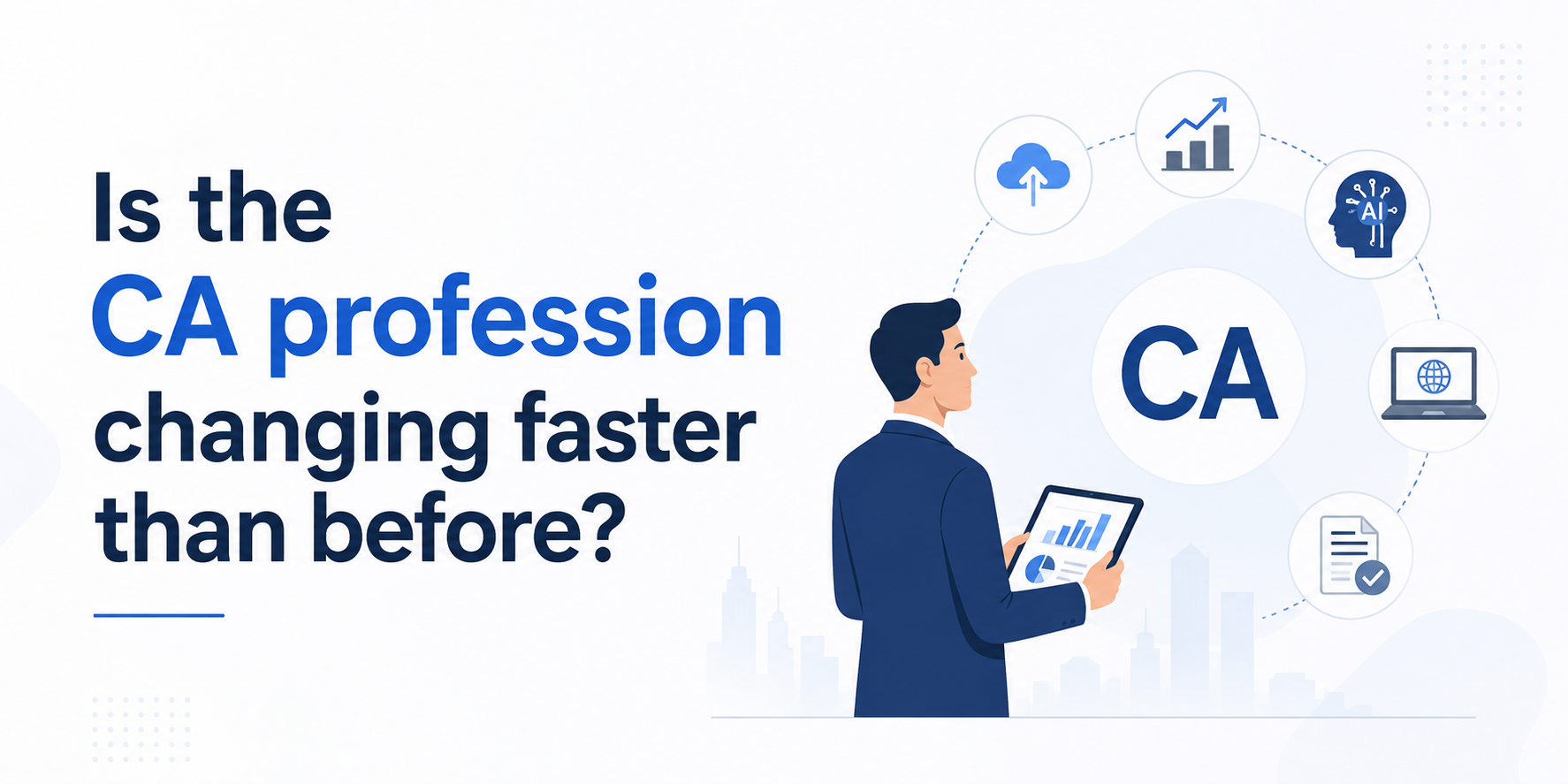
Table of Content
- Why the CA Profession Is Evolving Rapidly
- Technology Has Reshaped the Profession
- Major Changes in the CA Profession
- Businesses Expect More Than Compliance
- Advisory Services Are Becoming a Core Role
- Skills Every Modern Chartered Accountant Should Develop
- Digital Skills Are No Longer Optional
- Industry Expectations Continue to Rise
- New Opportunities Are Expanding the Career Scope
- Continuous Learning Has Become Essential
- Why the Future Looks Promising for Chartered Accountants
- Success Will Depend on Adaptability
- Conclusion
The Chartered Accountancy profession has always adapted to changing business and economic environments. However, the pace of transformation over the last few years has been far greater than many professionals expected. Businesses are embracing digital technologies, financial regulations are becoming more complex, and organisations now expect finance professionals to contribute far beyond traditional accounting functions. As a result, the role of a Chartered Accountant is evolving rapidly, creating both new challenges and exciting opportunities.
Today, a Chartered Accountant is no longer viewed only as a tax expert or auditor. Modern businesses rely on CAs for strategic planning, financial forecasting, risk management, business advisory, digital transformation, and decision-making support. This shift has expanded the profession significantly, making Chartered Accountants valuable contributors to business growth rather than professionals who work only during audits or tax filing seasons. For aspiring and practising CAs alike, understanding these changes is essential for building a successful long-term career.
Why the CA Profession Is Evolving Rapidly
The business environment has changed dramatically over the past decade. Companies now generate large volumes of financial data, operate across multiple markets, and face increasing compliance requirements. Business owners also expect faster reporting and better financial insights to make informed decisions.
These changing expectations have naturally transformed the responsibilities of Chartered Accountants. Instead of focusing only on maintaining financial records, CAs are now expected to analyse business performance, identify risks, improve profitability, and support strategic planning. The profession has therefore moved from record-keeping to value creation.
Technology Has Reshaped the Profession
One of the biggest reasons behind this transformation is technology. Modern accounting software, cloud platforms, automation tools, artificial intelligence, and business analytics have changed the way financial information is managed.
Routine accounting tasks that once required hours of manual work can now be completed much faster through automation. This allows Chartered Accountants to spend more time interpreting financial information and advising businesses on important decisions. Technology has not reduced the importance of CAs—it has changed the nature of their work.
Major Changes in the CA Profession
- Digital Accounting – Cloud-based accounting systems have replaced many traditional manual processes.
- Business Advisory Services – Companies increasingly seek strategic guidance along with financial expertise.
- Data-Driven Decision Making – Financial data is now used to support business planning and growth.
- Automation of Routine Tasks – Repetitive accounting activities are becoming technology-driven.
- Greater Business Involvement – CAs now contribute to management decisions beyond finance and compliance.
These developments show how significantly the profession has evolved.
Businesses Expect More Than Compliance
There was a time when many businesses approached Chartered Accountants mainly for taxation, auditing, and statutory compliance. While these responsibilities remain important, organisations today expect much more.
Business owners want professionals who can improve profitability, strengthen internal controls, manage financial risks, optimise cash flow, and guide expansion strategies. This has transformed the Chartered Accountant into a trusted business advisor. The ability to provide practical business solutions has become just as valuable as technical knowledge.
Advisory Services Are Becoming a Core Role
Modern Chartered Accountants are increasingly involved in helping businesses make smarter financial decisions.
Whether it is evaluating investments, preparing business forecasts, improving operational efficiency, or supporting mergers and acquisitions, advisory services have become a major part of the profession.
This shift allows CAs to work more closely with business owners and senior management while contributing directly to organisational growth.
Skills Every Modern Chartered Accountant Should Develop
- Financial Analysis – Understanding financial data beyond basic accounting.
- Business Communication – Explaining financial insights in simple business language.
- Technology Awareness – Working confidently with accounting software and digital tools.
- Problem-Solving Ability – Recommending practical solutions to business challenges.
- Strategic Thinking – Connecting financial information with long-term business objectives.
These skills help Chartered Accountants remain competitive in a rapidly changing business environment.
Digital Skills Are No Longer Optional
Technology continues to reshape finance functions across industries. Businesses increasingly use ERP systems, cloud accounting software, business intelligence tools, and automation platforms to improve efficiency.
Chartered Accountants who understand these technologies can deliver faster reporting, better financial analysis, and more meaningful business insights. Learning digital tools has therefore become an important part of professional growth rather than an additional advantage.
Industry Expectations Continue to Rise
Today's organisations expect finance professionals to participate in strategic discussions rather than simply preparing reports. Senior management often depends on Chartered Accountants for:
- Business planning
- Budget preparation
- Risk assessment
- Performance evaluation
- Financial forecasting
- Investment decisions
This wider involvement has significantly increased the importance of the profession within modern organisations.
New Opportunities Are Expanding the Career Scope
As the profession evolves, Chartered Accountants now have opportunities across diverse industries and specialised roles.
Emerging Career Opportunities for CAs
- Business Consulting – Advising organisations on financial and operational improvements.
- Virtual CFO Services – Supporting businesses with strategic financial leadership.
- Financial Planning and Analysis – Helping management make informed business decisions.
- Startup Advisory – Assisting entrepreneurs with financial planning and business growth.
- Risk and Compliance Consulting – Strengthening governance and internal control systems.
These opportunities demonstrate that the profession is becoming increasingly dynamic.
Continuous Learning Has Become Essential
The pace of change means that professional learning cannot stop after qualifying as a Chartered Accountant.
Tax laws, accounting standards, financial regulations, technology, and business practices continue to evolve. Professionals who regularly upgrade their knowledge remain more valuable to employers and clients.
Continuous learning has become one of the defining characteristics of successful Chartered Accountants.
Why the Future Looks Promising for Chartered Accountants
Despite increasing automation, the demand for qualified Chartered Accountants continues to remain strong because businesses still require professional judgement, ethical decision-making, and financial expertise.
Technology can automate calculations, but it cannot replace critical thinking, strategic planning, or business advisory. These are areas where Chartered Accountants continue to provide significant value. As businesses become more complex, the importance of trusted financial advisors is likely to increase further.
Success Will Depend on Adaptability
The future CA will not simply prepare financial statements. They will analyse business performance, support management decisions, implement technology-driven solutions, and help organisations achieve sustainable growth.
Professionals who combine technical expertise with business understanding, communication skills, and digital knowledge will remain highly valuable across industries. Adaptability is becoming one of the most important qualities for every Chartered Accountant.
Conclusion
The answer to "Is the CA profession changing faster than before?" is undoubtedly yes. Technology, automation, changing business expectations, and increasing demand for advisory services have transformed the role of Chartered Accountants significantly. Today's CAs are not limited to accounting, taxation, or auditing. They actively contribute to strategic planning, financial management, business consulting, and organisational growth. As the profession continues to evolve, Chartered Accountants who embrace continuous learning, develop digital skills, and expand their business knowledge will be well positioned to succeed in the future. Rather than reducing opportunities, these changes are creating a broader and more impactful role for the modern Chartered Accountant.

FAQs
Is the CA profession changing faster than before?
Yes. Technology, automation, regulatory changes, and increasing business expectations are rapidly transforming the Chartered Accountancy profession.
Why is the role of Chartered Accountants changing?
Businesses now expect CAs to provide strategic advice, financial analysis, risk management, and business consulting in addition to traditional accounting services.
Will technology replace Chartered Accountants?
No. Technology automates routine tasks, but businesses still rely on Chartered Accountants for professional judgement, financial strategy, and decision-making.
What new skills should Chartered Accountants learn?
Modern CAs should develop digital skills, business analytics, financial planning, communication, and strategic advisory capabilities.
Are advisory services becoming important for CAs?
Yes. Business advisory has become one of the fastest-growing areas of the profession as companies seek strategic financial guidance.
Can Chartered Accountants work in business consulting?
Absolutely. Many Chartered Accountants build successful careers in business consulting, financial advisory, risk management, and corporate strategy.
Is continuous learning necessary for Chartered Accountants?
Yes. Regularly updating knowledge about technology, regulations, accounting standards, and business practices is essential for long-term career growth.
What industries are hiring Chartered Accountants today?
Chartered Accountants are in demand across manufacturing, technology, healthcare, banking, startups, retail, consulting, and multinational corporations.
Does automation reduce career opportunities for CAs?
No. Automation shifts the focus from routine accounting to higher-value services such as advisory, analysis, and strategic decision-making.
What is the future of the Chartered Accountancy profession?
The future is highly promising for Chartered Accountants who combine financial expertise with technology, business strategy, and continuous professional development.