Why Businesses Need Multi-Skilled Chartered Accountants Today
Learn why businesses need multi-skilled chartered accountants for strategic planning, technology adaptation, compliance management, and financial decision-making support.
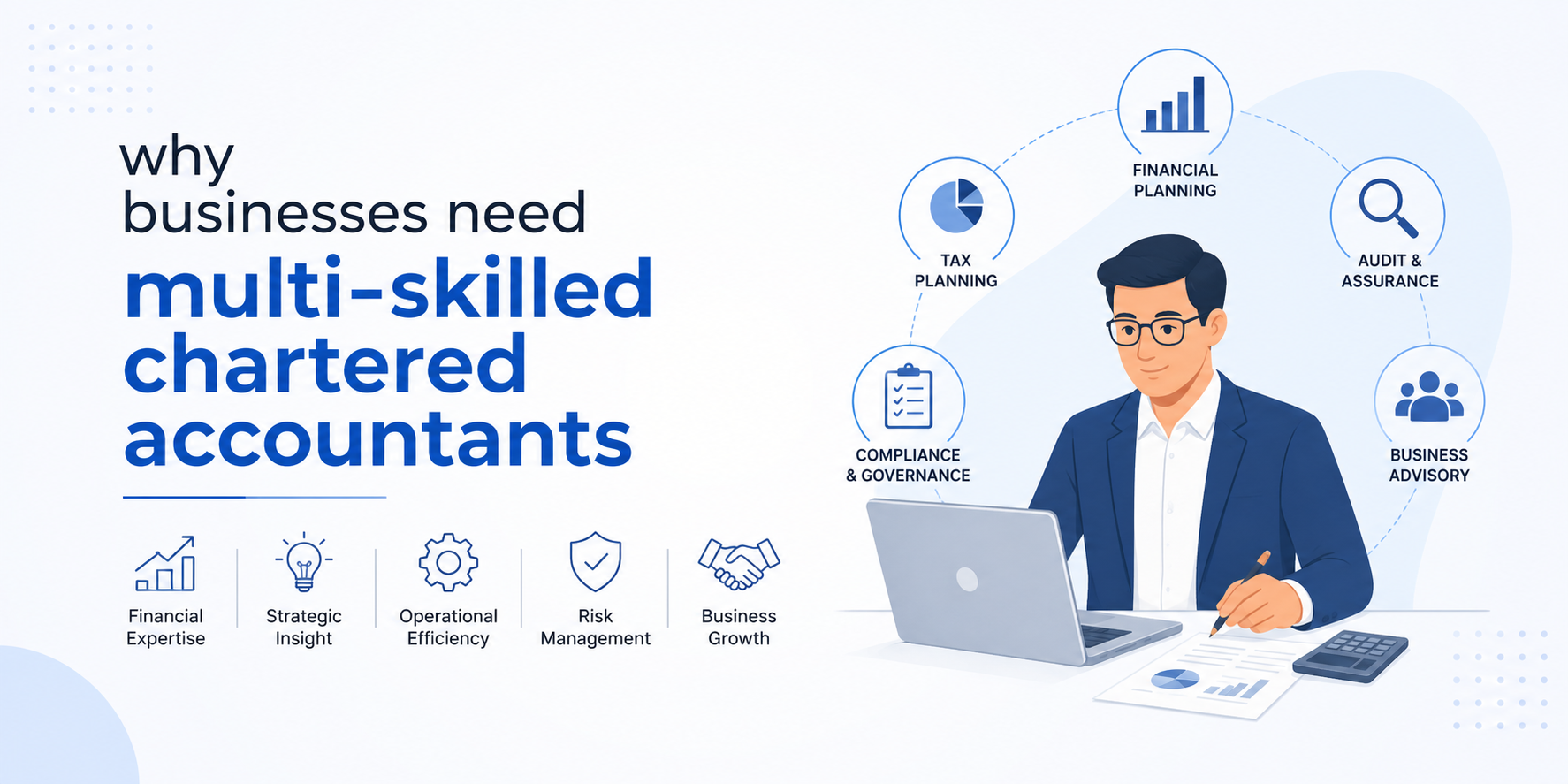
Table of Content
- Modern Businesses Face Complex Challenges
- Businesses Expect More Than Traditional Accounting Skills
- Technology Has Expanded Professional Responsibilities
- Communication Skills Are Becoming Essential
- Multi-Skilled CAs Improve Business Decision-Making
- Businesses Need Faster Problem-Solving Support
- Industry Specialization Increases Professional Value
- Leadership Skills Create Better Opportunities
- Businesses Prefer Adaptable Professionals
- Multi-Skilled Chartered Accountants Improve Client Trust
- Future CA Profession Will Demand Broader Skill Sets
- Conclusion
The role of chartered accountants has changed significantly over the years. Earlier, businesses mainly depended on CAs for accounting, taxation, auditing, and compliance-related responsibilities. However, today’s business environment is much more competitive, technology-driven, and strategically complex. Companies now expect finance professionals to contribute in multiple areas beyond traditional accounting work. Because of this shift, businesses increasingly prefer multi-skilled chartered accountants who can handle financial, operational, technological, and advisory responsibilities together.
Modern organizations no longer want professionals who only prepare reports and manage filings. They now require chartered accountants who can support business growth, analyze risks, understand technology, communicate effectively, and contribute to strategic decision-making. Understanding why businesses need multi-skilled chartered accountants helps explain the changing expectations from the CA profession in the modern corporate world.
Modern Businesses Face Complex Challenges
Businesses today deal with rapidly changing regulations, digital transformation, financial competition, and operational uncertainty. Managing these challenges requires professionals who possess a combination of technical expertise and practical business understanding. Companies now require support in areas such as:
- Financial planning
- Compliance management
- Risk analysis
- Technology adaptation
- Strategic decision-making
A professional who understands only accounting may struggle to handle broader business responsibilities effectively. This is one of the biggest reasons why businesses need multi-skilled chartered accountants in modern industries.
Businesses Expect More Than Traditional Accounting Skills
The finance profession is no longer limited to bookkeeping and taxation work. Chartered accountants are increasingly expected to support management in operational and strategic areas as well.
- Financial Analysis: Businesses need professionals who can interpret financial data and identify growth opportunities.
- Business Advisory: Management teams expect practical recommendations for improving profitability and efficiency.
- Compliance Management: Professionals must understand evolving taxation and regulatory systems.
- Technology Understanding: Modern businesses increasingly depend on digital finance platforms and automation systems.
Because of these expectations, multi-skilled professionals are becoming more valuable than ever before.
Technology Has Expanded Professional Responsibilities
Technology is transforming the accounting and finance industry rapidly. Automated software now handles many repetitive tasks that previously required manual work. Modern chartered accountants are expected to understand:
- Cloud accounting systems
- ERP software
- Financial analytics tools
- Automated compliance platforms
Businesses prefer professionals who can combine finance expertise with digital understanding because technology now plays a major role in financial operations and reporting systems. This technological shift strongly explains why businesses need multi-skilled chartered accountants.
Communication Skills Are Becoming Essential
Strong communication is now considered an important professional skill in the CA profession. Chartered accountants regularly interact with:
- Clients
- Investors
- Management teams
- Regulatory authorities
Professionals must explain financial matters clearly and practically instead of using only technical language. Good communication helps in:
- Building client trust
- Improving teamwork
- Supporting decision-making
- Presenting financial insights effectively
Businesses often prefer professionals who can combine technical knowledge with strong communication ability.
Multi-Skilled CAs Improve Business Decision-Making
Modern companies increasingly involve chartered accountants in strategic planning and operational discussions. Businesses want finance professionals who can understand both numbers and practical business realities.
- Risk Evaluation: Multi-skilled professionals can identify operational and financial risks more effectively.
- Strategic Planning: Businesses expect support for expansion, restructuring, and investment decisions.
- Cost Optimization: Professionals help companies improve operational efficiency and financial management.
- Performance Analysis: Chartered accountants now analyze business trends and profitability patterns regularly.
This strategic involvement makes multi-skilled professionals highly valuable in management environments.
Businesses Need Faster Problem-Solving Support
The modern business world moves very quickly, and companies often require immediate financial guidance and practical solutions. Multi-skilled chartered accountants are generally more adaptable and capable of handling different responsibilities efficiently. They can support businesses through:
- Compliance difficulties
- Financial planning issues
- Cash flow management
- Operational decision-making
Professionals who possess broader skill sets usually contribute more effectively during business challenges and uncertain situations.
Industry Specialization Increases Professional Value
Many businesses now prefer chartered accountants who not only possess multiple skills but also understand their industry specifically.
- Startup Ecosystem Knowledge: Startups require support in funding, compliance, and financial structuring.
- Real Estate Understanding: Industry-specific financial regulations and project costing require specialized expertise.
- E-Commerce and Digital Business Exposure: Online businesses operate differently compared to traditional industries.
- Manufacturing and Cost Analysis: Operational efficiency and cost management are highly important in manufacturing sectors.
This combination of specialization and multiple skills increases professional demand significantly.
Leadership Skills Create Better Opportunities
Modern chartered accountants are increasingly moving into leadership and management roles. Businesses often expect professionals to supervise teams and contribute to organizational planning. Important leadership-related skills include:
- Team management
- Professional coordination
- Client relationship handling
- Strategic participation
Multi-skilled professionals generally grow faster because they can handle responsibilities beyond technical finance work alone.
Businesses Prefer Adaptable Professionals
Business environments continue changing because of technology, market trends, and evolving regulations. Companies, therefore, value professionals who can adapt quickly to new systems and responsibilities.
- Learning New Technologies: Businesses need professionals who can work comfortably with modern digital platforms.
- Understanding Changing Laws: Regulatory updates require continuous learning and professional flexibility.
- Handling Diverse Responsibilities: Modern professionals often manage multiple operational and financial functions together.
- Working Across Teams: Cross-functional collaboration has become common in corporate environments.
Adaptability has therefore become one of the most important qualities in the CA profession today.
Multi-Skilled Chartered Accountants Improve Client Trust
Clients and businesses often trust professionals who can provide complete financial and strategic guidance instead of only handling limited responsibilities. A multi-skilled chartered accountant can often support businesses through:
- Financial planning
- Compliance supervision
- Business analysis
- Risk management
- Operational advice
This broader contribution strengthens long-term professional relationships and business trust.
Future CA Profession Will Demand Broader Skill Sets
The future finance industry is expected to become even more dynamic and technology-oriented. Businesses may increasingly require chartered accountants who possess:
- Digital finance knowledge
- Strategic advisory capabilities
- Data analytics understanding
- Leadership qualities
- Business management awareness
Traditional accounting knowledge alone may not be enough for long-term professional growth in future markets.
Conclusion
Understanding why businesses need multi-skilled chartered accountants helps explain the changing expectations from finance professionals in modern business environments. Today’s organizations require chartered accountants who can contribute beyond traditional accounting and compliance work by supporting technology adoption, strategic planning, risk management, financial analysis, and operational decision-making. Businesses increasingly value professionals who combine technical expertise with communication skills, adaptability, leadership ability, and practical business understanding. As industries continue evolving rapidly, multi-skilled chartered accountants are likely to become even more important for long-term business success and financial stability.

FAQs
Why do businesses need multi-skilled chartered accountants?
Businesses need multi-skilled chartered accountants because modern finance roles now involve technology, strategic planning, risk management, communication, and business advisory responsibilities, along with accounting work.
How has technology changed expectations from chartered accountants?
Technology has increased demand for professionals who understand cloud accounting, ERP systems, automation tools, analytics platforms, and digital compliance management systems.
Why are communication skills important for chartered accountants today?
Modern chartered accountants regularly interact with management teams, investors, and clients, making clear communication essential for financial discussions and decision-making support.
How do multi-skilled chartered accountants support business growth?
They help businesses through financial planning, strategic analysis, compliance management, operational improvements, and profitability-focused advisory services.
Why are businesses expecting advisory skills from CAs?
Companies now prefer professionals who can provide practical business recommendations instead of only handling compliance and reporting responsibilities.
How does adaptability help chartered accountants in modern industries?
Adaptability helps professionals manage changing regulations, digital systems, evolving technologies, and multiple financial responsibilities more effectively.
Why is industry specialization important for multi-skilled chartered accountants?
Industry specialization helps professionals understand sector-specific risks, operational structures, regulations, and financial challenges more accurately.
How do leadership skills benefit chartered accountants?
Leadership skills help professionals manage teams, build client relationships, participate in strategic planning, and handle senior-level responsibilities within organizations.
Why are businesses involving chartered accountants in decision-making processes?
Businesses depend on chartered accountants for financial analysis, risk evaluation, cost management, and long-term strategic planning support.
What is the future scope for multi-skilled chartered accountants?
Future opportunities are expected to grow in digital finance, analytics, strategic advisory, virtual CFO services, and technology-driven business consulting areas.