How CA Services Are Modernizing in Today’s Business World
Explore the modernization of CA services through technology, advisory roles, automation, analytics, and changing client expectations in modern businesses.
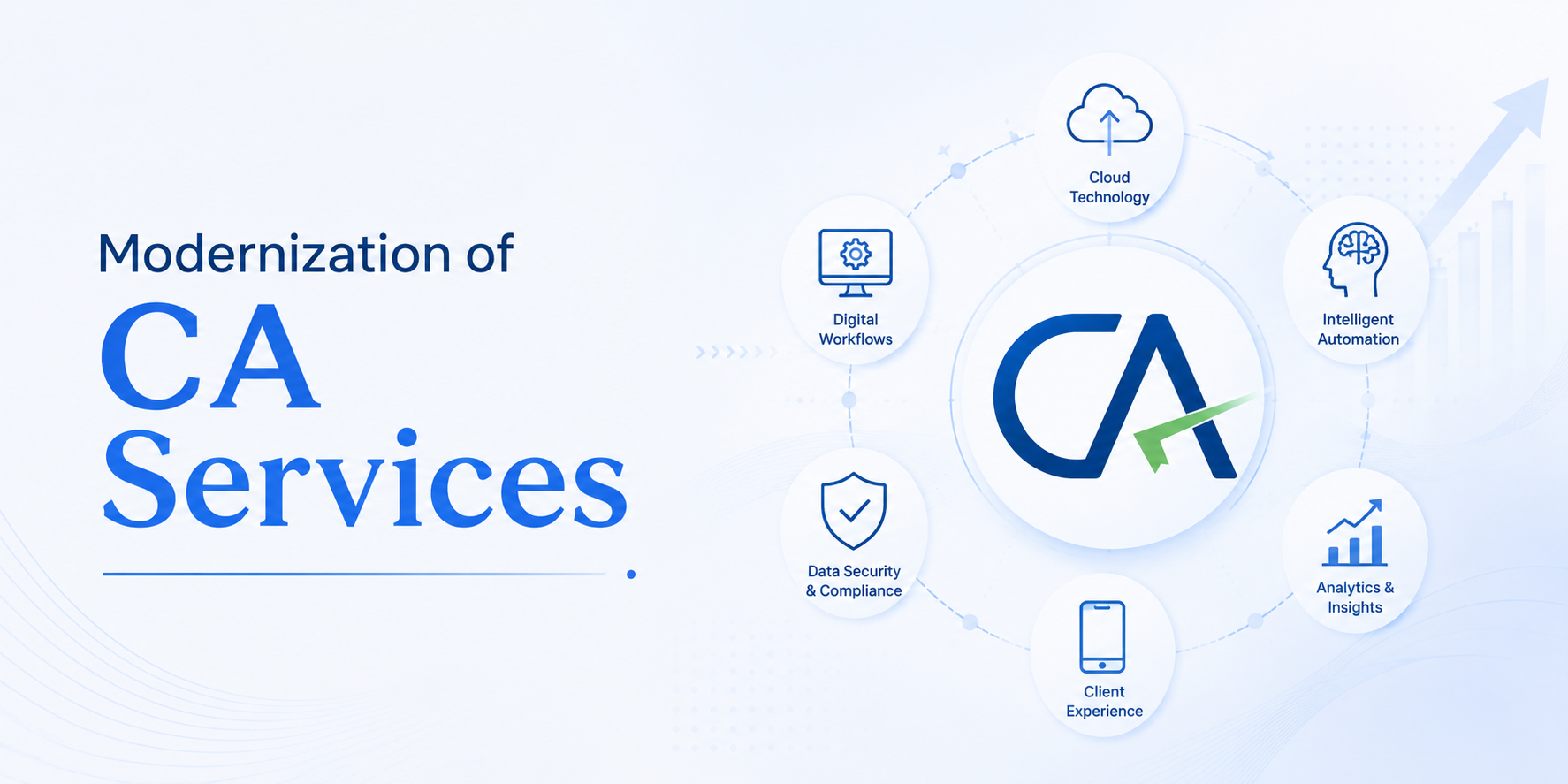
Table of Content
- Technology Has Completely Changed CA Work
- Businesses Now Expect More Than Compliance Work
- Advisory Services Are Growing Rapidly
- Clients Prefer Faster and Digital Communication
- Automation Is Reducing Repetitive Work
- Specialization Is Becoming More Important
- Personal Branding and Online Presence Matter More Today
- Human Skills Are Becoming Equally Important
- The Future of CA Services Will Be More Strategic
- Conclusion
The Chartered Accountancy profession has changed dramatically over the last few years. Earlier, CA services were mostly associated with taxation, auditing, bookkeeping, and compliance-related work. Businesses mainly approached chartered accountants during return filing seasons or statutory audit periods. The profession was often seen as highly technical, paperwork-heavy, and limited mainly to financial reporting activities.
But today, the situation is completely different. Businesses now expect chartered accountants to provide faster solutions, strategic financial guidance, technology-driven support, and real-time business insights. This shift has led to the rapid modernization of CA services across firms, startups, corporates, and independent practices.
Modern chartered accountants are no longer working only as compliance professionals. They are increasingly becoming business advisors, analysts, consultants, and financial problem-solvers.
Technology Has Completely Changed CA Work
One of the biggest reasons behind the modernization of CA services is technology. Traditional accounting methods depended heavily on manual entries, physical records, and repetitive operational work. Today, cloud accounting software, automation tools, and AI-driven systems have changed how professionals manage financial operations. Modern CA firms now use:
- Cloud platforms that allow clients and professionals to access financial data anytime from anywhere.
- Automated accounting and compliance systems that reduce repetitive manual workload significantly.
- Analytics tools that help businesses understand financial trends and operational performance faster.
Because of these digital systems, CA services are becoming quicker, smarter, and more efficient compared to traditional working models.
Businesses Now Expect More Than Compliance Work
Earlier, many clients approached chartered accountants mainly for GST filing, taxation support, or annual audits. Today, businesses expect much broader support from professionals. Modern clients increasingly seek help in:
- Financial planning and profitability improvement strategies.
- Business expansion and operational decision-making.
- Cash flow management and long-term financial forecasting.
- Startup consulting and fundraising preparation.
This shift has transformed the profession from “compliance-focused” to “business-focused.” Chartered accountants today are expected to understand business models, market challenges, and operational realities instead of only accounting standards.
Advisory Services Are Growing Rapidly
One of the biggest signs of modernization in the profession is the rapid growth of advisory services. Businesses now value professionals who can:
- Solve practical financial problems.
- Guide management during uncertain business conditions.
- Improve operational efficiency and profitability.
- Help companies make financially sustainable decisions.
As a result, many CA firms are gradually shifting toward:
- Virtual CFO services
- Business consulting
- Risk advisory
- Strategic financial planning
In many cases, advisory assignments are becoming more valuable than traditional compliance work. This change is creating a more dynamic and intellectually engaging environment inside the profession.
Clients Prefer Faster and Digital Communication
Modern businesses move very quickly, especially startups and technology-driven companies. Clients now expect instant communication, online reporting, and quick financial updates instead of waiting for traditional office meetings. Because of this, CA firms increasingly use:
- Online client portals
- Video consultations
- Digital document sharing systems
- Real-time reporting dashboards
This modernization has improved client convenience and made professional services more accessible across different cities and industries. Independent practitioners are also benefiting because technology now allows them to serve clients remotely without depending heavily on physical office presence.
Automation Is Reducing Repetitive Work
Automation has changed the daily working style inside CA firms significantly. Earlier, professionals spent long hours on:
- Data entry work
- Manual reconciliations
- Repetitive bookkeeping
- Basic compliance processing
Now, many of these tasks are automated through modern accounting systems. This allows professionals to focus more on analytical and strategic work instead of routine operational activities. The real value of chartered accountants is now shifting toward:
- Financial interpretation
- Business analysis
- Strategic planning
- Client advisory support
This transformation is making the profession more future-oriented and intellectually valuable.
Specialization Is Becoming More Important
Modern businesses increasingly prefer professionals who understand specific industries or specialized service areas. Because of this, many chartered accountants are developing expertise in:
- Startup finance
- International taxation
- Forensic accounting
- ESG reporting
- Financial analytics
Specialization helps professionals provide deeper business insights and stronger advisory support. The profession is slowly moving away from generalized service models toward expertise-driven practice structures.
Personal Branding and Online Presence Matter More Today
Another major sign of modernization is the growing importance of digital branding for chartered accountants. Earlier, CA firms mainly depended on referrals and local networking. Today, professionals build visibility through:
- LinkedIn and professional content creation
- Educational finance videos and blogs
- Online webinars and business communities
- Social media engagement
Clients now often choose professionals based on communication style, visibility, and practical understanding instead of only office location. This change is creating strong opportunities for young and tech-savvy chartered accountants.
Human Skills Are Becoming Equally Important
Modernization is not only about technology. It is also changing the type of skills businesses expect from finance professionals. Today, successful chartered accountants often need:
- Communication ability for client handling and business discussions.
- Analytical thinking for solving financial and operational challenges.
- Business understanding for strategic planning support.
- Adaptability to changing technology and regulations.
This combination of technical and practical skills is becoming highly valuable in modern business environments.
The Future of CA Services Will Be More Strategic
The future of CA services is expected to become more technology-driven, advisory-focused, and analytical. Traditional compliance work will remain important, but businesses will increasingly value professionals who can provide strategic business direction. Future-focused CA firms are likely to focus heavily on:
- Financial analytics
- Automation systems
- Business consulting
- Industry-specific advisory services
Professionals who continuously adapt to changing business expectations are likely to experience stronger long-term growth.
Conclusion
The modernization of CA services is transforming the profession completely. Technology, automation, advisory services, analytics, and changing client expectations are reshaping how chartered accountants work with businesses today. Modern professionals are no longer limited to taxation and compliance work because businesses increasingly depend on strategic financial guidance and operational insights. As companies continue becoming more digital and competitive, CA services are expected to become even more dynamic, technology-oriented, and business-focused in the future years.

FAQs
What is the modernization of CA services?
Modernization of CA services refers to the transformation of traditional accounting and compliance work through technology, automation, analytics, and advisory-focused business support.
How is technology changing CA services?
Technology is improving accounting automation, digital compliance, cloud reporting, analytics, and operational efficiency within CA firms and businesses.
Why are advisory services growing in the CA profession?
Businesses increasingly require strategic financial guidance, profitability planning, and business consulting support beyond traditional compliance services.
How has automation affected chartered accountants?
Automation has reduced repetitive tasks such as bookkeeping and reconciliations, allowing professionals to focus more on analysis and advisory work.
Why is specialization becoming important for CAs?
Businesses prefer professionals with industry-specific expertise and a deeper understanding of specialized financial areas such as startups, analytics, and taxation.
How are client expectations changing from chartered accountants?
Clients now expect faster communication, digital reporting, business insights, and practical financial guidance instead of only compliance management.
Why is online presence important for modern CA firms?
Digital visibility helps professionals build credibility, attract clients, and expand networking opportunities beyond local business environments.
What skills are important for modern chartered accountants?
Communication, analytical thinking, business understanding, technology awareness, and adaptability are becoming highly important for modern professionals.
Can independent CAs benefit from modernization?
Yes, technology and digital systems allow independent practitioners to provide efficient services and work with clients remotely across locations.
What is the future of CA services?
The future of CA services is expected to become more technology-driven, advisory-oriented, analytical, and strategically important for businesses.