What Clients Expect From CAs Today and Why It Matters
Explore what clients expect from CAs today, including faster service, business advice, technology-driven solutions, and strategic financial guidance.
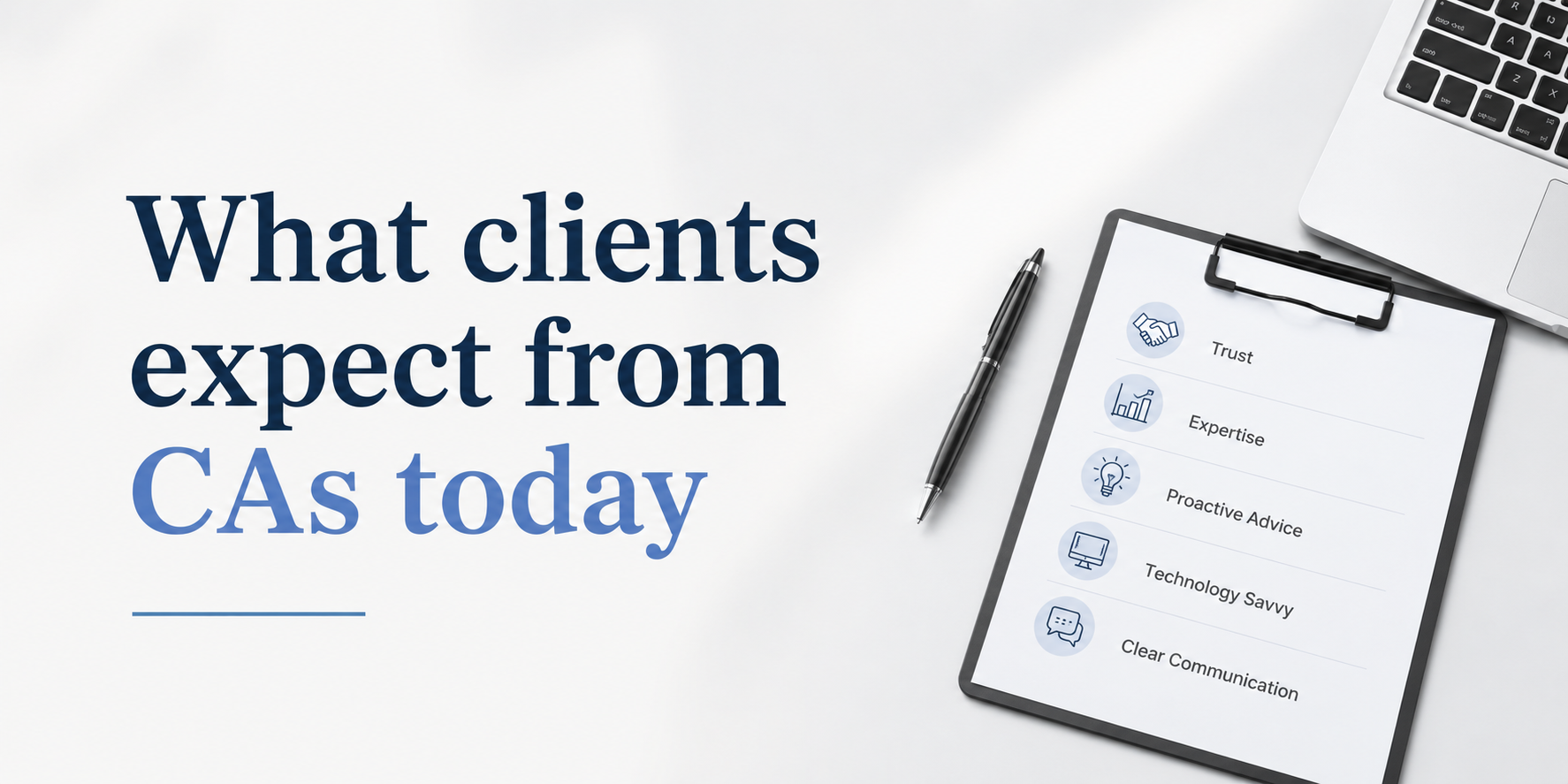
Table of Content
- Clients Want Faster Responses
- Businesses Expect More Than Compliance Support
- Technology-Driven Services Are Becoming Essential
- Practical Advice Is More Valuable Than Technical Language
- Clients Want Proactive Guidance
- Business Understanding Is Increasingly Important
- Transparency Builds Trust
- Clients Appreciate Strategic Thinking
- The Modern CA Is Becoming a Business Partner
- Conclusion
The relationship between clients and chartered accountants has changed significantly over the last decade. Earlier, most businesses approached CAs mainly for tax filing, audits, compliance work, and statutory reporting. As long as deadlines were met and returns were filed correctly, clients were generally satisfied with the services they received.
Today, however, expectations are very different. Businesses operate in a fast-moving environment where financial decisions need to be made quickly and accurately. Clients no longer view chartered accountants as professionals who only handle compliance. Instead, they increasingly see them as trusted advisors who can help improve business performance, manage risks, and support long-term growth.
This shift is transforming the profession and creating new opportunities for CAs who are willing to expand their role beyond traditional responsibilities.
Clients Want Faster Responses
One of the biggest expectations modern clients have is speed. Business owners often deal with urgent financial decisions and cannot afford to wait days for answers. Whether it is a taxation query, compliance concern, or financial planning discussion, clients prefer professionals who respond quickly and provide practical guidance. Today's businesses appreciate:
- Faster communication that helps them make timely decisions.
- Quick access to financial information and reports.
- Prompt updates regarding compliance deadlines and regulatory changes.
In a competitive business environment, responsiveness has become almost as important as technical expertise.
Businesses Expect More Than Compliance Support
A few years ago, many clients only approached chartered accountants during tax seasons or audit periods. Now, businesses seek continuous support throughout the year. Modern clients increasingly want help with:
- Improving profitability and managing business costs effectively.
- Planning future growth and expansion strategies.
- Evaluating financial risks before making important decisions.
Because of this, the CA's role is gradually moving from compliance management to business partnership. Clients value professionals who help them solve problems rather than simply complete statutory requirements.
Technology-Driven Services Are Becoming Essential
Technology has changed the way businesses operate, and client expectations have evolved accordingly. Many companies now expect:
- Digital document sharing and paperless workflows.
- Cloud-based access to financial information.
- Real-time reporting and financial visibility.
Clients often prefer working with professionals who use modern tools because these systems improve efficiency and reduce delays. A CA who embraces technology can often provide a much smoother and more convenient client experience compared to traditional methods.
Practical Advice Is More Valuable Than Technical Language
Business owners are usually focused on growth, profitability, and operational challenges. They may not always be interested in complex accounting terminology or lengthy technical explanations. Instead, clients appreciate professionals who can:
- Explain financial issues in simple and practical language.
- Translate financial data into actionable business recommendations.
- Provide solutions that support business objectives.
The ability to simplify complex concepts is becoming one of the most valuable skills for modern chartered accountants. Clients often remember practical advice more than technical expertise alone.
Clients Want Proactive Guidance
Modern businesses prefer professionals who identify issues before they become major problems. Rather than waiting for clients to ask questions, successful CAs often:
- Highlight upcoming compliance requirements in advance.
- Identify financial risks that may affect operations.
- Suggest opportunities to improve efficiency and profitability.
This proactive approach strengthens trust and demonstrates that the professional genuinely understands the client's business. Many clients today expect this level of involvement from their advisors.
Business Understanding Is Increasingly Important
Clients no longer want professionals who only understand accounting standards and tax laws. They prefer advisors who also understand how businesses operate. For example, clients value CAs who can:
- Understand industry-specific challenges.
- Evaluate the financial impact of business decisions.
- Contribute to discussions about growth and strategy.
When professionals understand both finance and business, they can provide more meaningful recommendations. This broader perspective often helps build stronger and longer-lasting client relationships.
Transparency Builds Trust
Trust remains one of the most important factors in any professional relationship. Clients expect:
- Clear communication regarding fees and services.
- Honest discussions about risks and challenges.
- Transparent reporting and financial advice.
Professionals who communicate openly and consistently tend to build stronger credibility over time. In many cases, trust becomes the foundation of long-term client retention and referrals.
Clients Appreciate Strategic Thinking
Businesses today face uncertainty from changing regulations, economic fluctuations, technology disruption, and increasing competition. Because of this, many clients want chartered accountants who can help them think strategically. They increasingly seek support in areas such as:
- Financial forecasting and planning.
- Investment and expansion decisions.
- Risk management and business stability.
This strategic involvement is one of the reasons the profession is becoming more advisory-focused. Clients value professionals who contribute to future growth rather than only reviewing past performance.
The Modern CA Is Becoming a Business Partner
Perhaps the biggest change in client expectations is the way businesses view chartered accountants. Earlier, the relationship was often limited to compliance and reporting activities. Today, many clients see their CA as:
- A financial advisor.
- A business consultant.
- A strategic planning partner.
- A trusted problem solver.
This shift creates opportunities for professionals who are willing to develop broader skills and deeper business understanding. The most successful CAs are often those who become involved in their clients' business journeys rather than only handling paperwork.
Conclusion
Understanding what clients expect from CAs today is essential for professionals who want to remain relevant in a changing business environment. Modern clients expect much more than compliance support. They want faster responses, practical advice, technology-driven services, proactive guidance, and strategic business insights. As businesses become more competitive and complex, chartered accountants are increasingly expected to act as advisors and partners rather than only technical experts. Professionals who adapt to these expectations are likely to build stronger client relationships and achieve long-term success in the evolving CA profession.

FAQs
What do clients expect from CAs today?
Clients expect faster communication, business advice, strategic guidance, technology-enabled services, and proactive financial support in addition to compliance work.
Why are client expectations changing for chartered accountants?
Businesses operate in more competitive and technology-driven environments, requiring broader financial and strategic support.
Why is quick communication important for modern CAs?
Business owners often make time-sensitive decisions and value professionals who provide prompt responses and guidance.
Do clients still value compliance services?
Yes, compliance remains important, but clients increasingly expect additional support related to business growth and financial planning.
How does technology influence client expectations?
Technology has increased demand for digital services, real-time reporting, cloud-based systems, and faster access to financial information.
Why do clients prefer practical financial advice?
Business owners want solutions they can apply directly rather than complex technical explanations that are difficult to understand.
What is proactive guidance in the CA profession?
Proactive guidance involves identifying risks, opportunities, and compliance requirements before clients ask for assistance.
Why is business understanding important for chartered accountants?
Business understanding helps professionals provide more relevant advice and support strategic decision-making.
How can CAs build stronger client relationships?
By maintaining transparency, communicating clearly, offering proactive support, and understanding client business goals.
What is the future role of chartered accountants with clients?
The future role is expected to be more advisory-focused, with CAs acting as strategic partners and trusted business advisors.