Role of CA in Modern Financial Reporting for Businesses
Learn the role of CA in modern financial reporting through transparency, compliance management, financial analysis, and accurate business reporting systems.
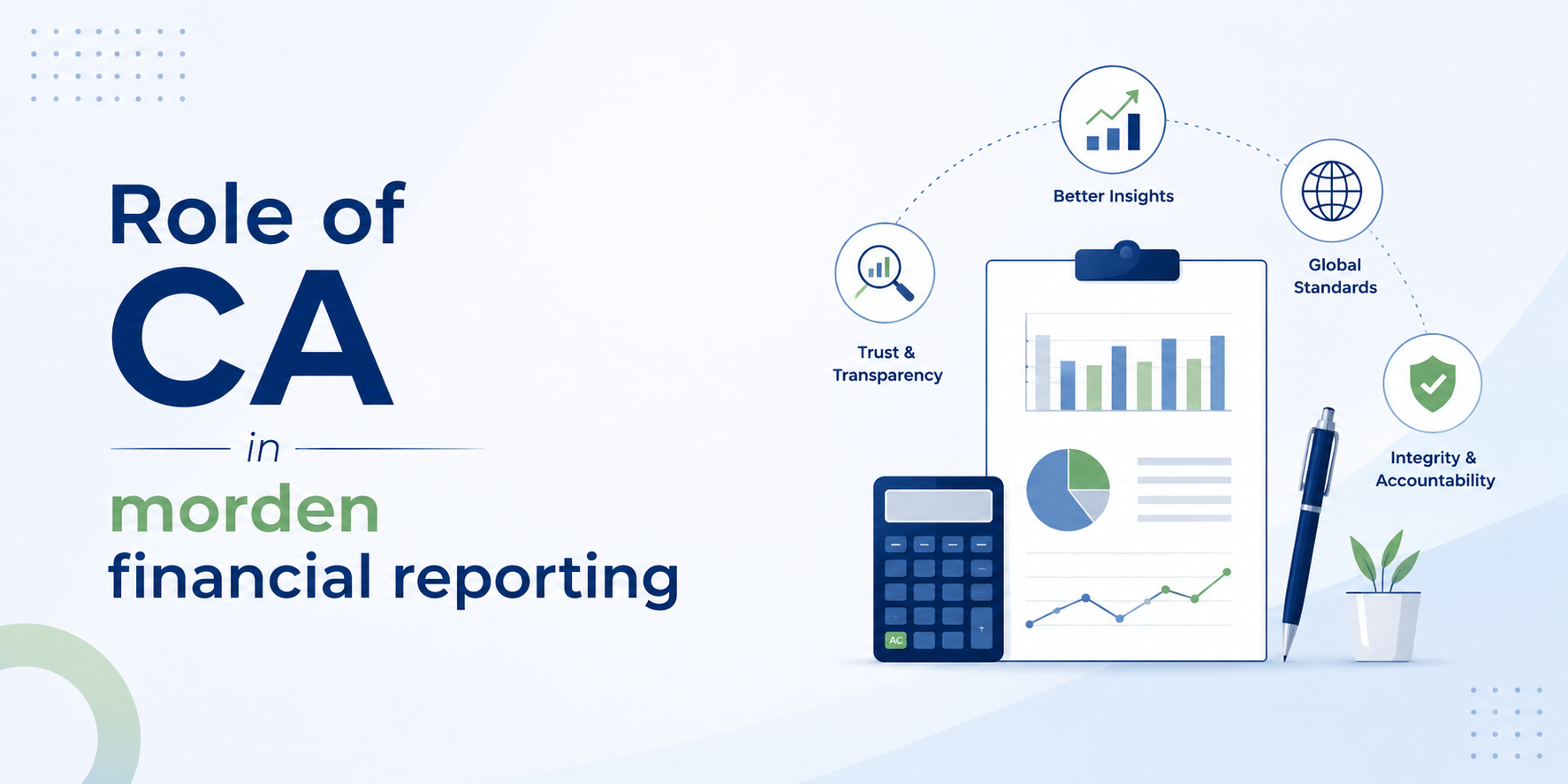
Table of Content
- Financial Reporting Supports Business Transparency
- Accuracy in Financial Reporting Is Extremely Important
- Modern Businesses Depend on Financial Analysis
- Compliance Management Is a Major Responsibility
- Technology Has Changed Modern Financial Reporting
- Chartered Accountants Improve Investor Confidence
- Reporting Standards Are Becoming More Advanced
- Advisory Role of CAs Is Expanding Through Reporting
- Communication Skills Have Become Important
- Startups and SMEs Need Structured Reporting Systems
- Future of Financial Reporting Will Become More Digital
- Conclusion
Financial reporting has become one of the most important parts of modern business management because companies today operate in highly regulated, competitive, and transparency-focused environments. Investors, lenders, regulators, management teams, and stakeholders all depend heavily on financial reports to understand the financial health and operational performance of businesses. Because of this, the role of chartered accountants in financial reporting has become extremely important in modern corporate systems.
Earlier, financial reporting was mainly limited to preparing balance sheets and profit statements for compliance purposes. However, modern financial reporting now involves transparency, analytical interpretation, regulatory compliance, digital reporting systems, and strategic financial communication. Chartered accountants today are not only responsible for preparing reports but also for ensuring that financial information is accurate, reliable, and useful for decision-making.
Financial Reporting Supports Business Transparency
One of the most important purposes of financial reporting is maintaining transparency within business operations. Modern organizations are expected to present clear and accurate financial information to stakeholders, investors, and regulatory authorities. Chartered accountants help businesses ensure that financial reports properly reflect:
- Revenue performance
- Operational expenses
- Profitability position
- Financial obligations
This transparency improves trust and allows stakeholders to evaluate business performance more confidently. Because of this responsibility, chartered accountants play a major role in strengthening financial credibility within organizations.
Accuracy in Financial Reporting Is Extremely Important
Even small reporting errors can create serious financial and legal consequences for businesses. Incorrect financial statements may affect investor confidence, taxation compliance, operational decisions, and business reputation. Chartered accountants, therefore, carefully supervise:
- Financial statement preparation
- Accounting entries
- Reporting standards
- Disclosure requirements
Their professional expertise helps businesses maintain reporting accuracy and avoid unnecessary compliance-related complications. Accurate financial reporting also improves management decision-making and long-term financial planning.
Modern Businesses Depend on Financial Analysis
Financial reporting today is not limited only to compliance documentation. Businesses increasingly use financial reports for strategic planning, performance monitoring, and operational improvement.
- Profitability Evaluation: Financial reports help businesses understand overall operational performance and profit trends.
- Cost Analysis: Management teams use reporting systems to identify unnecessary expenses and financial inefficiencies.
- Investment Planning: Investors and companies evaluate financial reports before making investment-related decisions.
- Risk Identification: Reporting systems help businesses detect financial weaknesses and operational concerns early.
Because of these uses, chartered accountants now contribute much more strategically toward business management.
Compliance Management Is a Major Responsibility
Modern businesses operate under strict taxation laws, accounting standards, and regulatory frameworks. Chartered accountants help organizations maintain proper compliance while preparing financial reports. Professionals regularly ensure alignment with:
- Accounting standards
- Taxation regulations
- Audit requirements
- Corporate reporting frameworks
This compliance supervision helps businesses avoid penalties, reporting disputes, and legal complications. As financial regulations continue evolving, the role of CAs in reporting systems is becoming even more important.
Technology Has Changed Modern Financial Reporting
Technology has significantly transformed how businesses prepare and manage financial reports. Earlier, reporting systems depended heavily on manual calculations and paper-based records. Today, businesses increasingly use cloud accounting, automated reporting software, and digital financial systems. Modern chartered accountants now work with:
- ERP systems
- Cloud accounting platforms
- Automated reporting tools
- Financial analytics software
Technology helps professionals improve reporting speed, operational accuracy, and financial data management significantly. Because of this digital transformation, technology adaptation has become essential in modern financial reporting practices.
Chartered Accountants Improve Investor Confidence
Investors and lenders rely heavily on financial reports before making business or investment decisions. Accurate and transparent reporting improves confidence regarding the financial stability and operational credibility of organizations. Chartered accountants help businesses present:
- Reliable financial statements
- Proper disclosures
- Consistent reporting systems
- Transparent operational information
This strengthens trust among investors, shareholders, and financial institutions. Strong reporting systems, therefore, directly support better investment opportunities for businesses.
Reporting Standards Are Becoming More Advanced
Modern accounting environments are becoming increasingly complex because businesses now operate globally and deal with advanced regulatory systems. Financial reporting standards continue evolving to improve consistency and transparency. Chartered accountants regularly update themselves regarding:
- Accounting standard changes
- Regulatory developments
- Reporting frameworks
- Digital compliance systems
This continuous learning helps professionals maintain reporting quality in changing financial environments.
Advisory Role of CAs Is Expanding Through Reporting
Financial reports now provide much more than historical accounting information. Businesses increasingly depend on financial interpretation and analytical insights while planning future operations. Chartered accountants contribute through:
- Financial forecasting
- Operational analysis
- Strategic planning support
- Profitability evaluation
Because of this, the role of chartered accountants is gradually expanding from reporting professionals to strategic financial advisors.
Communication Skills Have Become Important
Modern financial reporting also requires strong communication ability because financial information must often be explained clearly to management teams, investors, auditors, and stakeholders. Professionals today regularly discuss:
- Financial performance
- Business risks
- Operational trends
- Reporting observations
Clear financial communication improves decision-making quality and strengthens stakeholder confidence.
Startups and SMEs Need Structured Reporting Systems
Many startups and small businesses initially struggle with financial discipline and organizational reporting. Chartered accountants help such businesses establish proper accounting systems and structured reporting practices from the early stages of growth. Professionals support startups by improving:
- Financial documentation
- Compliance management
- Reporting accuracy
- Budget monitoring systems
This support helps growing businesses maintain better financial control and operational stability.
Future of Financial Reporting Will Become More Digital
The future of financial reporting is expected to become even more technology-driven because businesses increasingly depend on automation, analytics, and digital financial systems. Future-focused chartered accountants are increasingly working with:
- AI-based reporting systems
- Data analytics platforms
- Real-time reporting tools
- Digital compliance technologies
This indicates that the role of CAs in modern financial reporting will continue evolving strongly in the coming years.
Conclusion
Understanding the role of CA in modern financial reporting helps explain how chartered accountants contribute far beyond traditional accounting work. Modern financial reporting now involves transparency, compliance management, strategic analysis, investor communication, and technology-driven reporting systems. Chartered accountants help businesses maintain accurate financial records, improve operational credibility, support decision-making, and strengthen financial governance. As business environments continue becoming more digital and regulation-focused, the importance of chartered accountants in financial reporting is expected to increase even further in future years.

FAQs
What is the role of CA in modern financial reporting?
Chartered accountants help businesses prepare accurate financial reports, maintain compliance, improve transparency, and support financial decision-making through reliable reporting systems and professional financial supervision.
Why is financial reporting important for businesses?
Financial reporting helps businesses present financial performance, profitability, expenses, and operational stability clearly to investors, management teams, regulators, and stakeholders.
How do chartered accountants improve financial reporting accuracy?
Professionals supervise accounting entries, financial statements, disclosures, and reporting standards to reduce errors and maintain financial reliability.
Why is transparency important in financial reporting?
Transparent reporting improves investor confidence, business credibility, and stakeholder trust while supporting better financial governance within organizations.
How does technology affect modern financial reporting?
Technology improves reporting speed, operational accuracy, financial analysis, and record management through digital accounting systems and automated reporting tools.
Why are compliance standards important in financial reporting?
Compliance standards help businesses maintain legal reporting practices, avoid penalties, and ensure consistency in financial disclosures and accounting procedures.
How do financial reports support business decision-making?
Financial reports help management teams analyze profitability, operational efficiency, cash flow, and business risks before making strategic decisions.
Why are communication skills important in financial reporting?
Chartered accountants often explain financial information, operational trends, and reporting observations to stakeholders, investors, and management teams.
How do chartered accountants help startups with financial reporting?
Professionals help startups establish structured reporting systems, maintain compliance, improve documentation, and strengthen financial discipline during business growth.
What is the future of modern financial reporting?
The future of financial reporting is expected to become more technology-driven through automation, analytics, AI-based systems, and real-time digital reporting platforms.