Role of CAs in Cost Efficiency Planning for Businesses
Learn the role of CAs in cost efficiency planning through expense analysis, budgeting, operational control, and profitability improvement strategies.
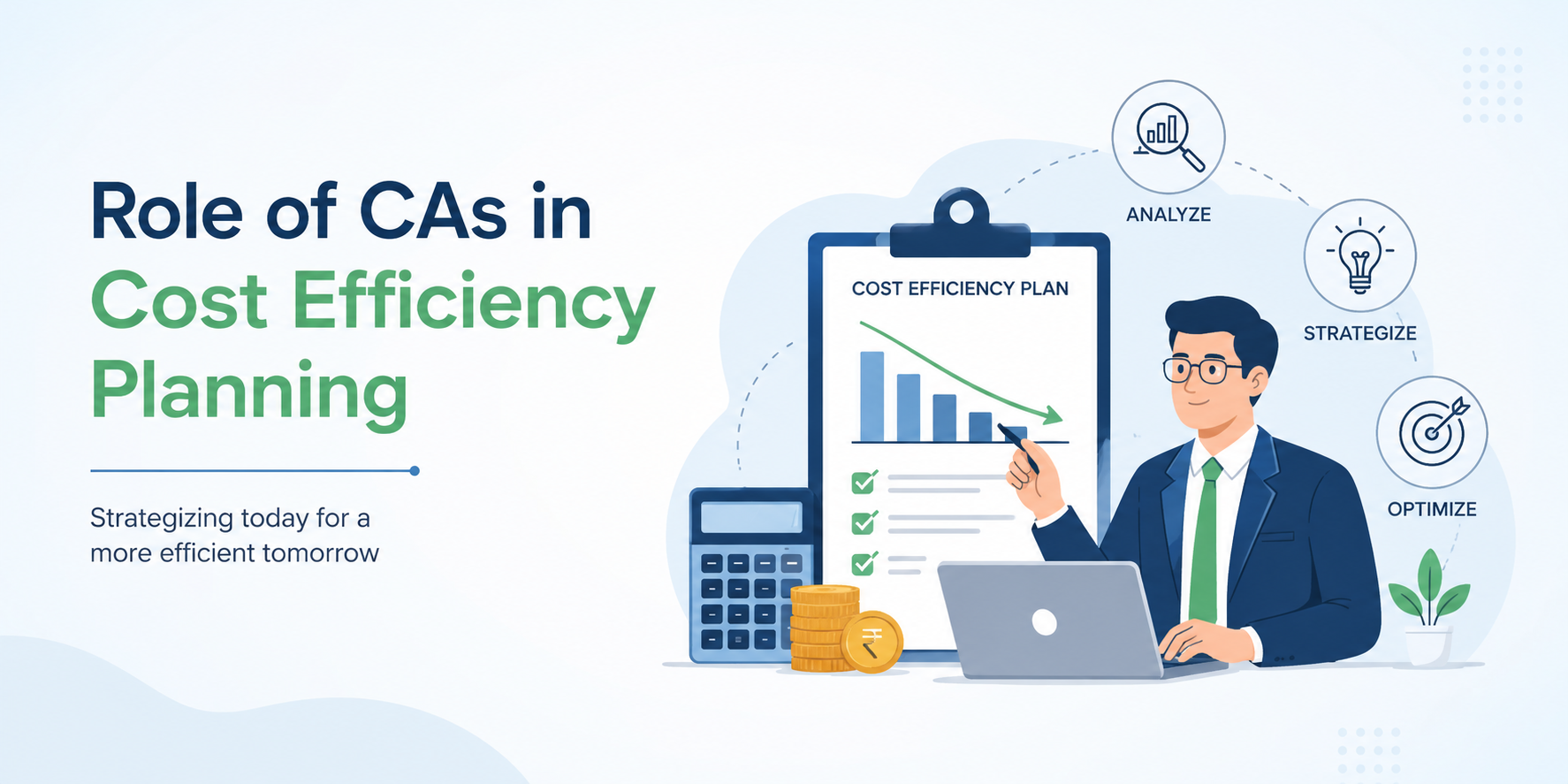
Table of Content
- Businesses Need Better Control Over Expenses
- Cost Analysis Helps Improve Profitability
- Budget Planning Is an Important Responsibility
- Chartered Accountants Help Identify Operational Inefficiencies
- Cost Efficiency Supports Business Growth
- Technology Is Improving Cost Management Systems
- Cost Efficiency Becomes Important During Financial Uncertainty
- Advisory Role of CAs Is Increasing
- Small Businesses Depend Heavily on Cost Planning Support
- Future Business Environments Will Focus More on Efficiency
- Conclusion
Cost efficiency has become one of the most important priorities for modern businesses because rising operational expenses and increasing competition directly affect profitability and long-term sustainability. Companies today are not only focused on increasing revenue but also on controlling unnecessary costs and improving operational efficiency. In this environment, chartered accountants play a major role in helping businesses plan, monitor, and manage financial resources more effectively.
Earlier, many people associated chartered accountants mainly with taxation, auditing, and compliance work. However, the profession has evolved significantly, and businesses now increasingly involve CAs in financial planning, operational supervision, and profitability management. The role of CAs in cost efficiency planning has therefore become extremely important for organizations trying to maintain stable financial performance in competitive markets.
Businesses Need Better Control Over Expenses
Modern companies operate in highly dynamic business environments where operational costs continue increasing because of inflation, market competition, technology investment, and regulatory requirements. Without proper financial monitoring, businesses may gradually lose profitability even if revenue remains stable.
Chartered accountants help businesses understand where money is being spent and whether expenses are creating sufficient business value. Through detailed financial analysis, professionals identify unnecessary spending patterns and operational inefficiencies that may affect long-term growth. This practical financial supervision helps businesses maintain stronger control over overall operational costs.
Cost Analysis Helps Improve Profitability
One of the most important responsibilities of chartered accountants is analyzing how business expenses affect profitability. Many businesses generate strong revenue but still struggle financially because operational costs remain too high. CAs regularly study areas such as:
- Production expenses
- Administrative costs
- Cash flow management
- Resource utilization
This analysis helps businesses identify areas where operational improvements can increase profitability without affecting business quality or performance. Cost efficiency planning, therefore, directly supports long-term financial stability.
Budget Planning Is an Important Responsibility
Budgeting is one of the strongest tools businesses use for cost efficiency management. Chartered accountants help organizations prepare realistic financial plans that control unnecessary spending and improve financial discipline.
- Expense Forecasting: Professionals estimate future operational costs based on business performance and market conditions.
- Resource Allocation: Businesses require proper distribution of financial resources for different operational activities.
- Cost Monitoring: Regular financial review helps businesses track whether expenses remain within planned limits.
- Financial Discipline: Budget systems improve accountability and reduce uncontrolled spending patterns.
Because of this structured approach, budgeting becomes an important part of cost efficiency planning.
Chartered Accountants Help Identify Operational Inefficiencies
Businesses often face hidden financial inefficiencies that may not be immediately visible to management teams. Chartered accountants regularly review operational data and financial records to identify areas where resources are being wasted or utilized poorly. For example, professionals may identify:
- Unnecessary operational expenses
- Weak inventory management
- Excessive administrative costs
- Poor cash flow practices
This detailed financial review helps businesses improve operational efficiency and maintain better financial control systems.
Cost Efficiency Supports Business Growth
Many companies focus heavily on revenue growth while ignoring operational efficiency. However, sustainable business growth depends equally on proper expense management and financial discipline.
Chartered accountants help businesses maintain a balance between expansion plans and financial stability. Before companies invest in new projects or operational growth, professionals often evaluate whether the business can manage future costs effectively. This financial guidance helps organizations avoid aggressive expansion strategies that may create long-term financial pressure.
Technology Is Improving Cost Management Systems
Modern businesses increasingly use digital systems and analytics tools for financial monitoring and operational planning. Chartered accountants now combine financial expertise with technology-based analysis to improve cost efficiency planning. Technology helps professionals:
- Monitor operational expenses faster
- Analyze financial trends more accurately
- Improve budgeting systems
- Generate detailed performance reports
Digital finance systems, therefore, make cost management more organized and data-driven.
Cost Efficiency Becomes Important During Financial Uncertainty
During economic slowdowns or unstable business conditions, companies often focus heavily on controlling expenses and maintaining cash flow stability. Chartered accountants become extremely important during such periods because businesses require careful financial supervision and realistic planning. Professionals help businesses by:
- Reviewing operational priorities
- Reducing unnecessary spending
- Improving financial planning
- Managing cash flow efficiently
This support helps companies maintain operational stability even during difficult market conditions.
Advisory Role of CAs Is Increasing
The role of chartered accountants is gradually shifting toward advisory and strategic financial support. Businesses now expect professionals to provide practical recommendations instead of only preparing financial reports. Modern CAs increasingly contribute through:
- Profitability analysis
- Financial forecasting
- Business restructuring advice
- Operational planning support
Because of this broader involvement, chartered accountants play an important role in improving overall business efficiency and financial performance.
Small Businesses Depend Heavily on Cost Planning Support
Startups and small businesses often operate with limited financial resources, making cost efficiency extremely important for survival and long-term growth. Many smaller businesses require professional support regarding:
- Budget preparation
- Expense control
- Financial prioritization
- Cash flow supervision
Chartered accountants help such businesses build stronger financial discipline and avoid operational instability caused by poor cost management.
Future Business Environments Will Focus More on Efficiency
Modern business environments are becoming increasingly competitive and cost-sensitive. Companies will continue focusing on operational efficiency because market pressure, technology investment, and changing consumer expectations directly affect profitability. Future-focused chartered accountants are therefore increasingly developing expertise in:
- Financial analytics
- Cost optimization strategies
- Performance monitoring
- Business advisory services
This indicates that the role of CAs in cost efficiency planning will become even more important in future corporate environments.
Conclusion
Understanding the role of CAs in cost efficiency planning helps explain how the Chartered Accountancy profession contributes to business stability and profitability beyond traditional compliance work. Chartered accountants help businesses analyze expenses, improve budgeting systems, monitor operational efficiency, and maintain financial discipline. Their practical financial guidance supports profitability improvement, risk management, and sustainable business growth. As competition and operational complexity continue increasing, businesses are expected to depend even more on chartered accountants for strategic cost management and long-term financial planning.

FAQs
What is the role of CAs in cost efficiency planning?
The role of CAs in cost efficiency planning is highly important because they help businesses monitor expenses, control unnecessary spending, and improve financial discipline. Their financial analysis helps companies maintain profitability while managing operational resources more effectively in competitive business environments.
Why is cost efficiency becoming important for modern businesses?
Cost efficiency is becoming important because rising operational expenses and market competition directly affect profitability. Businesses today focus not only on increasing revenue but also on controlling costs and improving financial stability for long-term growth and sustainability.
How do chartered accountants help improve business profitability?
Chartered accountants analyze operational expenses, cash flow patterns, and financial performance to identify areas where businesses can reduce unnecessary costs. Their recommendations help organizations improve profitability without negatively affecting operational performance or service quality.
Why is budgeting important in cost efficiency planning?
Budgeting helps businesses maintain financial discipline by controlling spending and properly allocating resources. Chartered accountants prepare structured budgets that help management track expenses, avoid overspending, and improve long-term financial planning for business operations.
How do CAs identify operational inefficiencies in businesses?
Chartered accountants study financial reports, expense trends, operational records, and resource utilization patterns to identify inefficiencies. They help businesses detect unnecessary spending areas, weak financial controls, and operational practices that may reduce profitability over time.
How does technology support cost efficiency planning for businesses?
Technology improves financial monitoring, reporting accuracy, and operational analysis through automation and digital accounting systems. Chartered accountants use modern tools to track expenses, manage budgets, and provide faster financial insights for better business decision-making.
Why is cost planning important during financial uncertainty?
During uncertain business conditions, companies need strong financial control to maintain stability. Chartered accountants help businesses reduce unnecessary expenses, improve cash flow management, and maintain operational sustainability during periods of financial pressure or economic slowdown.
How are chartered accountants becoming strategic business advisors?
Modern businesses increasingly involve chartered accountants in planning and decision-making because they provide practical financial guidance. Their expertise in profitability analysis, budgeting, and operational planning helps businesses improve long-term financial performance and efficiency.
Why do startups and SMEs need cost efficiency planning support?
Startups and small businesses usually operate with limited financial resources, making proper expense management extremely important. Chartered accountants help these businesses maintain financial discipline, improve budgeting systems, and avoid operational instability caused by poor cost planning.
What is the future importance of cost efficiency planning for businesses?
Cost efficiency planning will become even more important because businesses are facing increasing competition and rising operational costs. Companies will continue depending on chartered accountants for financial analysis, budgeting support, and strategic planning to maintain long-term profitability.