Preparing for a CA examination involves understanding concepts, practising questions and revising the syllabus in a planned way. A useful set of notes can make this process easier, but rewriting every page of a textbook is rarely the best use of study time.
The approach in this article focuses on building a practical revision resource from the applicable ICAI study material. Use the notes to support detailed learning, active recall and question practice rather than treating them as a replacement for the prescribed content.
Decide what belongs in pocket notes
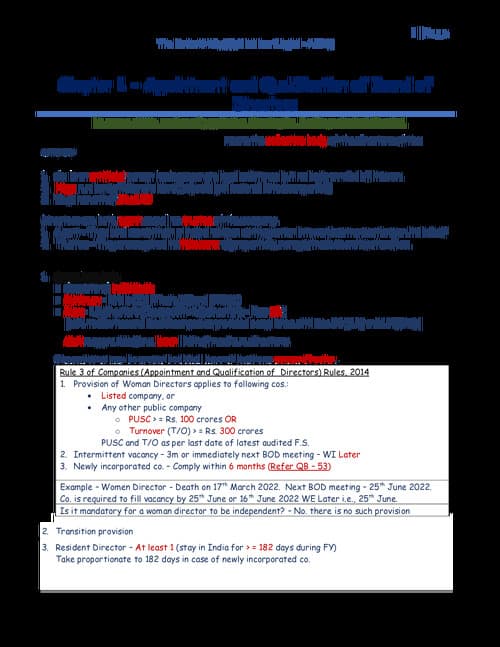
Pocket notes should contain information useful for quick recall: formulas, key provisions, important conditions, exceptions, formats, comparison points and reminders about recurring errors. They should not reproduce every explanation or illustration from the main material.
Before adding a point, ask whether it is difficult to remember, important for applying a concept or repeatedly missed in practice. If it is already obvious, it may not need space in a compact revision resource.
Keep notes linked to the current syllabus
Start with the syllabus and study material applicable to your examination attempt. Organise notes chapter-wise so every relevant area has a place. This helps identify gaps and prevents compact notes from becoming a random collection of points.
For subjects affected by amendments or updates, verify the latest applicable information through official resources. Add changes clearly and remove outdated details. Do not rely on old pocket notes without checking their accuracy.
Use short explanations, not isolated keywords
A list of keywords may look compact but can be difficult to understand after a few weeks. Add a short explanation where the relationship between terms matters. For a provision, note its essential elements and the condition that changes its application. For a formula, include what the variables represent.
The aim is to trigger recall. If a note cannot remind you what a point means, it is too brief. If it takes several paragraphs, it may belong in the main notes.
Create subject-specific formats
Practical subjects may need formulas, formats, adjustment reminders and calculation sequences. Theory-heavy subjects may benefit from provisions, definitions, conditions, exceptions and comparison tables.
Do not force every subject into the same layout. Use a format that helps you recall and apply material quickly. Keep headings consistent within each subject so information is easy to locate.
Highlight common mistakes and use examples carefully
Pocket notes are useful for reminders about mistakes that recur in practice. These may include a formula selected incorrectly, an exception overlooked or a presentation point missed. Write reminders directly and add a compact example only where it clarifies a method.
Avoid copying a complete long question into a pocket notebook. Note the approach and refer back to the detailed question in your main practice material.
Revise through recall and mock analysis
Read a small section, cover it and try to reproduce the main points. Write a formula from memory, explain a provision or list calculation steps. Then compare your recall with the notes and correct omissions.
After each mock paper, add only important reminders. If a mistake reflects a deeper concept gap, revisit the detailed chapter. Pocket notes are best for recall; they cannot resolve every misunderstanding.
Use Studycaller in final revision
Studycaller can be part of a final-revision routine built around concise notes, regular question practice and mock-test review. Keep applicable ICAI resources as the source for detailed concepts and use pocket notes to revisit important points efficiently.
A useful revision resource is accurate, brief and easy to navigate. Spend more time applying concepts than repeatedly formatting pages.
Quick Reference Table
| Content type | What to record | How to revise |
|---|---|---|
| Formulas | Formula and variable meaning | Recall and solve a short question |
| Provisions | Elements, conditions and exceptions | Explain and apply the rule |
| Practical topics | Formats and adjustment reminders | Attempt a complete problem |
| Theory topics | Definitions and comparisons | Recall key points aloud |
| Common errors | Personal reminders | Review before mock tests |
Conclusion
Effective preparation depends on clear concepts, relevant practice and regular review. Use applicable ICAI resources as your foundation, keep revision notes accurate and turn each assessment into a practical improvement plan. A consistent routine with Studycaller can help make revision more organised and focused.