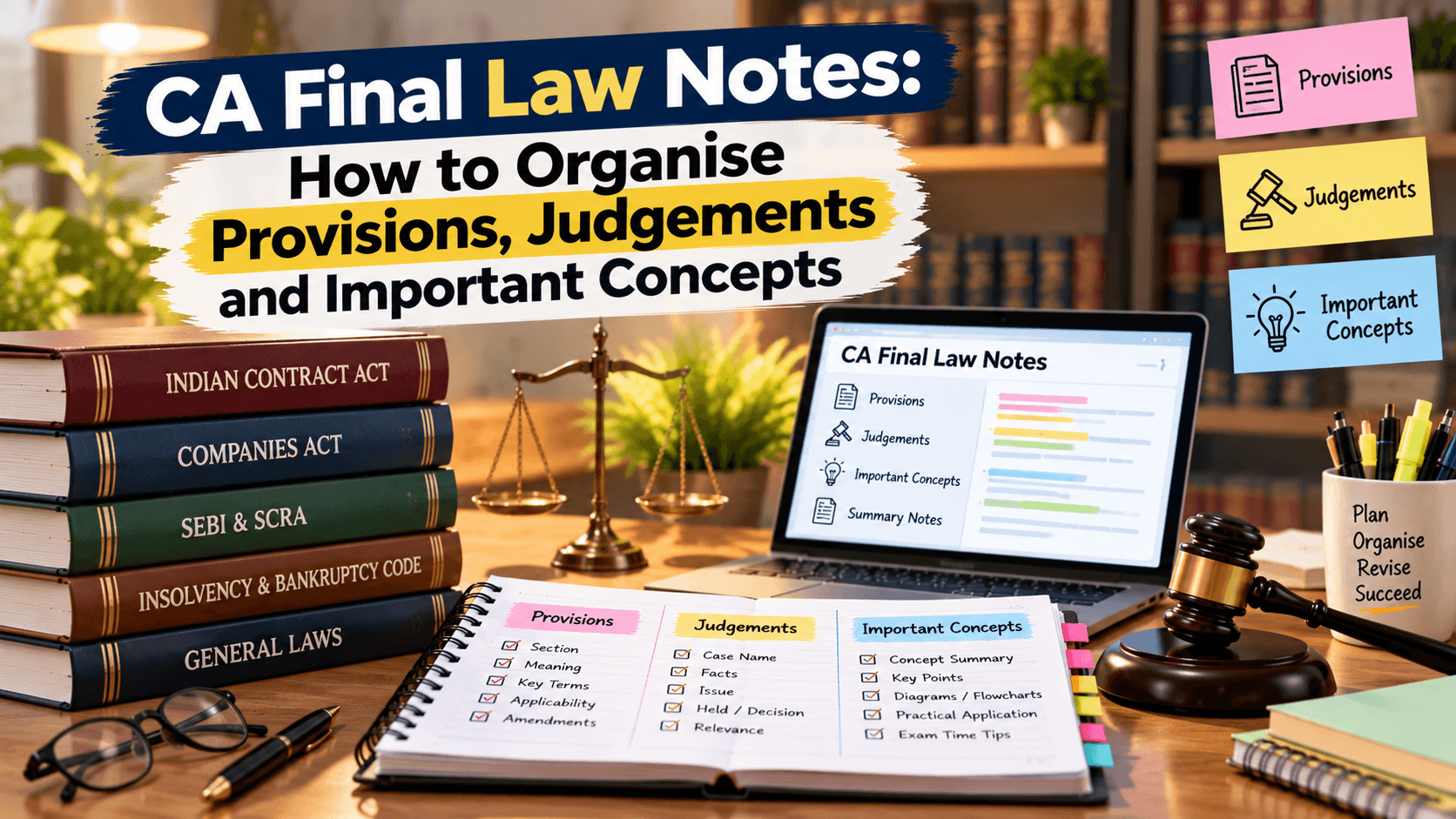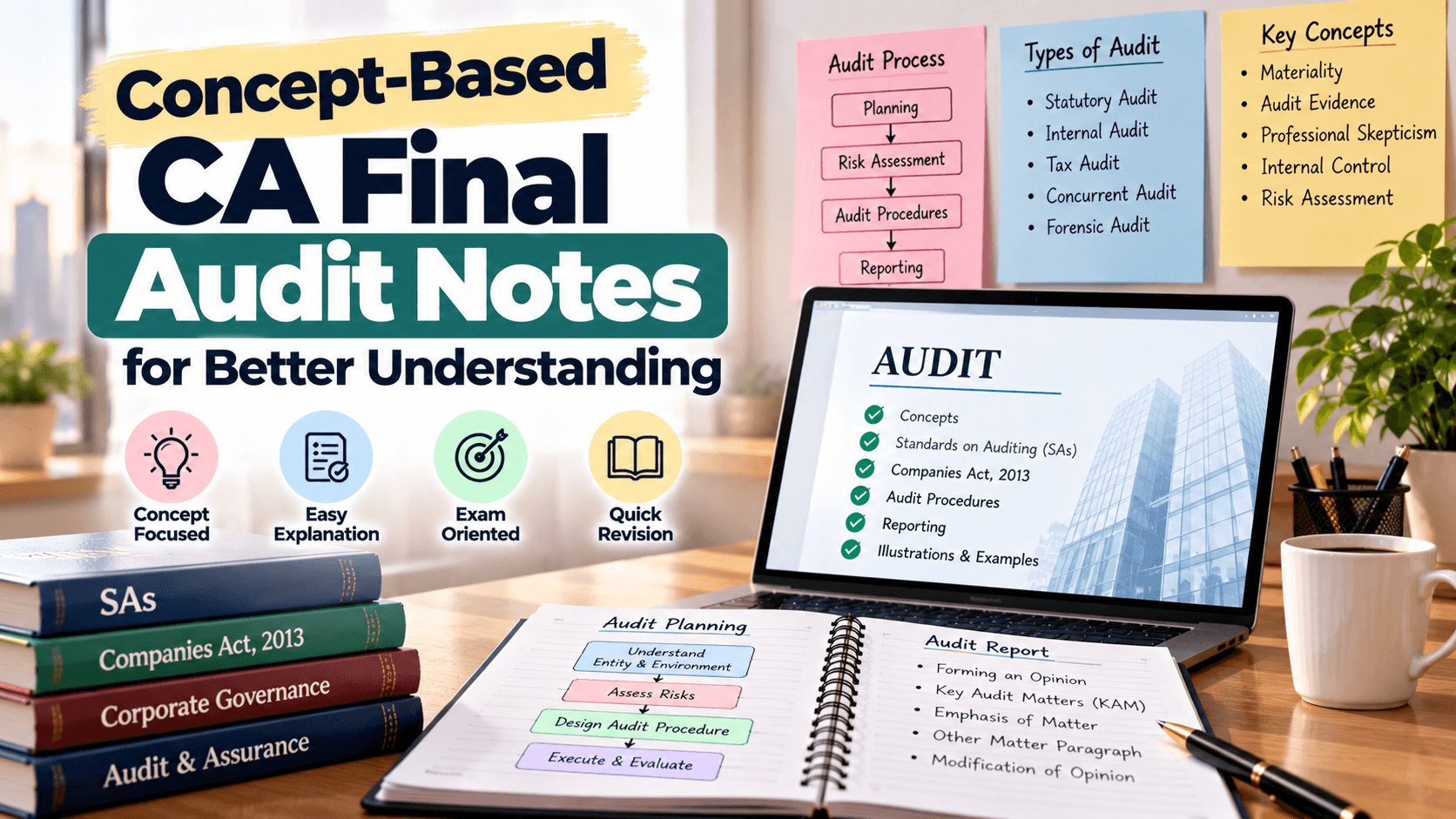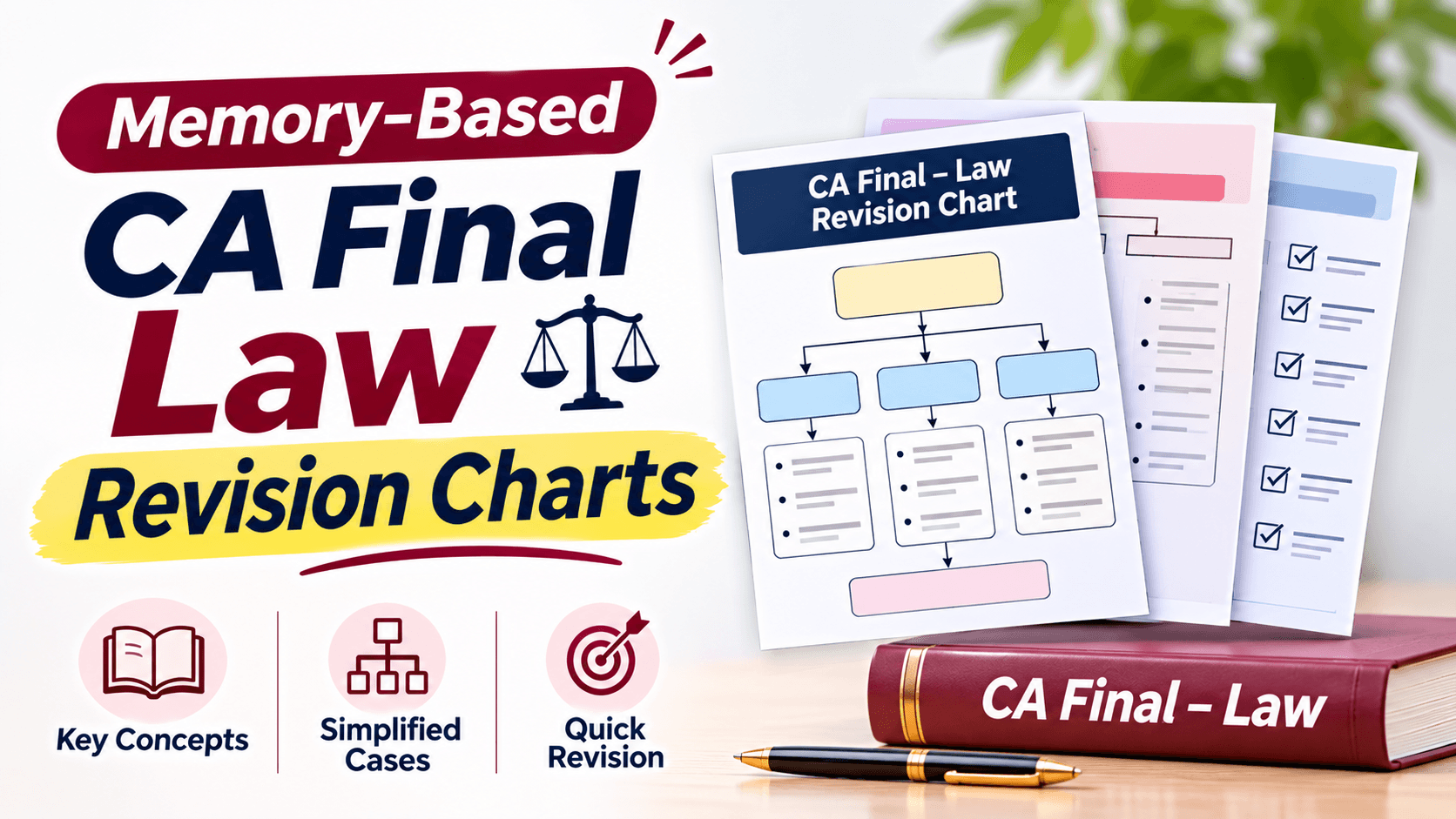
CA Final Law revision can become difficult when provisions, exceptions, case references and presentation points start blending together. Memory-based revision charts help turn lengthy material into a compact structure that is easier to review and recall. They work best when they are created from concepts you understand, rather than copied as isolated facts.
Use these charts as a last-mile revision aid alongside your primary study material and question practice. The applicable syllabus, amendments and examination requirements can change, so verify every provision and update against the official material relevant to your attempt.
What Memory-Based Revision Charts Should Include
A useful chart captures the framework of a topic: the main rule, conditions, exceptions, time limits where relevant, consequences and a short cue that helps you remember the sequence. For case-law topics, record the legal principle and why it matters instead of trying to memorise a long paragraph word for word.
Keep each chart focused on one chapter or connected group of provisions. If the page becomes crowded, split it into two linked charts. The aim is to make revision faster without removing the distinctions that help you apply the law correctly.
Start With the Chapter Structure
Before creating a chart, skim the chapter headings and identify how the material is organised. Group related provisions under clear labels, such as applicability, requirements, exceptions, consequences and practical application. This creates a mental map that helps you place details in context.
Do not start by shortening every sentence in the textbook. First decide what a student needs to recall in an examination answer. Include the legal ingredients that support a complete response and leave explanatory detail in your main notes for deeper study.
Build Provision and Exception Maps
Use a simple flowchart where a provision involves a sequence of steps or a decision. Put the starting condition at the top, then show the applicable rule, any exception and the result. Arrows should reflect the actual legal sequence rather than a decorative design.
For provisions that are easy to confuse, make a comparison chart with parallel columns. Contrast the trigger, required action, exception and consequence. This can be especially helpful for revising similar-looking rules, but always check the wording against your current study material.
Use Memory Cues Without Losing Accuracy
A short phrase, keyword or visual cue can help you retrieve a list, but it should act as a prompt rather than replace legal understanding. Write the full meaning next to the cue when preparing the chart, then practise expanding it into a proper answer without looking.
Avoid inventing acronyms that are harder to remember than the original points. If a cue causes you to mix up conditions or exceptions, remove it. Accuracy matters more than cleverness in law revision, and a simple numbered sequence may be more reliable.
Sample Structure for a Law Revision Chart
| Chart section | What to record | Revision check |
|---|---|---|
| Core rule | Main principle in accurate, short wording | Can I explain the rule without looking? |
| Conditions | Essential ingredients or applicability | Can I identify when it applies? |
| Exceptions | Important limits and exclusions | Can I distinguish the exception from the rule? |
| Application cue | A short question or fact pattern | Can I apply it to a new situation? |
| Answer structure | Headings or sequence for a response | Can I turn the chart into a complete answer? |
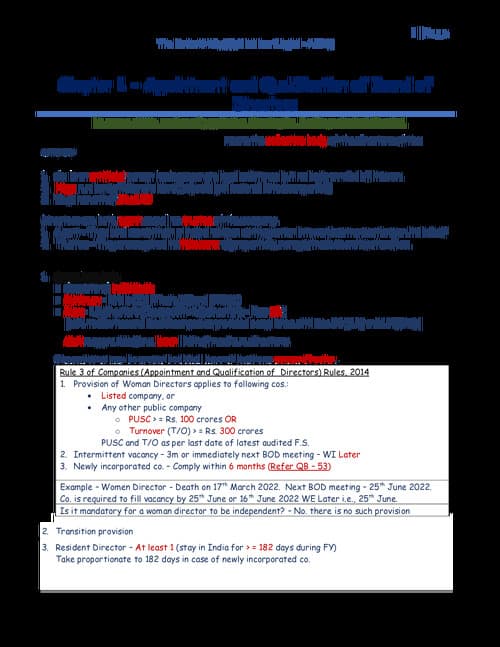
The following layout can be adapted to a chapter from your current CA Final Law material. It is a study format, not a summary of any particular statutory provision. Use the exact legal content and amendments prescribed for your examination attempt.
Turn Charts Into Active Recall
After reviewing a chart, cover it and write the main headings and key points from memory. Then compare your version with the original and mark any missing condition, exception or consequence. Revisit the chart after a gap instead of repeatedly reading it several times in one sitting.
Use the chart to generate questions. Ask yourself what triggers a rule, which exception may apply, what facts are needed and how you would structure the conclusion. This bridges the gap between recognising a note and retrieving information independently under exam conditions.
Practise Applying Law to Questions
A chart is not complete preparation by itself. Choose past-paper, mock-test or study-material questions that require you to apply the topic. Practise identifying the legal issue, stating the relevant provision or principle, applying it to the facts and writing a clear conclusion where appropriate.
After checking your answer, update the chart only if the error reveals a useful missing cue or distinction. Do not turn every chart into a complete solution bank. Keep it concise, and use your main notes or reference material when you need the full explanation.
Organise Charts for the Final Revision Cycle
Arrange charts in the order you plan to revise them and label each with the chapter name and the date it was last checked. Keep a separate list of charts that need amendment verification or that contain points you repeatedly forget. This makes the final review more purposeful.
Studycaller can be part of a structured preparation routine when you use practice and review tools to identify gaps. Whatever resources you use, let your own recall attempts and written answers guide the next revision session instead of relying on the number of pages reviewed.
Common Mistakes to Avoid
Do not shrink text until it becomes unreadable, combine unrelated provisions on one page or remove exceptions simply to save space. A chart that looks brief but leads to incorrect recall is not useful. Use consistent headings and leave enough white space for quick scanning.
Also avoid treating a memory cue as confirmation that a rule is current. Check amendments and prescribed material before the examination. A short revision chart should reduce cognitive load, not replace authoritative study sources or careful legal interpretation.