Skip to content
ICAI Update 2 min read

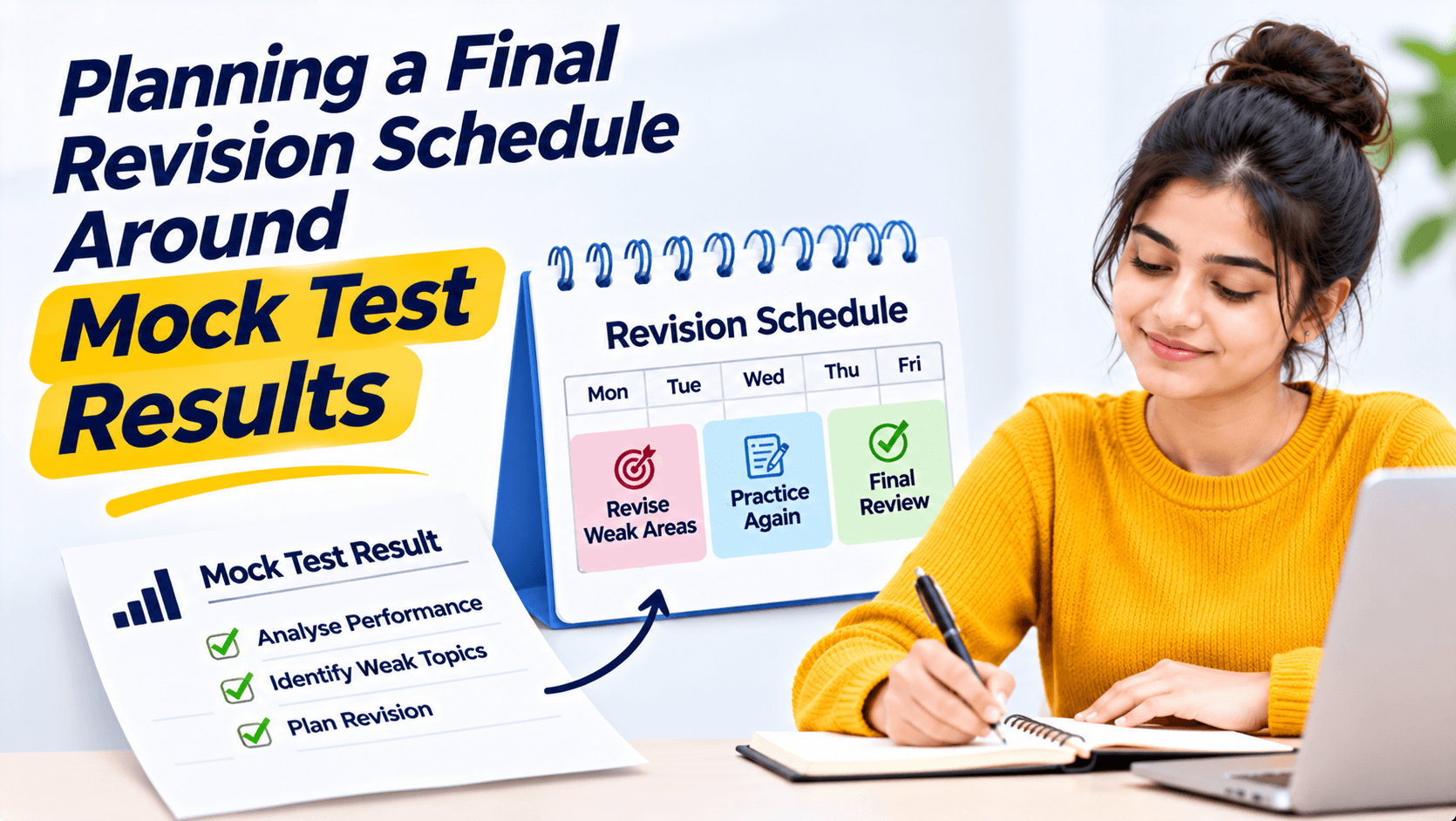
Planning a Final Revision Schedule Around Mock Test Results

Create a final revision schedule using mock test results to prioritise weak topics, protect strong areas and balance practice with last-stage syllabus review.

By Studycaller Editorial Team

CA students & educators at Studycaller

Published
Views
4 views
Planning a Final Revision Schedule Around Mock Test Results

A final revision schedule should reflect what your mock tests have revealed. A timetable created without reviewing performance may give equal time to every chapter, even when some areas are strong and others need urgent attention.

Use mock test results to identify topics and skills that need the most work. Build a realistic plan that combines targeted revision, question practice and short checks of areas you already understand.

Start with a complete mock test review

Record marks, completion, time use, topic-wise errors and feedback on answer quality. Look for repeated patterns rather than reacting to one unusual question.

Classify topics by preparation status

Group topics into strong, needs revision and weak or incomplete. Strong topics need short recall checks; weaker areas may require concept revision and more questions.

Prioritise repeated and high-impact errors

Give attention to mistakes that recur or affect several answers. Address the cause rather than simply rereading the chapter.

Set realistic daily revision targets

Divide remaining time into daily blocks with clear outcomes. Include topic revision, practice questions and review of earlier mistakes.

Protect strong topics with short revision

Use concise notes, formula checks, quick quizzes or selected questions to keep stronger areas fresh.

Use mock tests selectively in the final phase

Full-length papers help maintain readiness, but should not crowd out revision. If a full mock is no longer practical, use timed sections and targeted questions.

Include time for answer-writing corrections

If feedback shows incomplete or poorly structured answers, include short writing drills. For practical papers, focus on accurate workings and presentation.

Keep a final error list

Prepare a compact list of recurring mistakes, difficult concepts and items needing one last check. Keep it focused and useful.

Adjust the schedule as new evidence appears

If a topic improves, reduce its priority. If the same error continues, revisit the learning method or seek clarification.

How Studycaller can support final revision

Use Studycaller as part of a process connecting mock practice with targeted improvement. Let feedback set priorities and check progress with short practice sessions.

Quick Reference Table

Mock test finding Revision priority Suggested action
Repeated concept errors High Revisit concept and solve fresh questions
Weak topic performance High Schedule focused revision
Good topic performance Maintenance Use quick recall and quizzes
Incomplete answers Skill improvement Practise timed writing
Poor time allocation Exam technique Use timed sections

Found this useful? Share it with your study group.

Share

Frequently asked questions

How often should I practise under timed conditions?

Use timed practice regularly, based on your preparation stage. Begin with short sections and progress to full papers when you can review each attempt properly.

Does timed practice guarantee exam confidence?

No method guarantees confidence, but realistic practice can reduce unfamiliarity and help you trust your preparation, pacing and answer-writing approach.

How can I measure my exam preparation progress?

Track syllabus coverage, closed-book recall, practice accuracy, mock marks, completion and recurring errors. Review these indicators over several weeks.

What should I do after a low mock test score?

Identify why marks were lost, prioritise repeated errors and plan specific corrective practice. Use the next test to check whether the changes helped.

How can I manage pressure during a long professional course?

Break the syllabus into manageable tasks, follow a realistic timetable, include breaks and focus on actions within your control. Seek support if pressure affects daily functioning.

Is it effective to study multiple subjects in one day?

It can work when each subject has a defined purpose and focused time block. Mix active recall with question practice and avoid switching too frequently.

How much time should I give each subject during revision?

Allocate time according to syllabus gaps, difficulty, upcoming examinations and mock performance. Keep shorter review sessions for stronger subjects.

Should I take full-length mock tests during final revision?

Take them when enough time remains to review the paper and act on feedback. Otherwise, timed sections and targeted questions may be more useful.

How do I make a final revision timetable?

Review recent mock results, classify topics by strength, prioritise repeated errors and assign realistic daily tasks.

How can Studycaller support my exam preparation?

Studycaller can complement a structured routine of revision, practice and performance review. Use feedback to identify priorities and track improvement.

More on this topic from ICAI Update and the Studycaller blog.

Notes students love

Free notes from the Studycaller library, picked for this article.

See all

Free app · 5 lakh+ learners

Study on the go with the Studycaller app

Read full notes, ask doubts, follow toppers and track your study hours — free on Android and iPhone.