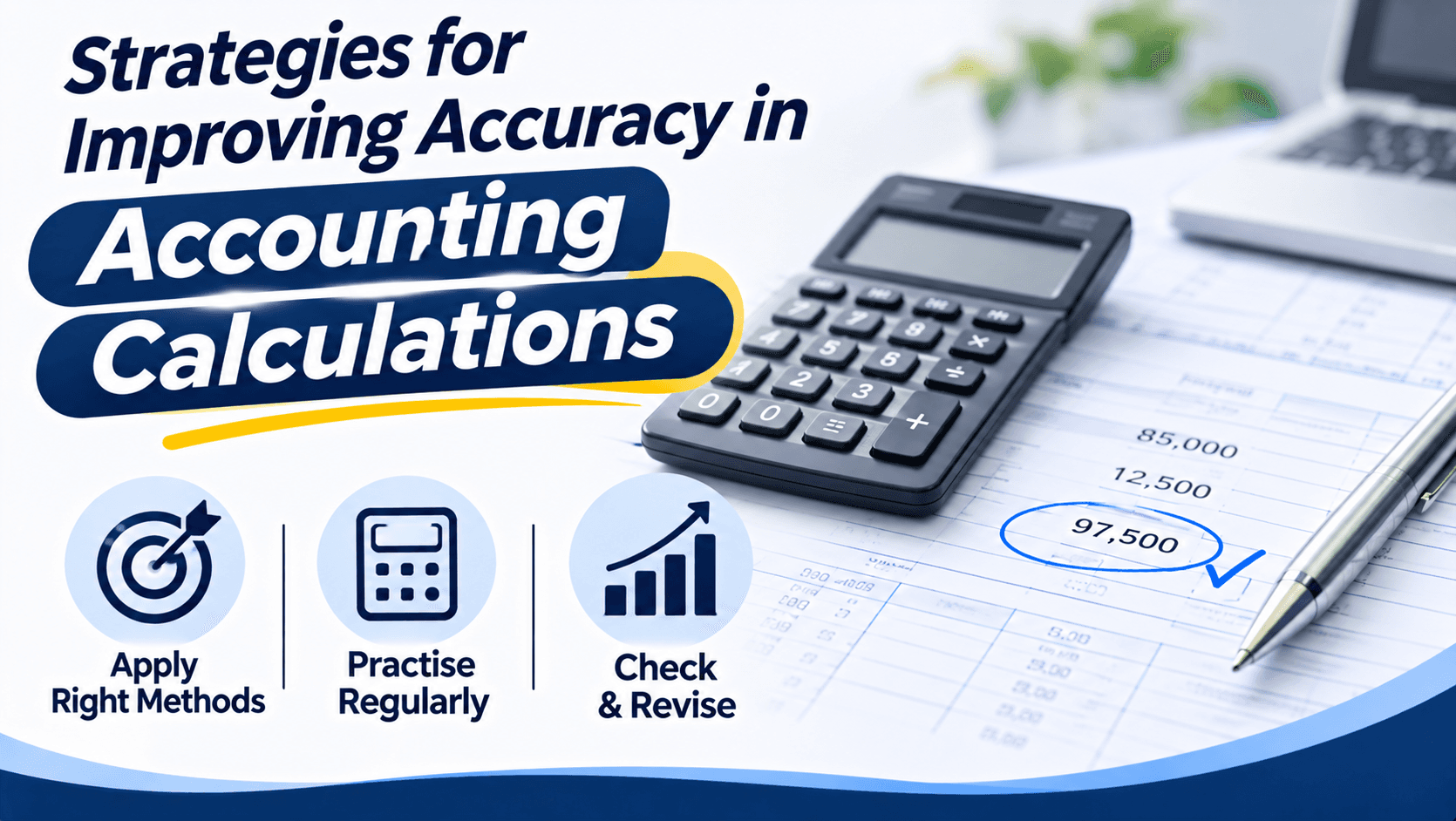
Accounting calculations require more than knowing formulas. Students must understand the question, identify relevant information, apply the correct treatment and present the working logically. Even a small error in an adjustment, sign or figure can affect the final result.
Accuracy improves when students understand why each step is required and develop a consistent checking method. Use a structured process: read, identify, calculate, verify and review.
Understand the Requirements and Build a Clear Starting Point
Before applying a formula, identify the accounting concept being tested and understand the relationship between the figures. Memorising a format without understanding the treatment can lead to incorrect application when a question changes.
Assess Your Current Preparation Honestly
Many errors begin before calculation. Students may overlook a date, condition, unit, percentage or instruction. Read the complete question, identify what must be calculated and separate the information given from the information required.
Break the Work Into Manageable Tasks
Arrange figures in a clear order and label each amount. Use a working table where helpful and keep adjustments separate so their effect is visible. Avoid doing too many steps mentally; written working makes errors easier to locate.
Choose the Right Method for Each Study Session
Check whether an amount must be added, deducted, apportioned or carried forward. Understand the reason for each treatment instead of relying on a memorised sign. Handle multiple adjustments one at a time and verify their effect.
Use Active Practice to Check Understanding
Follow a sequence: identify the requirement, select the concept, write the formula or format, enter figures, complete the calculation and state the result. For multi-part questions, label each part and keep intermediate figures visible.
Create a Realistic Weekly Routine
Verify key totals, percentages and important steps. If the result seems unusual, review the data and adjustments rather than assuming the calculator is wrong. Use a calculator only as permitted by examination rules; method selection remains your responsibility.
Review Mistakes and Identify Repeated Gaps
Record errors such as wrong formula, incorrect adjustment, arithmetic slip, missed condition, unit error or incomplete working. Add the question reference and correction. Reattempt selected questions after a gap to check whether the same mistake occurs.
Track Progress With Simple Measures
First follow the correct method and produce accurate working. Once the method becomes familiar, introduce time limits and track both time and correctness. If speed improves but accuracy falls, identify where errors enter the process.
Adjust the Plan as the Examination Approaches
Mixed practice requires you to identify which concept applies without being told. Combine questions from earlier topics and revisit them after a gap. This prevents dependence on chapter headings as clues and strengthens method selection.
Common Mistakes to Avoid
Clear working makes an answer easier to check. Label figures, show essential steps and identify the final result. Avoid giving only a final figure when supporting working is expected, but do not add unnecessary steps.
How Studycaller Can Support Your Preparation
Studycaller can be used alongside core study material as part of a planned practice routine. Attempt relevant questions independently, review the method and update your error log. Schedule reattempts so practice leads to measurable improvement.
Conclusion
Accounting accuracy develops through concept clarity, careful reading, organised working and repeated review. Understand the method before applying formulas, handle adjustments one by one and verify calculations. Track recurring errors and increase speed only after your approach becomes reliable.