Paperless CA Practice: The Future of Modern Accounting Firms
Explore how paperless CA practice is transforming accounting firms through digital workflows, cloud technology, improved efficiency, and better client experiences.
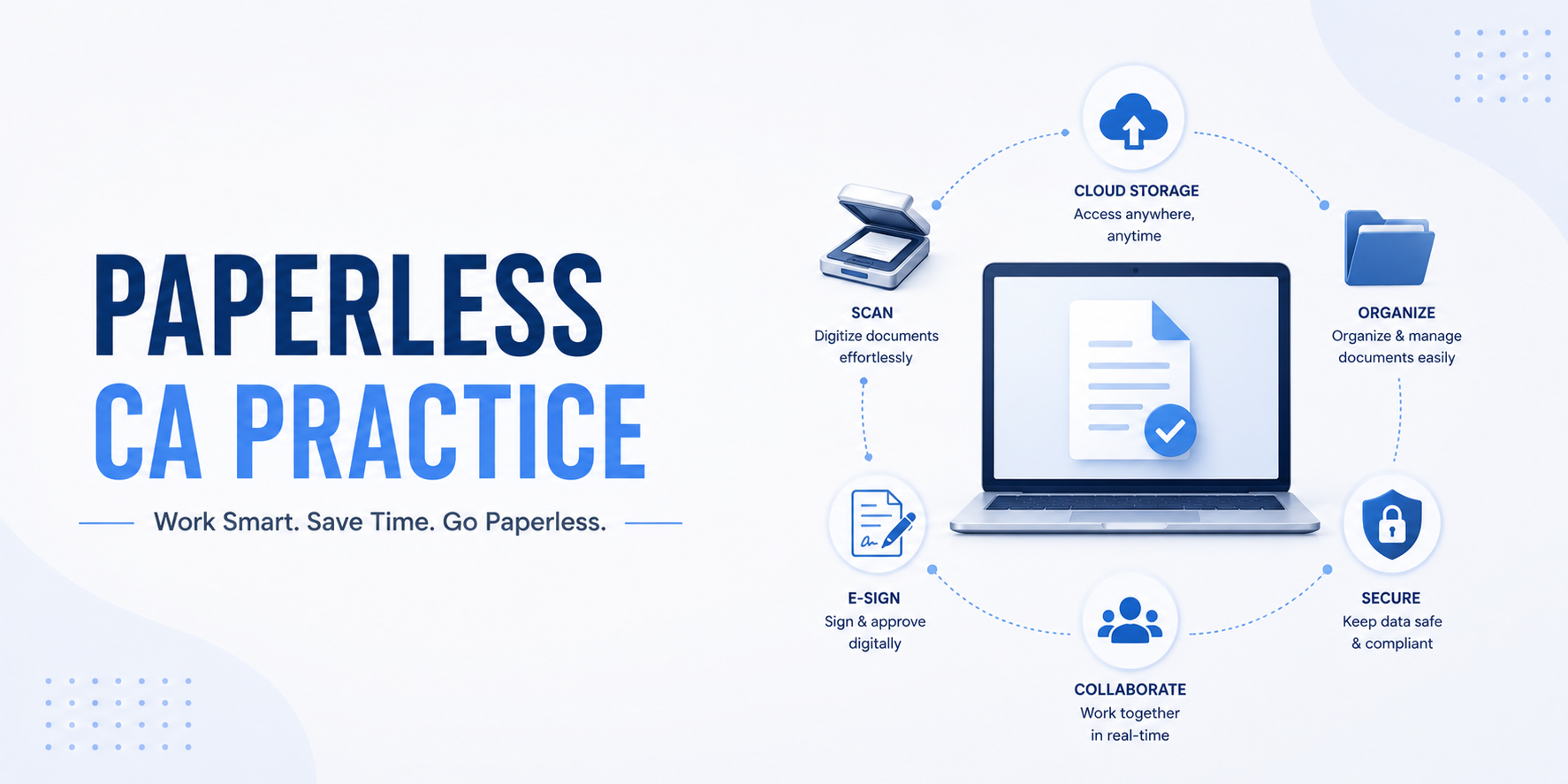
Table of Content
- Why CA Firms Are Moving Toward Paperless Operations
- Digital Document Management Improves Efficiency
- Remote Work Becomes Easier
- Client Experience Improves Significantly
- Data Security Is Becoming More Important
- Environmental Benefits Support Sustainability
- Technology Is Driving the Transition
- Challenges in Adopting a Paperless Practice
- The Future of CA Firms Is Increasingly Digital
- Conclusion
The Chartered Accountancy profession has traditionally been associated with files, registers, printed reports, client documents, and large volumes of paperwork. For many years, physical records were considered an essential part of accounting, auditing, taxation, and compliance processes. However, the rapid advancement of technology is changing this reality.
Today, many CA firms are moving toward paperless operations where documents are stored, shared, reviewed, and managed digitally. This shift is not simply about reducing paper usage. It is about improving efficiency, strengthening collaboration, enhancing data security, and creating a better experience for both clients and professionals. As businesses increasingly embrace digital transformation, paperless CA practice is becoming an important part of the future of the profession.
Why CA Firms Are Moving Toward Paperless Operations
Managing physical documents can be time-consuming and inefficient. Files need to be stored, organized, retrieved, and transported whenever required. As the volume of clients increases, these challenges become even more difficult to manage.
A paperless approach allows firms to store information digitally and access it instantly whenever needed. This reduces administrative effort and helps professionals focus more on client service and business advisory activities.
The shift is also being driven by changing client expectations. Modern clients prefer faster communication, digital document sharing, and remote collaboration rather than traditional paper-based processes. For many firms, going paperless is no longer just an option—it is becoming a necessity.
Digital Document Management Improves Efficiency
One of the biggest advantages of a paperless CA practice is the ability to manage documents more efficiently. Instead of searching through physical files, professionals can quickly locate information through digital systems. Documents can be categorized, indexed, and retrieved within seconds, saving valuable time during audits, tax filings, and advisory engagements.
Digital document management also simplifies collaboration among team members. Multiple professionals can access the same information simultaneously without waiting for physical files to be transferred. This increased accessibility often leads to faster completion of assignments and improved productivity.
Remote Work Becomes Easier
The growing popularity of remote and hybrid working models has accelerated the adoption of paperless practices. When documents exist only in physical form, remote collaboration becomes difficult. Digital systems eliminate this challenge by allowing professionals to access information securely from different locations. A paperless environment enables:
- Seamless document sharing between teams and clients.
- Faster communication and approvals.
- Greater flexibility in managing assignments.
As workplace models continue evolving, digital accessibility is becoming a major operational advantage for CA firms.
Client Experience Improves Significantly
Clients increasingly expect convenience when interacting with professional service providers. Paperless systems allow clients to:
- Upload documents electronically without visiting the office.
- Receive reports and updates quickly through digital channels.
- Track requests and submissions more efficiently.
These improvements reduce delays and create a smoother client experience. In today's competitive environment, convenience often plays an important role in client satisfaction and retention. Firms that offer efficient digital interactions are often perceived as more modern and responsive.
Data Security Is Becoming More Important
Many professionals initially worry that digital systems may increase security risks. However, properly implemented paperless systems often provide stronger protection than physical records. Digital platforms can include:
- Access controls and user permissions.
- Secure backups and recovery systems.
- Encryption technologies for sensitive information.
Physical files, on the other hand, may be lost, damaged, or accessed without authorization. While digital security requires proper management, modern systems often offer greater control over confidential client information.
Environmental Benefits Support Sustainability
Paperless practices also contribute to environmental sustainability. Reducing paper consumption lowers:
- Printing requirements.
- Storage needs.
- Physical resource usage.
While sustainability may not be the primary reason firms adopt digital systems, it is certainly a positive outcome. As businesses increasingly focus on environmental responsibility, paperless operations align well with broader sustainability objectives.
Many clients also appreciate working with organizations that embrace environmentally conscious practices.
Technology Is Driving the Transition
The growth of cloud computing, document management software, and digital collaboration platforms has made paperless operations more practical than ever. Modern firms can now:
- Store documents securely in cloud environments.
- Access information in real time.
- Automate document workflows and approvals.
These technologies reduce manual effort and improve operational efficiency. As digital tools continue advancing, the transition toward paperless practices is likely to accelerate across the profession.
Challenges in Adopting a Paperless Practice
Despite the benefits, moving to a paperless model is not always simple. Some firms face challenges such as:
- Resistance to changing traditional work habits.
- Initial investment in technology and training.
- Managing large volumes of historical physical records.
Successful implementation usually requires careful planning and gradual adoption. Firms that invest in employee training and process improvements often experience smoother transitions and stronger long-term results.
The Future of CA Firms Is Increasingly Digital
The future of the profession is likely to involve even greater reliance on digital systems. As technology becomes more integrated into accounting, auditing, taxation, and advisory services, paper-based workflows will continue declining. Future-focused firms are already exploring:
- Automated document processing.
- Digital signatures and approvals.
- Cloud-based client collaboration platforms.
- These innovations will further improve efficiency while reducing administrative burdens. Paperless operations are gradually becoming part of a broader digital transformation strategy within the profession.
Conclusion
Paperless CA practice represents much more than simply reducing paper usage. It is a strategic shift that improves efficiency, enhances client experience, strengthens collaboration, and supports long-term growth. Digital document management, cloud technology, and secure information-sharing systems are helping firms operate more effectively in an increasingly competitive environment. As technology continues advancing and client expectations evolve, paperless practices are likely to become a standard feature of successful and future-ready CA firms.

FAQs
What is a paperless CA practice?
A paperless CA practice is a professional environment where documents, records, reports, and communications are managed digitally instead of relying on physical paperwork. This approach improves efficiency, accessibility, and overall operational effectiveness.
Why are CA firms adopting paperless practices?
CA firms are adopting paperless practices to improve productivity, reduce administrative work, enhance client convenience, and support remote collaboration. Digital systems also help firms manage information more efficiently and respond faster to client requirements.
How does a paperless practice improve efficiency?
Digital document management allows professionals to store, organize, search, and retrieve information quickly. This reduces time spent handling physical files and helps teams complete assignments more efficiently.
Can paperless systems improve client service?
Yes, paperless systems enable faster document sharing, quicker communication, and easier collaboration with clients. These improvements create a more convenient and professional experience for clients.
Is a paperless CA practice secure?
When implemented properly, paperless systems can be highly secure. Features such as encryption, access controls, secure backups, and user authentication help protect sensitive client information from unauthorized access.
How does paperless practice support remote work?
Digital documents can be accessed securely from different locations, allowing professionals to collaborate effectively without being physically present in the office. This flexibility supports modern remote and hybrid working models.
What challenges do firms face when going paperless?
Common challenges include employee resistance to change, technology implementation costs, training requirements, and the process of converting existing physical records into digital formats.
How does paperless practice benefit the environment?
By reducing paper consumption, printing requirements, and physical storage needs, paperless operations support environmental sustainability and help organizations reduce resource usage.
What technologies support paperless CA firms?
Cloud storage, document management software, digital signatures, workflow automation tools, and secure collaboration platforms are among the technologies that support paperless operations.
What is the future of paperless CA practice?
The future is expected to involve greater automation, digital workflows, cloud-based collaboration, and intelligent document management systems that further improve efficiency and client service.