Why CA Students Feel Mentally Exhausted During Preparation
Learn why CA students feel mentally exhausted during preparation and how stress, long study periods, pressure, lack of balance, and unhealthy routines affect mental energy.
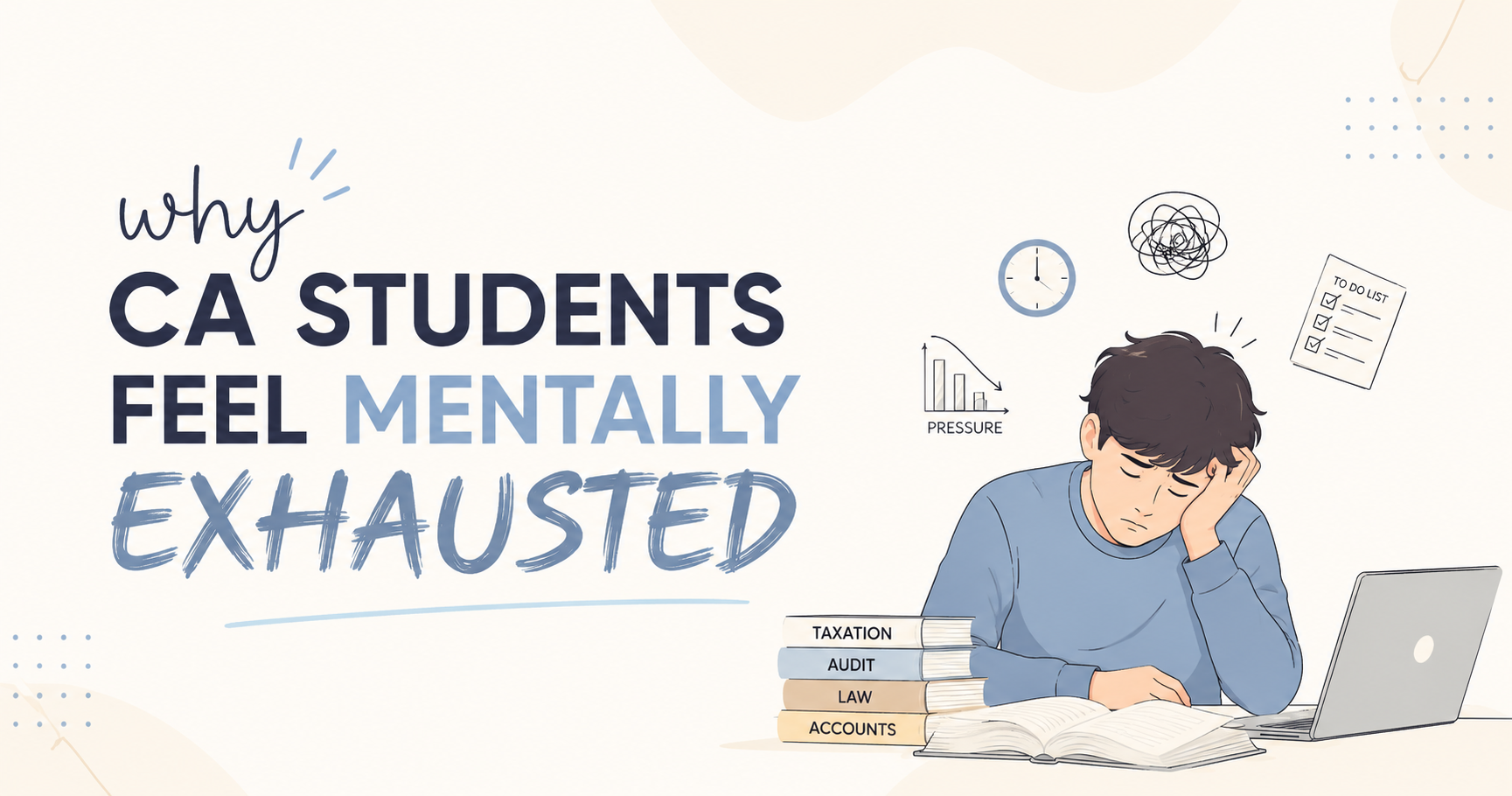
Table of Content
- Continuous Academic Pressure Creates Mental Fatigue
- Long Study Hours Without Balance Increase Exhaustion
- Fear of Failure Increases Mental Stress
- Poor Sleep Habits Affect Mental Energy
- Lack of Breaks Reduces Mental Freshness
- Constant Comparison Creates Emotional Pressure
- Irregular Routine Increases Mental Confusion
- Lack of Physical Activity Affects Mental Health
- Perfectionism Creates Additional Pressure
- Emotional Isolation Can Increase Exhaustion
- Conclusion
CA preparation is often emotionally and mentally demanding because students deal with a large syllabus, continuous revision, exam pressure, and long preparation periods. While physical tiredness usually improves after rest, mental exhaustion can slowly build over weeks or months without students realizing its impact immediately.
Many CA students experience situations where they continue studying regularly but still feel mentally drained, emotionally frustrated, or unable to focus properly. Even simple study sessions may start feeling difficult because the brain remains continuously overloaded.
If you want to understand why CA students feel mentally exhausted, it is important to know that mental exhaustion usually develops gradually because of stress, pressure, unhealthy routines, emotional overthinking, and imbalance during preparation.
CA preparation is not only an academic challenge. It is also a long mental journey that requires emotional stability and sustainable study habits.
Continuous Academic Pressure Creates Mental Fatigue
One of the biggest reasons CA students feel mentally exhausted is continuous academic pressure. The course requires students to manage:
- Multiple subjects
- Repeated revisions
- Mock tests
- Time pressure
- Fear of exams
Unlike short-term academic preparation, CA studies usually continue for several months continuously without major breaks. Because of this, students often remain mentally occupied with studies almost all the time. Constant pressure gradually reduces:
- Emotional freshness
- Motivation levels
- Mental energy
Even highly sincere students may feel mentally tired after handling pressure continuously for long periods.
Long Study Hours Without Balance Increase Exhaustion
Many students believe that increasing study hours continuously is the only way to improve preparation. Because of this mindset, they often ignore:
- Proper rest
- Sleep quality
- Mental relaxation
- Physical movement
Initially, long study hours may feel productive, but over time, they can create severe mental exhaustion. The brain cannot maintain deep concentration continuously for extremely long periods. Without balance, students often experience:
- Reduced focus
- Slow understanding
- Emotional irritation
- Loss of interest in studies
Balanced preparation usually supports long-term productivity much better than extreme study routines.
Fear of Failure Increases Mental Stress
Many CA students constantly worry about:
- Results
- Attempts
- Career pressure
- Expectations from family or society
This fear slowly increases emotional pressure during preparation. Students may continue studying physically, but mentally, they remain occupied with thoughts like:
- “What if I fail?”
- “What if I cannot clear this attempt?”
- “Others are performing better than me”
Continuous overthinking drains emotional energy significantly. Fear-based preparation often reduces concentration and makes studying feel mentally heavier over time.
Poor Sleep Habits Affect Mental Energy
Sleep plays a major role in maintaining emotional balance and mental performance. Many CA students sacrifice sleep to increase study hours, especially close to exams. However, poor sleep quality gradually affects:
- Concentration
- Memory retention
- Emotional stability
- Learning efficiency
Students with poor sleep often feel mentally exhausted even after studying for fewer hours. An exhausted brain struggles to process information properly, which increases frustration during studies. Healthy sleep routines help students remain mentally fresher and emotionally calmer during long preparation periods.
Lack of Breaks Reduces Mental Freshness
Some students study continuously for several hours without taking proper breaks because they feel guilty about relaxing. However, the brain requires short recovery periods to maintain concentration and mental energy. Without breaks:
- Focus level decreases
- Understanding becomes slower
- Irritation increases gradually
Small breaks help refresh the mind and improve overall productivity. Students who maintain balanced study sessions usually feel less mentally exhausted compared to students following nonstop study patterns. Rest is an important part of sustainable preparation.
Constant Comparison Creates Emotional Pressure
Many students continuously compare their preparation with:
- Friends
- Toppers
- Online study discussions
- Social media updates
This comparison often creates unnecessary anxiety and emotional stress. Students may start feeling:
- “I am behind everyone.”
- “Others are studying more than me”
- “I am not preparing well enough.”
Over time, comparison weakens confidence and increases mental exhaustion. Every student has a different learning speed and preparation style, so excessive comparison usually harms productivity more than it helps.
Irregular Routine Increases Mental Confusion
Students without proper routines often study randomly according to mood or pressure. This creates:
- Unclear revision schedules
- Incomplete targets
- Subject imbalance
- Continuous mental confusion
An unorganized preparation style increases stress because students constantly feel unsure about their progress. Stable routines help students feel more mentally controlled and organized during preparation. Discipline reduces unnecessary decision fatigue and emotional pressure.
Lack of Physical Activity Affects Mental Health
CA students often spend long hours sitting continuously while preparing for exams. Ignoring physical health may gradually reduce:
- Energy levels
- Mental freshness
- Emotional balance
Even light physical movement, such as:
- Walking
- Stretching
- Short exercise routines
Healthy body movement supports better concentration and emotional stability during long preparation periods. Mental health and physical health remain closely connected.
Perfectionism Creates Additional Pressure
Some students continuously try to prepare every topic perfectly before moving forward. This perfectionist mindset often creates:
- Slow syllabus completion
- Constant dissatisfaction
- Fear of mistakes
- Excessive self-pressure
Students may feel mentally exhausted because they never feel fully satisfied with their preparation. CA preparation requires practical balance rather than unrealistic perfection in every chapter. Progress usually matters more than perfect preparation.
Emotional Isolation Can Increase Exhaustion
Many students reduce social interaction completely during preparation and spend most of their time alone with studies. While focus is important, complete emotional isolation may increase:
- Stress
- Overthinking
- Emotional fatigue
Healthy communication with supportive people often helps students feel mentally lighter during difficult preparation phases. Emotional support becomes important during long academic journeys like CA. Students generally manage stress better when they maintain a balanced emotional connection with family or trusted friends.
Conclusion
CA students often feel mentally exhausted because of continuous academic pressure, long study hours, fear of failure, poor sleep, comparison, irregular routines, and emotional stress during preparation. Mental exhaustion usually develops gradually and can reduce concentration, confidence, and productivity significantly over time.
Balanced routines, proper sleep, regular breaks, emotional stability, and realistic preparation strategies help students manage mental pressure more effectively. CA preparation is not only about studying harder. It is also about maintaining mental strength and sustainable habits throughout the journey. Students who protect their mental health usually prepare more effectively and remain more stable during exams.

FAQs
Why do CA students feel mentally exhausted?
CA students often feel mentally exhausted because of continuous academic pressure, long study hours, fear of failure, poor sleep, and emotional stress during preparation.
How do long study hours affect mental health?
Continuous long study hours without proper balance can reduce concentration, emotional stability, and overall mental energy gradually.
Does fear of failure increase mental exhaustion?
Yes, constant fear and overthinking increase emotional pressure, which slowly drains mental energy during preparation.
Can poor sleep affect mental freshness during CA preparation?
Yes, poor sleep negatively affects concentration, memory retention, emotional balance, and mental recovery.
Why are breaks important during studies?
Breaks help refresh the brain, improve concentration, and reduce mental fatigue during long preparation sessions.
How does comparison affect CA students mentally?
Excessive comparison creates anxiety, self-doubt, and emotional stress, which gradually increases mental exhaustion.
Can irregular routines increase preparation stress?
Yes, irregular routines create confusion, weak revision management, and continuous mental pressure during preparation.
Does physical activity help reduce mental exhaustion?
Yes, light physical activity improves energy levels, emotional stability, and mental freshness during long study periods.
How does perfectionism affect CA students?
Perfectionism creates unnecessary pressure and dissatisfaction, which increases mental stress and slows preparation progress.
Why is mental health important during CA preparation?
Good mental health improves focus, emotional balance, consistency, productivity, and overall preparation quality during long academic journeys.