Preparing for a CA examination involves understanding concepts, practising questions and revising the syllabus in a planned way. A useful set of notes can make this process easier, but rewriting every page of a textbook is rarely the best use of study time.
The approach in this article focuses on building a practical revision resource from the applicable ICAI study material. Use the notes to support detailed learning, active recall and question practice rather than treating them as a replacement for the prescribed content.
Use ICAI modules as the foundation
The ICAI study material gives students a structured route through the CA Foundation syllabus. Using it as the base for notes keeps preparation connected to prescribed topics instead of relying on scattered explanations. It also makes it easier to return to the original chapter whenever a concept needs a detailed review.
Notes should support the module, not replace it. A short summary cannot always capture every condition, example or explanation. Keep the module available for detailed study and use your notes for quick recall, revision and identifying areas that need more practice.
Read before deciding what to note
Begin by reviewing chapter headings and understanding how topics are arranged. Read a section carefully before writing a summary. This prevents copying sentences without understanding their role.
After reading, close the module and write the central idea in your own words. Reopen the material and check whether you retained key points, technical terms and exceptions. This makes note-making an active learning exercise.
Prepare subject-specific notes
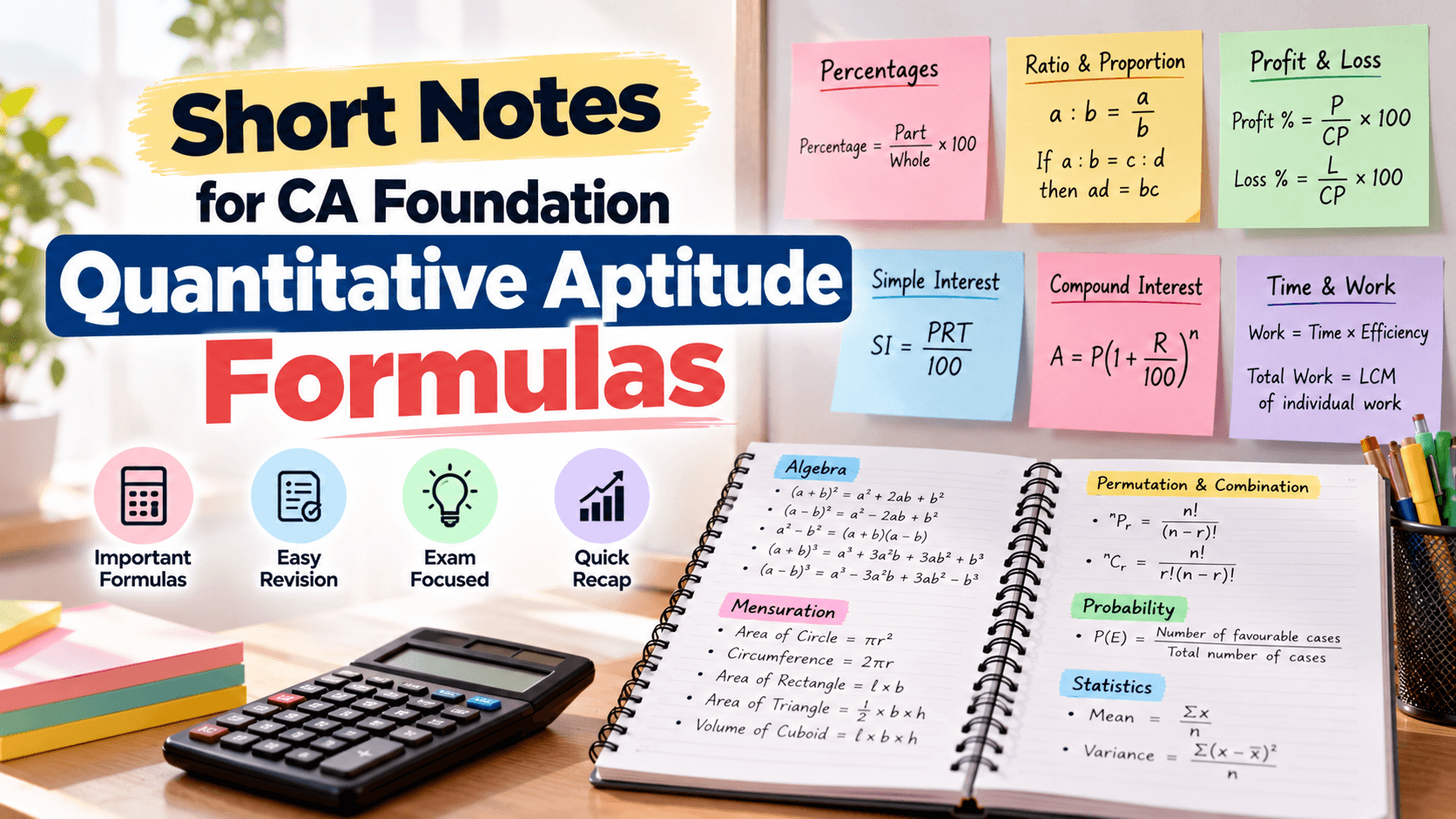
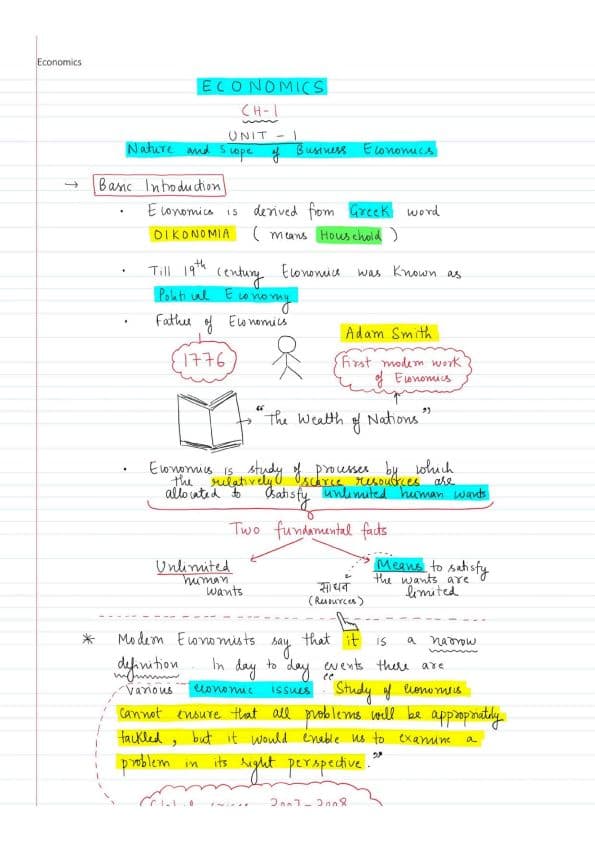
For Accounting, focus on logic, treatments, formats, entries and working steps. For Business Laws, record the meaning of a provision, its essential elements, conditions and exceptions. For Quantitative Aptitude, organise formulas and the situations in which each method is useful. For Economics, note definitions, relationships and important distinctions.
Do not copy complete solved questions. Record the approach, important steps and common errors. Add a short example only where it makes a difficult idea easier to recall.
Keep notes aligned with the current syllabus
Use the current syllabus and module contents page to create a chapter-wise checklist. Include each relevant heading so that note-making does not leave out a prescribed topic. Mark sections that are complete, need more reading or require another round of practice.
If you use an older notebook or another student's notes, compare them with the material applicable to your examination attempt. Syllabus coverage and updates matter. Verify content through relevant official resources.
Use a consistent format
A repeatable format makes notes easier to scan. Include the chapter name, key concepts, definitions or formulas, important exceptions, one representative example and questions that need another attempt. The exact sections can vary by subject, but keep the layout familiar.
Leave space to add points discovered during question practice. Avoid keeping multiple versions that contain conflicting information. Update notes selectively when a genuine gap is identified.
Revise through active recall and practice
Do not treat notes as a document to read passively. Cover a section and try to recall its main points. Write formulas from memory, explain a provision or solve a short question. Compare your response with the notes and correct what was missed.
Use spaced revision so chapters return to your schedule after a gap. Combine quick note reviews with questions from the module. If you cannot solve a question, return to the full explanation rather than expecting a short note to answer every doubt.
Use Studycaller as part of a preparation routine
Studycaller can be included in a wider routine that combines module-based learning, concise notes, regular question practice and performance review. Keep the applicable ICAI material as your reference and use notes to make revision more organised.
After completing a chapter, attempt questions and review mistakes. Add only useful learning points to your notes. This keeps the resource practical and helps identify what needs attention before the examination.
Quick Reference Table
| Subject | What to include | Revision activity |
|---|---|---|
| Accounting | Treatments, formats and working steps | Solve illustrations independently |
| Business Laws | Provisions, elements and exceptions | Recall and apply provisions |
| Quantitative Aptitude | Formulas and method selection | Practise mixed question sets |
| Business Economics | Definitions and relationships | Explain concepts without notes |
Conclusion
Effective preparation depends on clear concepts, relevant practice and regular review. Use applicable ICAI resources as your foundation, keep revision notes accurate and turn each assessment into a practical improvement plan. A consistent routine with Studycaller can help make revision more organised and focused.