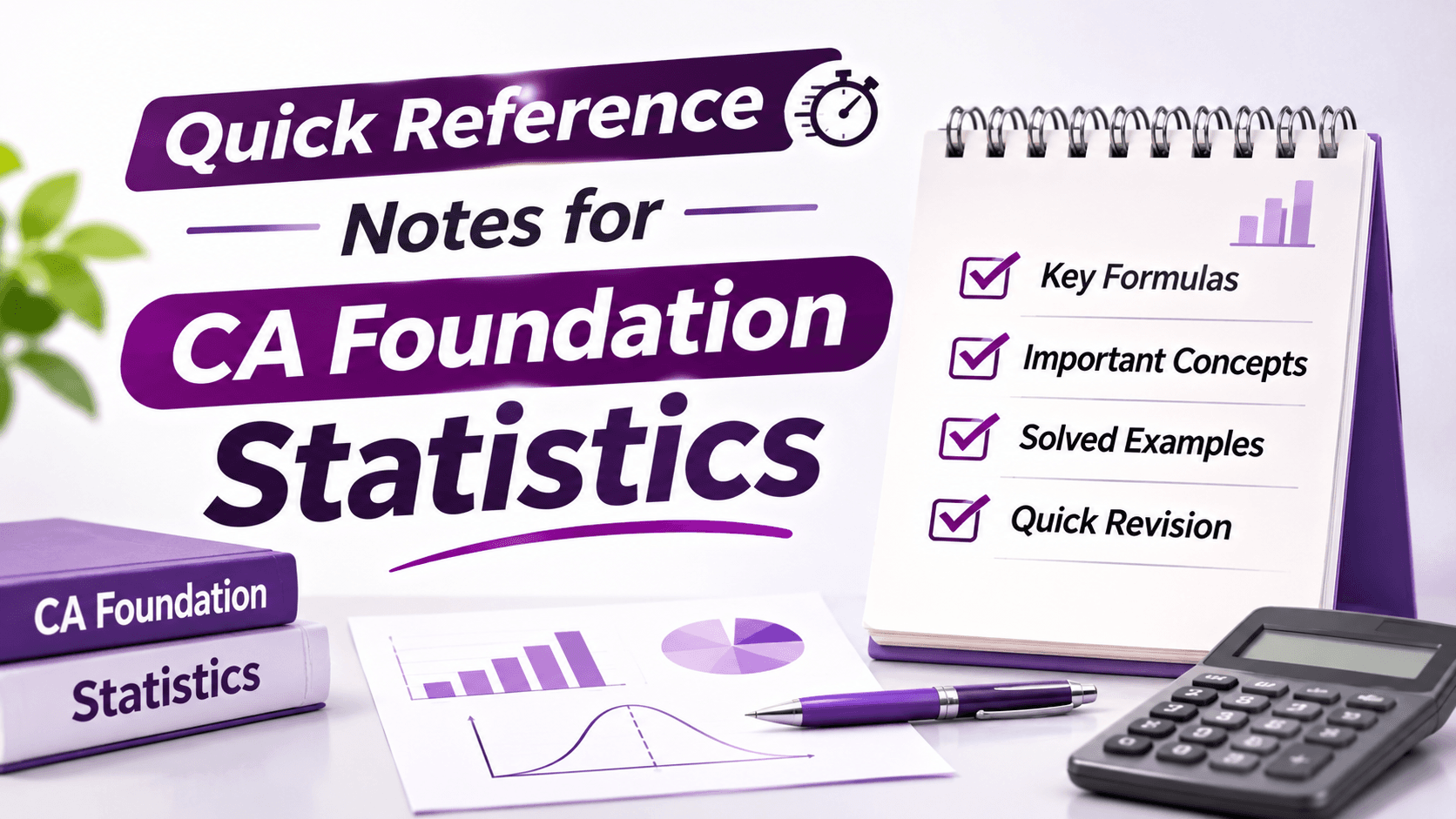
Quick Reference Notes for CA Foundation Statistics
Revise CA Foundation Statistics with formula sheets, method-selection cues, common errors and short practice routines. Build confidence with structured revision from…
In this article(9 sections)ShowHide
Statistics can feel difficult when formulas look similar or when a question requires you to choose the right method before starting calculations. Quick reference notes make revision easier by grouping formulas, defining symbols and showing when a method is appropriate. They are most useful when paired with regular problem-solving.
Use the notes below as a framework for building your own formula reference. Follow the current CA Foundation syllabus and prescribed material for the exact topics, notation and methods relevant to your attempt.
Create a Formula Sheet With Meaning
A formula sheet should do more than list equations. For each formula, record what the symbols mean, the kind of question it is used for and any conditions that affect its use. This reduces the risk of choosing a familiar formula that does not fit the problem.
Group formulas by topic and use consistent notation. If your class notes use a particular symbol convention, keep it consistent throughout your revision material. When two methods look similar, place them side by side and write one sentence explaining the difference.
Organise Notes by Question Type
Sort your reference notes around the decisions you make while solving a question: what information is given, what needs to be found, which method fits, and what calculation follows. This helps you recognise the structure of a problem rather than memorising formulas without context.
For each topic, keep one worked example with clear steps and one short note about a common trap. Rework the example later without looking at the solution. If you can reproduce the method and explain why it works, the note is serving its purpose.
Use a Consistent Problem-Solving Sequence
Read the question carefully and identify the required result before substituting values. Write down the relevant data, select the method, show the calculation and check whether the answer is reasonable. This sequence reduces avoidable mistakes when questions contain extra information or unfamiliar wording.
Keep units, signs, decimal places and rounding consistent with the instructions in your study material or question. If your answer seems unreasonable, review the inputs and intermediate steps before repeating the entire calculation.
Make a Comparison Table for Similar Methods
When several methods could appear in the same chapter, a comparison table can help you decide which one to use. Include the information each method requires, what it calculates and the clue in a question that points toward it. Avoid relying on a single keyword when the full context matters.
Use practice questions to check your selection. After solving, ask why the method was appropriate and whether another method would have been valid. This small review improves method selection, which is often just as important as performing the arithmetic correctly.
| Reference note | Include | Self-check |
|---|---|---|
| Formula | Formula and symbol meanings | Can I write it from memory? |
| Method cue | When the method is appropriate | Can I identify the right question type? |
| Worked example | Clear steps and final result | Can I solve it without seeing the steps? |
| Common error | Typical mistake and correction | Can I avoid it in a new question? |
| Practice prompt | One question to reattempt later | Can I solve it accurately under time pressure? |
Build a Weekly Statistics Revision Routine
Short, repeated practice is usually more effective than leaving all numerical revision for one long session. Rotate formula recall, solved examples and independent questions across the week. Return to earlier topics after a gap so that formulas remain accessible as the examination approaches.
Track Calculation Errors Separately
Keep an error log that distinguishes concept errors from arithmetic slips, formula-selection errors, misreading and incomplete working. Each category needs a different response. A concept gap requires relearning, while a repeated arithmetic slip may need a slower checking routine.
Write the corrected step next to the mistake and reattempt a similar question later. Simply reading the correct solution can create a false sense of familiarity. You need to demonstrate that you can use the method independently.
Use Timed Practice Without Rushing
Once you can solve a topic accurately, practise sets under a time limit that reflects your examination preparation. Begin with manageable sets and increase the difficulty as your method selection and accuracy improve. Do not use speed as the only measure of progress.
After a timed set, calculate which questions consumed the most time and why. If you were stuck choosing a formula, revisit the comparison notes. If the method was clear but calculations took too long, practise similar questions while keeping the steps accurate.
Use Studycaller as Part of a Revision System
Studycaller can fit into a planned cycle of topic revision, practice and review. Select relevant practice material, record recurring errors and return to weak question types. The value comes from acting on what your practice reveals rather than counting the number of questions attempted.
Keep your reference notes compact and update them when you discover a repeated error or a clearer method-selection cue. Check that the material aligns with the current CA Foundation syllabus and avoid mixing different notation systems without explanation.
Prepare for the Final Revision Days
In the final days, revise formulas and solve a small selection of representative questions instead of reading every solution passively. Prioritise topics where you still hesitate, but do not neglect the areas you already know. Quick recall sessions can help keep the full syllabus active.
Avoid changing to a completely new reference book at the last moment. Use your established notes, check the official examination instructions and maintain enough rest to work accurately. A calm and consistent approach supports better concentration during numerical papers.
CA Foundation notes students love
Free notes from the Studycaller library, picked for this article.
 Amendments
CA Foundation · Business Economics
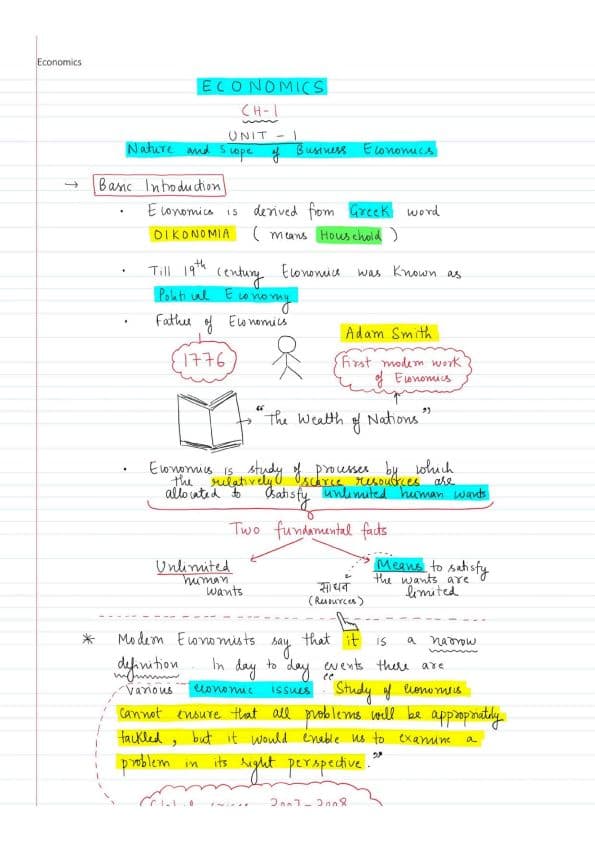
Full economics handwritten notes by CA Parag Gupta sir
Heet HingrajiyaLikes 209Views 68.6k Detailed Notes
CA Foundation · Business Economics
"Hi guys! Maine kuch naya try kiya Economics me — ek alag andaaz, ek alag soch. Chapter 1: Nature & Scope of Business Economics – Unit 1
مُحَمَّدLikes 126Views 14.7k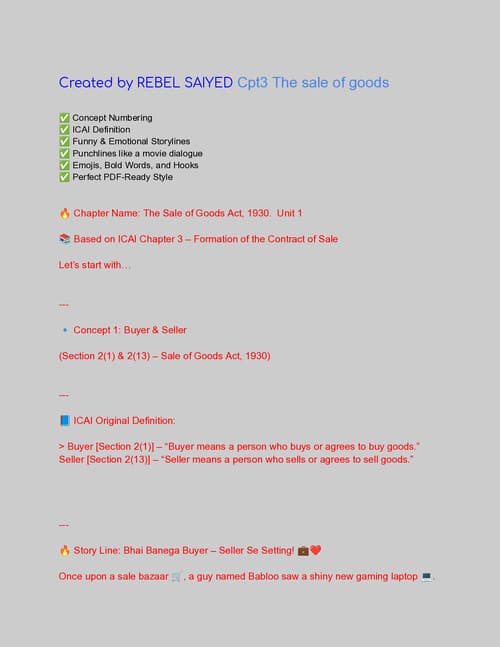 Charts
CA Foundation · Business Laws
Chpter 3 the sale of goods act Unit. 1 only. Full of story line Concept clarity and funny stories punch lines
مُحَمَّدLikes 118Views 14.2k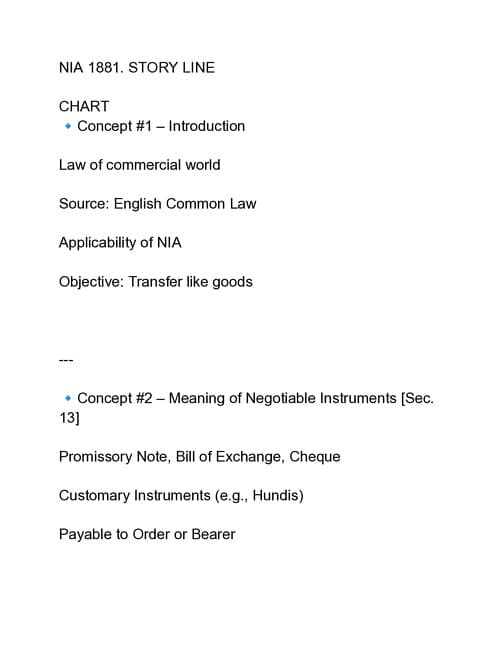 Amendments
CA Foundation · Business Laws
Nia 1881 story line pdf Coverage total 11 Concept
مُحَمَّدLikes 117Views 12.5k
Frequently asked questions
What should CA Foundation Statistics quick notes contain?
Include formulas, symbol meanings, method-selection cues, one representative example and common mistakes. Keep the notes aligned with the current syllabus and use them alongside independent question practice.
How can I memorise Statistics formulas?
Practise writing formulas from memory, explain what each symbol means and solve a question that uses the formula. Revisit the formula after a gap instead of relying only on repeated reading.
Should I prepare separate formula sheets for each chapter?
Yes, chapter-wise sheets can make revision easier. You can also keep a one-page index of topics and formula names to help you locate the correct sheet quickly.
How do I know which statistical method to use?
Identify what the question asks, list the available information and compare these with the conditions of each method. Practise mixed questions so you learn to select a method from context, not just a keyword.
How can I reduce calculation mistakes?
Show steps clearly, keep signs and units consistent, and check whether the final result is reasonable. Maintain an error log and reattempt similar questions to confirm that the correction has become a habit.
Is reading solved examples enough for Statistics?
No. Solved examples explain a method, but independent practice shows whether you can select and apply it yourself. Cover the solution and attempt the question before checking your work.
When should I start timed Statistics practice?
Start after you understand the basic method for a topic. Use short timed sets first, then move to broader practice as accuracy improves. Review time-consuming questions after every set.
How often should I revise formula notes?
Use short sessions several times a week and revisit earlier topics after a gap. Increase the frequency for formulas or methods you repeatedly forget or apply incorrectly.
Can Studycaller help with CA Foundation Statistics preparation?
Studycaller can be part of a structured practice routine when you use relevant questions to identify weak areas and review mistakes. Ensure all materials match the current examination syllabus.
What should I do the day before the Statistics paper?
Review your established formula sheets, solve a few familiar representative questions and check examination instructions. Avoid trying to learn every method from scratch or sacrificing rest for excessive practice.