How Poor Compliance Affects Company Reputation & Business Growth
Learn how poor compliance affects company reputation through legal penalties, investor distrust, financial losses, and reduced business credibility in competitive industries.
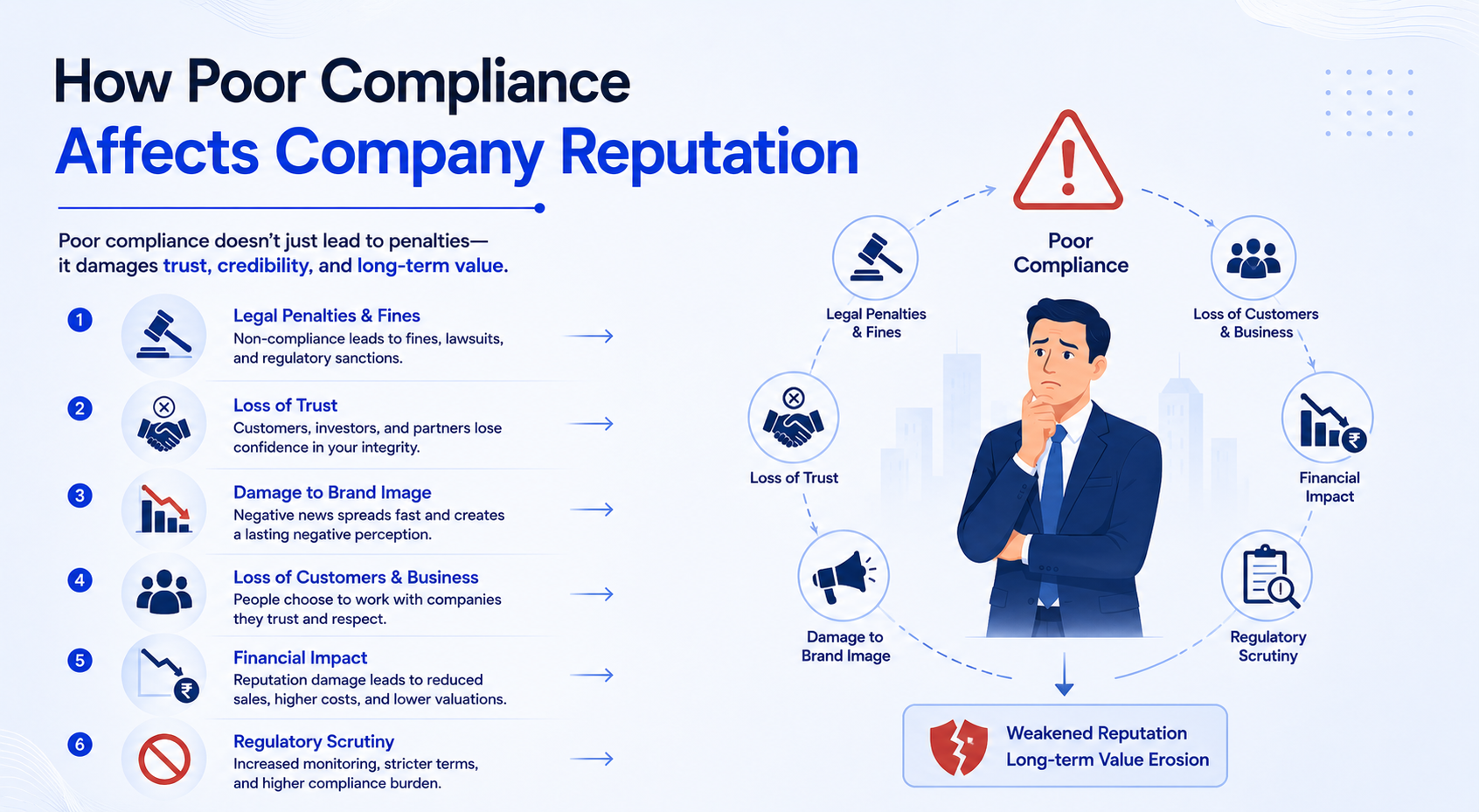
Table of Content
- Poor Compliance Reduces Business Credibility
- Investors Lose Confidence in Non-Compliant Companies
- Legal Penalties Damage Public Image
- Customers Prefer Trustworthy Businesses
- Poor Compliance Can Affect Business Partnerships
- Financial Losses Increase Due to Compliance Failures
- Employee Confidence Also Gets Affected
- Weak Compliance Reflects Poor Internal Controls
- Technology Has Increased Compliance Visibility
- Chartered Accountants Help Businesses Maintain Compliance
- Long-Term Reputation Depends on Responsible Business Practices
- Conclusion
In today’s business environment, companies are expected to maintain transparency, accountability, and proper compliance with financial and legal regulations. Businesses regularly deal with taxation rules, corporate laws, financial reporting standards, labor regulations, and industry-specific legal requirements. Compliance is therefore not only a legal responsibility but also an important factor that affects business credibility and long-term reputation. When companies fail to follow proper compliance systems, the consequences often go beyond financial penalties and can seriously damage public trust.
Modern businesses operate in highly competitive markets where reputation plays a major role in attracting investors, customers, employees, and financial institutions. Poor compliance practices can create negative perceptions about a company’s professionalism, ethics, and operational discipline. Understanding how poor compliance affects company reputation is, therefore, extremely important for businesses aiming for long-term stability and growth.
Poor Compliance Reduces Business Credibility
A company’s reputation is strongly connected with how responsibly it follows legal and financial regulations. Businesses that repeatedly fail to meet compliance requirements often appear unorganized and unreliable in the market. Poor compliance may involve:
- Delayed tax filings
- Inaccurate financial reporting
- Regulatory violations
- Weak documentation systems
- Failure to follow industry regulations
When such problems become public, stakeholders may start questioning the company’s management quality and financial discipline. This loss of credibility can affect long-term business relationships significantly.
Investors Lose Confidence in Non-Compliant Companies
Investors prefer businesses that maintain transparency and proper financial discipline. Companies with compliance-related issues often struggle to build investor trust because regulatory failures increase financial and operational uncertainty.
- Financial Transparency Concerns: Poor compliance creates doubts regarding the accuracy of financial records and reporting systems.
- Increased Business Risk: Investors may feel the company faces higher legal and operational risks.
- Fear of Future Penalties: Compliance failures may result in financial losses that affect business profitability.
- Negative Market Image: Public compliance issues often damage the company’s reputation in financial markets.
This is one of the biggest reasons why poor compliance affects company reputation in modern corporate environments.
Legal Penalties Damage Public Image
Regulatory authorities impose penalties and legal action when companies fail to follow compliance requirements properly. Such actions often attract public attention and negatively affect business reputation. Companies may face:
- Financial penalties
- Regulatory notices
- Legal proceedings
- License-related restrictions
These issues create negative publicity and may reduce trust among customers, investors, and business partners. Repeated compliance failures can permanently damage corporate image.
Customers Prefer Trustworthy Businesses
Modern customers increasingly value ethical and responsible business practices. Companies known for poor compliance often lose customer trust because consumers may associate non-compliance with weak professionalism and poor corporate ethics. Businesses with strong compliance systems generally appear:
- More reliable
- More transparent
- More professionally managed
- More financially stable
Customer confidence is therefore closely connected with corporate accountability and compliance discipline.
Poor Compliance Can Affect Business Partnerships
Companies regularly work with vendors, financial institutions, investors, and corporate partners. Poor compliance practices may create hesitation among these stakeholders because they prefer organizations with strong operational discipline.
- Vendor Relationships: Suppliers may hesitate to work with businesses facing compliance-related instability.
- Banking Support: Financial institutions often prefer businesses with transparent compliance records.
- Corporate Collaborations: Companies may avoid partnerships with organizations having a poor regulatory reputation.
- Investor Interest: Weak compliance systems often reduce investment opportunities.
Strong compliance management, therefore, directly supports long-term business relationships.
Financial Losses Increase Due to Compliance Failures
Poor compliance not only affects reputation — it can also create major financial losses for businesses. Companies may face additional costs related to penalties, legal support, delayed operations, and reputational recovery. Businesses may suffer because of:
- Heavy fines
- Operational disruptions
- Increased legal expenses
- Declining investor confidence
These financial pressures may eventually affect profitability and business growth plans significantly.
Employee Confidence Also Gets Affected
Employees generally prefer organizations with professional management systems and ethical business practices. Poor compliance can create internal uncertainty and reduce employee confidence in the company’s future stability. Businesses facing repeated compliance issues may experience:
- Lower employee morale
- Increased workplace stress
- Higher employee turnover
- Difficulty attracting skilled professionals
Corporate reputation, therefore, affects both external and internal business environments.
Weak Compliance Reflects Poor Internal Controls
Compliance failures often indicate deeper operational and management problems within organizations. Businesses with poor internal systems are more likely to face financial irregularities, reporting mistakes, and operational inefficiencies.
- Inadequate Monitoring Systems: Weak supervision increases the chances of financial and compliance-related errors.
- Poor Documentation Practices: Incomplete records reduce operational transparency.
- Lack of Accountability: Weak internal discipline creates higher operational risks.
- Financial Reporting Issues: Inaccurate reporting may damage investor and stakeholder trust.
This is another important reason why poor compliance affects company's reputation over time.
Technology Has Increased Compliance Visibility
Digital systems and online reporting platforms have increased transparency in modern business environments. Regulatory actions and compliance failures now spread much faster through media and digital platforms. Because of this, even small compliance issues can quickly affect:
- Public image
- Investor perception
- Customer trust
- Market reputation
Businesses, therefore, need stronger compliance systems than ever before.
Chartered Accountants Help Businesses Maintain Compliance
Chartered accountants play a highly important role in helping organizations maintain proper compliance discipline and financial transparency. Professionals support businesses through:
- Taxation compliance management
- Financial reporting supervision
- Audit systems
- Documentation control
- Regulatory guidance
Strong financial supervision helps organizations avoid compliance failures and protect long-term business credibility.
Long-Term Reputation Depends on Responsible Business Practices
Reputation is built slowly but can be damaged very quickly. Businesses that consistently follow ethical and compliant practices generally achieve stronger market trust and operational stability over time. Companies with strong compliance cultures often benefit from:
- Better investor confidence
- Improved business partnerships
- Higher customer trust
- Stronger financial credibility
This long-term trust becomes a major competitive advantage in modern industries.
Conclusion
Understanding how poor compliance affects company reputation helps explain why businesses must maintain strong financial discipline and regulatory accountability. Poor compliance can damage investor confidence, customer trust, corporate credibility, and operational stability while also creating legal and financial consequences. Modern businesses require proper compliance systems, transparent reporting, and professional financial supervision to maintain a long-term reputation and sustainable growth. As industries become more competitive and transparent, strong compliance management will remain essential for business success and public trust.

FAQs
How does poor compliance affect company reputation?
Poor compliance damages business credibility, investor confidence, customer trust, and overall corporate image in competitive industries.
Why do investors avoid non-compliant companies?
Investors consider non-compliant businesses financially risky because regulatory issues may lead to penalties, instability, and reputational damage.
How can compliance failures create financial losses?
Compliance failures may result in penalties, legal expenses, operational disruptions, and reduced investment opportunities for businesses.
Why is compliance important for customer trust?
Customers prefer businesses that maintain ethical practices, transparency, and proper operational discipline in their activities.
How does poor compliance affect business partnerships?
Vendors, investors, and corporate partners often hesitate to work with companies facing regulatory and compliance-related issues.
Why are internal controls important for compliance management?
Strong internal controls improve monitoring, accountability, financial accuracy, and operational discipline within organizations.
How has technology increased the importance of compliance?
Digital platforms and online reporting systems make compliance failures more visible and publicly accessible than before.
What role do chartered accountants play in compliance management?
Chartered accountants help businesses maintain taxation compliance, financial reporting accuracy, and proper regulatory supervision.
How does poor compliance affect employees?
Repeated compliance issues may reduce employee confidence, workplace stability, and overall organizational trust.
Why is long-term reputation important for businesses?
Strong reputation improves investor confidence, customer loyalty, financial credibility, and sustainable business growth opportunities.