How Self-Pressure Affects CA Exam Performance and Confidence
Learn how self-pressure impacts CA exam performance, concentration, confidence, revision quality, and emotional stability during long preparation periods.
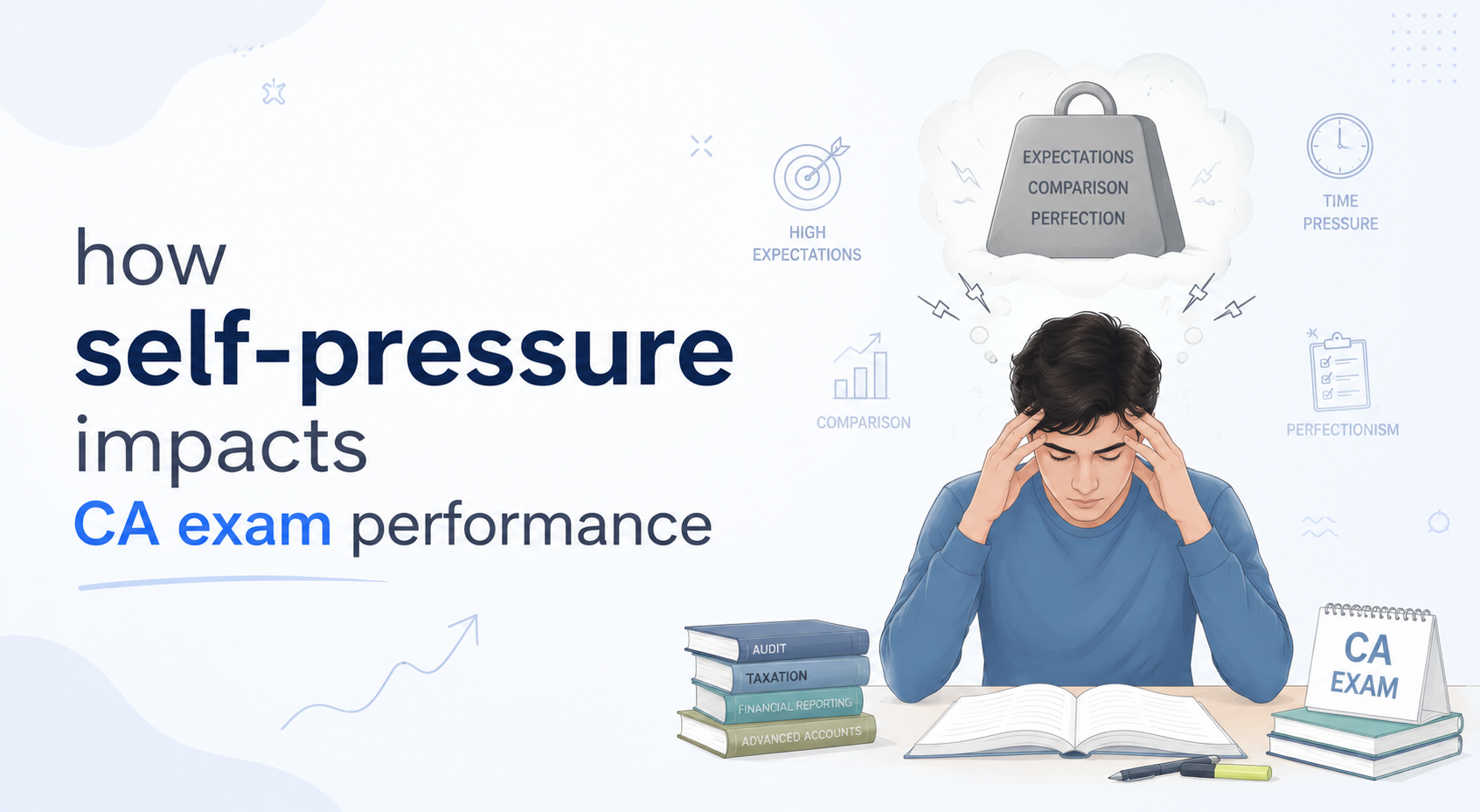
Table of Content
- Self-Pressure Reduces Concentration During Studies
- Unrealistic Expectations Increase Mental Stress
- Fear of Mistakes Weakens Confidence
- Excessive Pressure Can Lead to Burnout
- Self-Pressure Disturbs Revision Quality
- Comparison Makes Self-Pressure Worse
- Self-Pressure Affects Performance in the Exam Hall
- Balanced Routine Helps Reduce Internal Pressure
- Self-Discipline Works Better Than Self-Punishment
- Healthy Mindset Improves Long-Term Preparation
- Conclusion
CA students often face pressure not only from exams, syllabus, or competition, but also from themselves. Many students create extremely high expectations regarding marks, study hours, attempts, and performance. While some level of pressure can improve seriousness toward studies, excessive self-pressure slowly starts affecting concentration, emotional balance, and overall preparation quality.
Students preparing for CA exams usually want everything to go perfectly. They expect themselves to complete the syllabus on time, revise multiple times, score well in mock tests, and remain productive every single day. However, when reality becomes different from these expectations, frustration and mental stress start increasing gradually.
If you want to understand how self-pressure impacts CA exam performance, it is important to know that constant internal pressure often weakens preparation more than students realize. Excessive pressure may push students toward overthinking, emotional exhaustion, and fear-based studying instead of calm and effective learning. Balanced preparation generally produces much better results than preparation driven entirely by stress and self-criticism.
Self-Pressure Reduces Concentration During Studies
Students under constant pressure often struggle to focus properly during study sessions. Even while studying, the mind remains occupied with thoughts related to:
- Pending syllabus
- Fear of failure
- Future results
- Expectations from self
Because of this mental burden, concentration becomes weaker. Many students continue sitting for long hours, but mentally absorb very little because their thoughts remain divided between studies and anxiety. Overthinking gradually reduces learning efficiency and makes preparation feel emotionally heavier.
A calmer mindset usually improves understanding and retention much more effectively than continuous internal pressure.
Unrealistic Expectations Increase Mental Stress
Some students expect themselves to perform perfectly in every area of preparation. They may feel guilty if:
- Daily targets remain incomplete
- Mock test scores are low
- Productivity decreases for a day
Instead of accepting normal ups and downs in preparation, students begin criticizing themselves continuously. This mindset creates emotional exhaustion because students stop appreciating progress and focus only on shortcomings.
CA preparation is a long process, and expecting perfection every day often increases stress unnecessarily. Realistic expectations usually help students remain mentally healthier and more productive over time.
Fear of Mistakes Weakens Confidence
Students experiencing high self-pressure often become afraid of making mistakes. Because of this fear, they may:
- Avoid mock tests
- Delay difficult subjects
- Overthink simple questions
This behavior slowly affects confidence during preparation. Mistakes are actually an important part of learning, especially in courses like CA, where practical understanding develops gradually through revision and practice.
Students who accept mistakes calmly usually improve faster because they focus on correction instead of emotional frustration. Confidence grows much better in an environment of balanced learning rather than constant self-judgment.
Excessive Pressure Can Lead to Burnout
Many students try to push themselves continuously without proper emotional or mental recovery. Initially, this may feel like serious preparation, but over time, it often leads to burnout. Burnout may cause:
- Mental tiredness
- Loss of motivation
- Emotional frustration
- Reduced study efficiency
Students sometimes reach a stage where even simple study tasks start feeling mentally exhausting. Continuous pressure without balance slowly reduces productivity instead of improving it. Healthy preparation requires proper rest, emotional stability, and sustainable study habits, along with hard work.
Self-Pressure Disturbs Revision Quality
Students under pressure often rush through preparation because they constantly feel:
“I am running behind.” Because of this panic mindset, revision becomes:
- Unorganized
- Incomplete
- Emotionally stressful
Instead of understanding concepts calmly, students start revising only to reduce anxiety temporarily. This weakens retention significantly because effective revision requires mental clarity and repeated reinforcement.
Students who revise with patience and structure usually retain concepts much better compared to students revising under panic and fear.
Comparison Makes Self-Pressure Worse
Many students increase their self-pressure by continuously comparing themselves with others. They may feel stressed after hearing:
- Someone completed the syllabus earlier
- Others study for more hours
- Friends score higher in mock tests
Over time, comparison creates the feeling that personal preparation is never enough. This emotional pressure reduces self-confidence and shifts focus away from individual improvement.
Every student learns differently and progresses at a different pace. Constant comparison usually increases anxiety much more than productivity.
Self-Pressure Affects Performance in the Exam Hall
Excessive pressure does not remain limited to preparation only. It often affects actual exam performance as well. Students under high stress may:
- Panic during difficult questions
- Forget familiar concepts temporarily
- Mismanage time
- Make careless mistakes
Even well-prepared students sometimes underperform because anxiety reduces mental clarity during exams. Students who remain calmer usually think more logically and handle difficult situations more effectively in the examination hall. Mental stability often becomes just as important as academic preparation during CA exams.
Balanced Routine Helps Reduce Internal Pressure
One of the best ways to manage self-pressure is by maintaining a balanced preparation routine. Students generally feel more stable when they:
- Follow realistic schedules
- Sleep properly
- Revise consistently
- Take controlled breaks
A structured routine creates a sense of control and reduces unnecessary panic. Students should focus more on:
- Daily progress
- instead of:
- Constantly worrying about final results
Small, consistent improvement usually creates stronger confidence over time.
Self-Discipline Works Better Than Self-Punishment
Some students believe strict self-pressure automatically improves performance. However, constantly criticizing or mentally punishing yourself usually weakens emotional stability. Self-discipline and self-pressure are different. Discipline encourages:
- Consistency
- Organized preparation
- Stable routines
Whereas unhealthy pressure creates:
- Fear
- Anxiety
- Emotional exhaustion
Students who prepare with discipline and patience usually sustain productivity much longer than students preparing under continuous emotional pressure.
Healthy Mindset Improves Long-Term Preparation
CA preparation becomes more manageable when students stop expecting perfection from themselves every single day. A healthier mindset focuses on:
- Consistency
- Gradual improvement
- Learning from mistakes
- Emotional balance
This approach improves both mental health and preparation quality. Students who remain emotionally balanced usually perform more steadily throughout long preparation periods. Success in CA often depends not only on intelligence or study hours but also on the ability to handle pressure calmly.
Conclusion
Self-pressure impacts CA exam performance by reducing concentration, increasing anxiety, disturbing revision quality, and affecting emotional stability during preparation. While some level of seriousness is important, excessive internal pressure often weakens productivity instead of improving it.
Students who maintain balanced routines, realistic expectations, and healthier preparation habits usually perform better because their minds remain calmer and more focused. CA preparation is a long journey that requires patience, discipline, and emotional stability, along with academic effort.
In the end, students generally perform best when they study with consistency and confidence instead of constant fear and self-pressure.

FAQs
How does self-pressure affect CA exam performance?
Self-pressure increases anxiety, weakens concentration, disturbs revision quality, and affects confidence during preparation and exams.
Why do CA students put pressure on themselves?
Students often create pressure because of high expectations, fear of failure, comparison with others, and concern about future career success.
Can excessive pressure reduce concentration during studies?
Yes, excessive pressure causes overthinking and mental distractions, which gradually reduce study focus and productivity.
How does self-pressure affect revision quality?
Students under pressure often revise in panic, which reduces understanding, retention, and long-term memory strength.
Can self-pressure lead to burnout during CA preparation?
Yes, continuous emotional stress and unrealistic expectations can cause mental exhaustion and burnout over time.
Why is comparison harmful during CA preparation?
Comparison increases anxiety and self-doubt, making students feel emotionally pressured and less confident about their own progress.
Does self-pressure affect actual exam performance?
Yes, excessive pressure may cause panic, memory blocks, careless mistakes, and poor time management during exams.
How can students reduce self-pressure during preparation?
Students can reduce self-pressure through balanced routines, realistic targets, proper revision planning, and emotional stability.
Is self-discipline different from self-pressure?
Yes, self-discipline improves consistency and organization, while unhealthy self-pressure creates fear and emotional stress.
Why is emotional balance important in CA preparation?
Emotional balance helps students maintain concentration, confidence, consistency, and healthier preparation habits during long exam journeys.