How to Manage Unfinished Syllabus Before Exams Effectively?
Learn how to manage unfinished syllabus before exams with practical revision strategies, time management tips, and smart study planning to reduce stress and improve preparation.
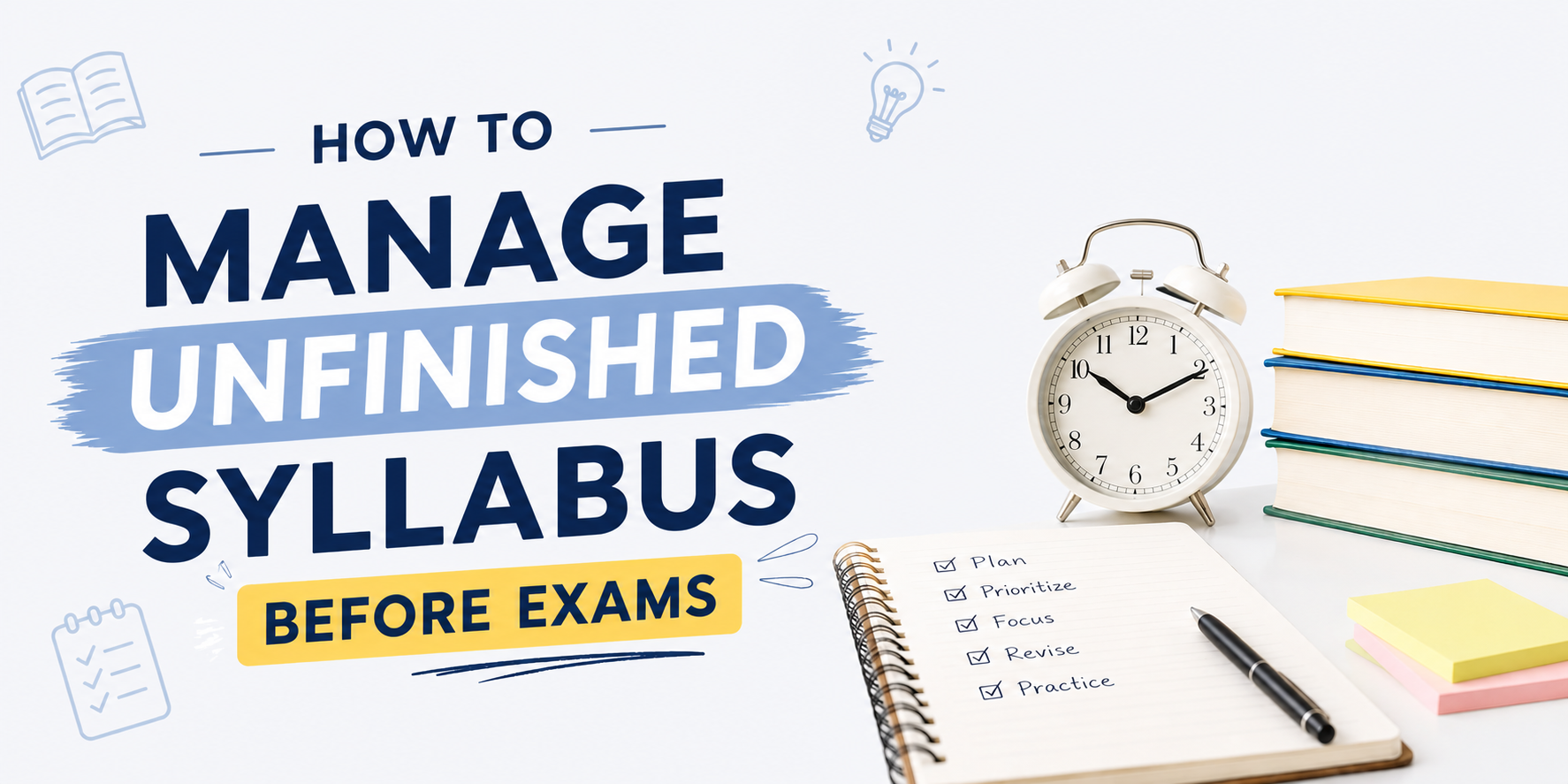
Table of Content
- Accept the Situation Instead of Panicking
- Identify Important and High-Weightage Topics
- Do Not Leave Revision Completely
- Break the Remaining Syllabus Into Smaller Targets
- Avoid Learning Everything in Extreme Detail
- Use Short Notes and Summary Material
- Avoid Comparing Your Preparation With Others
- Practice Important Questions Instead of Only Reading
- Maintain a Stable Routine During the Final Days
- Focus on Maximum Preparation, Not Complete Preparation
- Conclusion
Almost every student faces some level of unfinished syllabus before exams, especially in demanding courses like CA. Even students who study regularly sometimes feel that certain topics are incomplete, weak, or not revised properly when exams come closer.
This situation often creates panic because students start thinking about everything that is still left instead of focusing on what can realistically be managed in the remaining time. As pressure increases, concentration weakens and preparation becomes more unorganized.
If you want to understand how to manage unfinished syllabus before exams, the first thing to remember is that panic usually wastes more time than the unfinished portion itself. A calm and practical approach helps students use the remaining days much more effectively.
The goal before exams should not always be perfection. The goal should be maximizing preparation quality with the time available.
Accept the Situation Instead of Panicking
Many students lose valuable study time because they keep worrying about how much syllabus is still pending. Continuous stress and overthinking often reduce productivity even further. An unfinished syllabus does not automatically mean failure. In many cases, students still perform well by handling the remaining time intelligently. The first step is to:
- Accept What Is Pending
- Stop Emotional Overthinking
- Focus On Practical Planning
Once students stop panicking, decision-making and concentration usually improve significantly. A calm mindset helps preparation move faster and more clearly.
Identify Important and High-Weightage Topics
When time becomes limited, students should not try to study every pending topic with equal depth. Smart prioritization becomes extremely important. Students should first identify:
- High-Weightage Chapters
- Frequently Asked Topics
- Scoring Areas
- Important Concepts For Revision
This approach helps maximize marks even if some low-priority areas remain incomplete. Focusing on the most valuable portions first improves confidence and preparation efficiency during the final phase.
Do Not Leave Revision Completely
One common mistake students make is stopping revision entirely while trying to finish pending topics. As a result, previously studied concepts start fading from memory. A balanced approach works better. Students should:
- Continue Short Revision Sessions
- Revise Important Formulas And Concepts
- Keep Previously Studied Topics Active
Revision improves retention and confidence during exams. Completely abandoning revision often creates confusion later, even if the syllabus is completed partially.
Break the Remaining Syllabus Into Smaller Targets
Large unfinished portions often feel overwhelming because students think about everything together. A better strategy is to divide the remaining syllabus into:
- Daily Targets
- Subject-Wise Portions
- Short Study Sessions
Smaller goals feel more manageable and reduce mental pressure. Completing one small target at a time creates momentum and improves confidence gradually. This approach also makes time management more practical during stressful preparation periods.
Avoid Learning Everything in Extreme Detail
Before exams, students sometimes spend excessive time trying to master every pending topic perfectly. This usually creates more pressure because time becomes insufficient. At this stage, selective and practical preparation becomes more important. Students should focus on:
- Basic Conceptual Clarity
- Important Questions
- Frequently Tested Areas
- Revision-Friendly Notes
Understanding important concepts reasonably well is often more beneficial than trying to study every minor detail deeply under time pressure.
Use Short Notes and Summary Material
Short notes become extremely useful during the final phase when the syllabus is unfinished and revision time is limited.
Students can use:
- Summary Notes
- Formula Sheets
- Charts And Keywords
- Revision Booklets
These materials help in:
- Faster Revision
- Quick Recall
- Time Saving
Well-prepared summary material improves efficiency and reduces stress during the last days before exams.
Avoid Comparing Your Preparation With Others
As exams approach, students often become mentally disturbed after hearing how much others have completed or revised. Comparison usually increases:
- Anxiety
- Self-Doubt
- Panic
Every student studies differently and progresses at a different speed. Instead of focusing on someone else’s preparation, students should concentrate on improving their own remaining preparation with the available time. A focused mindset improves productivity far more than comparison ever does.
Practice Important Questions Instead of Only Reading
When time is limited, active practice often becomes more effective than passive reading. Students should try to:
- Solve Important Practical Questions
- Practice Writing Theory Answers
- Attempt Mock Questions
This improves:
- Retention
- Answer Presentation
- Exam Confidence
Writing practice also helps identify weak areas quickly before exams. Even limited practice can improve performance significantly during the final phase.
Maintain a Stable Routine During the Final Days
Many students react to unfinished syllabus pressure by suddenly increasing study hours aggressively and sacrificing sleep or breaks.
This usually creates:
- Mental Exhaustion
- Low Concentration
- Weak Retention
A stable routine helps students remain productive for longer periods. Students should maintain:
- Proper Sleep
- Controlled Breaks
- Realistic Study Sessions
Mental freshness becomes very important during the last phase of preparation.
Focus on Maximum Preparation, Not Complete Preparation
Very few students feel completely satisfied with their preparation before major exams. Waiting for “perfect preparation” often increases stress unnecessarily. The practical goal should be:
- Covering Important Areas Properly
- Improving Revision Quality
- Avoiding Panic
- Performing Calmly In The Exam Hall
Even with an unfinished syllabus, students can still score well through smart revision and focused preparation. Confidence often improves when students focus on progress instead of perfection.
Conclusion
Managing an unfinished syllabus before exams is mainly about staying practical, organized, and mentally stable under pressure. Panic and overthinking usually reduce productivity far more than the pending syllabus itself.
Students who prioritize important topics, continue revision, maintain realistic routines, and avoid unnecessary comparison often perform much better than expected, even with incomplete preparation. In the final phase, smart planning and calm execution usually matter more than emotional stress about what is left.
The goal should always be to use the remaining time effectively instead of wasting energy worrying about perfection.

FAQs
How to manage the unfinished syllabus before exams effectively?
Students can manage an unfinished syllabus effectively by prioritizing important topics, maintaining revision, creating realistic study targets, and avoiding panic during the final preparation phase.
Is an unfinished syllabus common before CA exams?
Yes, many students experience some unfinished syllabus before CA exams because of the vast course structure and limited preparation time.
Should students panic because of incomplete preparation?
No, panic usually reduces concentration and productivity, while calm planning helps students use the remaining preparation time more effectively.
How should students prioritize topics before exams?
Students should focus first on high-weightage chapters, important concepts, frequently asked questions, and scoring areas during the final revision phase.
Is revision important even when the syllabus is unfinished?
Yes, revision remains important because it strengthens retention and confidence for already studied topics before exams.
Can short notes help during unfinished syllabus situations?
Yes, short notes and summary material help students revise faster and manage important concepts more efficiently during limited preparation time.
Why should students avoid comparing their preparation with others?
Comparison increases anxiety and self-doubt, which negatively affects focus and productivity during the final preparation stage.
Is writing practice useful before exams with limited time?
Yes, practicing important questions improves retention, answer presentation, and exam confidence even when preparation time is short.
Does poor sleep affect exam preparation quality?
Yes, lack of sleep reduces concentration, memory retention, and productivity, especially during stressful preparation periods.
Can students still perform well with an unfinished syllabus?
Yes, students can still perform well through smart prioritization, focused revision, calm preparation, and effective use of the remaining study time.