Understand the Skill Gap Between Articleship and Practice
Understand the skill gap between articleship and practice, why many newly qualified Chartered Accountants struggle in practice, and how practical skills can bridge the transition.
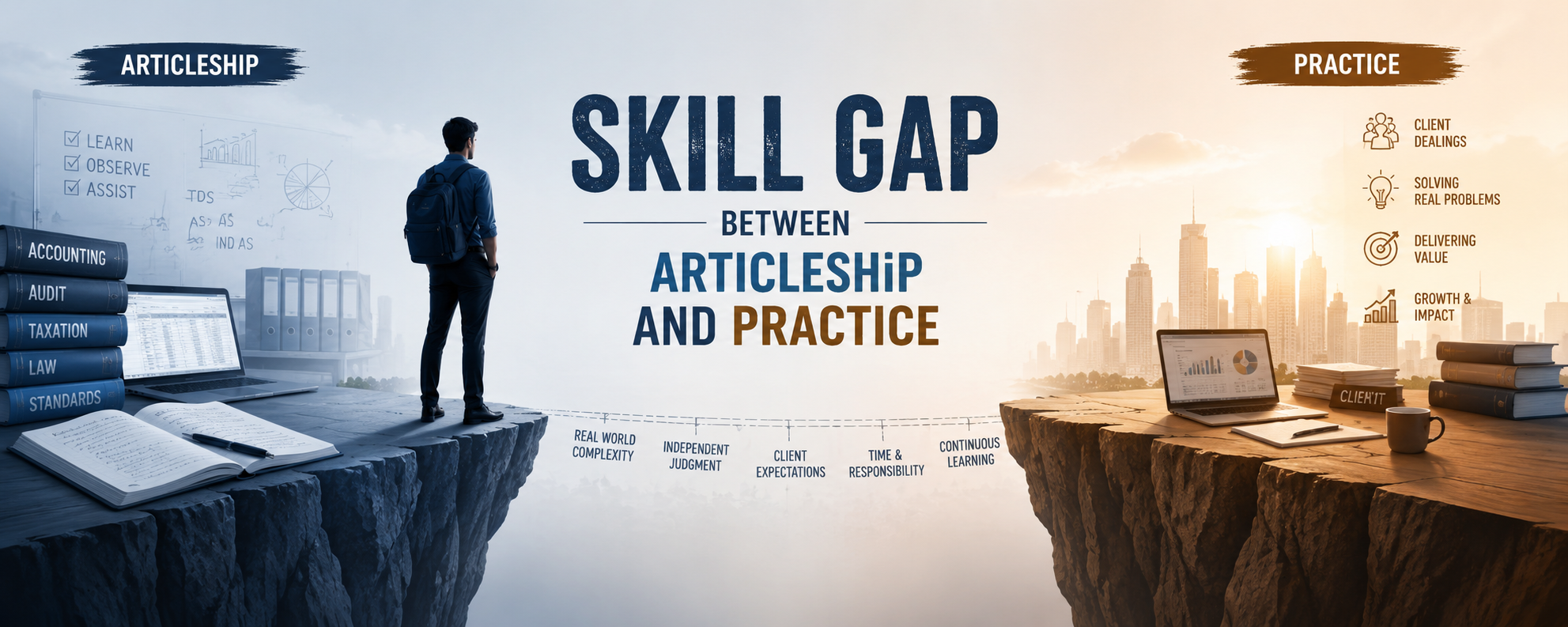
Table of Content
- Articleship Teaches Execution, Practice Requires Ownership
- Only Technical Knowledge Is Not Enough
- Client Handling Is Rarely Taught in Articleship
- Practice Is Also a Business
- Decision-Making Becomes More Important
- The Communication Gap Is Real
- Technology Is Changing the Expectations of Practice
- How Newly Qualified CAs Can Bridge the Gap
- The Future of Articleship and Professional Training
- Summary
Articleship marks the first real professional world for chartered accountants. In this stage, students go beyond textbooks and start to understand how accounting, taxation, auditing, and compliance operate in actual businesses. Yet, many new CAs find out the hard way that the skills needed for independent practice or top roles differ greatly from what they picked up during articleship. This is why talking about the skill gap between articleship and actual practice matters so much.
Articleship gives you valuable learning chances for sure. You pick up discipline, tech processes, how to doc stuff right, and pro ethics. But many folks feel unprepared when they have to deal with clients, manage teams, make business decisions, or build their own practice. Making that switch from being trained to calling the shots is way tougher than most expect.
The skill gap between articleship and practice is not necessarily a flaw in the training system. Rather, it reflects the reality that professional success depends on a broader set of skills than technical knowledge alone.
Articleship Teaches Execution, Practice Requires Ownership
A key difference between articleship and professional practice is responsibility. During articleship, students typically operate under managers or seniors. They give you tasks and expect you to nail them, whether that's preparing audit papers, helping with tax filings, or checking finances. Your duties stay pretty set and defined too.
Once a CA starts managing clients independently, there is no senior manager constantly reviewing every decision. Clients expect answers, solutions, and professional judgment. Suddenly, the responsibility shifts from completing tasks to owning outcomes. This change can be difficult for many newly qualified professionals because articleship rarely provides complete ownership of assignments.
Only Technical Knowledge Is Not Enough
Most CA students spend years building solid technical knowledge—mastering standards, laws, and frameworks. While these skills are crucial, real-world success requires more. CA's often face scenarios without clear, easy answers from textbooks. So, practical know-how ends up being pretty important too.
Clients may ask questions about:
- Business expansion decisions
- Cash flow challenges
- Profitability concerns
- Risk management issues
Client Handling Is Rarely Taught in Articleship
If you ask any experienced accountant what’s the toughest part of the job, they probably won't say it's taxes or audits. It's dealing with clients. Dealing with their expectations takes time to master. Clients might hold back info, want instant replies, debate fees, or look for extra advice outside the deal.
Articleship often provides limited exposure to these situations because trainees usually work behind the scenes. In practice, however, client interaction becomes a daily responsibility. Some important client management skills include:
- Conducting professional meetings
- Explaining complex issues in simple language
- Handling disagreements professionally
- Building long-term relationships
These abilities are rarely developed through technical training alone.
Practice Is Also a Business
This is one area where the skill gap between articleship and practice becomes very visible. Many newly qualified CAs assume that technical competence automatically leads to a successful practice. While expertise is important, running a CA firm involves several business responsibilities that articleship may not adequately cover. A practicing CA must think about:
- Client acquisition
- Team management
- Pricing of services
- Business development
- Technology investments
In simple terms, practice is not just a profession—it is also a business. Understanding this distinction often takes time, especially for professionals entering independent practice for the first time.
Decision-Making Becomes More Important
During articleship, seniors usually make the big decisions, even if the trainees spot problems. After all, final judgments come from those with more experience. Once professionals work independently, this support shrinks a lot, so they must handle more on their own.
Clients often expect quick and confident advice. They want guidance regarding compliance risks, financial decisions, and business challenges. Waiting for someone else to make the decision is no longer an option.
This is why decision-making becomes one of the most important practice skills. Unfortunately, it is also one of the hardest skills to learn from textbooks.
The Communication Gap Is Real
Many super technically savvy pros struggle because they can't communicate well. Even if a CA understands a tricky tax issue, if they explain it in a confusing way, the client won't get it. That makes the expertise less valuable. Being a great communicator isn't just about speaking English fluently - there's more to it.
It includes:
- Active listening
- Clear explanations
- Professional writing
- Negotiation skills
The ability to communicate confidently often determines how clients perceive professional competence. This is one reason why some average technical professionals build successful practices while highly knowledgeable individuals sometimes struggle.
Technology Is Changing the Expectations of Practice
The gap between articleship and practice is really standing out more due to tech altering client expectations. Lots of routine tasks are automated now, so many routine accounting and compliance stuff is too. Plus, clients can get reports in seconds using software and cloud systems.
As a result, businesses increasingly expect their CA to provide insights rather than simply prepare documents. Modern practitioners need to understand:
- Data analytics
- Financial dashboards
- Business intelligence tools
- Digital collaboration platforms
How Newly Qualified CAs Can Bridge the Gap
The good news is that the skill gap between articleship and practice can be reduced with the right approach. Many successful practitioners actively work on skills that go beyond technical knowledge. Some practical steps include:
- Participating in client meetings whenever possible
- Learning business development skills
- Improving communication abilities
- Understanding different industries
- Staying updated with technology trends
Experience remains the best teacher, but a proactive approach can accelerate professional growth significantly. The earlier these skills are developed, the smoother the transition into practice becomes.
The Future of Articleship and Professional Training
As the profession evolves, there is increasing discussion about how practical training can better prepare future Chartered Accountants. Businesses today expect advisors, not just compliance experts. Consequently, areas such as communication, technology, leadership, and business advisory are becoming increasingly important. The future may see greater emphasis on:
- Client management exposure
- Technology training
- Advisory assignments
- Business development skills
Such changes could help reduce the skill gap between articleship and practice and better prepare professionals for real-world challenges.
Summary
The gap between what you learn in articleship and real-world practice is real for lots of Chartered Accountants. Articleship gives you the technical know-how, but on-the-job stuff like managing clients, talking to them, making decisions, growing the business, and thinking long-term comes later. Recognizing this is key to dealing with it.
As the field keeps changing, those CA folks need to keep improving too – in all kinds of skills. Mastering both technical stuff and soft skills helps Chartered Accountants not just make it in practice, but build careers that last.

FAQs
What is the skill gap between articleship and practice?
The skill gap between articleship and practice refers to the difference between the technical skills learned during articleship and the broader professional skills required to manage clients, make decisions, and run a successful practice.
Why do many newly qualified CAs struggle in practice?
Many professionals have strong technical knowledge but limited exposure to client management, business development, communication, and decision-making responsibilities during articleship.
Does articleship provide sufficient practical exposure?
Articleship provides valuable technical experience, but the level of exposure varies depending on the firm, assignments, and opportunities available to the trainee.
Why is client handling important in CA practice?
Client relationships are central to professional success. Effective communication, expectation management, and relationship-building help create long-term trust and business growth.
How is practice different from articleship?
Articleship focuses on executing assigned tasks under supervision, while practice requires independent decision-making, client management, business development, and responsibility for outcomes.
Can communication skills affect a CA's career growth?
Yes. Strong communication skills help professionals explain complex issues clearly, build client confidence, and create stronger professional relationships.
Why is business development important for practicing CAs?
A successful practice depends on attracting and retaining clients. Business development skills help professionals expand their client base and grow their firms.
How is technology affecting the skill gap between articleship and practice?
Technology is automating routine work, increasing demand for advisory services, data analysis, and business insights. This requires additional skills beyond traditional accounting knowledge.
How can newly qualified CAs bridge the skill gap?
They can focus on communication, client interaction, technology skills, industry knowledge, and practical business understanding while gaining professional experience.
Will the skill gap between articleship and practice reduce in the future?
The gap may reduce if training programs place greater emphasis on advisory skills, client management, technology exposure, and practical business learning alongside technical education.