How to Study Long Hours Without Getting Tired: Practical & Effective Guide
Discover how to study long hours without getting tired using practical strategies, smart study techniques, and healthy habits. Improve focus and energy.
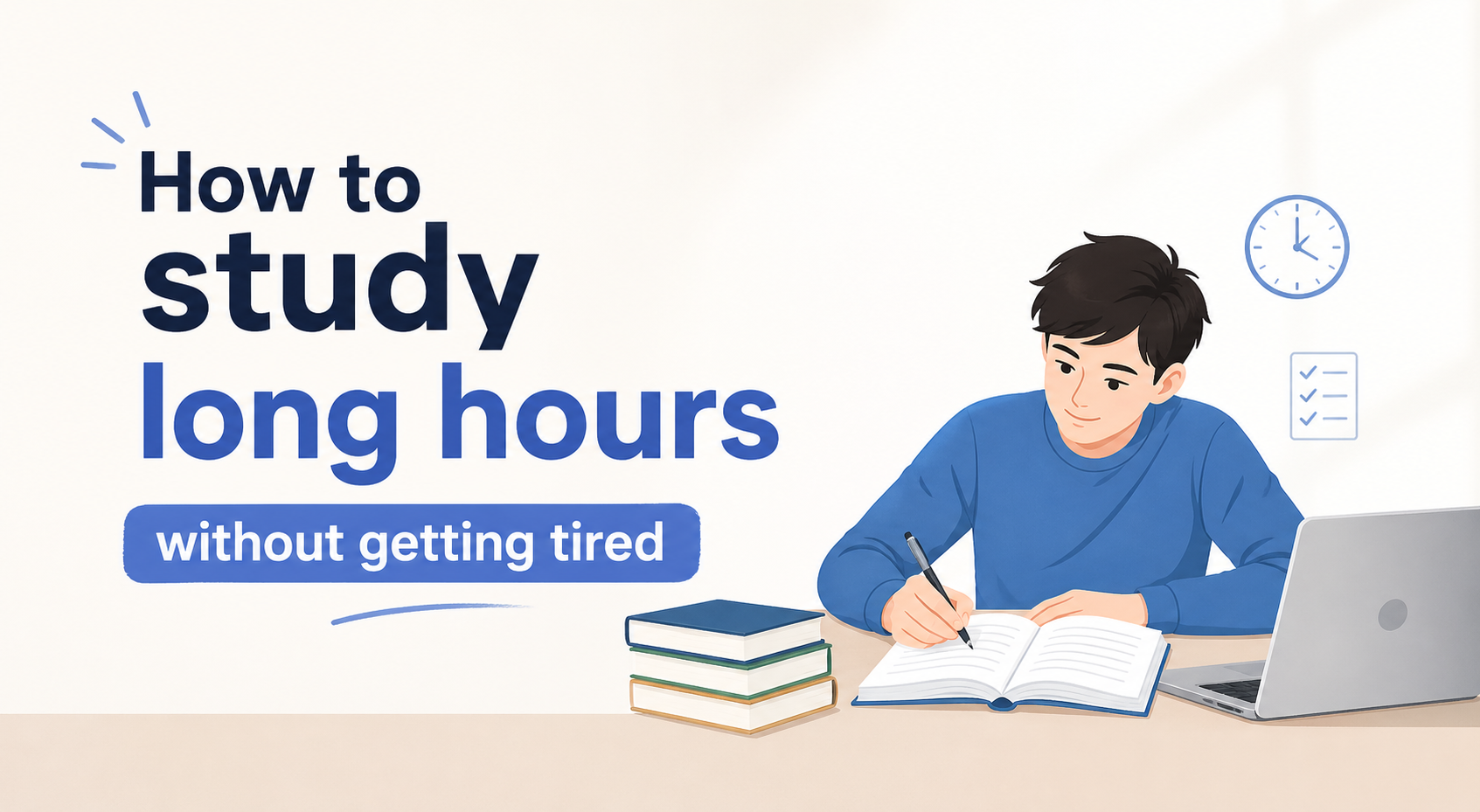
Table of Content
- Why Do You Feel Tired While Studying?
- Build Study Stamina Step by Step
- Use Smart Study Sessions Instead of Continuous Studying
- Create a Comfortable Study Environment
- Take Care of Your Body to Support Long Study Hours
- Eat Smart to Stay Active While Studying
- Keep Your Mind Engaged with Active Learning
- Avoid Distractions to Save Energy
- Stay Motivated Throughout Your Study Journey
- Summary
Every student has faced this situation—sitting with books for hours but feeling tired within a short time. You try to focus, but your mind starts wandering, your body feels heavy, and productivity drops. The truth is, studying long hours is not about sitting longer; it is about managing your energy, focus, and strategy in the right way.
If you try to force yourself to study for long hours without understanding how your brain works, you will end up feeling exhausted and frustrated. But when you use the right techniques, studying for long hours becomes easier and more effective. In this guide, you will learn practical ways to study longer without getting tired, while keeping your mind fresh and active.
Why Do You Feel Tired While Studying?
Before improving your study hours, it is important to understand why you get tired so quickly. Most students think the problem is a lack of motivation, but in reality, it is often poor study habits and routine.
When you study continuously without breaks, your brain gets overloaded. Similarly, lack of sleep, unhealthy food, and studying without interest can quickly drain your energy. Your brain needs proper rest, variety, and engagement to stay active for long periods. So instead of blaming yourself, focus on fixing the root causes.
Build Study Stamina Step by Step
One of the biggest mistakes students make is trying to study for 10–12 hours from the very first day. This creates pressure and leads to burnout. Just like physical stamina, study stamina also needs to be built gradually.
Start with a comfortable number of hours and slowly increase your capacity over time. This allows your brain to adapt without feeling stressed.
How to Increase Study Time Gradually
- Start Small: Begin with 3–4 hours of focused study instead of forcing long sessions. This helps you stay consistent without feeling overwhelmed.
- Increase Slowly: Add 1–2 hours every week so your brain gets used to longer focus periods naturally.
- Track Progress: Keep a simple record of your daily study time to stay motivated and see improvement.
When you follow this approach, long study hours will feel natural instead of exhausting.
Use Smart Study Sessions Instead of Continuous Studying
Studying continuously for hours might look productive, but it actually reduces efficiency. Your brain works better in short, focused sessions rather than long, uninterrupted hours.
Effective Study Session Method
- Focused Study Time: Study for 40–50 minutes with full concentration. During this time, avoid all distractions and focus only on one task.
- Short Breaks: Take a 5–10 minute break after each session to relax your mind. This helps your brain recover and prepare for the next session.
- Long Break Cycle: After completing 3–4 sessions, take a longer break of 20–30 minutes to fully recharge.
This method improves both productivity and energy levels, allowing you to study longer without feeling tired.
Create a Comfortable Study Environment
Your surroundings have a direct impact on your energy and focus. A poor study environment can make you feel tired even before you start studying properly.
What Makes a Good Study Setup
- Proper Lighting: A well-lit room reduces eye strain and keeps you alert for longer periods.
- Clean Space: A clutter-free desk helps your mind stay organized and focused.
- Right Posture: Sitting on a proper chair instead of studying on the bed prevents laziness and sleepiness.
Avoid studying in a noisy or distracting environment, as it reduces concentration and increases mental fatigue.
Take Care of Your Body to Support Long Study Hours
Studying is not just a mental activity—it also depends on your physical health. If your body is not active, your mind will feel tired quickly.
Daily Habits That Improve Study Energy
- Regular Sleep: Getting 6–8 hours of sleep keeps your brain fresh and improves memory retention.
- Light Exercise: Even 15–20 minutes of walking or stretching improves blood flow and reduces tiredness.
- Hydration: Drinking enough water prevents fatigue and helps maintain focus throughout the day.
Ignoring these basic habits can make studying feel much harder than it actually is.
Eat Smart to Stay Active While Studying
Food plays a very important role in how long you can study without getting tired. Heavy or unhealthy meals can make you feel sleepy and reduce your concentration.
Smart Eating Habits for Students
- Light Meals: Eating light and balanced meals helps maintain energy without causing laziness.
- Healthy Snacks: Fruits and nuts provide quick energy and improve brain function.
- Avoid Junk Food: Oily and sugary foods may give temporary energy, but lead to tiredness later.
A good diet supports your brain, making it easier to study for longer hours.
Keep Your Mind Engaged with Active Learning
If you only read books passively, your brain will get bored quickly. Active learning keeps your mind involved and reduces tiredness.
Techniques to Stay Mentally Active
- Self-Explanation: Try explaining topics in your own words to improve understanding.
- Practice Questions: Solving problems keeps your brain alert and improves retention.
- Note-Making: Writing short notes helps you stay engaged and remember concepts better.
When your brain is actively involved, studying becomes less tiring and more interesting.
Avoid Distractions to Save Energy
Distractions not only waste time but also drain your mental energy. Every time your focus breaks, your brain needs extra effort to return to the task.
Ways to Stay Focused
- Keep Phone Away: Place your phone out of reach or use apps to block distractions.
- Set Clear Goals: Decide what you want to complete before starting a session.
- Study in Silence: A quiet environment helps maintain deep focus.
Deep focus for a shorter time is always better than distracted studying for long hours.
Stay Motivated Throughout Your Study Journey
Motivation plays a key role in how long you can study. Without a clear purpose, even short study sessions feel tiring.
Simple Motivation Techniques
- Set Small Goals: Completing small targets gives a sense of achievement and keeps you going.
- Reward Yourself: After finishing tasks, give yourself small rewards to stay motivated.
- Visualize Success: Remind yourself why you started and what you want to achieve.
When your mind is motivated, it naturally resists tiredness.
Summary
Studying long hours without getting tired is not about forcing yourself or sitting continuously with books. It is about using smart strategies, maintaining your health, and keeping your mind engaged.
When you build your study stamina gradually, take proper breaks, and follow a balanced routine, you will notice a big difference in your energy and productivity.
Focus on quality, stay consistent, and your study hours will automatically increase without exhaustion.

FAQs
How can I study long hours without getting tired?
You can study long hours without getting tired by using short study sessions, taking regular breaks, maintaining proper sleep, and keeping your environment comfortable. Smart planning helps improve focus and reduce fatigue effectively.
What is the best way to avoid tiredness while studying?
The best way is to combine proper rest, healthy eating, and active learning techniques. Avoid continuous studying and instead divide your time into focused sessions with breaks to keep your mind fresh.
How many hours should I study in a day?
It depends on your capacity, but starting with 4–6 hours and gradually increasing is ideal. A quality study is more important than the number of hours you spend sitting with books.
Does taking breaks improve study performance?
Yes, breaks improve concentration and reduce mental fatigue. Short breaks allow your brain to relax, which helps you stay productive for longer study sessions without feeling exhausted.
Why do I feel sleepy while studying?
Sleepiness can be due to lack of sleep, heavy meals, or boring study methods. Improving your routine and using active learning techniques can help you stay alert.
Can I study for 12 hours daily without getting tired?
Yes, but only with proper planning, breaks, and healthy habits. Gradually increasing study time and maintaining a balanced routine is essential to avoid burnout.
How does diet affect study stamina?
A healthy diet provides consistent energy and improves brain function. Unhealthy food can cause laziness and reduce your ability to concentrate for long hours.
Is studying at night better for long hours?
It depends on your personal preference. Some students focus better at night, while others prefer mornings. Choose a time when your energy and concentration are naturally high.
How can I improve my concentration for long study hours?
You can improve concentration by avoiding distractions, setting clear goals, and practicing consistent study habits. Active learning methods also help keep your mind engaged.
How long does it take to build study stamina?
It usually takes 2–3 weeks of consistent effort to improve study stamina. Gradual increase in study time and maintaining discipline are key factors in building long-term focus.