How CA Students Manage Stress and Studies – Complete Practical Guide
Learn how CA students manage stress and studies with practical strategies, time management techniques, and simple habits to stay focused, balanced, and productive during CA preparation.
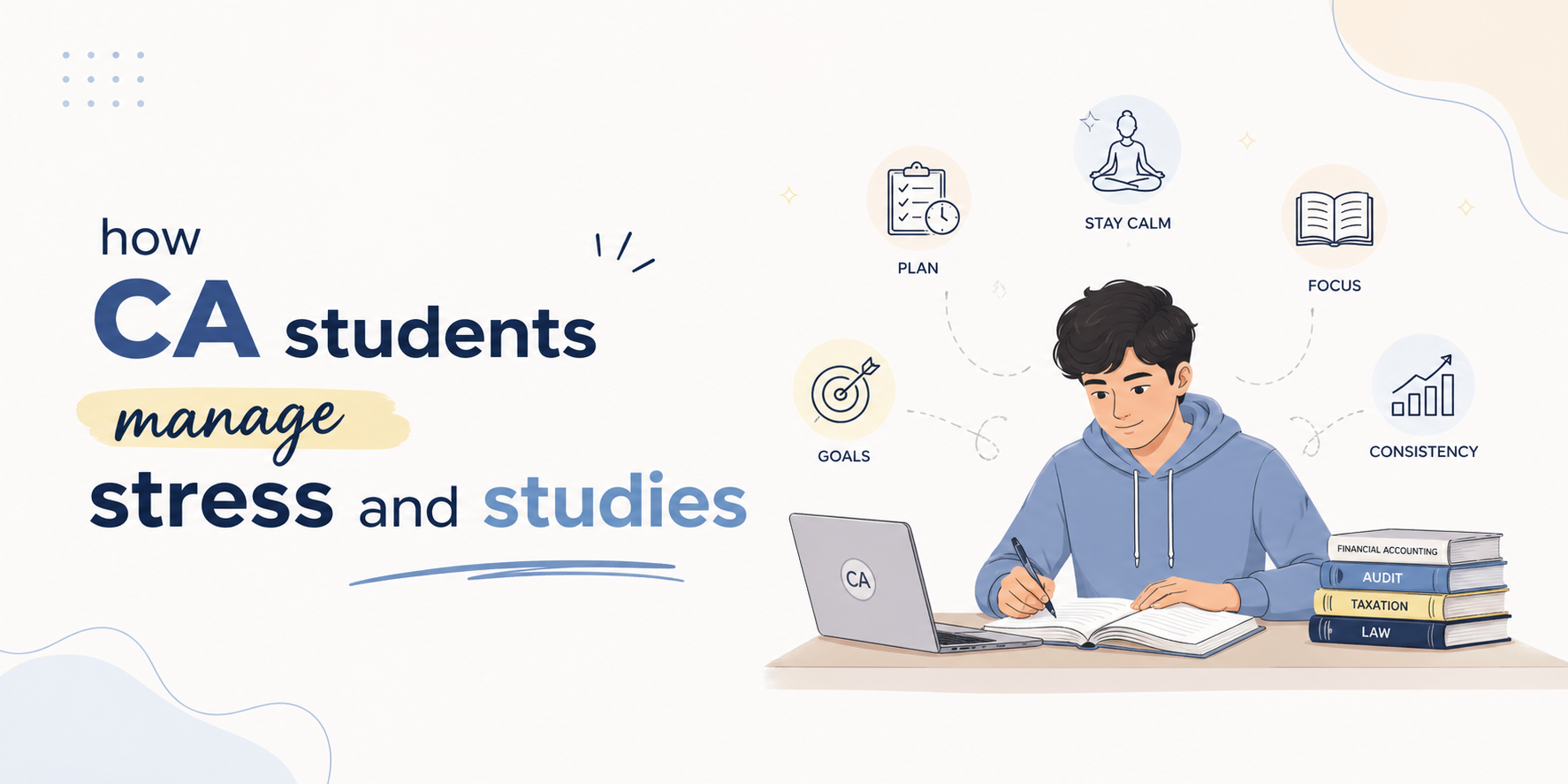
Table of Content
- Why Stress Is Common Among CA Students
- Balancing Studies and Mental Health Is Essential
- Creating a Realistic Study Routine
- Avoiding the Trap of Overthinking
- Importance of Taking Breaks
- Staying Consistent Instead of Studying Excessively
- Dealing with Exam Pressure
- The Role of Physical and Mental Well-being
- Avoiding Comparison with Others
- How Successful CA Students Handle Stress
- Conclusion
Preparing for CA is not just about studying hard—it is also about managing pressure. The journey is long, the syllabus is vast, and expectations are often high. Many students enter the course with confidence, but as time passes, stress starts building up alongside their studies.
If you are wondering how CA students manage stress and studies, the answer is not found in a single trick or shortcut. It is a combination of mindset, routine, and small daily habits that help students stay consistent without feeling overwhelmed.
The truth is, stress cannot be completely avoided in CA preparation. However, it can be managed in a way that it does not affect your performance.
Why Stress Is Common Among CA Students
Stress in CA is not unusual. In fact, it is expected. The pressure comes from multiple directions—difficult subjects, repeated revisions, fear of failure, and sometimes comparison with others.
Many students also set very high expectations for themselves. While ambition is important, unrealistic expectations can lead to constant dissatisfaction. When results do not match effort immediately, frustration begins to build. Understanding that stress is a natural part of the process helps you deal with it more calmly. Instead of fighting it, you learn to manage it.
Balancing Studies and Mental Health Is Essential
One of the biggest mistakes students make is ignoring their mental well-being. They assume that sacrificing everything for studies is the only way to succeed. While dedication is important, ignoring your mental health can reduce your productivity.
A tired and stressed mind cannot perform at its best. On the other hand, a calm and focused mind can complete tasks more efficiently in less time. Managing stress is not about studying less. It is about studying in a smarter and more balanced way.
Creating a Realistic Study Routine
A well-planned routine helps reduce stress significantly. When your day is organized, your mind feels more in control. However, the key is to keep your routine realistic. Many students create strict schedules that are difficult to follow. When they fail to stick to them, they feel guilty and stressed. Instead, build a flexible routine that includes study time, breaks, and rest. This balance makes it easier to stay consistent. A simple structure works best:
- focused study sessions
- short breaks in between
- time to relax and reset
This approach keeps your mind fresh and reduces burnout.
Avoiding the Trap of Overthinking
Overthinking is one of the biggest causes of stress among CA students. Thoughts like “What if I fail?” or “I am not doing enough” can keep repeating in your mind and affect your focus. The problem with overthinking is that it does not solve anything—it only increases anxiety.
The best way to handle it is to bring your attention back to your current task. Instead of worrying about results, focus on what you can do today. Completing small tasks gives a sense of progress and reduces unnecessary stress.
Importance of Taking Breaks
Continuous studying without breaks may seem productive, but it often leads to mental exhaustion. When your brain is overloaded, your ability to understand and remember decreases.
Taking breaks is not a waste of time—it is a part of effective studying. Short breaks help your mind relax and improve concentration when you return to study. Even simple activities like walking, listening to music, or just sitting quietly can refresh your mind.
Staying Consistent Instead of Studying Excessively
Many students believe that long study hours automatically lead to success. While effort is important, consistency matters more than intensity.
Studying for a reasonable number of hours daily with full focus is more effective than studying for very long hours irregularly. When you stay consistent, your workload becomes manageable. You do not feel rushed, and stress levels remain under control.
Dealing with Exam Pressure
As exams approach, stress naturally increases. The fear of forgetting, lack of revision, or time shortage can make students anxious. During this phase, it is important to keep your approach simple. Focus on revising what you already know instead of trying to learn everything again. Confidence plays a major role here. If you trust your preparation, you can handle exam pressure much better.
The Role of Physical and Mental Well-being
Your body and mind are closely connected. If you are physically tired, your mental performance will also suffer. Getting enough sleep, eating properly, and maintaining a basic routine can improve your focus and energy levels. These small habits may seem simple, but they have a strong impact on your overall productivity. Ignoring your health might save time in the short term, but it reduces efficiency in the long run.
Avoiding Comparison with Others
In the CA journey, it is easy to compare yourself with others. Seeing someone else perform better can create self-doubt and stress. However, every student has a different pace and learning style. Comparing your progress with others often leads to unnecessary pressure. Instead, focus on your own improvement. Even little progress is valuable. When you concentrate on your journey, you feel more confident and less stressed.
Building a Positive Mindset
Your mindset plays a major role in how you handle stress. If you constantly think negatively, your stress levels will increase even if your preparation is good. A positive mindset does not mean ignoring challenges. It means accepting them and working through them calmly. Remind yourself that stress is temporary, but your effort is permanent. With the right attitude, even difficult phases become manageable.
How Successful CA Students Handle Stress
Successful students are not stress-free—they simply know how to manage it better. They focus on what they can control and avoid unnecessary pressure. They follow a few simple habits:
- They maintain a balanced routine
- They revise consistently instead of cramming
- They take breaks without guilt
These small practices help them stay stable and focused throughout their preparation.
Conclusion
Understanding how CA students manage stress and studies is not about eliminating stress. It is about handling it in a way that does not affect your progress.
When you create a realistic routine, stay consistent, avoid overthinking, and take care of your well-being, stress becomes manageable. Over time, you learn to handle pressure with more confidence and clarity. CA is a challenging journey, but it is also a learning experience. If you manage both your studies and stress effectively, success becomes much more achievable.

FAQs
How do CA students manage stress and studies effectively?
CA students manage stress and studies by maintaining a balanced routine, taking regular breaks, and focusing on consistency rather than long hours. Managing time properly helps reduce pressure and improve productivity.
Why do CA students feel stressed during preparation?
CA students feel stressed due to a vast syllabus, high expectations, and exam pressure. Without proper planning, the workload becomes overwhelming, which increases anxiety and reduces confidence.
How to balance CA studies and mental health?
To manage stress and studies effectively, CA students should include breaks, proper sleep, and relaxation time in their routine. A healthy mind improves focus and helps in a better understanding of concepts.
Is stress normal for CA students?
Yes, stress is normal during CA preparation. However, managing it properly is important to avoid burnout and maintain consistent performance throughout the study journey.
How to stay consistent during CA preparation?
Consistency comes from following a realistic routine and setting achievable daily goals. CA students manage stress and studies better when they avoid overloading themselves and focus on steady progress.
How to handle exam pressure in CA?
To manage stress and studies during exams, focus on revision instead of new topics. Staying calm, trusting your preparation, and avoiding last-minute panic can improve performance.
Do breaks help in reducing stress during CA studies?
Yes, short breaks help CA students manage stress and studies effectively. They refresh the mind, improve concentration, and prevent mental exhaustion during long study sessions.
Can overthinking affect CA preparation?
Overthinking increases stress and reduces focus. CA students should concentrate on their daily tasks instead of worrying about results to maintain a stable and productive mindset.
How important is sleep for CA students?
Sleep is essential for managing stress and studying effectively. Proper rest improves memory, concentration, and overall performance during preparation.
What is the biggest mistake CA students make while managing stress?
The biggest mistake is ignoring mental health and overloading themselves with unrealistic schedules. This leads to burnout and reduces efficiency during CA preparation.