The final week before a commerce examination can feel demanding because students are revising a large syllabus while managing practice tests and exam-day preparation. Starting too many new resources or creating an entirely new timetable can add confusion.
The purpose of the last week is to strengthen what you have studied, identify important gaps and enter the examination with a practical plan. A calm, organised approach is more useful than starting everything again.
Understand the Requirements and Build a Clear Starting Point
Check the current syllabus and your topic tracker. Identify topics that are revised, partly revised and still weak. Prioritise areas where a short revision can improve your ability to answer questions. Be realistic about large topics that remain untouched.
Assess Your Current Preparation Honestly
Plan remaining days around examination dates. Include revision blocks, question practice, mock assessment and time to review errors. Keep the schedule realistic, set three or four main outcomes each day and avoid changing the entire plan repeatedly.
Break the Work Into Manageable Tasks
Use concise notes, marked study material and official resources. Review definitions, concepts, formulas, formats and provisions relevant to your papers. Avoid creating a completely new set of notes in the final week; add only brief corrections or reminders.
Choose the Right Method for Each Study Session
Attempt representative questions from important topics. Practical subjects need independent problem solving, while theory papers need recall and written answers. Check the method and identify missing points after each attempt rather than spending the whole day reading solutions.
Use Active Practice to Check Understanding
Return to your error log, marked questions and mock test feedback. Focus on repeated mistakes such as incorrect adjustments, incomplete explanations, misread requirements or poor time allocation. Reattempt selected questions without looking at the earlier solution.
Create a Realistic Weekly Routine
A timed mock can check pacing and identify gaps, but do not schedule so many papers that there is no time to review them. Choose a paper early enough in the week to analyse the result and revise weak areas.
Review Mistakes and Identify Repeated Gaps
Check examination instructions and make a list of permitted items and required documents. Confirm centre details, reporting time and travel arrangements through official information. Follow the latest instructions for your session.
Track Progress With Simple Measures
Avoid sacrificing sleep every night. Fatigue can affect recall, attention and calculation accuracy. Keep a consistent sleep schedule, take short breaks and eat regular meals. Focus on your own checklist rather than comparing preparation with others.
Adjust the Plan as the Examination Approaches
Use the day before the paper for light, familiar revision and practical preparation. Review concise notes and key points already studied. Prepare exam items, confirm travel and stop intensive study at a reasonable time.
| Checklist item | What to check |
|---|---|
| Syllabus | Remaining weak topics |
| Revision notes | Marked and concise material |
| Practice | Representative questions |
| Mock test | Timed attempt and analysis |
| Exam readiness | Instructions, travel and rest |
Common Mistakes to Avoid
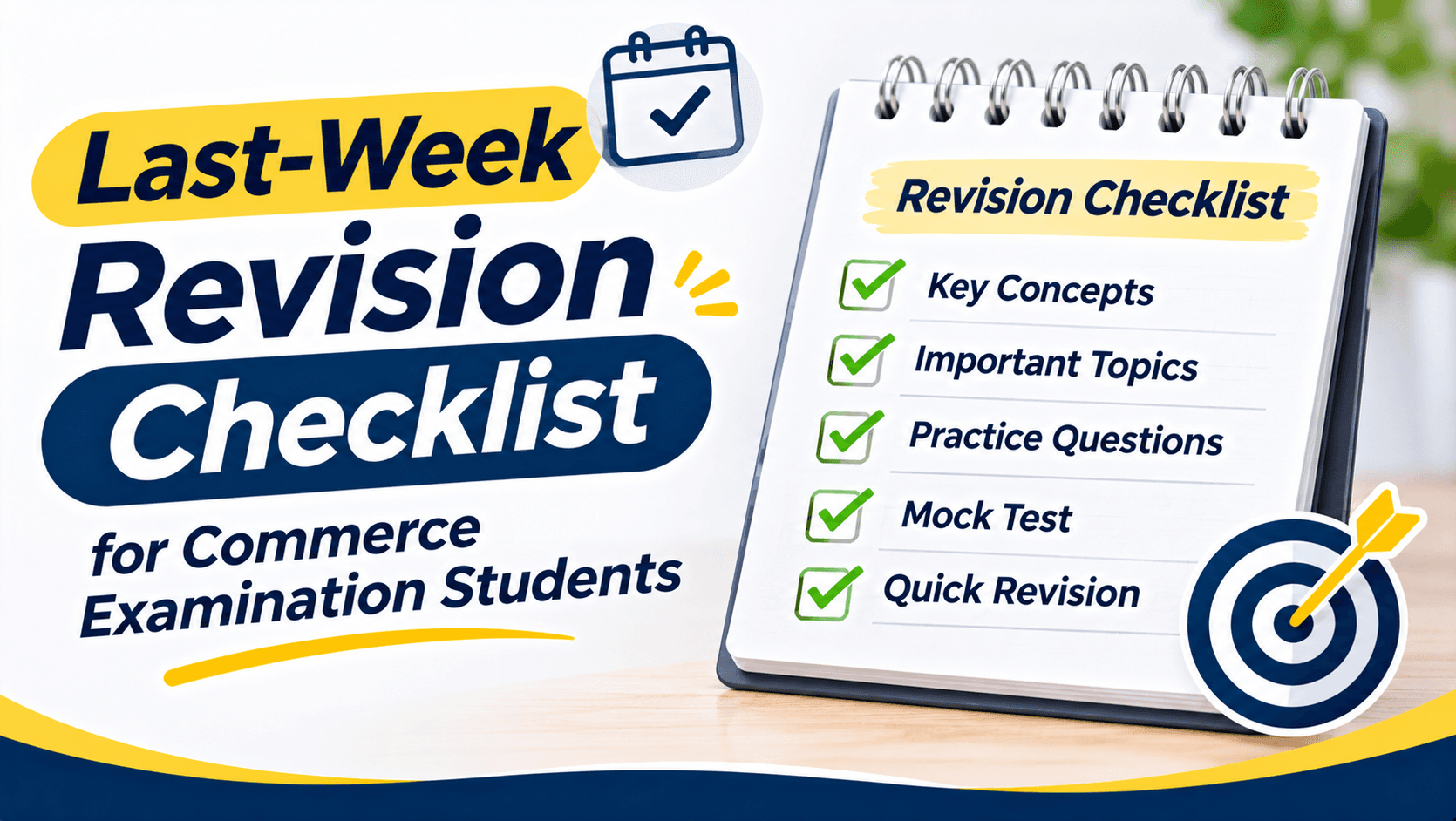
Use a checklist to reduce uncertainty, not to create pressure. Include syllabus review, notes, representative questions, error-log revision, one timed paper, exam instructions, travel planning and rest. Mark tasks complete and focus on what remains manageable.
How Studycaller Can Support Your Preparation
Studycaller can be a supporting resource for revision and practice. Choose material that matches your course and syllabus. Avoid adding multiple new sources when you already have reliable notes; use each session to identify a clear next action.
Conclusion
A useful last-week plan combines syllabus checks, concise revision, question practice, error review and practical exam-day preparation. Avoid unnecessary new material, protect sleep and use timed practice to check readiness. Work through a realistic checklist one task at a time.