What Is the Ideal Study Schedule for CA Repeaters? A Practical Guide to Success
Learn what the ideal study schedule is for CA repeaters with effective time management, revision plans, mock test strategies, and daily routines for better CA exam preparation.
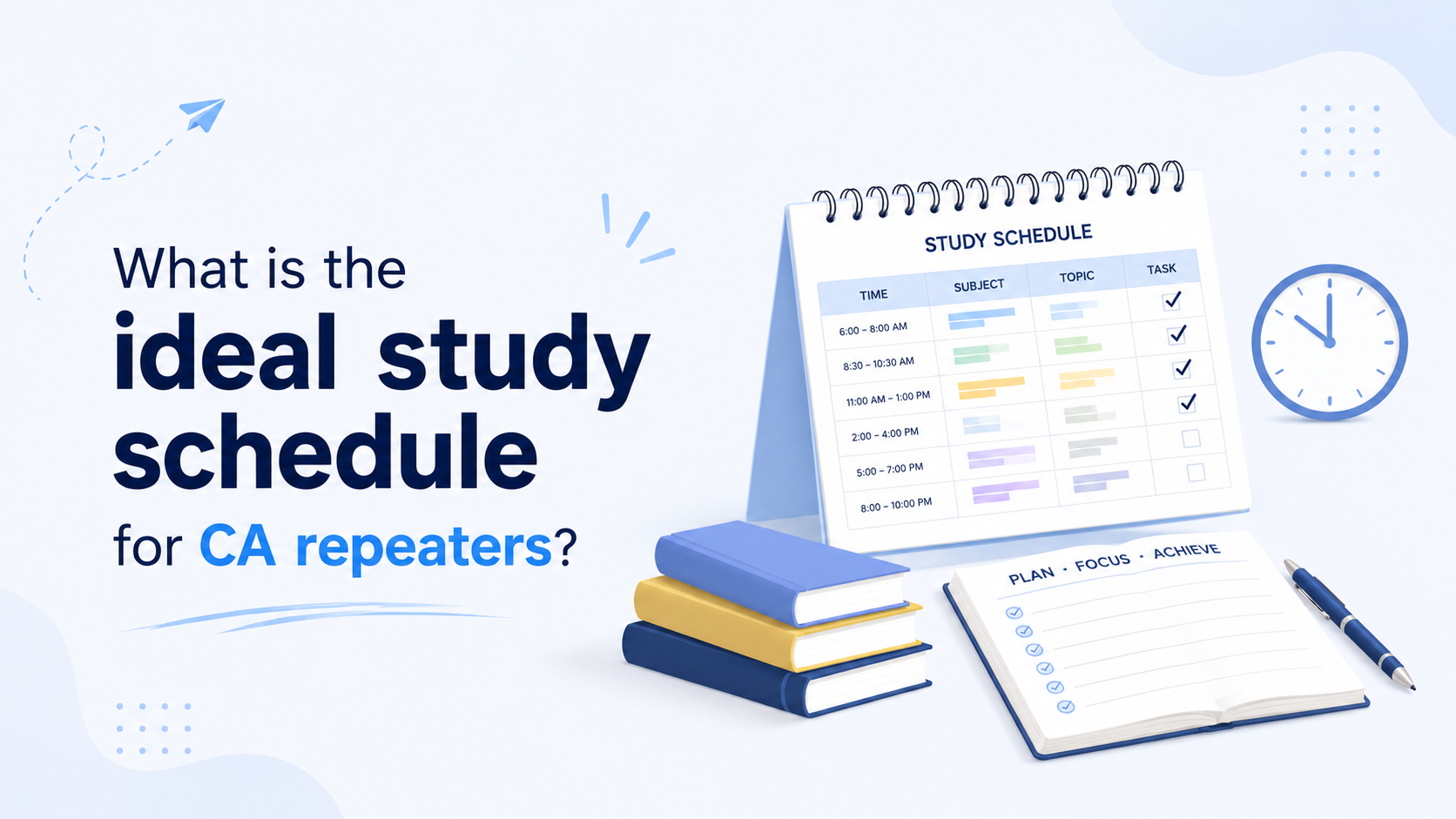
Table of Content
- Start by Analyzing Your Previous Attempt
- Create a Realistic Daily Routine
- What Is the Ideal Study Schedule for CA Repeaters During the First Phase of Preparation?
- Reserve Dedicated Time for Revision Every Day
- Include Mock Tests in the Weekly Schedule
- Divide the Day According to Energy Levels
- Maintain a Weekly Progress Review
- Keep Time for Answer-Writing Practice
- Avoid Studying One Subject for the Entire Day
- Keep One Buffer Day Every Week
- Take Care of Physical and Mental Health
- Focus on Consistency Rather Than Perfection
- Conclusion
Preparing for the Chartered Accountancy examination after an unsuccessful attempt is never easy. Along with the pressure of completing the syllabus, repeaters often carry the emotional burden of their previous results. Many students start the next attempt with enthusiasm but gradually lose direction because they either study without a proper plan or try to follow unrealistic schedules that cannot be maintained for long. As the examination approaches, incomplete revision and poor time management create unnecessary stress.
The question "What is the ideal study schedule for CA repeaters?" is therefore one of the most important concerns for students preparing for another attempt. The ideal schedule is not about studying for fifteen hours every day. Instead, it is about creating a balanced routine that combines conceptual learning, revision, answer-writing practice, and mock tests while leaving enough time for rest and recovery. A practical timetable that can be followed consistently is far more effective than an ambitious plan that works for only a few days.
Start by Analyzing Your Previous Attempt
Before creating a new study schedule, repeaters should first understand why the previous attempt was unsuccessful. Many students immediately start studying again without identifying their mistakes, which often leads to repeating the same errors.
Spend some time evaluating your previous preparation honestly. Think about whether revision was incomplete, whether mock tests were ignored, or whether time management became a problem during the examination.
Once these weaknesses are identified, the new timetable should be designed to address them specifically. A schedule built around your mistakes is always more effective than a generic study plan.
Create a Realistic Daily Routine
One of the biggest mistakes repeaters make is preparing a timetable that looks impressive on paper but is impossible to follow in real life. Studying continuously for fourteen or fifteen hours every day may work for a short period, but it often leads to burnout and inconsistency. Instead, create a practical daily routine that balances study with adequate rest. A sample daily schedule may include:
- Morning conceptual study session
- Afternoon practical question solving
- Evening revision
- Night answer-writing practice
- Short breaks between sessions
The focus should always remain on productive study hours rather than total study hours.
What Is the Ideal Study Schedule for CA Repeaters During the First Phase of Preparation?
The first phase should focus on building conceptual clarity and completing the syllabus systematically. Students should avoid rushing through chapters simply to finish them quickly. During this stage, each subject should receive adequate attention, especially those where marks were low in the previous attempt. Daily goals should include:
- Learning new concepts
- Solving practical questions
- Making short revision notes
- Clearing doubts immediately
This strong foundation makes revision much easier in the later stages of preparation.
Reserve Dedicated Time for Revision Every Day
Many repeaters spend all their time learning new topics and postpone revision until the final month. This often leads to poor retention and unnecessary pressure before examinations. The ideal schedule should include revision from the very beginning.
Students should allocate at least one study session every day exclusively for revising previously completed topics. Regular revision helps:
- Strengthen memory
- Improve conceptual clarity
- Increase confidence
- Reduce last-minute stress
- Improve recall during examinations
A revised syllabus is always more valuable than an unrevised completed syllabus.
Include Mock Tests in the Weekly Schedule
Mock tests should never be treated as optional activities. Every CA repeater should dedicate time every week to writing subject-wise or full-length mock papers under examination conditions. Mock tests help students evaluate:
- Writing speed
- Time management
- Answer presentation
- Concept application
- Weak areas
- Revision effectiveness
Equally important is analyzing mistakes after every mock test and improving them before the next one.
Divide the Day According to Energy Levels
Every student has different productivity patterns. Some study best in the morning, while others perform better during late evening hours. The ideal timetable should allocate difficult subjects during peak concentration hours and lighter revision work during periods of lower energy. For example:
- Morning: Difficult practical subjects
- Afternoon: Theory revision
- Evening: MCQs and question practice
- Night: Quick revision and planning
This approach improves productivity without increasing study hours.
Maintain a Weekly Progress Review
A study schedule should not remain fixed for months without evaluation. At the end of every week, students should review:
- Chapters completed
- Revision status
- Mock test performance
- Pending topics
- Weak areas
- Time management
This review helps identify delays and allows necessary adjustments before preparation falls behind schedule. Weekly monitoring creates accountability and keeps preparation organized.
Keep Time for Answer-Writing Practice
Many repeaters focus only on reading books and solving concepts but neglect answer writing. However, examination success depends not only on knowledge but also on presentation. The daily timetable should include at least thirty to sixty minutes for answer-writing practice. Students should practice:
- Theory answers
- Practical questions
- Case studies
- Time-bound writing
- Presentation techniques
Regular writing practice gradually improves speed and confidence.
Avoid Studying One Subject for the Entire Day
Studying a single subject continuously for many hours often reduces concentration and retention. The ideal schedule should include a mix of theory and practical subjects to maintain interest and avoid mental fatigue. Alternating subjects also improves overall productivity and prevents boredom. For example, students may study Accounting in one session and Law or Audit in the next session. Balanced subject rotation keeps preparation fresh and engaging.
Keep One Buffer Day Every Week
Unexpected events, illness, office work, or family responsibilities can disturb study plans. Therefore, students should keep one flexible session or buffer period every week to cover pending topics or revise difficult chapters. This reduces stress and prevents backlog accumulation throughout preparation. A flexible timetable is usually more sustainable than a rigid one.
Take Care of Physical and Mental Health
Long study hours without proper rest reduce productivity and increase stress. The ideal study schedule should also include time for:
- Proper sleep
- Exercise
- Healthy meals
- Short breaks
- Relaxation
Maintaining physical and mental health improves concentration and supports long-term consistency. Success in CA examinations depends as much on discipline as on hard work.
Focus on Consistency Rather Than Perfection
Many repeaters become discouraged after missing one day's target and stop following the timetable altogether. Students should remember that consistency matters far more than perfection.
Even if a day's schedule is disturbed, preparation should restart immediately the next day without guilt or unnecessary stress. Small daily improvements over several months create significant progress and improve examination confidence.
Conclusion
The answer to "What is the ideal study schedule for CA repeaters?" lies in creating a practical, balanced, and consistent routine rather than following unrealistic study plans. A successful schedule should combine conceptual learning, daily revision, mock tests, answer-writing practice, and weekly progress reviews while leaving enough time for physical and mental well-being. Repeaters who prepare systematically, learn from previous mistakes, and remain disciplined throughout the preparation period significantly improve their chances of clearing the CA examination successfully.

FAQs
What is the ideal study schedule for CA repeaters?
The ideal study schedule includes conceptual learning, daily revision, answer-writing practice, mock tests, and weekly performance reviews while maintaining consistency and proper time management throughout preparation.
How many hours should CA repeaters study every day?
Study hours vary for each student, but six to eight productive hours with proper revision and mock test practice are generally more effective than extremely long but inconsistent study sessions.
Should repeaters revise every day?
Yes. Daily revision strengthens memory retention, improves conceptual understanding, and reduces last-minute examination pressure by keeping previously studied topics fresh.
How important are mock tests for CA repeaters?
Mock tests help improve writing speed, answer presentation, time management, and confidence while identifying weak areas that require additional preparation before the final examination.
Should repeaters prepare a fixed timetable?
Students should create a practical timetable but remain flexible enough to adjust it according to progress, mock test performance, and unexpected circumstances.
Can repeaters study one subject for the entire day?
It is generally better to alternate theory and practical subjects because studying one subject continuously for long hours may reduce concentration and productivity.
Should answer-writing practice be included in the daily schedule?
Yes. Regular answer-writing practice improves presentation, writing speed, logical structure, and confidence, helping students convert knowledge into higher examination scores.
Why should repeaters analyze their previous attempt?
Analyzing previous mistakes helps identify weak areas such as revision gaps, poor time management, or presentation issues, allowing students to prepare more effectively for the next attempt.
How should repeaters balance revision and new learning?
Students should study new concepts in one session and revise previously completed topics in another session every day to maintain both progress and retention.
What is the biggest mistake repeaters make while preparing?
One of the biggest mistakes is following unrealistic study schedules without regular revision or mock tests, leading to inconsistency and unnecessary stress before the examination.