Healthy Habits That Support Long CA Study Sessions
Learn healthy habits for long CA study sessions, including sleep, hydration, breaks, focus management, balanced routines, and mental wellness during exam preparation.
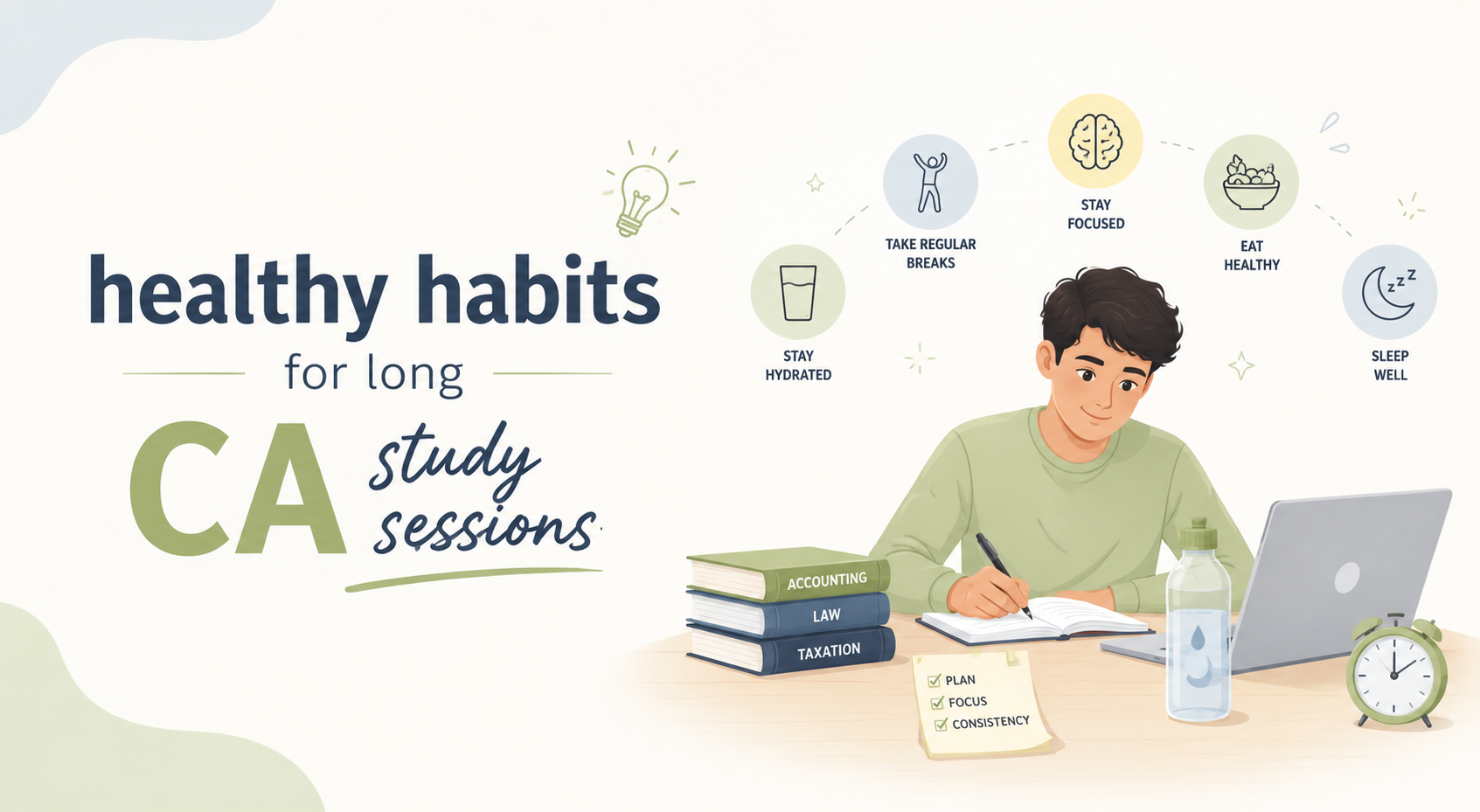
Table of Content
- Proper Sleep Improves Study Efficiency
- Short Breaks Help Maintain Concentration
- Healthy Eating Habits Support Mental Energy
- Hydration Improves Focus and Alertness
- Physical Movement Reduces Mental Exhaustion
- Fixed Study Routine Improves Stability
- Controlling Screen Distractions Improves Productivity
- Positive Mental Habits Reduce Stress
- Avoiding Extreme Study Pressure Helps Sustainability
- Consistency Matters More Than Perfection
- Conclusion
CA preparation often requires students to spend several hours studying regularly over long periods. Because of the vast syllabus, repeated revisions, mock tests, and exam pressure, students sometimes focus only on study hours while ignoring their physical and mental health completely.
Initially, unhealthy routines may not seem harmful, but over time, they gradually reduce concentration, productivity, emotional balance, and study efficiency. Many students feel mentally exhausted, not because they lack ability, but because their daily habits slowly weaken their energy and focus.
If you want to understand the healthy habits for long CA study sessions, it is important to know that effective preparation depends not only on hard work but also on maintaining sustainable routines that support both physical and mental well-being. Healthy habits help students remain productive for longer periods without feeling emotionally or mentally drained.
Proper Sleep Improves Study Efficiency
Many students reduce sleep while trying to increase study hours, especially close to exams. However, poor sleep quality usually affects:
- Memory retention
- Concentration
- Emotional stability
- Revision efficiency
A tired brain struggles to process information properly, even if students continue studying for long hours. Students who maintain proper sleep routines often:
- Focus better during studies
- Recall concepts more quickly
- Feel mentally fresher throughout the day
Sleep is not a waste of preparation time. It is an important part of effective learning and mental recovery. Balanced sleep habits improve long-term study consistency significantly.
Short Breaks Help Maintain Concentration
Continuous studying for several hours without breaks often reduces focus and mental freshness. The brain naturally loses concentration when students try to study continuously for extremely long periods. Because of this, short breaks become important for maintaining productivity. Small breaks help students:
- Refresh the mind
- Reduce mental fatigue
- Improve concentration levels
Students do not need very long relaxation periods, but short pauses between study sessions often improve learning quality significantly. Balanced study sessions usually work better than nonstop forced studying.
Healthy Eating Habits Support Mental Energy
Food habits directly affect energy levels and concentration during preparation. Students who continuously depend on:
- Junk food
- Excessive caffeine
- Irregular meals
Often experience:
- Energy crashes
- Low concentration
- Mental tiredness
Healthy eating supports better brain functioning and emotional balance during long study schedules.
Simple habits like:
- Eating on time
- Drinking enough water
- Including nutritious food
help students maintain stable productivity throughout the day.
Good preparation requires both mental and physical energy.
Hydration Improves Focus and Alertness
Many students ignore water intake while studying continuously for long hours. Dehydration may reduce:
- Mental alertness
- Concentration levels
- Energy stability
Even mild dehydration can increase tiredness and reduce focus during revision sessions. Regular hydration helps students:
- Stay mentally active
- Feel less exhausted
- Maintain concentration longer
Simple healthy habits often create noticeable improvements in overall study efficiency.
Physical Movement Reduces Mental Exhaustion
Long sitting hours can slowly reduce physical energy and increase mental tiredness. Students preparing for CA exams often spend most of their day sitting continuously with books or laptops. Over time, this may affect:
- Energy levels
- Body posture
- Mental freshness
Light physical movement such as:
- Walking
- Stretching
- Short exercise routines
Helps improve blood circulation and refreshes the mind. Students who include some physical activity in their routine often feel more energetic and emotionally balanced during preparation.
Fixed Study Routine Improves Stability
Irregular study schedules often create confusion and emotional stress during preparation. Students who follow fixed routines generally:
- Study more consistently
- Revise more regularly
- Manage time better
A stable routine helps students reduce decision fatigue because they already know:
- When to study
- When to revise
- When to rest
Healthy routines create better emotional balance and stability over long periods. Consistency becomes easier when preparation follows an organized structure.
Controlling Screen Distractions Improves Productivity
Mobile phones and social media distractions silently reduce study efficiency during long sessions. Frequent interruptions break concentration repeatedly and make revision slower. Students who control unnecessary screen usage often:
- Focus better
- Complete targets faster
- Feel mentally calmer
This does not mean avoiding technology completely, but managing digital distractions carefully becomes important during serious preparation phases. Focused study sessions usually produce stronger learning outcomes than distracted, long study hours.
Positive Mental Habits Reduce Stress
Mental habits affect preparation quality just as much as study methods. Students who constantly think:
- “I cannot complete the syllabus.”
- “Others are ahead of me.”
- “I will fail.”
Gradually increase emotional pressure and mental exhaustion. Positive mental habits such as:
- Focusing on daily improvement
- Accepting mistakes calmly
- Maintaining realistic expectations
Help students remain emotionally stable during difficult preparation phases. Healthy thinking patterns support stronger long-term productivity.
Avoiding Extreme Study Pressure Helps Sustainability
Some students suddenly start studying aggressively for very long hours without balance, especially before exams. Although temporary intensive preparation may feel productive, extreme pressure often causes:
- Burnout
- Mental exhaustion
- Emotional frustration
Sustainable preparation usually works better than temporary aggressive routines. Students who maintain balanced effort consistently over several months often perform more effectively during exams. Healthy habits help students remain productive without damaging emotional stability.
Consistency Matters More Than Perfection
Many students feel unhealthy pressure to maintain “perfect” routines every single day. However, occasional low-productivity days are normal during long preparation journeys. Instead of expecting perfection continuously, students should focus on:
- Regular effort
- Gradual improvement
- Stable routines
Healthy preparation is built through repeated small habits over time. Consistency generally matters much more than unrealistic perfection during CA preparation. Students who maintain balanced routines patiently often feel more stable and confident during exams.
Conclusion
Healthy habits for long CA study sessions are extremely important because preparation quality depends heavily on physical energy, mental freshness, emotional balance, and sustainable routines. Proper sleep, balanced eating, hydration, breaks, physical movement, and controlled distractions help students remain productive for longer periods without severe exhaustion.
CA preparation is not only about increasing study hours. It is also about maintaining healthy habits that support consistent learning and emotional stability throughout the journey. Students who take care of both their studies and well-being usually prepare more effectively and confidently over time.

FAQs
Why are healthy habits important for CA students?
Healthy habits improve concentration, memory retention, emotional stability, and long-term productivity during demanding CA preparation schedules.
How does proper sleep help CA preparation?
Proper sleep improves focus, memory retention, mental freshness, and revision efficiency during long study periods.
Why should students take breaks during study sessions?
Short breaks help refresh the mind, reduce mental fatigue, and maintain concentration during long study hours.
Can unhealthy eating habits affect preparation quality?
Yes, unhealthy eating habits may reduce energy levels, concentration, and emotional balance during studies.
Does hydration improve concentration during studies?
Yes, proper hydration helps maintain mental alertness, focus, and stable energy levels during preparation.
Why is physical activity important for CA students?
Physical activity improves energy, blood circulation, mental freshness, and emotional stability during long study schedules.
How do fixed routines help CA preparation?
Fixed routines improve consistency, revision management, time utilization, and overall preparation stability.
Can social media distractions reduce productivity?
Yes, frequent digital distractions break concentration and reduce study efficiency significantly.
Why should students avoid extreme study pressure?
Extreme study pressure often causes burnout, mental exhaustion, and reduced long-term productivity.
Is consistency more important than perfection in CA preparation?
Yes, consistent preparation habits usually produce better results than unrealistic attempts to maintain perfect routines daily.