Cybersecurity Challenges for CA Firms in the Digital Era
Explore cybersecurity challenges for CA firms, including data protection, cyber threats, client confidentiality, digital risks, and strategies to improve security.
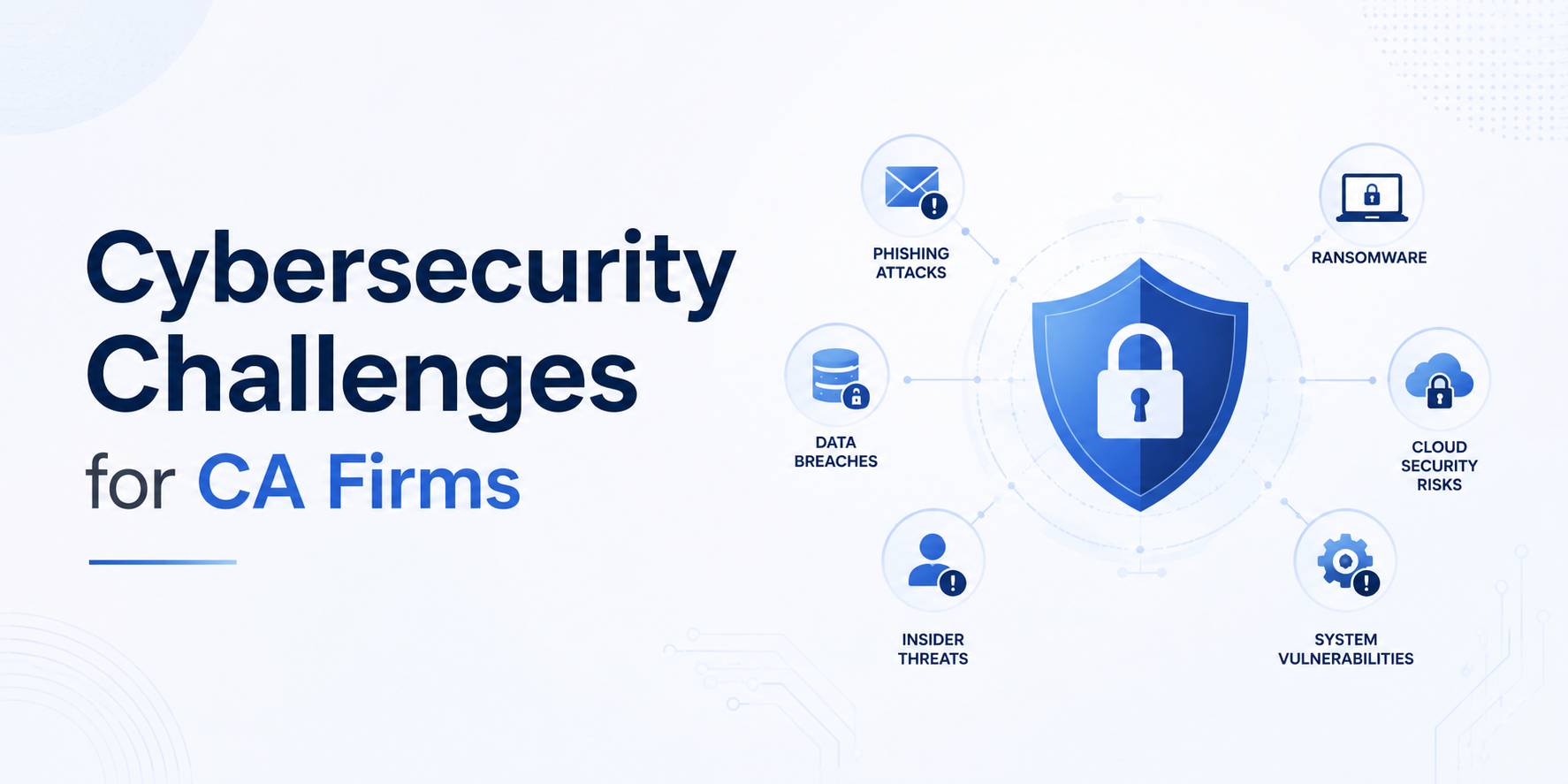
Table of Content
- Why CA Firms Are Attractive Targets
- Data Breaches Can Have Serious Consequences
- Phishing Attacks Are Becoming More Sophisticated
- Remote Working Has Increased Security Risks
- Ransomware Threats Continue to Grow
- Human Error Remains a Major Challenge
- Protecting Client Confidentiality Is Essential
- Technology Investments Are Becoming Necessary
- The Future of Cybersecurity in CA Firms
- Conclusion
The Chartered Accountancy profession has become increasingly digital over the last few years. Cloud accounting platforms, online document sharing, digital workflows, remote working arrangements, and automated systems have transformed the way CA firms operate. While these advancements have improved efficiency and client service, they have also introduced new cybersecurity risks.
CA firms handle some of the most sensitive information in the business world. Financial statements, tax records, bank details, business strategies, payroll data, and confidential client documents are all attractive targets for cybercriminals. As a result, cybersecurity is no longer just an IT issue—it has become a business and professional responsibility.
Today, even small and mid-sized CA firms must take cybersecurity seriously. A single security breach can affect client trust, disrupt operations, and damage a firm's reputation that may have taken years to build.
Why CA Firms Are Attractive Targets
Cybercriminals are constantly looking for organizations that store valuable information. CA firms possess a large volume of confidential financial data that can be exploited for fraud, identity theft, or financial crimes. Unlike some businesses that store only operational information, accounting firms often maintain comprehensive records relating to multiple clients.
This makes them attractive targets because a successful attack may provide access to significant amounts of sensitive information. As firms continue adopting digital systems, the importance of protecting this data becomes even greater. Cybersecurity is no longer optional—it is a critical requirement for maintaining professional credibility.
Data Breaches Can Have Serious Consequences
One of the biggest cybersecurity concerns for CA firms is the possibility of a data breach.A breach may occur when unauthorized individuals gain access to confidential information through hacking, stolen credentials, or system vulnerabilities. The consequences can include:
- Exposure of client financial information.
- Loss of business reputation.
- Legal and regulatory complications.
Clients trust Chartered Accountants with highly sensitive information. If that trust is compromised, the impact can extend far beyond immediate financial losses. For many firms, reputation is one of their most valuable assets.
Phishing Attacks Are Becoming More Sophisticated
Phishing remains one of the most common cyber threats facing professional service firms. Cybercriminals often send emails that appear legitimate in an attempt to trick employees into:
- Sharing passwords.
- Downloading malicious files.
- Providing confidential information.
Because CA firms regularly exchange financial documents and client communications, phishing emails can sometimes appear convincing. Even a single employee mistake can create a security risk for the entire organization. This is why employee awareness and training have become important components of cybersecurity management.
Remote Working Has Increased Security Risks
The growth of remote and hybrid work models has created additional cybersecurity challenges. Employees now access client information from different locations and devices. While this flexibility improves productivity, it can also increase exposure to cyber risks if security measures are not properly implemented. Some common concerns include:
- Unsecured internet connections.
- Personal devices with weak security controls.
- Inadequate access management systems.
Firms must ensure that remote working arrangements maintain the same level of security as office environments. Effective cybersecurity policies are essential for managing these risks.
Ransomware Threats Continue to Grow
Ransomware attacks have become a major concern across industries, including professional services. In a ransomware attack, cybercriminals encrypt important files and demand payment in exchange for restoring access.
For CA firms, such attacks can be particularly disruptive because access to client records and financial information is often critical for daily operations. A ransomware incident can:
- Interrupt client services.
- Delay important compliance work.
- Create significant financial and reputational damage.
Regular backups and strong security controls are important measures for reducing these risks.
Human Error Remains a Major Challenge
Many cybersecurity incidents occur not because of advanced technology failures but because of simple human mistakes. Examples include:
- Using weak passwords.
- Clicking suspicious links.
- Sharing confidential information unintentionally.
Even the most advanced security systems cannot eliminate risks created by human behavior. This is why cybersecurity awareness training has become increasingly important for CA firms. Employees who understand common threats are often the first line of defense against cyberattacks.
Protecting Client Confidentiality Is Essential
Confidentiality has always been a core principle of the Chartered Accountancy profession. Digital transformation has changed how information is stored and shared, but the responsibility to protect client data remains the same. Clients expect firms to:
- Safeguard sensitive information.
- Use secure communication channels.
- Maintain strict access controls.
Strong cybersecurity practices help firms meet these expectations and strengthen client trust. Protecting confidentiality is not only a professional obligation but also a business necessity.
Technology Investments Are Becoming Necessary
Many firms previously viewed cybersecurity spending as an optional expense. Today, it is increasingly seen as a necessary investment. Modern CA firms often require:
- Secure cloud platforms.
- Multi-factor authentication systems.
- Data encryption tools.
- Regular security monitoring.
These investments help reduce vulnerabilities and improve overall security posture. While implementing such measures involves costs, the potential consequences of a major security incident are often far more expensive. Prevention is generally more effective than recovery.
The Future of Cybersecurity in CA Firms
As technology continues evolving, cybersecurity challenges are likely to become more complex. Artificial Intelligence, cloud computing, and digital collaboration tools will create new opportunities but may also introduce new risks. Future-focused firms are expected to place greater emphasis on:
- Cybersecurity governance.
- Employee training programs.
- Advanced threat detection systems.
- Continuous security monitoring.
Cybersecurity will increasingly become an integral part of firm management rather than a separate technical function. The firms that proactively strengthen their defenses today will be better prepared for future challenges.
Conclusion
Cybersecurity challenges for CA firms are growing as the profession becomes more dependent on digital systems and online collaboration. From data breaches and phishing attacks to ransomware and remote work risks, firms face a wide range of threats that can affect both operations and client trust. Protecting sensitive information requires a combination of technology, employee awareness, strong policies, and ongoing vigilance. As digital transformation continues, cybersecurity will remain one of the most important priorities for modern CA firms seeking to protect their reputation and deliver secure professional services.

FAQs
What are the major cybersecurity challenges for CA firms?
CA firms commonly face challenges such as data breaches, phishing attacks, ransomware threats, remote work vulnerabilities, and unauthorized access to sensitive client information. These risks can impact operations, reputation, and client trust if not managed properly.
Why are CA firms attractive targets for cybercriminals?
CA firms store valuable financial data, tax records, business information, and confidential client documents. This information can be used for fraud, identity theft, or financial crimes, making accounting firms attractive targets for cyberattacks.
What is a data breach in a CA firm?
A data breach occurs when unauthorized individuals gain access to confidential information stored by the firm. This may expose sensitive client records and create financial, legal, and reputational consequences for the organization.
How do phishing attacks affect Chartered Accountancy firms?
Phishing attacks attempt to trick employees into sharing passwords, opening malicious attachments, or revealing confidential information. These attacks can lead to data theft, financial losses, and unauthorized system access.
Why has remote working increased cybersecurity risks?
Remote working often involves accessing systems from different devices and networks. Without proper security controls, this can increase the risk of unauthorized access, data leakage, and cyberattacks targeting remote users.
What is ransomware and why is it dangerous for CA firms?
Ransomware is a type of cyberattack where important files are encrypted and access is blocked until a ransom is paid. Such attacks can disrupt client services and affect critical business operations.
How important is employee training in cybersecurity?
Employee awareness is extremely important because many security incidents result from human error. Training helps staff identify threats, avoid risky behavior, and respond appropriately to potential cyber risks.
How can CA firms protect client confidentiality digitally?
Firms can protect confidentiality through secure communication systems, access controls, encryption technologies, strong authentication methods, and well-defined cybersecurity policies.
What cybersecurity technologies should CA firms consider?
Many firms invest in multi-factor authentication, secure cloud platforms, antivirus systems, encryption tools, firewalls, and continuous security monitoring solutions to strengthen their cybersecurity defenses.
What is the future of cybersecurity for CA firms?
The future will involve greater focus on advanced threat detection, cybersecurity governance, employee awareness programs, and technology-driven security solutions as digital operations continue expanding.