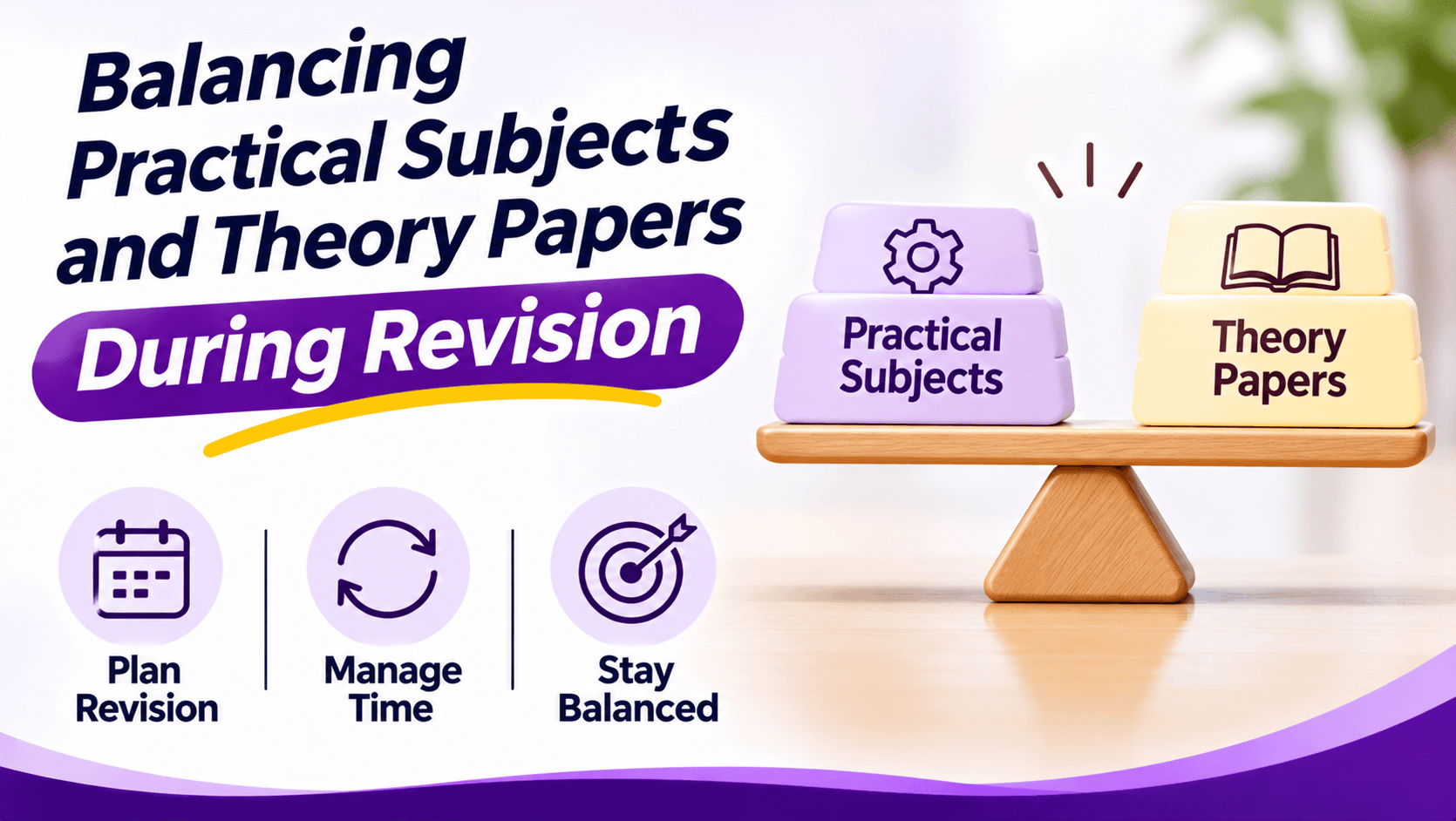
Commerce examination preparation often includes papers that demand different kinds of effort. Practical subjects require concept clarity, method selection and accurate calculations, while theory papers depend on recall, interpretation and structured explanations. Giving attention to only one type can leave gaps in overall preparation.
A balanced revision plan does not mean giving every subject exactly the same number of hours. It means understanding what each paper needs, identifying weak areas and alternating study methods so that neither application nor recall is neglected.
Understand the Requirements and Build a Clear Starting Point
Separate papers according to the work involved. Practical subjects usually require concept clarity, method selection and independent problem solving. Theory papers need recall, interpretation and structured explanations. Some subjects combine both, so check the syllabus and question style before deciding how to revise.
Assess Your Current Preparation Honestly
List each paper and assess coverage, confidence, recent test performance and revision still required. Use simple labels such as Strong, Needs Practice and Needs Revision. Update these after tests rather than treating them as permanent labels.
Break the Work Into Manageable Tasks
Set a minimum weekly allocation for every subject, then add time for weak areas. Do not give every paper identical hours simply for symmetry. A practical paper may need longer problem-solving blocks, while theory can benefit from shorter, repeated recall sessions.
Choose the Right Method for Each Study Session
Alternate practical and theory sessions to create variety, but give each block enough time to complete a meaningful task. For example, follow a numerical practice session with a theory recall session or a written answer. Avoid switching subjects every few minutes.
Use Active Practice to Check Understanding
For practical papers, solve questions without looking at worked examples and record formula, adjustment and arithmetic errors. For theory, close your notes and write the main points from memory. Check omissions and practise answers in the format required by the paper.
Create a Realistic Weekly Routine
Include practical questions, theory recall, written answers, mock tests and review in each week. A sample mix is: morning practical questions, a second block for theory revision, an afternoon error-correction session and an evening written answer. Adjust it to your productive hours.
| Session | Activity | Purpose |
|---|---|---|
| Morning | Practical questions | Application and accuracy |
| Midday | Theory recall | Strengthen memory |
| Afternoon | Error correction | Fix repeated mistakes |
| Evening | Written answers | Improve structure |
Review Mistakes and Identify Repeated Gaps
Review practical papers for method selection, working and calculation accuracy. Review theory answers for relevance, completeness, recall and presentation. Identify whether low marks came from weak knowledge, rushed work or poor time allocation.
Track Progress With Simple Measures
Track topics revised, questions attempted, errors corrected and performance in tests. A simple tracker is more useful than a complicated timetable that is rarely updated. Use the record to decide which subject needs another session.
Adjust the Plan as the Examination Approaches
As examinations approach, shift from broad learning to targeted revision and timed practice. Keep every paper active, but give more time to subjects where mock tests show a clear weakness. Leave enough time to review the feedback.
Common Mistakes to Avoid
Do not postpone theory because it appears easy to revise quickly, and do not replace practical problem solving with reading solutions. Avoid rigid equal-time schedules and repeated mock attempts without analysis.
How Studycaller Can Support Your Preparation
Studycaller can be included alongside official study material, personal notes, question practice and mock assessments. Select resources that match your course and syllabus, then use the results to update weak-topic lists and schedule another attempt.
Conclusion
Balancing practical and theory papers requires a plan that reflects each subject's demands. Give practical papers enough independent problem solving, revise theory through active recall and written answers, and use tests to check whether the time split is working.