Working Capital Advisory for CAs: Business Liquidity Management
Learn how working capital advisory for CAs helps businesses optimize cash flow, manage liquidity, improve working capital cycles, and achieve sustainable financial growth.
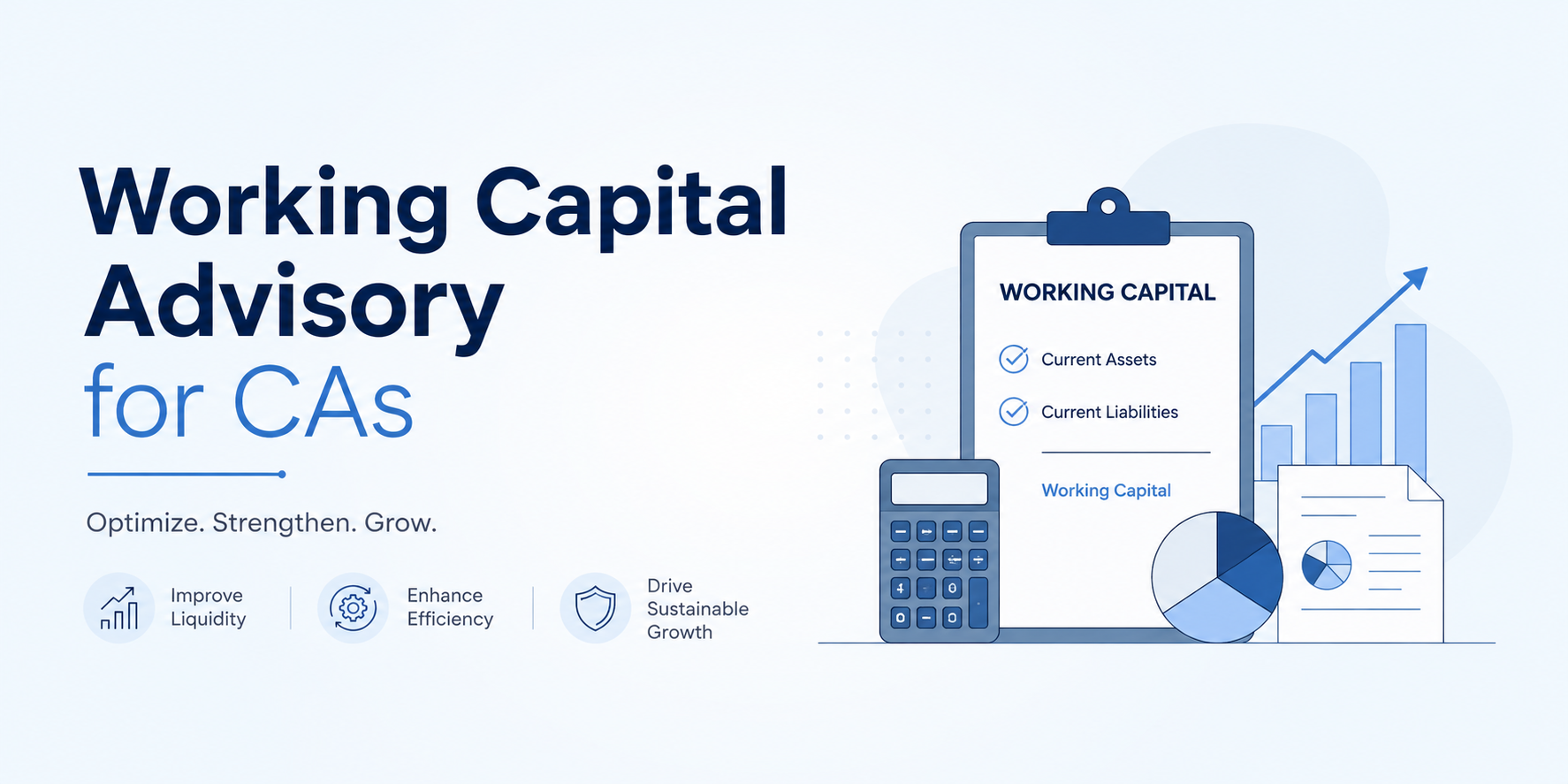
Table of Content
- What Is Working Capital Advisory for CAs?
- Why Working Capital Management Is Important
- Working Capital Advisory for CAs Improves Cash Flow Management
- Receivables Management Enhances Liquidity
- Inventory Optimization Improves Working Capital
- Payable Management Supports Financial Stability
- Working Capital Ratio Analysis
- Budgeting and Working Capital Planning
- Technology Improves Working Capital Management
- Working Capital Advisory Supports Business Growth
- Continuous Monitoring Is Essential
- Conclusion
Working capital is one of the most important financial indicators of a business because it determines whether an organization can comfortably meet its short-term obligations while continuing its daily operations without interruption. A business may report healthy profits on paper but still struggle to pay suppliers, salaries, taxes, or operational expenses due to poor working capital management. Delayed customer collections, excessive inventory, unplanned expenses, and inefficient cash flow management often create liquidity problems that directly affect business stability and future growth. Therefore, managing working capital effectively has become a critical priority for businesses across every industry.
This is where working capital advisory for CAs becomes extremely valuable. Chartered Accountants help businesses analyze their current assets and liabilities, evaluate cash flow cycles, improve receivable collections, optimize inventory management, and strengthen financial planning. Through detailed financial analysis and practical advisory, CAs assist organizations in maintaining adequate liquidity while maximizing operational efficiency. A well-managed working capital cycle not only supports daily business operations but also improves profitability, financial discipline, and long-term sustainability.
What Is Working Capital Advisory for CAs?
Working capital advisory for CAs refers to specialized financial advisory services provided by Chartered Accountants to help businesses effectively manage short-term assets and liabilities while maintaining sufficient liquidity for day-to-day operations.
The objective is to optimize the working capital cycle, strengthen cash flow management, improve operational efficiency, and ensure that businesses have enough financial resources to support continuous growth. Professional working capital advisory helps organizations make informed financial decisions while minimizing liquidity-related risks.
Why Working Capital Management Is Important
Every business requires sufficient working capital to manage routine expenses such as salaries, supplier payments, inventory purchases, rent, utilities, and operational costs. Poor working capital management can create financial pressure even when business sales remain strong.
Businesses with healthy working capital are better positioned to manage market fluctuations, seize growth opportunities, and maintain smooth operations without relying excessively on external borrowing. Proper working capital planning supports long-term financial stability.
Working Capital Advisory for CAs Improves Cash Flow Management
One of the primary objectives of working capital advisory for CAs is improving business cash flow management. Chartered Accountants analyze cash inflows and outflows to ensure that businesses maintain adequate liquidity throughout their operating cycle. Cash flow advisory may include:
- Collection management
- Payment scheduling
- Cash forecasting
- Working capital planning
- Liquidity analysis
- Short-term funding assessment
Better cash flow management reduces financial stress and improves operational continuity.
Receivables Management Enhances Liquidity
Delayed customer payments are one of the most common reasons for working capital shortages. Chartered Accountants review receivable management practices and recommend strategies that accelerate collections while improving customer payment discipline. Effective receivable management helps businesses:
- Improve cash availability
- Reduce overdue payments
- Strengthen liquidity
- Lower borrowing requirements
- Improve financial planning
Faster collections contribute directly to healthier working capital.
Inventory Optimization Improves Working Capital
Excess inventory blocks valuable financial resources that could be utilized elsewhere in the business. Chartered Accountants analyze inventory levels and recommend strategies that balance stock availability with financial efficiency. Inventory optimization may involve:
- Stock analysis
- Slow-moving inventory review
- Inventory turnover monitoring
- Purchase planning
- Demand forecasting
- Cost control measures
Efficient inventory management strengthens liquidity while reducing storage costs.
Payable Management Supports Financial Stability
Supplier payments should be managed carefully to maintain healthy business relationships while optimizing cash utilization. Chartered Accountants help businesses develop payment schedules that improve working capital without affecting supplier confidence. Proper payable management supports:
- Better cash utilization
- Improved vendor relationships
- Lower financing costs
- Enhanced liquidity planning
- Operational stability
- Balanced payment strategies strengthen financial management.
Working Capital Ratio Analysis
Financial ratios provide valuable insights into business liquidity and operational efficiency. Chartered Accountants evaluate important working capital ratios to assess financial health and identify areas requiring improvement. Common ratios analyzed include:
- Current ratio
- Quick ratio
- Inventory turnover ratio
- Debtor turnover ratio
- Creditor turnover ratio
- Cash conversion cycle
Ratio analysis supports informed financial decision-making and performance monitoring.
Budgeting and Working Capital Planning
Budgeting plays a significant role in maintaining healthy working capital. Chartered Accountants prepare cash budgets and working capital forecasts that help businesses anticipate future liquidity requirements. Proper budgeting enables organizations to:
- Plan expenses
- Control costs
- Allocate resources efficiently
- Avoid cash shortages
- Support expansion plans
Financial planning strengthens long-term business stability.
Technology Improves Working Capital Management
Modern accounting software and digital financial tools have transformed working capital management. Chartered Accountants increasingly use technology to monitor liquidity and improve financial decision-making. Technology supports:
- Cash flow dashboards
- Automated reporting
- Receivable tracking
- Inventory monitoring
- Budget analysis
- Financial forecasting
Technology-driven reporting enables businesses to respond quickly to changing financial conditions.
Working Capital Advisory Supports Business Growth
Healthy working capital enables businesses to invest confidently in expansion opportunities without disrupting existing operations. Chartered Accountants assist management in balancing liquidity with business growth by optimizing financial resources and improving operational efficiency. Strong working capital management supports:
- Business expansion
- New investments
- Operational continuity
- Better profitability
- Improved financial flexibility
- Sustainable growth
Financial stability creates a strong foundation for long-term success.
Continuous Monitoring Is Essential
Working capital management is an ongoing process rather than a one-time financial exercise. Changing market conditions, customer payment patterns, inventory levels, and operational costs require continuous monitoring and periodic review.
Chartered Accountants regularly evaluate working capital performance and recommend improvements that strengthen liquidity and business efficiency. Continuous financial monitoring helps organizations remain financially resilient.
Conclusion
Working capital advisory for CAs plays a crucial role in helping businesses maintain healthy cash flow, improve liquidity, optimize inventory, strengthen receivable management, and enhance overall financial performance. Through detailed analysis, strategic planning, budgeting, and technology-driven reporting, Chartered Accountants provide valuable financial guidance that supports operational efficiency and sustainable business growth. As businesses continue to face changing economic conditions and competitive pressures, effective working capital management has become an essential component of long-term financial success.

FAQs
What is working capital advisory for CAs?
Working capital advisory for CAs is a professional financial service that helps businesses manage liquidity, optimize cash flow, improve receivables, and strengthen overall working capital management.
Why is working capital management important?
Working capital management ensures that businesses have sufficient funds to meet short-term obligations while maintaining smooth day-to-day operations and financial stability.
How do Chartered Accountants improve working capital?
They analyze cash flow, receivables, inventory, payables, financial ratios, and budgeting systems to improve liquidity and operational efficiency.
Can working capital advisory improve cash flow?
Yes. Chartered Accountants optimize collections, payment schedules, budgeting, and liquidity planning to strengthen overall cash flow management.
How does inventory management affect working capital?
Excess inventory blocks cash resources, while optimized inventory management improves liquidity and reduces unnecessary holding costs.
What financial ratios are used in working capital analysis?
Common ratios include the current ratio, quick ratio, inventory turnover ratio, debtor turnover ratio, creditor turnover ratio, and cash conversion cycle.
Can MSMEs benefit from working capital advisory services?
Absolutely. MSMEs can improve liquidity, reduce financial stress, strengthen cash flow, and support business growth through professional working capital advisory.
How does technology improve working capital management?
Technology enables real-time cash flow monitoring, automated reporting, receivable tracking, inventory analysis, budgeting, and financial forecasting.
Why should businesses monitor working capital regularly?
Regular monitoring helps identify liquidity issues early, improve financial planning, optimize resource utilization, and maintain operational stability.
What is the biggest benefit of working capital advisory for CAs?
The biggest benefit is improving business liquidity and financial efficiency by optimizing cash flow, managing working capital cycles, and supporting sustainable long-term growth.