Management Reporting by Chartered Accountants: Better Business Decisions
Learn how management reporting by Chartered Accountants helps businesses improve decision-making, financial analysis, budgeting, profitability, and long-term growth.
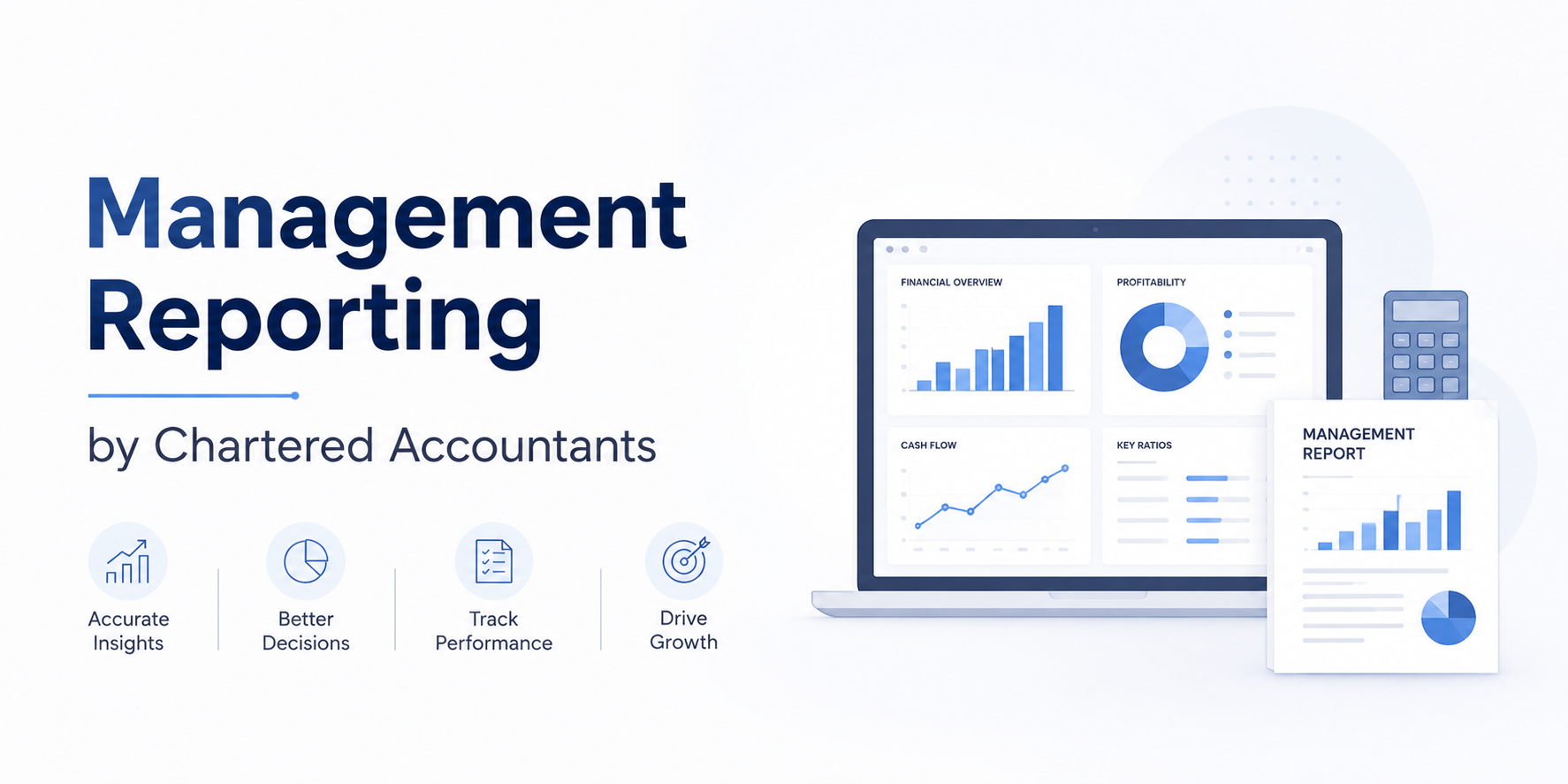
Table of Content
- What Is Management Reporting by Chartered Accountants?
- Why Management Reporting Is Important
- Management Reporting by Chartered Accountants Improves Business Decision-Making
- Financial Performance Analysis
- Budget Monitoring and Variance Analysis
- Cash Flow Reporting
- Department-Wise Performance Reporting
- Management Reporting Supports Profitability Improvement
- Financial Dashboards and Business Analytics
- Compliance and Governance Reporting
- Technology Has Transformed Management Reporting
- Long-Term Benefits of Management Reporting
- Conclusion
Modern businesses operate in a highly competitive and data-driven environment where quick and informed decision-making is essential for long-term success. Business owners and senior management cannot rely only on annual financial statements or basic accounting records to evaluate business performance. They require detailed reports that provide meaningful insights into profitability, cash flow, expenses, operational efficiency, and future financial trends. Without proper reporting systems, businesses may struggle to identify opportunities, control costs, or respond to changing market conditions effectively.
This is where management reporting by Chartered Accountants becomes an essential business advisory service. Chartered Accountants prepare customized financial and operational reports that transform accounting data into meaningful business intelligence. These reports help management understand financial performance, monitor key business indicators, compare budgets with actual results, and make strategic decisions based on reliable information. Effective management reporting strengthens financial control while supporting sustainable business growth and long-term profitability.
What Is Management Reporting by Chartered Accountants?
Management reporting by Chartered Accountants refers to the preparation, analysis, and presentation of financial and operational reports that help business owners and management teams evaluate organizational performance and make informed decisions.
Unlike statutory financial statements prepared mainly for legal compliance, management reports are designed specifically for internal use and strategic planning. These reports provide timely financial information that supports better resource allocation, performance monitoring, and business growth.
Why Management Reporting Is Important
Businesses generate large volumes of financial data every day through sales, purchases, payroll, inventory, investments, and operational activities. Without structured reporting, management may find it difficult to understand the actual financial condition of the organization or identify emerging business challenges.
Management reporting converts raw accounting data into actionable insights that improve planning, budgeting, and decision-making. It enables business leaders to respond quickly to financial opportunities and operational risks.
Management Reporting by Chartered Accountants Improves Business Decision-Making
One of the biggest advantages of management reporting by Chartered Accountants is improved decision-making. Chartered Accountants analyze financial information and present reports that help management evaluate performance and future business opportunities. These reports support decisions related to:
- Business expansion
- Cost management
- Investment planning
- Pricing strategies
- Resource allocation
- Profitability improvement
Reliable financial information reduces uncertainty and supports strategic planning.
Financial Performance Analysis
Understanding financial performance is essential for every business. Chartered Accountants prepare detailed reports that analyze revenue, expenses, profitability, and financial trends over different reporting periods. Performance analysis generally includes:
- Revenue growth
- Gross profit margins
- Net profit margins
- Expense analysis
- Return on investment
- Cost trends
These insights help management evaluate business performance objectively and identify areas requiring improvement.
Budget Monitoring and Variance Analysis
Budgeting plays a crucial role in financial management. Management reporting compares actual financial performance with planned budgets and highlights significant variances that require management attention. Budget monitoring helps businesses:
- Control expenses
- Improve financial discipline
- Allocate resources efficiently
- Monitor departmental performance
- Support financial planning
Regular variance analysis enables timely corrective action and improves business efficiency.
Cash Flow Reporting
Profitability alone does not guarantee financial stability. Businesses must also maintain healthy cash flow to meet operational requirements and future obligations. Chartered Accountants prepare cash flow reports that help management understand liquidity trends and working capital requirements. Cash flow reporting supports:
- Payment planning
- Liquidity management
- Working capital optimization
- Investment decisions
- Borrowing requirements
Effective cash flow management strengthens business sustainability.
Department-Wise Performance Reporting
Large organizations often require separate performance reports for different departments or business units. Chartered Accountants prepare department-wise reports that help management evaluate operational efficiency and resource utilization. These reports may include:
- Sales performance
- Cost analysis
- Budget utilization
- Profit contribution
- Productivity indicators
- Department expenses
- Departmental reporting improves accountability and supports performance improvement initiatives.
Management Reporting Supports Profitability Improvement
Management reporting provides valuable insights into areas affecting business profitability. Chartered Accountants analyze cost structures, pricing strategies, operational efficiency, and financial ratios to identify opportunities for improvement. The reports help businesses:
- Reduce unnecessary expenses
- Improve margins
- Optimize pricing
- Increase productivity
- Strengthen financial planning
Continuous financial monitoring contributes directly to better profitability.
Financial Dashboards and Business Analytics
Modern management reporting increasingly relies on digital dashboards and business analytics tools. Chartered Accountants use technology to present financial information through visual reports that simplify complex data. Digital dashboards may display:
- Revenue trends
- Expense patterns
- Cash flow position
- Budget performance
- Profitability indicators
- Key financial ratios
Visual reporting enables management to understand business performance quickly and make informed decisions.
Compliance and Governance Reporting
Management reporting also supports compliance and corporate governance by ensuring that financial information is accurate and transparent. Chartered Accountants prepare reports that monitor statutory compliance, financial controls, and regulatory obligations. Governance reporting may include:
- Tax compliance status
- Internal control reports
- Audit observations
- Financial policy compliance
- Regulatory filings
- Risk management updates
Strong reporting systems improve accountability and organizational governance.
Technology Has Transformed Management Reporting
Technology has significantly improved the quality and speed of management reporting. Cloud accounting systems, ERP software, automation tools, and business intelligence platforms allow Chartered Accountants to generate real-time reports with greater accuracy. Technology enables:
- Automated reporting
- Real-time dashboards
- Financial forecasting
- Data visualization
- Business analytics
- Performance monitoring
Digital reporting improves management efficiency and supports faster strategic decisions.
Long-Term Benefits of Management Reporting
Regular management reporting creates long-term value by improving financial transparency and supporting strategic growth. Some major benefits include:
- Better financial control
- Improved budgeting
- Stronger profitability
- Faster decision-making
- Enhanced business planning
- Sustainable growth
Organizations that rely on structured management reporting are generally better equipped to adapt to changing market conditions and business challenges.
Conclusion
Management reporting by Chartered Accountants has become an indispensable tool for modern business management. By converting financial data into meaningful insights, Chartered Accountants help organizations improve decision-making, monitor profitability, strengthen budgeting, optimize cash flow, and enhance overall financial performance. Technology-driven reporting systems further improve accuracy and efficiency, enabling management to respond proactively to business opportunities and risks. As businesses continue to grow in complexity, professional management reporting will remain a key driver of financial discipline, operational excellence, and sustainable long-term success.

FAQs
What is management reporting by Chartered Accountants?
Management reporting by Chartered Accountants involves preparing financial and operational reports that help management evaluate performance and make informed business decisions.
Why is management reporting important for businesses?
Management reporting provides accurate financial insights that support budgeting, profitability analysis, strategic planning, and better operational decision-making.
How do Chartered Accountants prepare management reports?
They analyze accounting records, financial statements, budgets, cash flow, and business performance indicators to prepare customized reports for management.
Can management reporting improve profitability?
Yes. Management reporting identifies cost inefficiencies, pricing opportunities, budgeting gaps, and operational improvements that help increase profitability.
What information is included in management reports?
Management reports may include revenue analysis, expense reports, cash flow statements, budget comparisons, profitability trends, financial ratios, and performance dashboards.
Does management reporting help with budgeting?
Yes. It compares actual performance with budgeted figures, identifies variances, and supports better financial planning and cost control.
Can MSMEs benefit from management reporting services?
Absolutely. MSMEs can improve financial management, budgeting, cash flow planning, profitability, and decision-making through professional management reporting.
How does technology improve management reporting?
Technology enables automated reporting, financial dashboards, business analytics, real-time monitoring, and data visualization for faster and more accurate decision-making.
How often should management reports be prepared?
Most businesses prepare management reports monthly or quarterly, depending on operational requirements and management information needs.
What is the biggest benefit of management reporting by Chartered Accountants?
The biggest benefit is providing accurate financial insights that improve decision-making, strengthen financial control, enhance profitability, and support sustainable business growth.