Future Opportunities in ESG Advisory for CAs in India
Learn about future opportunities in ESG advisory for CAs through sustainability reporting, governance consulting, compliance support, and business advisory services.
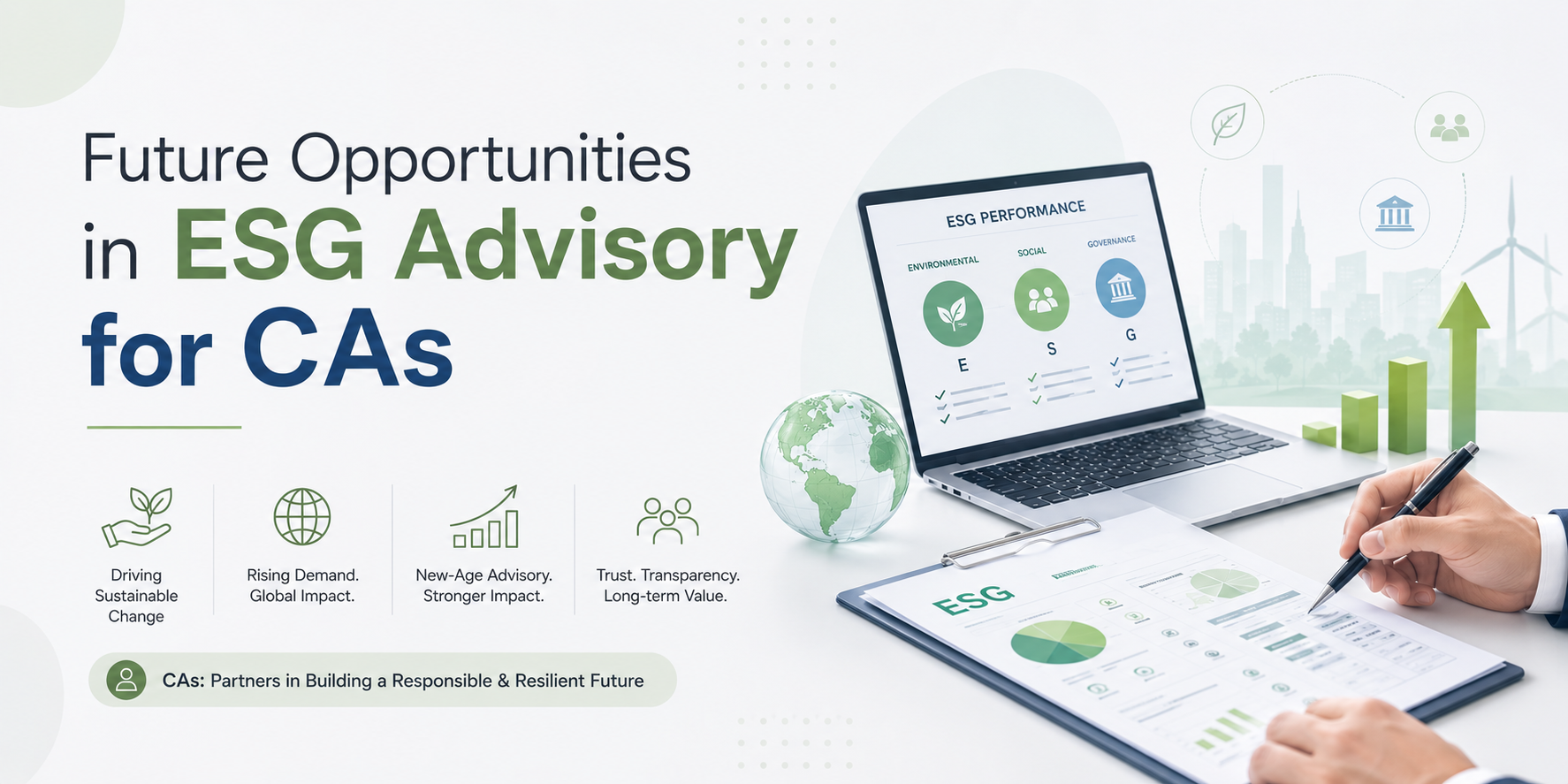
Table of Content
- Businesses Are Giving More Importance to ESG Compliance
- Investors Are Focusing on ESG Performance
- Chartered Accountants Already Possess Relevant Financial Expertise
- ESG Advisory Requires Both Financial and Strategic Understanding
- Global Business Trends Are Increasing ESG Importance
- Technology Is Supporting ESG Reporting Systems
- ESG Advisory Creates New Career Opportunities
- Businesses Need Long-Term ESG Strategy Planning
- Communication and Advisory Skills Are Becoming Important
- Continuous Learning Will Be Necessary
- Future Scope of ESG Advisory Looks Very Strong
- Conclusion
The business environment is changing rapidly because companies today are expected to focus not only on profitability but also on sustainability, ethical governance, and social responsibility. Investors, regulators, customers, and global organizations increasingly want businesses to maintain transparent environmental and governance practices. Because of this shift, ESG advisory has emerged as one of the fastest-growing professional areas in the finance and corporate world.
ESG stands for Environmental, Social, and Governance practices. Businesses are now required to disclose information related to sustainability efforts, governance systems, environmental impact, employee welfare, and ethical business operations. As these reporting expectations continue increasing, chartered accountants are expected to play a major role in helping businesses manage ESG-related compliance and advisory requirements. This is why future opportunities in ESG advisory for CAs are growing rapidly in modern business environments.
Businesses Are Giving More Importance to ESG Compliance
Modern businesses are facing increasing pressure from regulators, investors, and international markets to maintain responsible business practices. Companies are no longer judged only on financial performance but also on how responsibly they operate. Businesses now increasingly focus on:
- Sustainability reporting
- Governance transparency
- Environmental responsibility
- Ethical operational practices
Because of this, organizations require professionals who can help them understand ESG frameworks and maintain proper reporting systems.
This growing corporate focus is creating strong advisory opportunities for chartered accountants.
Investors Are Focusing on ESG Performance
Investment decisions today are increasingly influenced by ESG performance and sustainability practices. Many investors now evaluate businesses based on governance quality, ethical standards, and environmental responsibility before making investment decisions.
Companies with weak ESG practices may face:
- Lower investor confidence
- Reputation-related risks
- Compliance pressure
- Long-term operational uncertainty
Because of this, businesses are actively investing in ESG reporting and governance improvement initiatives, creating growing demand for ESG advisory professionals.
Chartered Accountants Already Possess Relevant Financial Expertise
One major reason why future opportunities in ESG advisory for CAs look strong is that chartered accountants already possess important skills related to financial reporting, compliance management, auditing, and governance systems. These skills naturally support ESG advisory work because businesses require professionals who understand:
- Reporting frameworks
- Regulatory compliance
- Financial disclosures
- Internal control systems
Chartered accountants can therefore contribute significantly toward helping businesses build reliable ESG reporting structures.
ESG Advisory Requires Both Financial and Strategic Understanding
ESG reporting is not limited to non-financial disclosures. Businesses increasingly need professionals who can connect sustainability practices with financial impact and long-term business strategy.
- Governance Evaluation: Businesses require support in strengthening transparency and accountability systems.
- Sustainability Reporting: Companies increasingly need guidance regarding ESG disclosure frameworks.
- Risk Assessment: Professionals help identify environmental and operational risks.
- Compliance Management: Organizations require support for maintaining regulatory standards.
Because of this combination of financial and strategic responsibilities, chartered accountants are highly suitable for ESG advisory roles.
Global Business Trends Are Increasing ESG Importance
International markets and multinational companies increasingly expect businesses to follow global sustainability standards. Indian businesses operating internationally are also facing stronger ESG-related expectations. This global shift is increasing opportunities for chartered accountants in areas such as:
- International ESG reporting
- Sustainability consulting
- Governance advisory
- Compliance review services
As global business integration continues to increase, ESG advisory demand is expected to grow strongly across industries.
Technology Is Supporting ESG Reporting Systems
Modern ESG reporting systems depend heavily on technology because businesses now collect and analyze large amounts of sustainability-related data digitally. Technology helps organizations:
- Monitor environmental performance
- Maintain reporting records
- Analyze operational risks
- Improve disclosure accuracy
Chartered accountants with technology understanding and analytical skills are therefore likely to perform strongly in ESG advisory roles.
ESG Advisory Creates New Career Opportunities
The rise of ESG reporting is creating multiple career opportunities for finance professionals beyond traditional accounting and taxation work. Modern ESG-related opportunities may include:
- Sustainability consulting
- ESG assurance services
- Governance advisory
- Risk consulting
Professionals who develop ESG expertise early are likely to experience strong long-term career growth because businesses increasingly require specialized sustainability support.
Businesses Need Long-Term ESG Strategy Planning
Many organizations now understand that ESG is not only about compliance but also about long-term business sustainability and reputation management. Businesses increasingly seek professional support regarding:
- ESG policy development
- Governance improvement
- Sustainability planning
- Stakeholder reporting systems
This long-term strategic involvement makes ESG advisory an important future growth area for chartered accountants.
Communication and Advisory Skills Are Becoming Important
ESG advisory involves regular interaction with management teams, investors, regulators, and stakeholders. Chartered accountants working in this field, therefore, require strong communication and advisory skills. Professionals often need to:
- Explain ESG risks clearly
- Discuss sustainability frameworks
- Present governance recommendations
- Support strategic discussions
Good communication improves professional credibility and strengthens long-term client relationships in advisory roles.
Continuous Learning Will Be Necessary
The ESG field is evolving continuously because sustainability frameworks, reporting standards, and compliance requirements are still developing globally. Professionals interested in ESG advisory will need continuous learning regarding:
- Sustainability regulations
- Reporting standards
- Governance frameworks
- ESG-related technology systems
Chartered accountants who adapt quickly to these changes are likely to benefit strongly from future ESG opportunities.
Future Scope of ESG Advisory Looks Very Strong
The future of ESG advisory for CAs appears highly promising because businesses are expected to become even more sustainability-focused and transparency-oriented in the coming years. Future opportunities are likely to increase in areas such as:
- ESG assurance services
- Sustainability reporting
- Corporate governance consulting
- ESG risk analysis
As businesses continue integrating ESG practices into core business strategy, chartered accountants with ESG expertise are expected to remain highly valuable.
Conclusion
Understanding the future opportunities in ESG advisory for CAs helps explain how the Chartered Accountancy profession is evolving beyond traditional accounting and compliance work. Businesses today increasingly require support related to sustainability reporting, governance systems, ESG compliance, and long-term risk management. Chartered accountants possess strong financial, compliance, and reporting expertise that naturally aligns with ESG advisory responsibilities. As global markets continue focusing more on sustainability and transparency, ESG advisory is expected to become one of the most important future growth areas for modern chartered accountants and CA firms.

FAQs
What are the future opportunities in ESG advisory for CAs?
Future opportunities include sustainability consulting, ESG reporting, governance advisory, compliance management, and ESG assurance services.
Why is ESG advisory becoming important for businesses?
Businesses face increasing pressure from investors, regulators, and global markets to maintain sustainable and transparent operations.
How can chartered accountants contribute to ESG advisory?
Chartered accountants support ESG reporting, governance evaluation, compliance management, and sustainability-related financial analysis.
What does ESG stand for in business reporting?
ESG stands for Environmental, Social, and Governance practices related to sustainable and ethical business operations.
Why are investors focusing on ESG performance?
Investors increasingly prefer companies with strong sustainability practices, governance systems, and lower long-term operational risks.
How does technology support ESG advisory services?
Technology helps businesses monitor sustainability data, improve reporting accuracy, and maintain digital ESG reporting systems.
What career opportunities are growing in ESG advisory?
Career opportunities include ESG consulting, sustainability assurance, governance advisory, and risk management services.
Why are global businesses increasing ESG reporting requirements?
International markets increasingly expect businesses to maintain transparent sustainability and governance standards.
Why are communication skills important in ESG advisory?
Professionals regularly explain sustainability risks, governance practices, and ESG reporting frameworks to businesses and stakeholders.
What is the future of ESG advisory for chartered accountants?
The future looks highly promising because businesses are becoming more sustainability-focused and governance-oriented globally.