Board Meeting Analytics by CAs: Turning Data into Better Decisions
Explore board meeting analytics by CAs and how Chartered Accountants help boards analyze performance, identify risks, track KPIs, and support strategic decision-making.
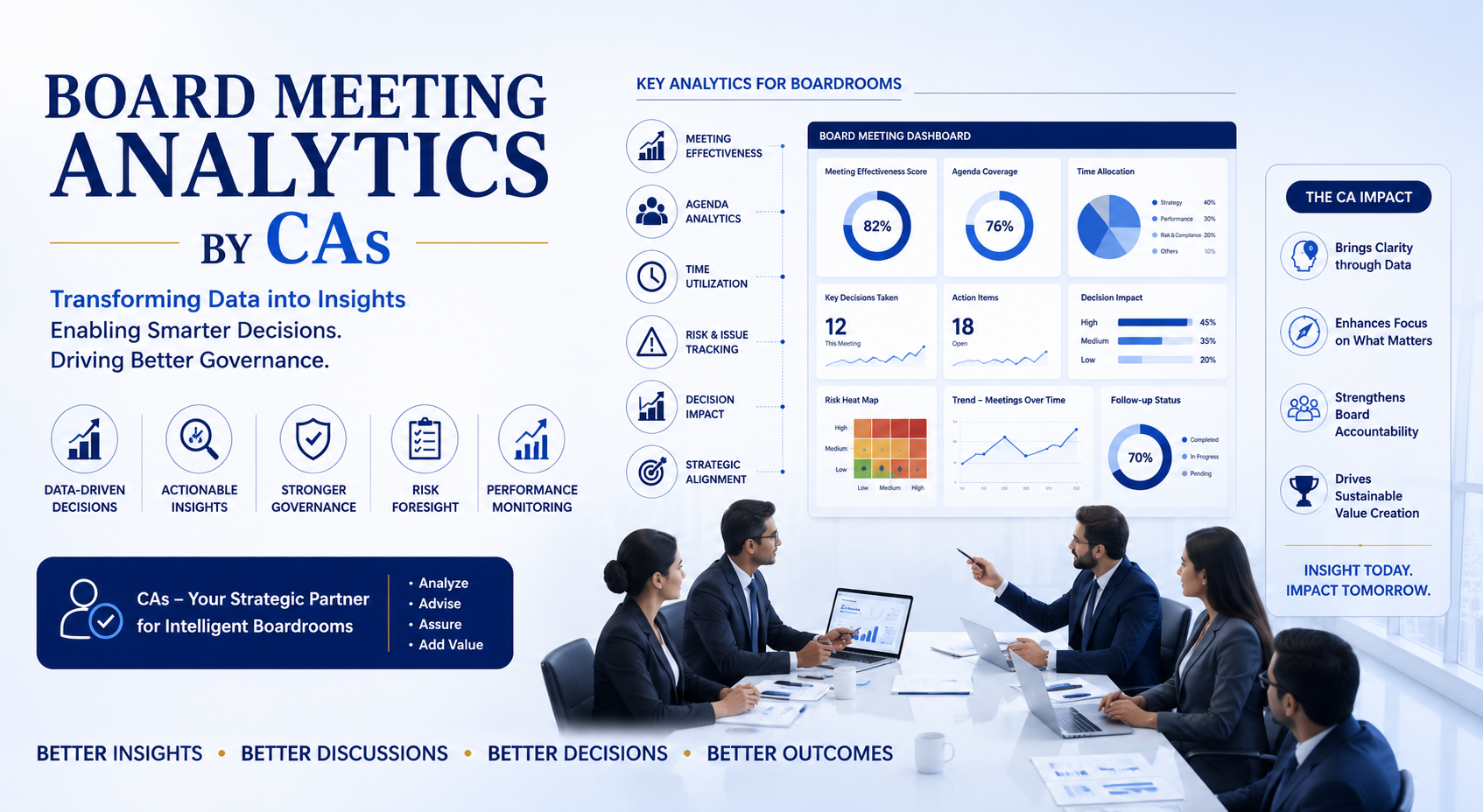
Table of Content
- Why Traditional Board Reports Are No Longer Enough
- Understanding the Purpose of Board Meeting Analytics
- The Expanding Role of Chartered Accountants
- Identifying Trends Before They Become Problems
- Board Meeting Analytics by CAs Supports Strategic Planning
- Measuring Performance Beyond Financial Results
- Risk Analytics Is Becoming a Board Priority
- Technology Is Transforming Board Analytics
- Why Board Meeting Analytics Is a Growing Advisory Opportunity
- The Future of Board Meeting Analytics by CAs
- Conclusion
Board meetings? That's where many key decisions in a company get hashed out. From giving the green light on expansion to checking out the financials, dealing with risks, or sketching out strategies for down the road, directors need their info straight and true. But hey, simply handing over reports isn't cutting it anymore.
Now, boards want and need meatier insights to grasp what's happening within the business and know which moves might be necessary. This is where the game changes with the analytics provided by CAs, or Chartered Accountants. It's not just about cranking out those traditional financial statements or compliance reports. CAs are diving deeper, helping boards decode data and spot trends. Plus, they assist with assessing risks and even throwing in some solid input for strategic chats thanks to advanced analytics and reports on performance.
Why Traditional Board Reports Are No Longer Enough
For many years, board meetings centered on reviewing financial statements and past performance. While that info is still vital, today's boards need a deeper understanding of how the business is doing. A profit number by itself doesn't explain what caused that rise or fall in profitability. Likewise, revenue growth might look great on paper, yet it won't show if growth can be sustained. That's why directors now want explanations along with the figures.
This shift is a key reason why board meeting analytics by CAs are getting noticed. Analytics turn raw financial and operational data into useful insights to support smart decisions. Instead of just reporting what happened, Chartered Accountants explain why it happened and what it might mean for the future.
Understanding the Purpose of Board Meeting Analytics
Board meeting analytics aim to give directors useful, timely info, not tons of reports. The point is to spotlight key trends, risks, and opportunities needing management focus.
When done right, CA-led analytics help boards see clearly into business perf and priorities. This lets directors skip routine info review and tackle discussions that shape future outcomes instead. These analytics usually answer critical questions like:
- Which business segments are performing well?
- What factors are affecting profitability?
- Are operational risks increasing?
- How is cash flow performing?
- What trends require immediate attention?
The Expanding Role of Chartered Accountants
Chartered Accountants' roles in boardrooms have changed a lot over time. In the past, their main job was seen as making financial reports and ensuring everything complied with rules. Nowadays, though, companies expect more from them.
Now, boards want finance pros to join in on big strategy talks. This is where CAs really shine because they can analyze stuff better than most. They bring a perfect blend of financial smarts and business know-how to the table, making them invaluable for strategic planning.
They spot patterns in financial data, assess business performance, and give context. This helps directors grasp the bigger picture of crucial choices. So, CAs turn into strategic advisors, not just report writers. With organizations relying more on data, this advisory role will probably get even more important.
Identifying Trends Before They Become Problems
One of the biggest perks of analytics is spotting issues early on. Business problems usually build up slowly. Shrinking margins, higher costs, or cash flow issues might seem small at first. Yet, analytics can show warning signs before these turn into big troubles.
Analyses done by CAs during board meetings help directors see important performance trends that could be overlooked. This regular check lets management act quickly to fix problems instead of reacting after serious damage happens.
This proactive approach often improves both operational performance and risk management. For many organizations, the ability to identify problems early is one of the strongest arguments for investing in board-level analytics.
Board Meeting Analytics by CAs Supports Strategic Planning
Every big business decision comes with financial stakes. Whether it's expansion, launching a product, tech investment, or entering new markets, directors need dependable info to commit. Analytics is key for weighing those choices.
Analyses by CAs in board meetings help strategy by looking at past performance, projecting futures, and spotting risks. So, instead of just guessing, the board uses data to make informed judgments, not just gut feelings
This improves decision quality and helps organizations allocate resources more effectively. Strategic planning becomes stronger when decisions are supported by evidence rather than intuition alone.
Measuring Performance Beyond Financial Results
Financial performance is key, yet nowadays, boards understand there's more to success than profits alone. Companies keep an eye on lots of other factors too, like how well they run operations, keep customers happy, and maintain a productive workforce. So, when Certified Accountants analyze board meetings, these reports usually cover both financial stuff and things like risk management. Comprehensive reports might look at these areas, but you get the idea balance is important.
- Revenue growth trends
- Profitability analysis
- Cash flow performance
- Customer retention rates
- Operational efficiency indicators
- Project performance metrics
This broader perspective helps directors understand how different parts of the organization contribute to overall success.
Risk Analytics Is Becoming a Board Priority
Risk management is key for lots of boards now. Organizations deal with bigger uncertainties due to shaky economies, tough new rules, tech risks, cyber attacks, and cutthroat competition. For directors to make smart choices, they must see these risks clearly.
CAs play a big role here too. They use board meeting data to spot and keep tabs on warning signs. This means Chartered Accountants assist boards in checking financial, operational, and compliance risks through organized reports and analyses.
This information allows directors to assess risks proactively rather than reacting after issues emerge. As governance expectations continue to increase, risk analytics is likely to remain a critical part of board discussions.
Technology Is Transforming Board Analytics
Tech has revamped the way companies gather, analyze, and showcase info. Now, thanks to modern reporting tools, board members can see real-time dashboards and interact with reports easily—something that was super tough before. Data is not just quicker and more detailed; it's at their fingertips.
Still, having the latest tech doesn't automatically boost value. Proper interpretation is key. This is where the role of CAs really shines. They assist directors in grasping data's meaning, spotting important takeaways, and prioritizing critical issues. Tech handles the info gathering, but professional judgment is what turns that into actionable business intelligence.
Why Board Meeting Analytics Is a Growing Advisory Opportunity
As compliance tasks get more automated, many Chartered Accountants are moving into advisory roles. Analytics leads the way since companies now need experts to help them make smarter choices, not just prepare reports.
There's rising demand for board meeting analytics from CAs, as businesses prefer advisors who grasp both the numbers and the real-world business issues. Board members appreciate it when experts can spot trends, explain what's driving performance, and back up their suggestions with data. This shift presents CA firms with a chance to do more than basic reporting; they can build stronger client relationships by offering strategic advice.
The Future of Board Meeting Analytics by CAs
The future of board reporting is likely to be more analytical, data-driven, and forward-looking than ever before. Directors are increasingly expected to make decisions based on evidence, while stakeholders demand greater transparency and accountability.
As these expectations continue to grow, board meeting analytics by CAs will become even more important. Chartered Accountants who develop expertise in analytics, business intelligence, performance measurement, and strategic reporting will be well-positioned to support modern boards. The profession is gradually moving from reporting the past to helping organizations prepare for the future, and board analytics is an important part of that transformation.
Conclusion
Board meeting analytics from Chartered Accountants is really taking off as a helpful advisory service. It aids companies in making better decisions, beefing up governance, and boosting strategic planning. These accountants turn complicated data into useful insights, letting directors zero in on what's truly important. They do this through performance tracking, trend analysis, risk assessment, and strategic reviews. With businesses leaning more on data every day, the CA's role in board analytics will likely expand a lot. This creates new chances for both firms and the pros involved.

FAQs
What is board meeting analytics by CAs?
Board meeting analytics by CAs involves analyzing financial and operational data to provide boards with insights that support decision-making, governance, and strategic planning.
Why is board meeting analytics important?
It helps directors understand business performance, identify risks, evaluate opportunities, and make informed decisions based on reliable information.
How do Chartered Accountants contribute to board analytics?
They analyze business data, identify trends, assess risks, prepare performance reports, and provide insights that support board-level discussions.
Does board meeting analytics focus only on financial information?
No. Modern board analytics often includes operational, strategic, customer-related, and risk management metrics alongside financial data.
How does analytics improve board decision-making?
Analytics provides evidence-based insights that help directors evaluate options, monitor performance, and understand the impact of strategic decisions.
What role does risk analysis play in board meetings?
Risk analysis helps directors identify potential threats and evaluate how those risks may affect organizational performance and future objectives.
Can small and medium businesses benefit from board analytics?
Yes. Businesses of all sizes can use board analytics to improve reporting, monitor performance, and strengthen strategic planning.
How is technology influencing board meeting analytics?
Technology enables real-time reporting, automated dashboards, and advanced data analysis, improving the quality and speed of information available to boards.
Why is board meeting analytics becoming a growth area for CAs?
Organizations increasingly seek advisors who can provide business insights and strategic guidance rather than focusing solely on compliance reporting.
What is the future scope of board meeting analytics by CAs?
The scope is expected to expand as businesses place greater emphasis on data-driven decision-making, governance, performance measurement, and strategic advisory services.