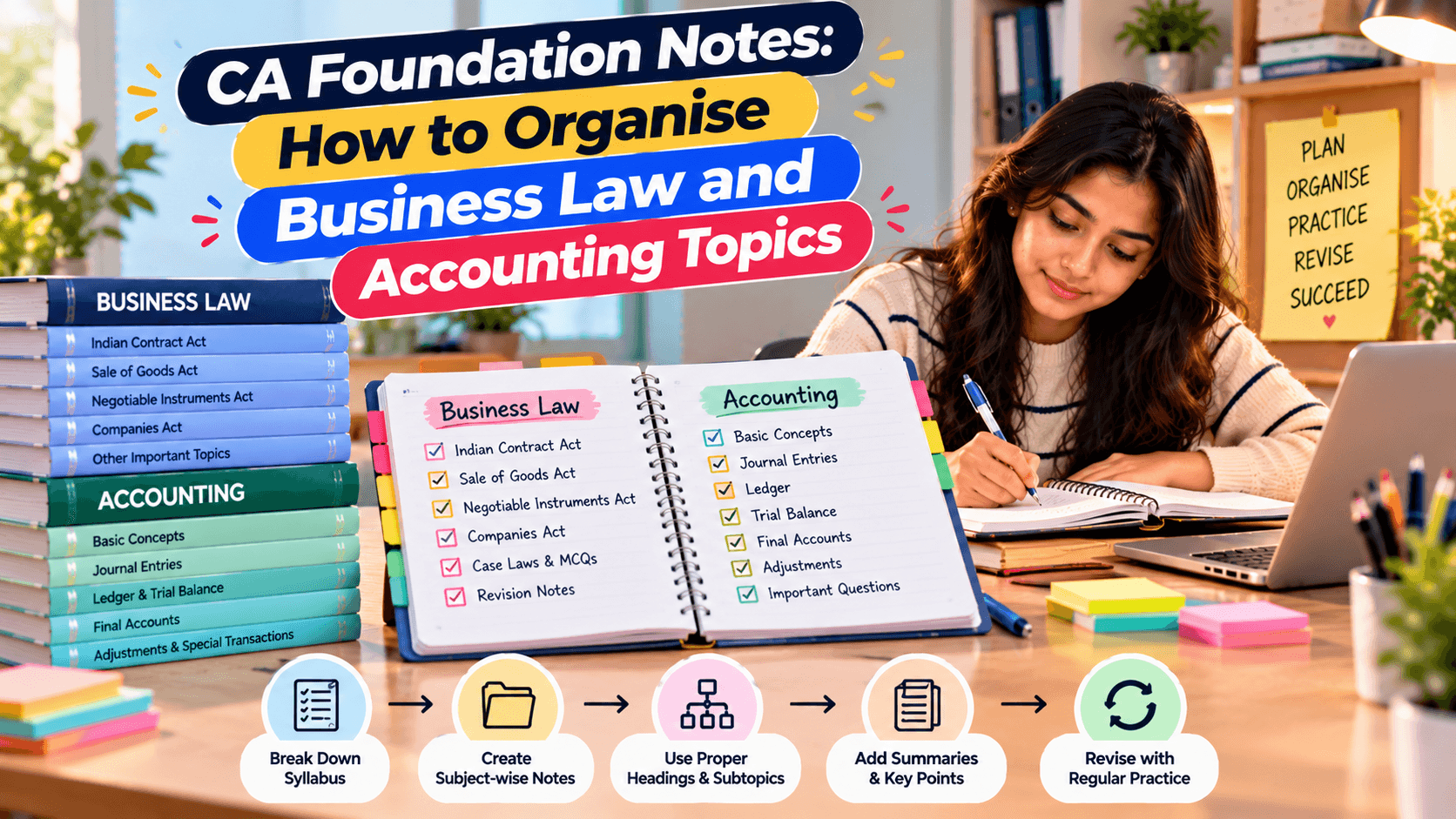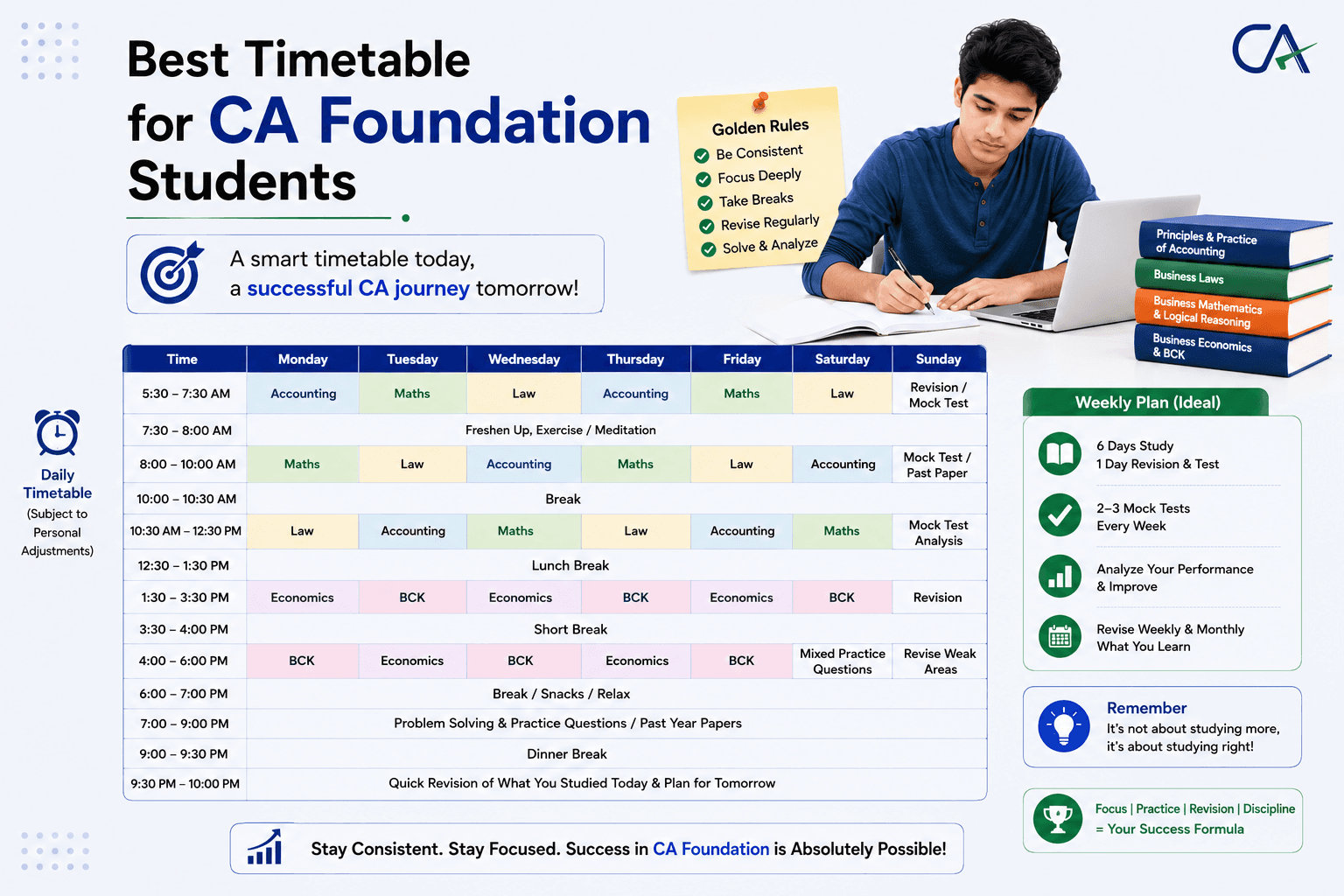
Preparing for a CA examination involves understanding concepts, practising questions and revising the syllabus in a planned way. A useful set of notes can make this process easier, but rewriting every page of a textbook is rarely the best use of study time.
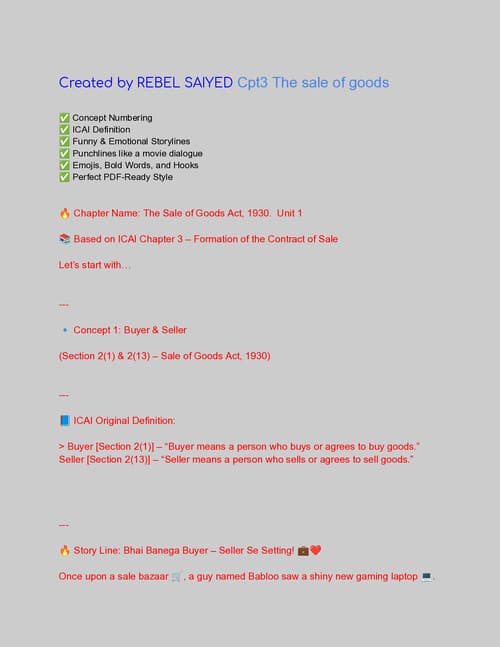
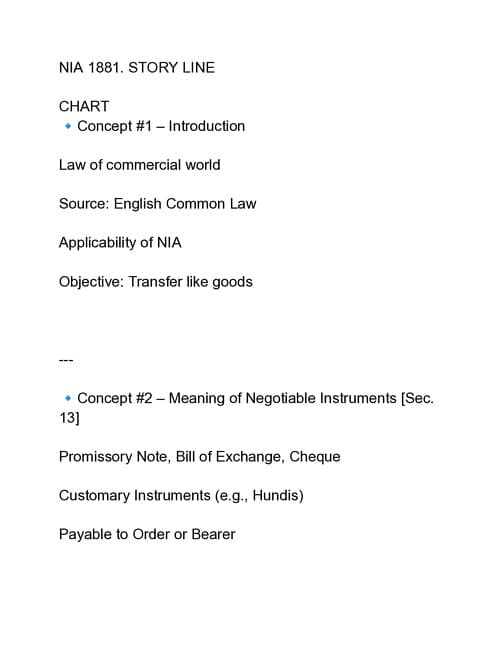
The approach in this article focuses on building a practical revision resource from the applicable ICAI study material. Use the notes to support detailed learning, active recall and question practice rather than treating them as a replacement for the prescribed content.
Why illustrations help in Business Law
A legal provision may contain several elements, conditions and exceptions. A short illustration shows how those parts operate in a practical situation. It gives students context for understanding the rule instead of memorising words without knowing their purpose.
Illustrations should support the provision, not replace it. Learn the legal principle first, identify its essential requirements and then use an example to test understanding.
Understand the provision before the example
Read the relevant provision from the applicable study material. Identify who the rule applies to, what action or condition it covers and whether an exception is mentioned. Note legal terms that should be retained in an examination answer.
Once the rule is clear, create a simple situation that demonstrates it. Change one fact and consider whether the result would also change. This helps you understand which part of the provision is decisive.
Use issue, rule, application and conclusion
For a case-based question, identify the issue, state the relevant legal rule, apply it to the facts and reach a conclusion. This structure prevents answers from becoming a general description of the chapter without addressing the question.
For a question about a decision taken without following a required procedure, identify the procedural requirement first. Compare the facts with that requirement and explain the consequence supported by the provision.
Create illustrations for definitions and key terms
Some legal concepts are easier to remember when paired with a short example. Write the definition or essential meaning first, then add a one- or two-line situation. Keep the example simple enough that it does not introduce unrelated legal issues.
Where two terms are similar, create a comparison with one example for each. This helps identify distinctions during revision and reduces confusion when case facts are closely worded.
Understand conditions and exceptions
A common source of error is remembering the main rule but overlooking a condition or exception. When making an illustration, include facts that satisfy the condition. Then change one fact to see whether a different result may apply.
Do not treat every example as a universal rule. Write down the specific condition that makes the example work. This is useful when practising questions that test subtle differences in wording.
Practise concise legal answers
An illustration may help understanding, but examination answers still need accurate legal terminology and a clear structure. State the relevant principle, connect it to the facts and give a direct conclusion. Avoid lengthy stories or unrelated details.
After checking your response, see whether the legal rule was accurate, important facts were used and the conclusion followed from the reasoning.
Use Studycaller for balanced revision
Studycaller can be included in a routine that combines provision-based learning, simple illustrations, answer-writing practice and regular assessment. Begin with prescribed material, use examples to clarify difficult concepts and test understanding through questions.
After practice, note provisions or distinctions that caused difficulty. Revisit the original explanation and attempt a new situation.
Quick Reference Table
| Learning step | Student activity | Purpose |
|---|---|---|
| Read provision | Identify rule, conditions and exceptions | Build legal accuracy |
| Study illustration | Connect rule with facts | Understand application |
| Change a fact | Check whether outcome changes | Understand conditions |
| Write an answer | Use rule, application and conclusion | Improve presentation |
| Revise | Recall without notes | Strengthen retention |
Conclusion
Effective preparation depends on clear concepts, relevant practice and regular review. Use applicable ICAI resources as your foundation, keep revision notes accurate and turn each assessment into a practical improvement plan. A consistent routine with Studycaller can help make revision more organised and focused.