Skip to content
ICAI Update 2 min read

Efficient Ways to Revise Multiple Subjects in One Day

Learn how to revise multiple subjects in one day using priority blocks, active recall, mixed practice and short review sessions.

By Studycaller Editorial Team

CA students & educators at Studycaller

Published
Views
5 views
Efficient Ways to Revise Multiple Subjects in One Day

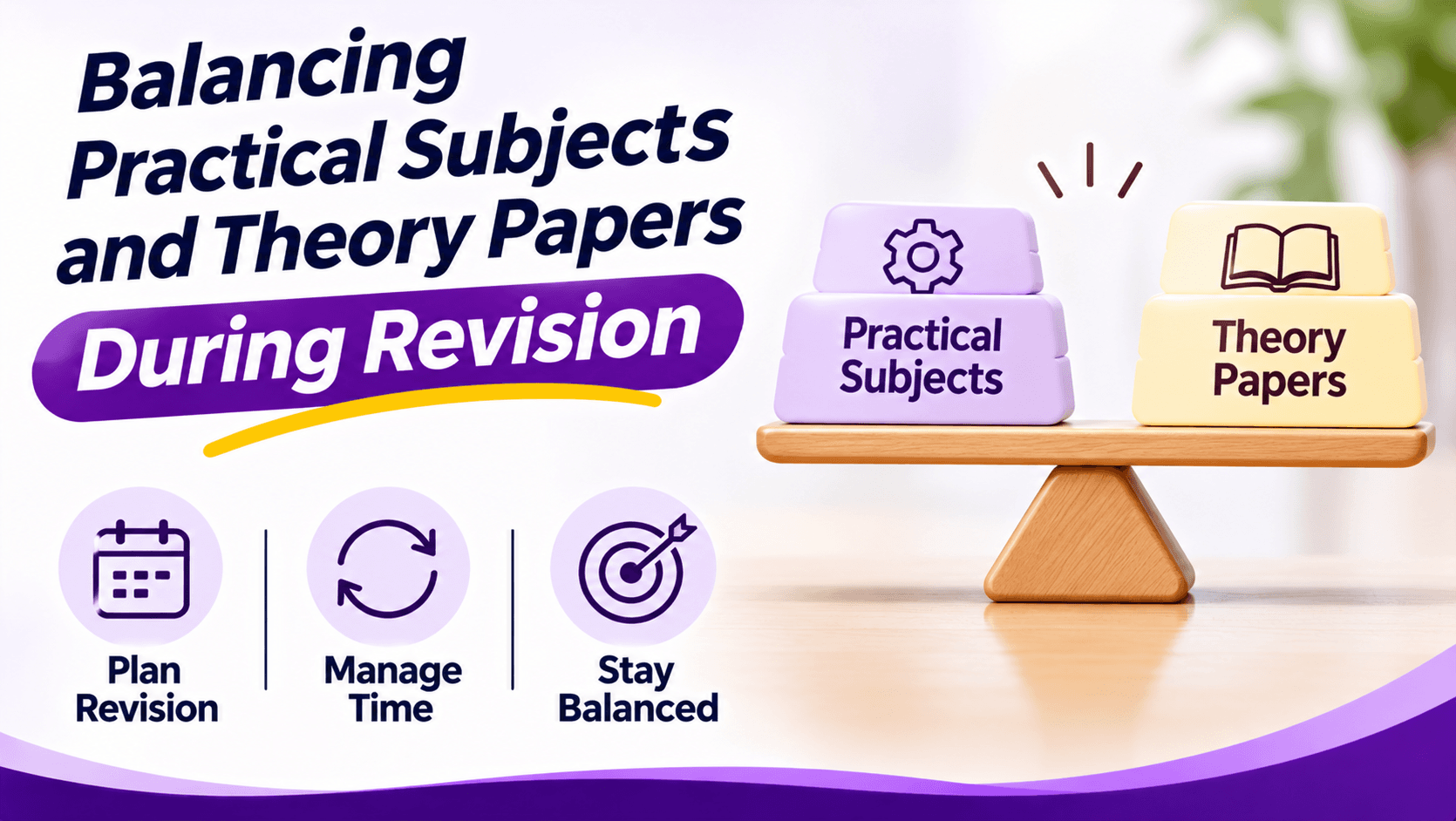
Revising several subjects in one day can be useful when examinations are approaching or when you need to keep earlier topics active. However, switching between subjects without a plan can waste time and make revision feel scattered.

A balanced day should give each subject a clear purpose. Use focused blocks, active recall and question practice rather than trying to reread entire chapters from every subject.

Decide the purpose of each subject block

Decide whether each subject needs first revision, quick recall, problem-solving or correction of weak areas. Different goals require different methods.

Prioritise subjects by need and urgency

Consider the next examination, syllabus gaps, topic difficulty and recent mock performance. Give more time to subjects that need attention while retaining shorter sessions for stronger subjects.

Use focused study blocks

Assign a defined time window and one clear task to each subject. A clear finish point makes it easier to move between subjects.

Start with active recall

Close your notes and write the main concepts, formulas or provisions you remember. Compare your recall with study material to identify gaps.

Mix reading with question practice

After reviewing a topic, solve relevant questions. Practical subjects need calculations and application, while theory subjects may need structured written answers.

Use short review sessions between subjects

At the end of a block, summarise what you revised and what remains unclear. This makes the next session easier to start.

Plan breaks and avoid constant switching

Complete a meaningful block before moving on and take a short break between demanding sessions. Too much switching interrupts concentration.

Keep a compact revision sheet

Maintain concise notes of key formulas, provisions, definitions or common errors. Return to full study material whenever a concept is unclear.

Review progress at the end of the day

Check completed tasks and move unfinished work to another day. Note whether you understood the topic or only read it.

Use Studycaller to keep revision organised

Use test feedback to set priorities and keep each subject block focused. Avoid filling the day with more tasks than you can complete properly.

Quick Reference Table

Daily block Suggested task Method
First subject High-priority topic Concept revision and recall
Second subject Practice-based chapter Solve questions
Third subject Theory or memory-heavy area Recall and write answers
Short review Revisit earlier weak points Error log
End-of-day check Review completed tasks Set next-day priorities

Found this useful? Share it with your study group.

Share

Frequently asked questions

How often should I practise under timed conditions?

Use timed practice regularly, based on your preparation stage. Begin with short sections and progress to full papers when you can review each attempt properly.

Does timed practice guarantee exam confidence?

No method guarantees confidence, but realistic practice can reduce unfamiliarity and help you trust your preparation, pacing and answer-writing approach.

How can I measure my exam preparation progress?

Track syllabus coverage, closed-book recall, practice accuracy, mock marks, completion and recurring errors. Review these indicators over several weeks.

What should I do after a low mock test score?

Identify why marks were lost, prioritise repeated errors and plan specific corrective practice. Use the next test to check whether the changes helped.

How can I manage pressure during a long professional course?

Break the syllabus into manageable tasks, follow a realistic timetable, include breaks and focus on actions within your control. Seek support if pressure affects daily functioning.

Is it effective to study multiple subjects in one day?

It can work when each subject has a defined purpose and focused time block. Mix active recall with question practice and avoid switching too frequently.

How much time should I give each subject during revision?

Allocate time according to syllabus gaps, difficulty, upcoming examinations and mock performance. Keep shorter review sessions for stronger subjects.

Should I take full-length mock tests during final revision?

Take them when enough time remains to review the paper and act on feedback. Otherwise, timed sections and targeted questions may be more useful.

How do I make a final revision timetable?

Review recent mock results, classify topics by strength, prioritise repeated errors and assign realistic daily tasks.

How can Studycaller support my exam preparation?

Studycaller can complement a structured routine of revision, practice and performance review. Use feedback to identify priorities and track improvement.

More on this topic from ICAI Update and the Studycaller blog.

Notes students love

Free notes from the Studycaller library, picked for this article.

See all

Free app · 5 lakh+ learners

Study on the go with the Studycaller app

Read full notes, ask doubts, follow toppers and track your study hours — free on Android and iPhone.