Effective CA preparation requires more than completing chapters. Students need to understand concepts, revise them regularly and apply them accurately in examination questions. Well-organised study material can make this process easier, particularly when the syllabus is extensive.
This guide explains practical ways to organise and use revision resources while staying aligned with current applicable ICAI material. Studycaller can be part of a wider learning routine alongside independent practice and regular self-assessment.
Why chapter summaries matter
CA Foundation Accounting covers concepts, principles, formats and practical adjustments. A concise chapter summary gives students a shorter revision reference without replacing the detailed study material needed to learn a topic. It should help you recall the central idea and decide how to approach a question.
Understand before making notes
Begin with the prescribed chapter and understand its purpose before shortening it. Identify the relevant rule, accounting treatment, format and situations in which it applies. Close the book and write what you remember, then check the source to correct gaps. This creates more useful notes than copying every paragraph.
Organise summaries chapter by chapter
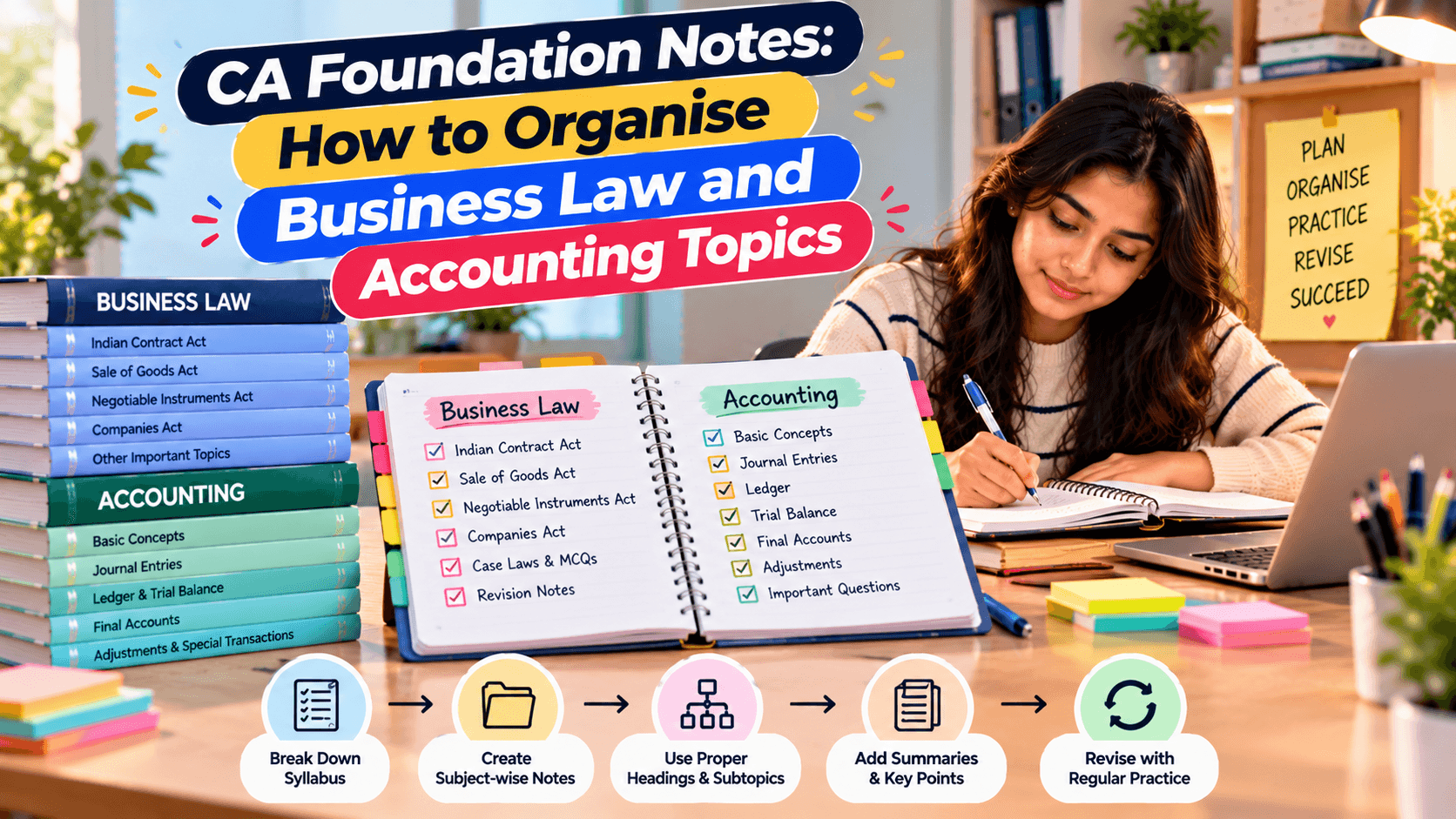
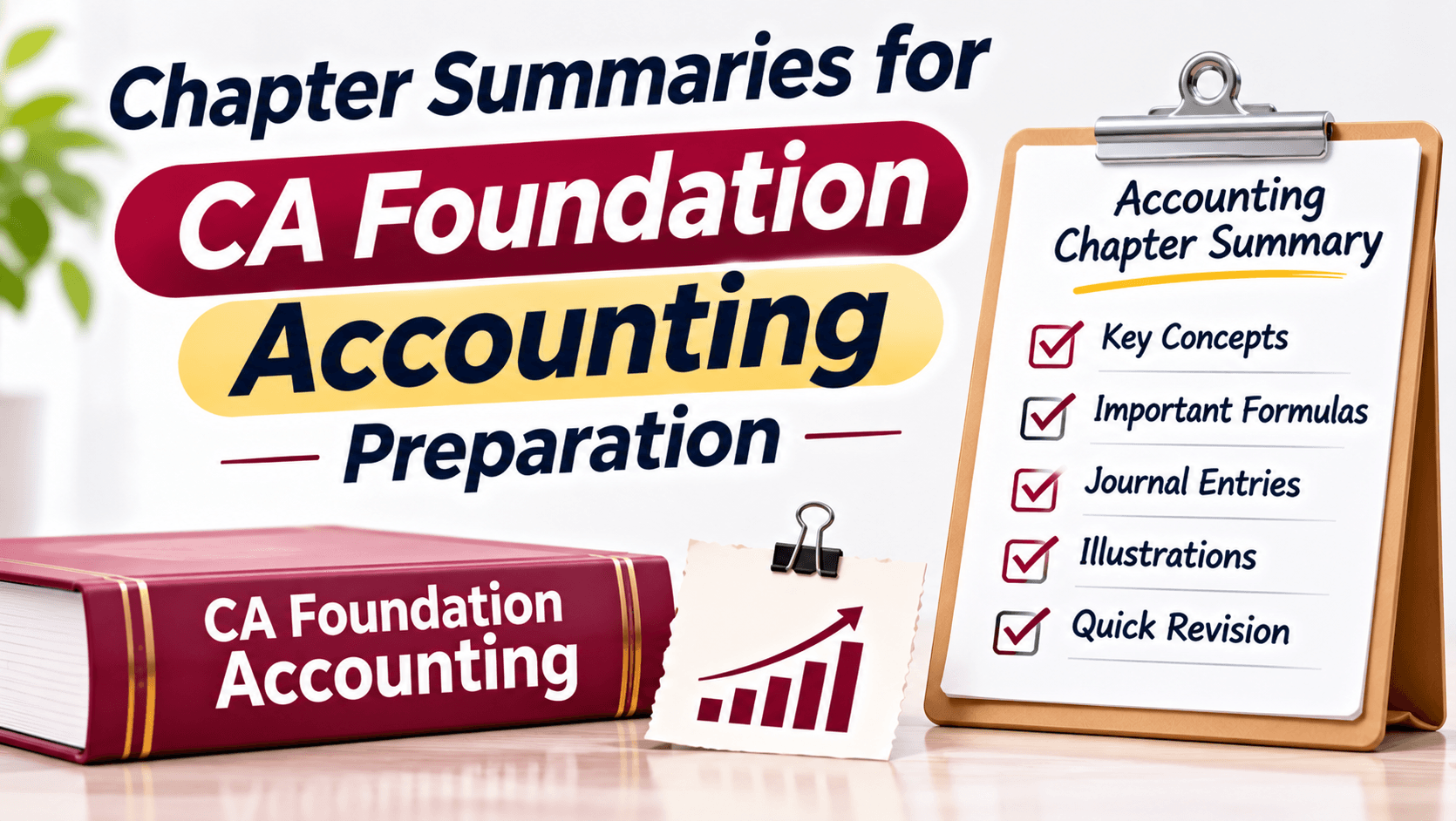
Use a consistent layout: chapter scope, key concepts, accounting treatments, formats or journal entries, common adjustments and mistakes to avoid. Practical chapters may need separate pages for formats, while concept-based chapters may work better with short explanations and examples. Keep each summary focused.
Include formats, entries and working notes
Include essential formats, journal-entry patterns and working-note sequences. Add a short explanation of why a debit or credit is used rather than keeping an unexplained list. For adjustments, show their effect on relevant accounts and the order in which they are considered.
Use worked examples selectively
A selected worked example can explain a treatment more clearly than a long paragraph. Choose examples that demonstrate a rule or adjustment students often confuse. Explain the reasoning briefly, then solve a fresh question independently to check whether you can apply the method with changed figures.
Revise through active recall
Do not only read summaries from beginning to end. Cover the explanation and recall the rule, format or sequence. Reproduce an entry from memory, explain an adjustment aloud or write calculation steps without looking. Return to topics after planned gaps and review difficult ones more frequently.
Connect summaries with question practice
After revising a chapter, solve related questions. Start with basic questions and move to mixed or application-based practice. Mark questions where you needed help or made an error, then add the underlying learning point to your summary instead of copying the entire solution.
Keep summaries updated
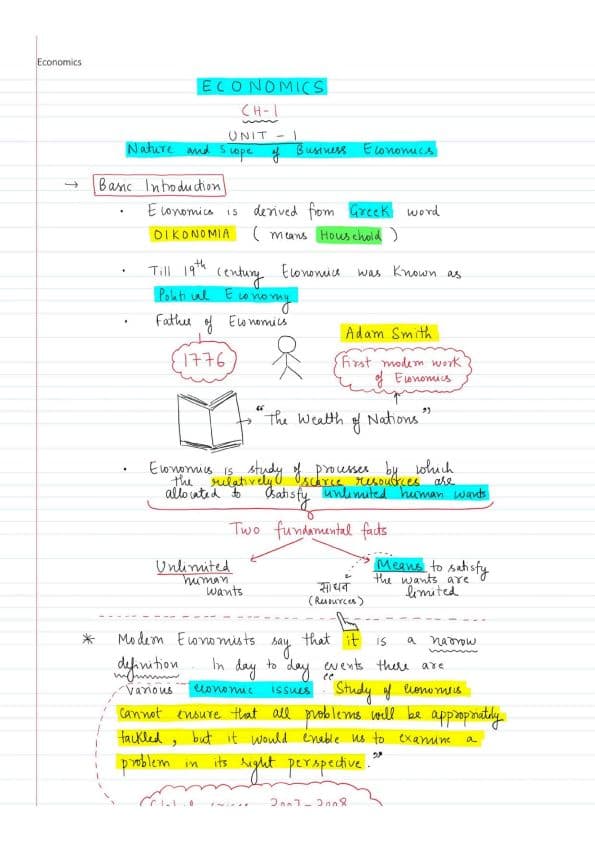
Update summaries after practice tests, teacher explanations and revision. Keep the latest version clearly labelled. Handwritten notes may support learning through writing, while digital notes are easier to search and edit. Choose a format you can maintain and revise regularly.
Quick Reference Table
| Summary element | What to include | Revision benefit |
|---|---|---|
| Concept overview | Meaning and purpose | Recalls the central idea |
| Accounting treatment | Rules, entries and adjustments | Supports correct application |
| Formats and workings | Layouts and calculation steps | Improves answer structure |
| Worked example | One representative illustration | Clarifies the method |